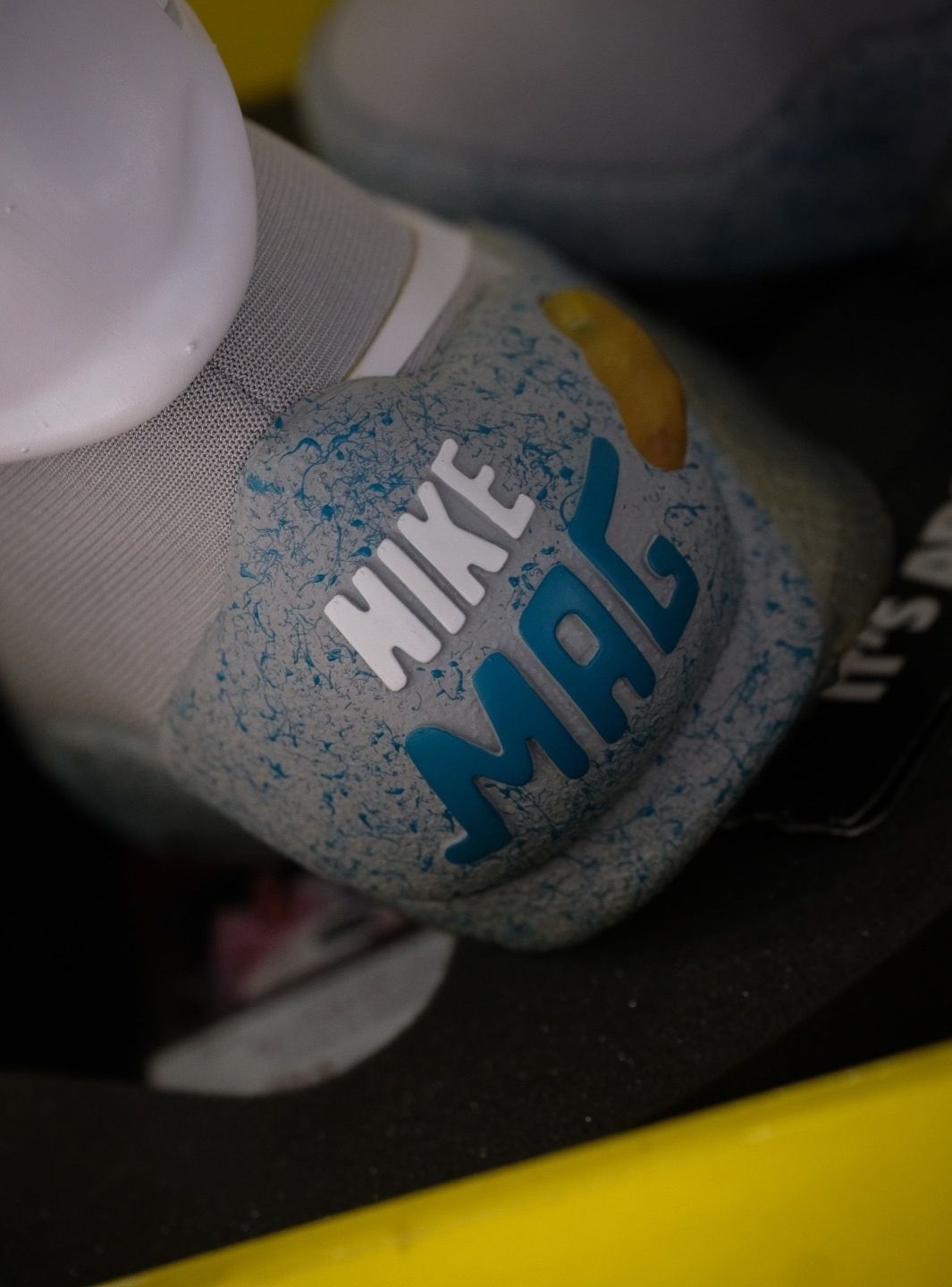
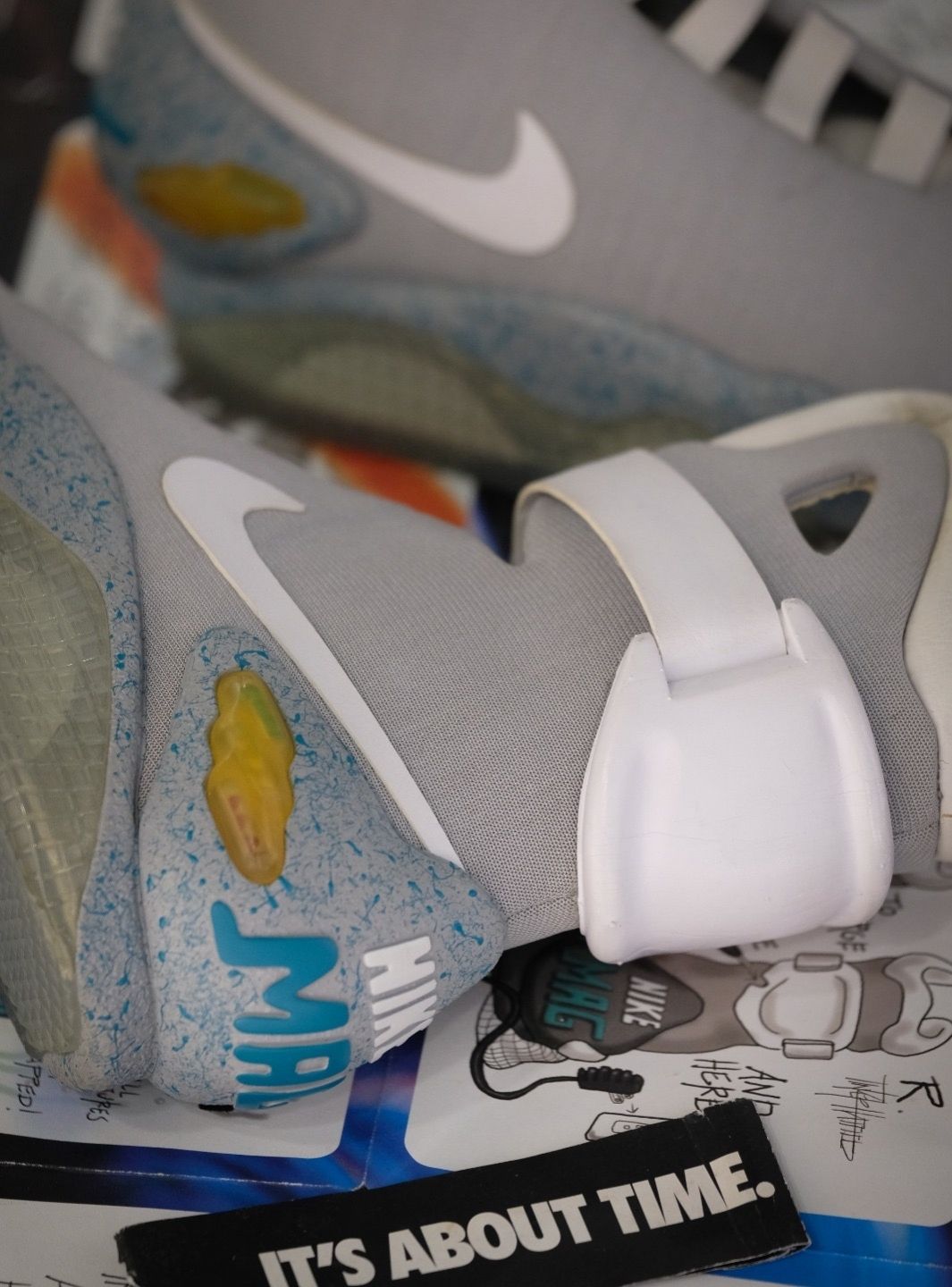
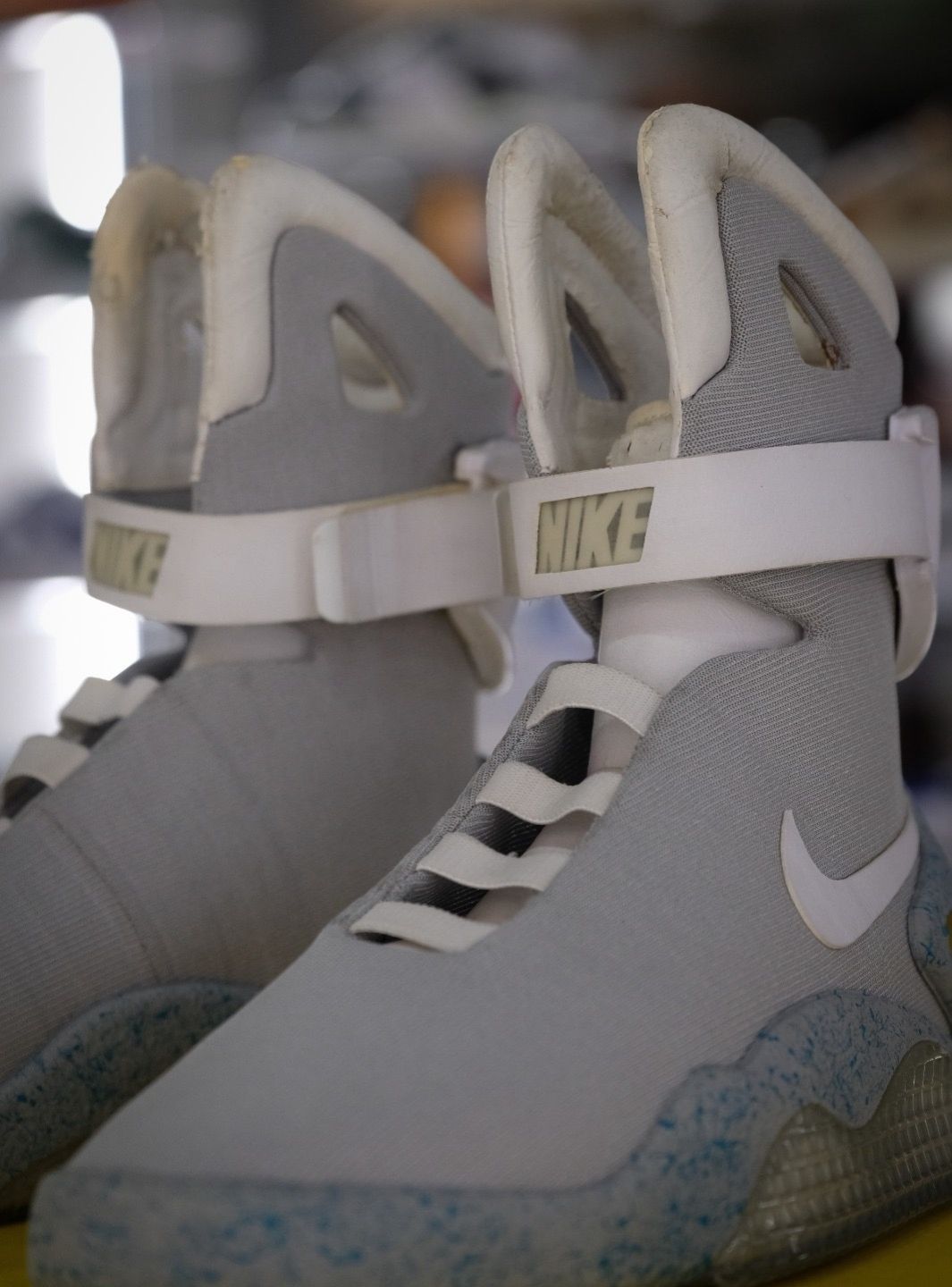
Before becoming one of the rarest and most recognizable sneakers in the world, the Nike Mag was nothing more than an imaginary object.
It was born on the big screen in 1989, on the feet of Marty McFly in Back to the Future Part II, as a symbol of a 2015 filled with hoverboards, flying cars, and self-lacing shoes.
What no one could have imagined was that, more than twenty years later, Nike would truly turn that cinematic idea into a real sneaker, using it simultaneously as a technological laboratory and as a tool to raise funds for Parkinson's research.
1989: when the Nike Mag existed only in Back to the Future
In 1989, Back to the Future Part II hit theaters. Marty McFly travels to 2015 and finds himself facing a future imagined through the lens of the eighties.
Among the film's most memorable objects appears a high-top, gray, illuminated sneaker that was, above all, capable of apparently tightening around the foot on its own.
The shoe was designed for the film with the contribution of Tinker Hatfield, but the technology shown on screen did not actually exist. During filming, the auto-lacing effect was achieved through a system operated manually off-camera.
The scene lasts only a moment, but it is enough to turn that futuristic sneaker into one of the most recognizable items of the entire saga.

From cinematic object to a sneaker desired by thousands of fans
For many years, the Nike Mag remained just a movie shoe.
There was no version available for purchase, and there was not yet any technology capable of truly replicating what the public had seen in the cinema. However, the sneaker continued to live on in pop culture.
With the growth of the internet, sneaker forums and communities began to demand more and more insistently that Nike turn the Mag into a real product. According to official Nike archives, over 30,000 people went as far as advocating online for the request of a mass-produced version.
The interest proved that the Mag was no longer just cinematic memorabilia: it had become one of the sneakers the public most wanted to see exist for real.

2011: Nike finally turns the Mag into a real sneaker
The turning point arrived in 2011.
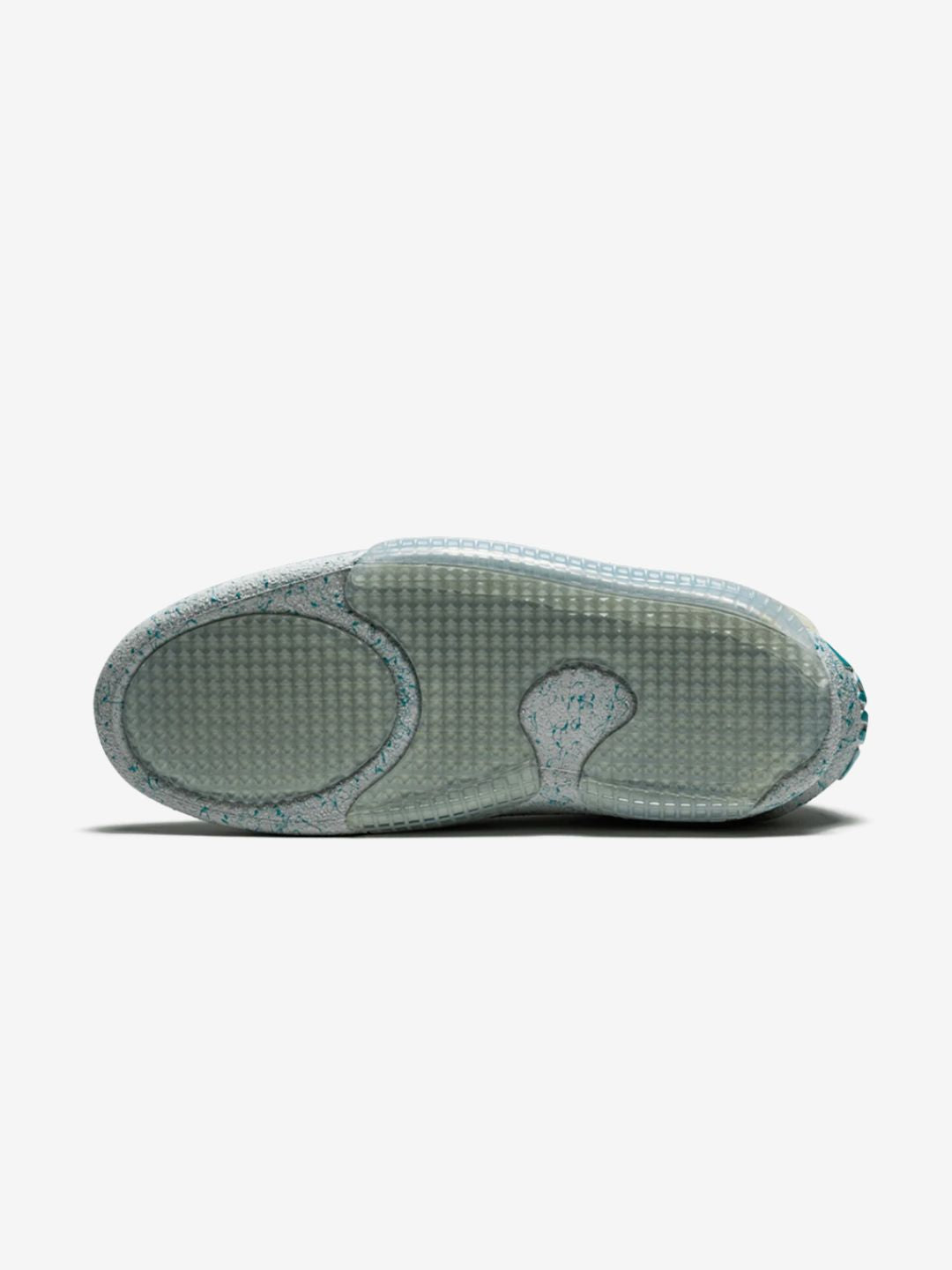
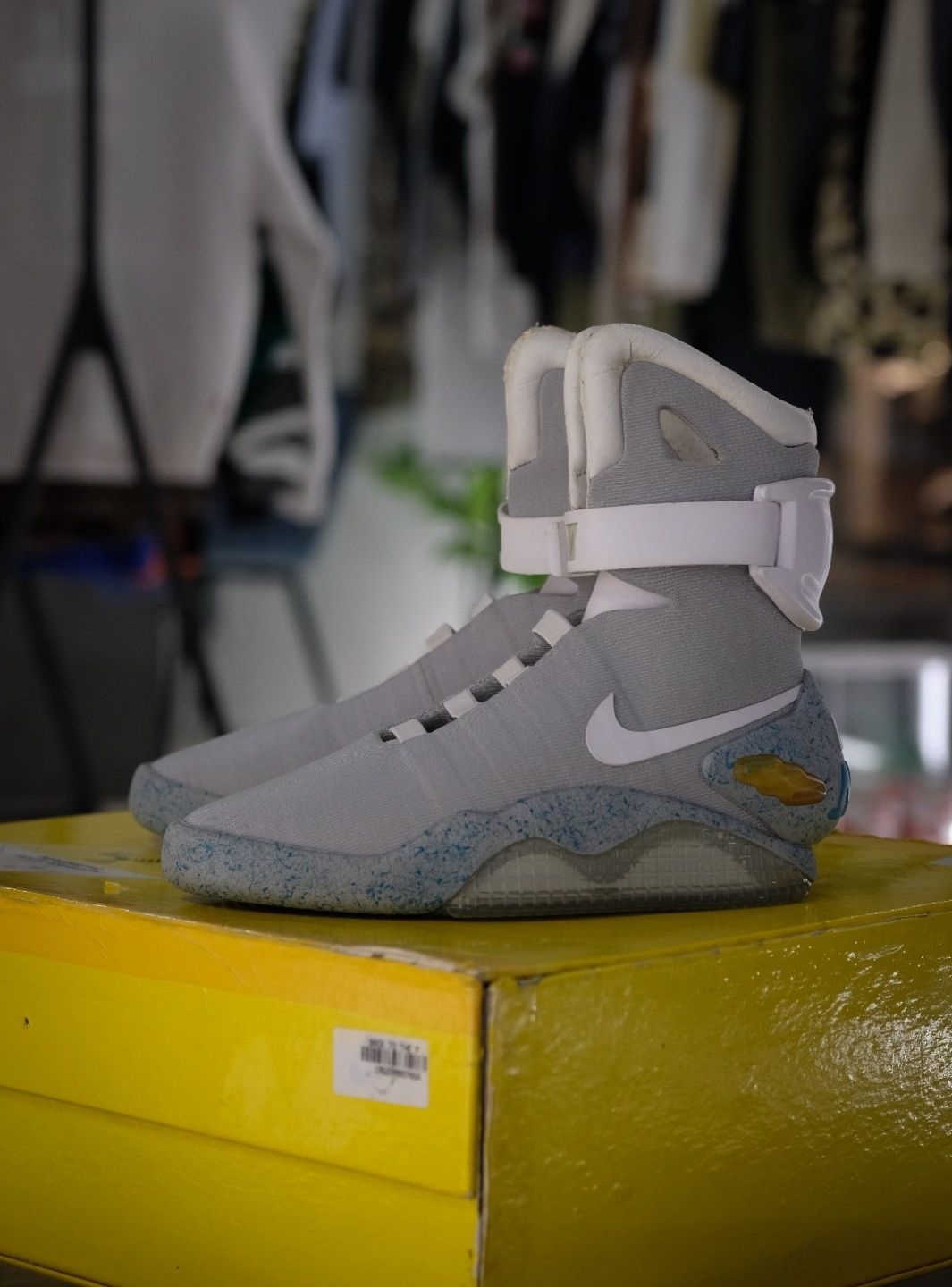
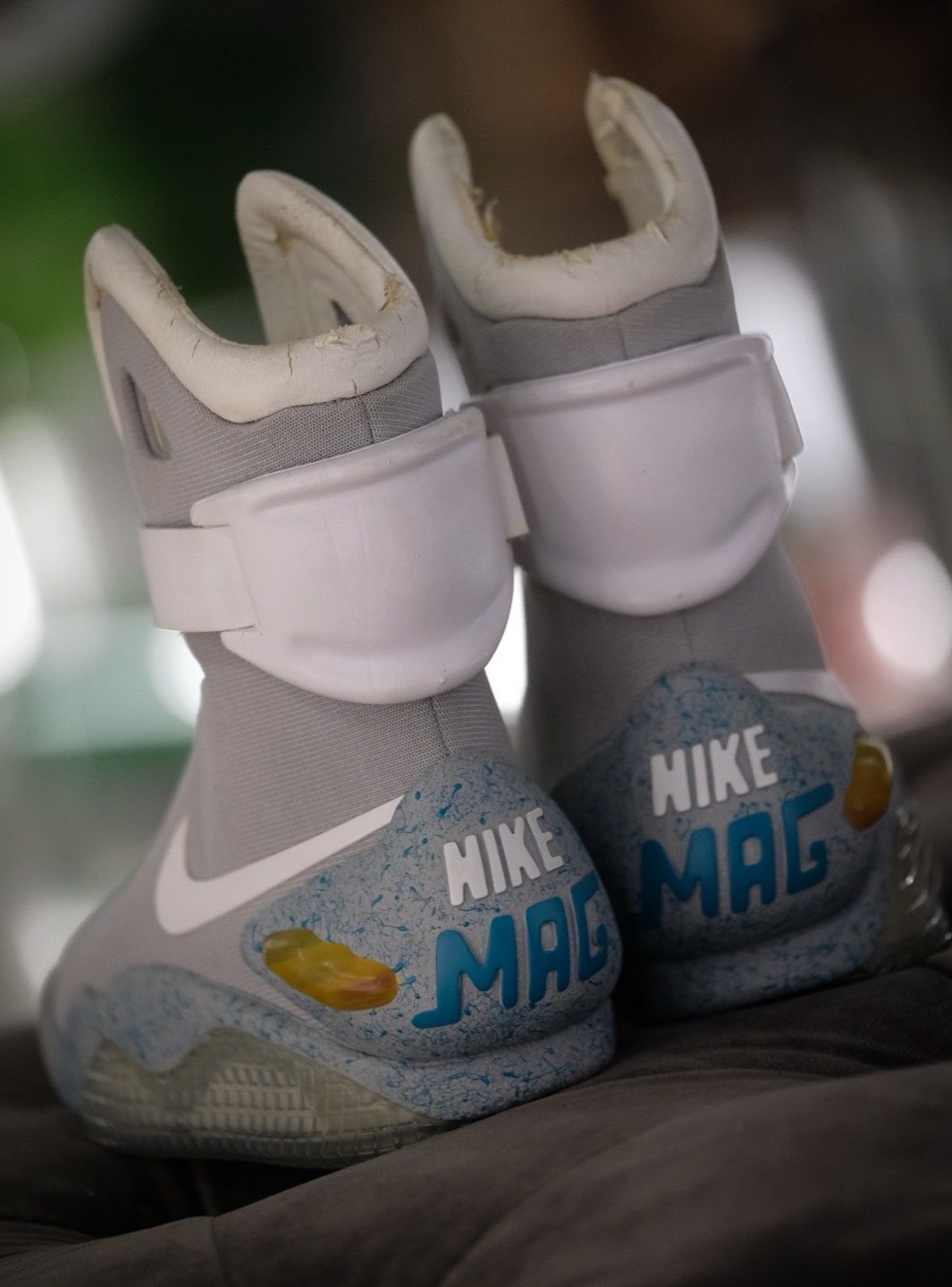
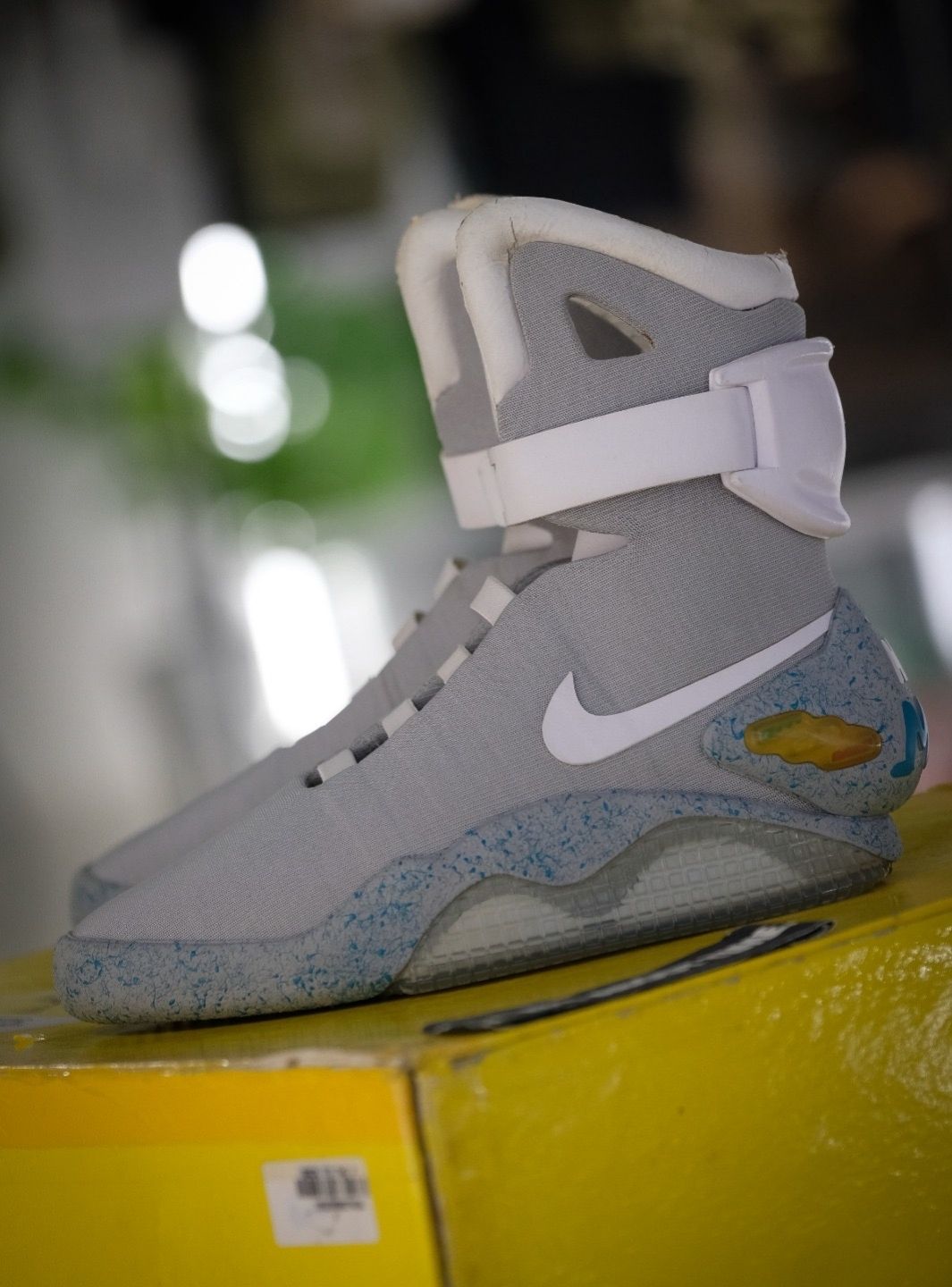
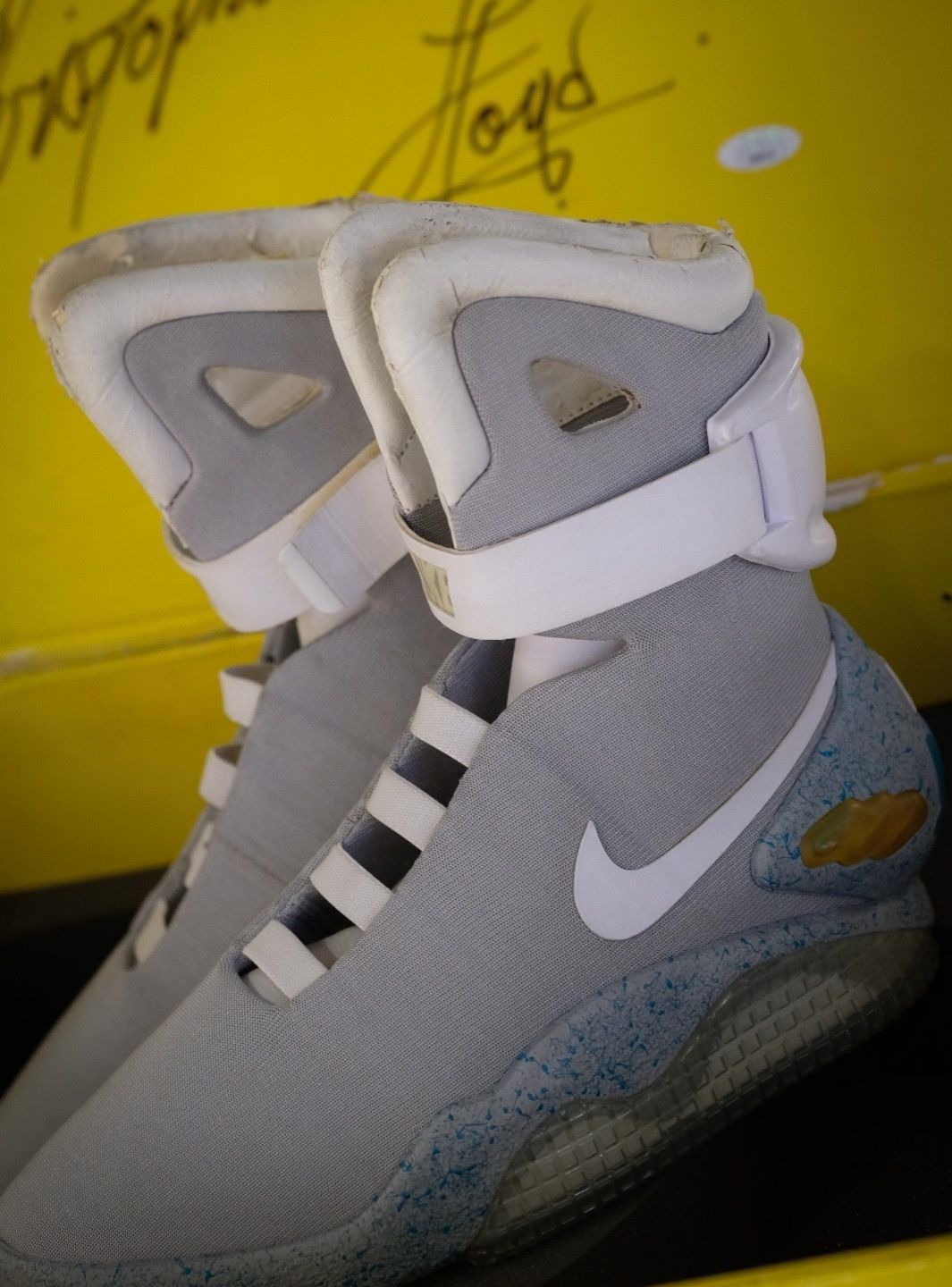
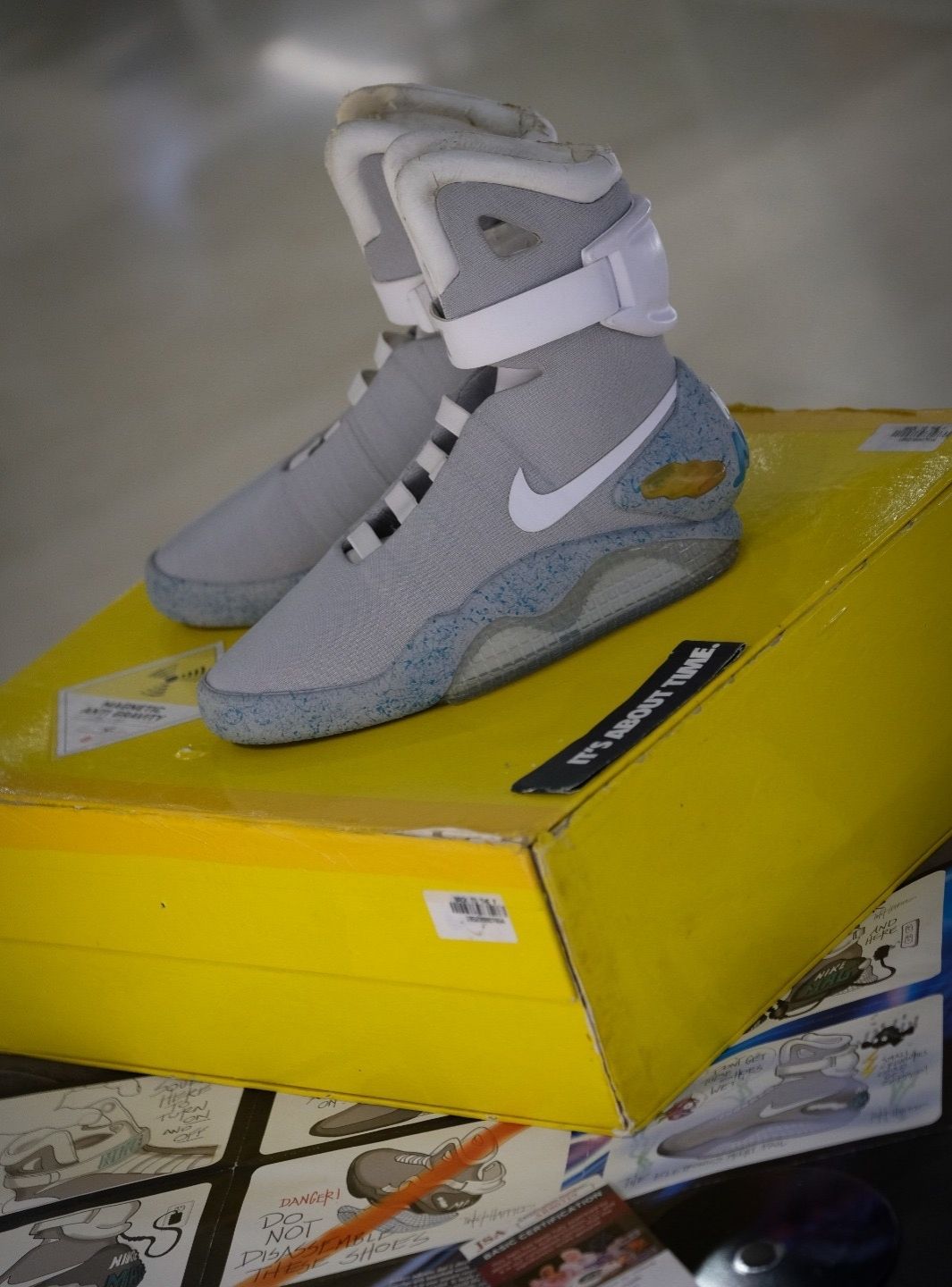
Nike presented for the first time a version of the Mag that was actually produced and available to the public, developed under the guidance of Tinker Hatfield and Tiffany Beers.
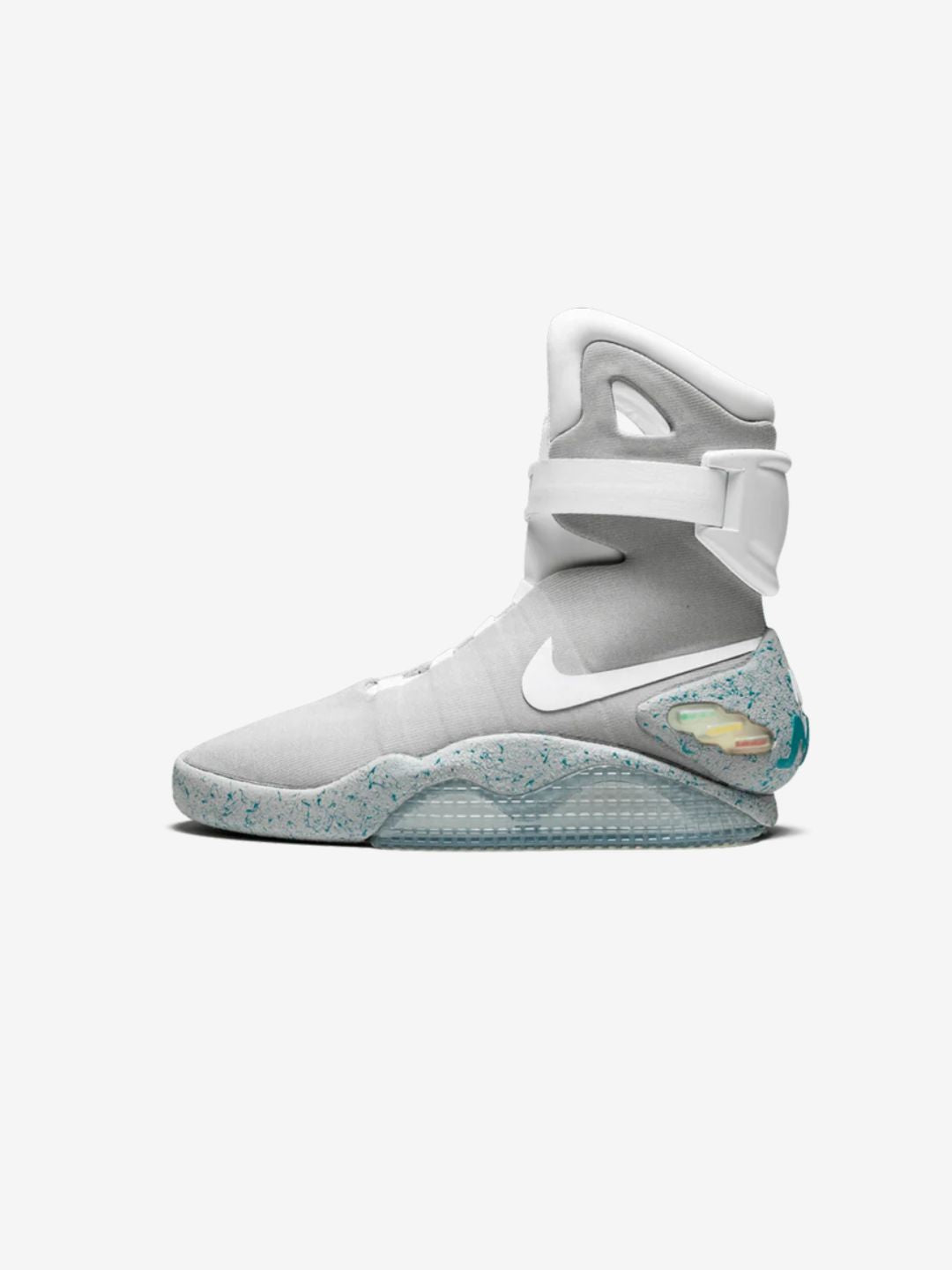
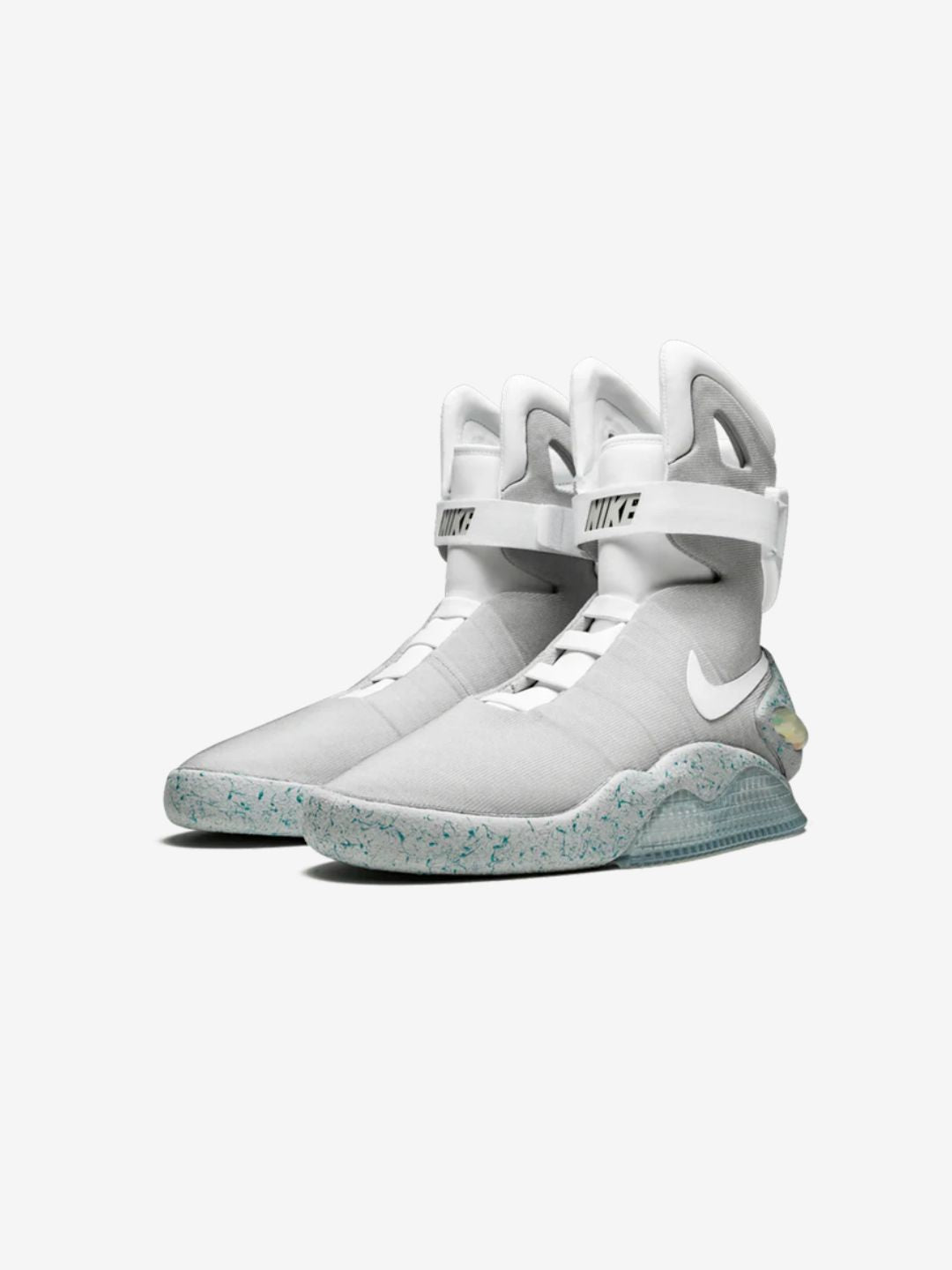
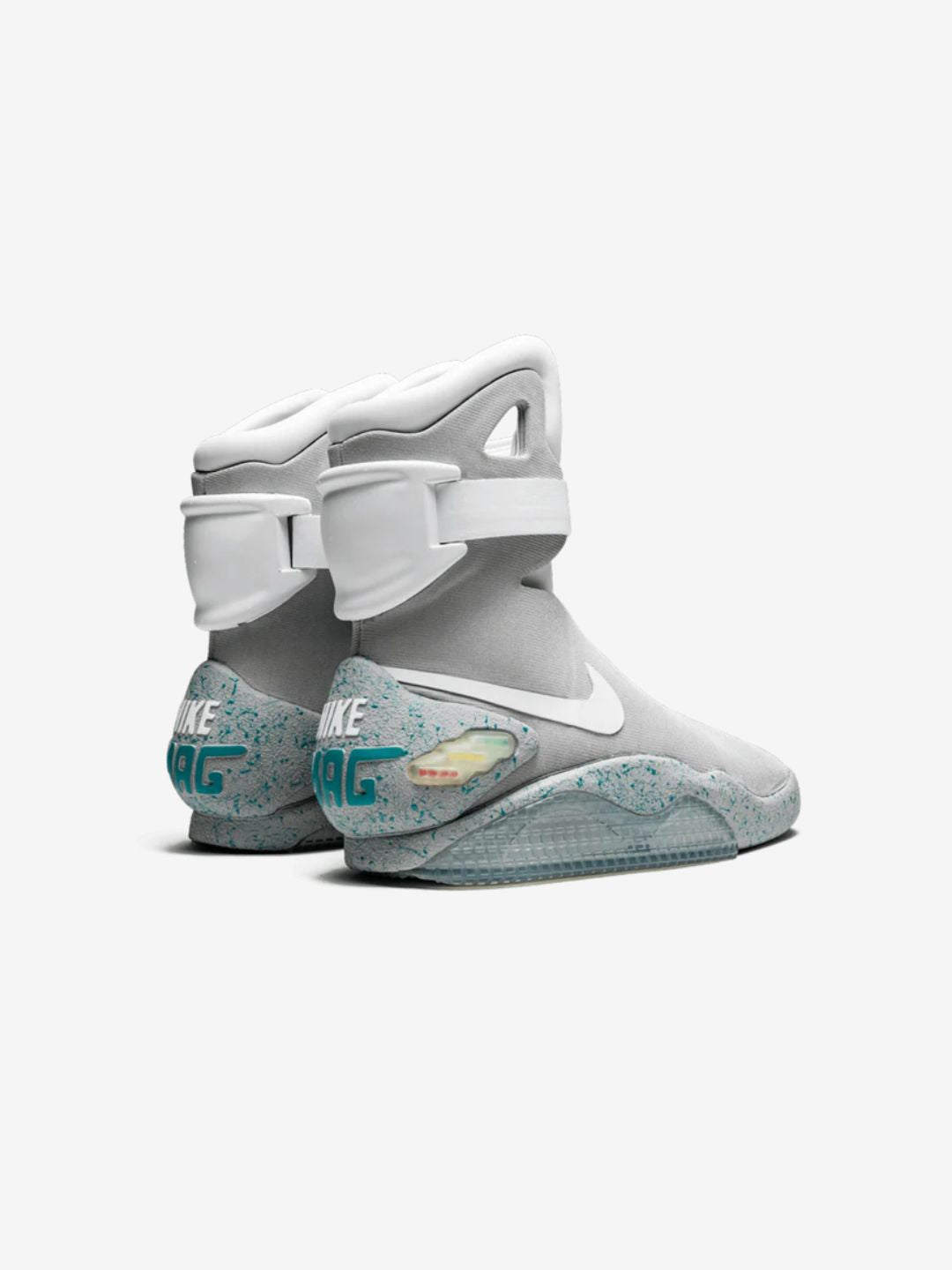
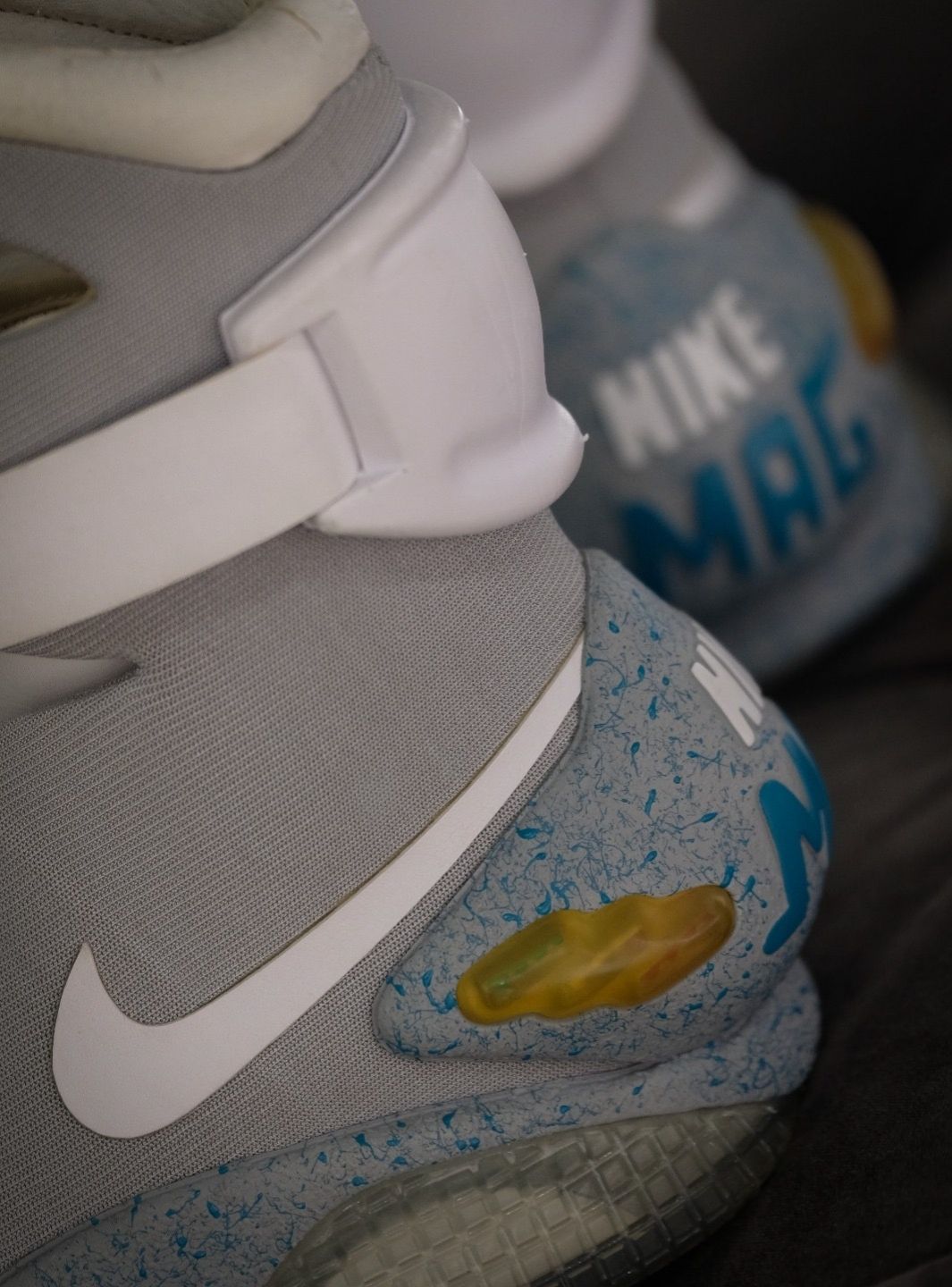
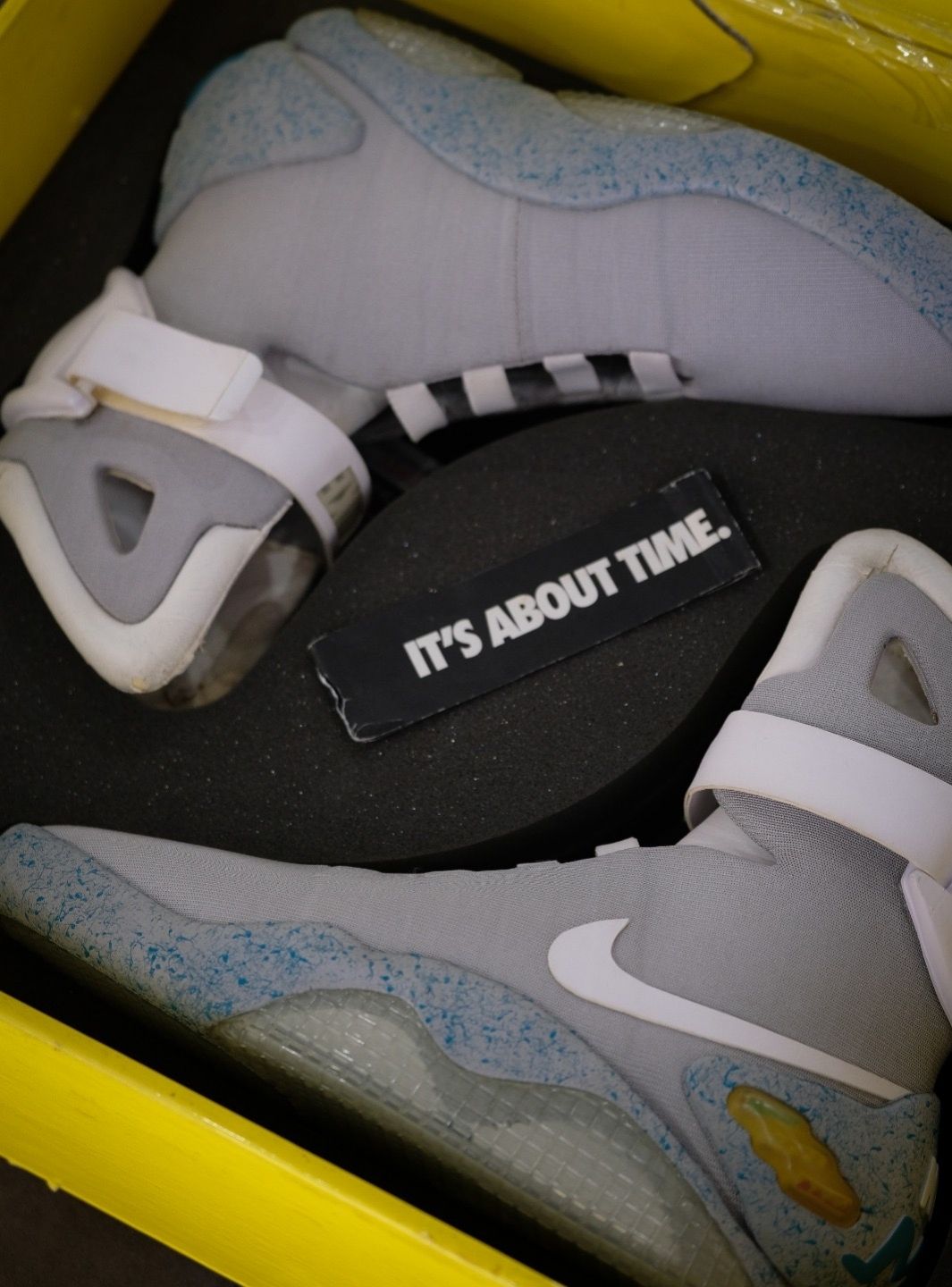
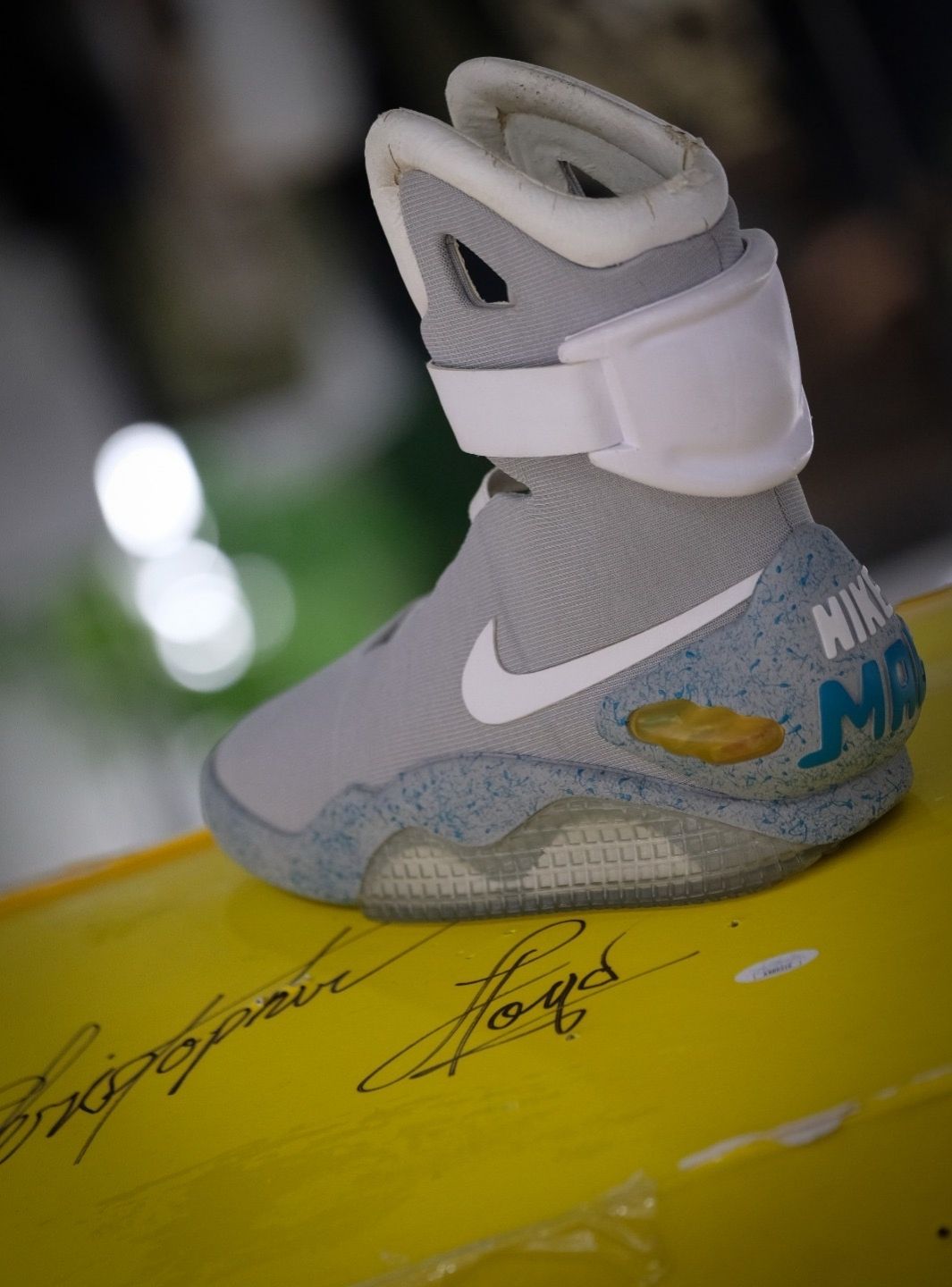
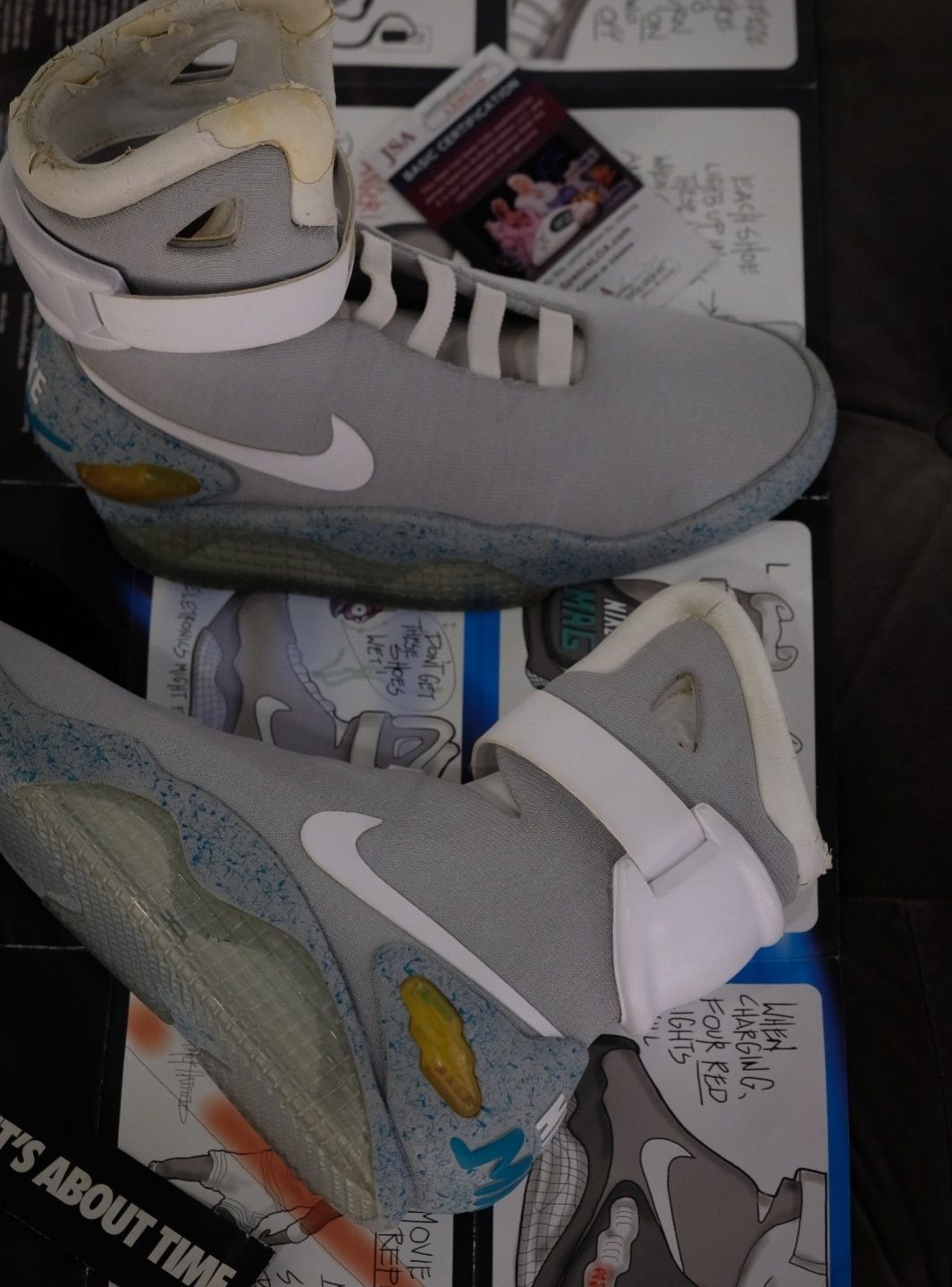
The design sought to reproduce the look from the film as faithfully as possible: high-top silhouette, gray upper, large ankle strap, glowing panels, and futuristic details.
The sneaker also introduced an important technological element: it was the first rechargeable Nike footwear, thanks to the system powering the lights integrated into the shoe.
However, the most famous detail from the movie was still missing: the 2011 version was not auto-lacing.
Nike produced only 1,500 pairs and decided to distribute them through eBay auctions, donating the proceeds to the Michael J. Fox Foundation to support Parkinson's research.
The initiative raised nearly 10 million dollars in just ten days, transforming the sneaker into something much more important than a simple cinematic replica.

2016: the auto-lacing Nike Mags finally arrive
Five years later, Nike completed what had been left unfinished in 2011.
In 2016, a new Nike Mag was presented, equipped with Adaptive Fit—a technology capable of automatically tightening and adjusting the shoe around the foot.
For the first time, one of the most famous features of the sneaker imagined in 1989 became truly functional.
Production was even more limited than in 2011: only 89 pairs were made.
Most were allocated through a charity draw in which every entry corresponded to a donation to the Michael J. Fox Foundation, while other pairs were destined for international auctions.
The 2016 project raised millions of dollars, bringing the total generated by the partnership between Nike and the Foundation since 2011 to over 16 million.
How did the auto-laces on the 2016 Nike Mags work?
Adaptive Fit technology represents much more than a simple special effect.
The system uses sensors and motorized components to adapt the tension of the shoe around the foot, turning the concept imagined in the film into a truly functioning solution.
The Nike Mag thus became a platform through which Nike experimented with ideas that would subsequently be developed into products like HyperAdapt and Nike Adapt.
Its technological significance therefore goes beyond the 89 pairs produced: the Mag helped demonstrate that footwear can automatically modify its fit using integrated electronic components.

Why the Nike Mag is much more than a movie sneaker
The success of the Mag stems from the intersection of worlds that usually remain separate.
It is simultaneously a cinematic object, a Nike sneaker, a technological experiment, and one of the best-known charitable projects in sneaker culture.
The 2011 version proved that the public was willing to place huge value on an object born from pop culture. The 2016 version proved that the technology imagined almost thirty years earlier could finally become real.
This is also why the Mag occupies a unique position in the history of Nike: it does not derive from sport, running, or skateboarding, but from cinematic imagination.
How rare is a Nike Mag today?
The quantities produced only partially explain the rarity of the model.
There are 1,500 pairs of the 2011 version, while the auto-lacing Mag from 2016 was produced in just 89 examples. To this, one must add more than ten years of collecting, varying conditions, and an international demand that involves both sneakerheads and film enthusiasts.
For this reason, the Nike Mag is considered today one of the iconic models in the world of grail sneakers.
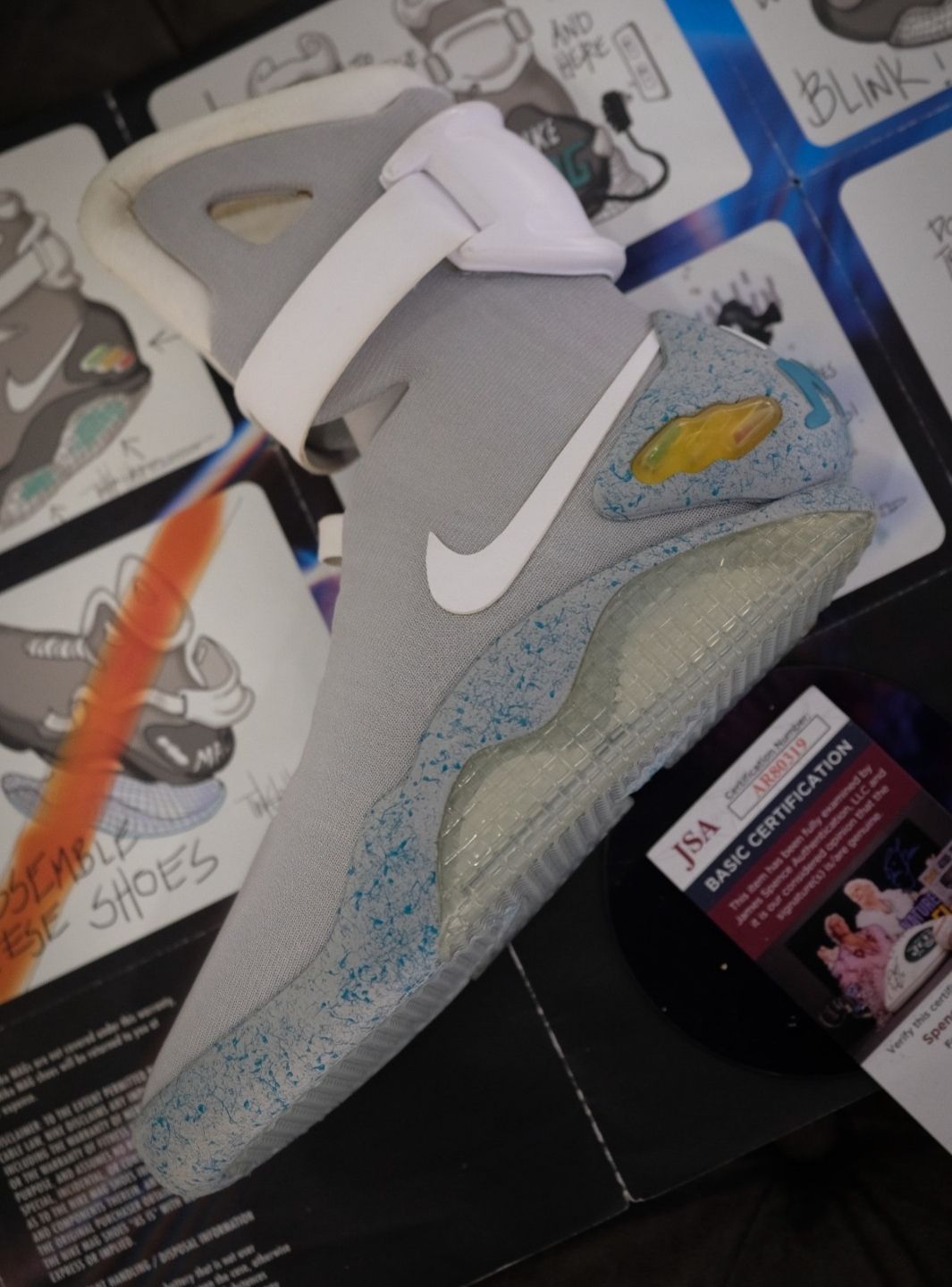
Examples can reach very high valuations, but there is no fixed value: year, condition, size, completeness of the packaging, and provenance can radically change the price.
ResellZone also offers the Nike Mag Back to the Future 2011, allowing you to get a close look at the version that first turned the shoe from the film into a truly existing product.
Why the Nike Mag became a legend
There are sneakers that are rare because they are produced in small quantities, and sneakers that are important because they introduce new technology. The Nike Mag manages to be both, while also adding a connection to one of the most recognizable films in pop culture.
In 1989, it represented the idea of how we might dress in the future. In 2011, it finally became a real sneaker. In 2016, it also fulfilled the most difficult promise, introducing a truly functional auto-lacing system.
Meanwhile, the two releases allowed for the raising of millions of dollars for Parkinson's research through the Michael J. Fox Foundation.

From cinematic fantasy to an icon of sneaker culture
The Nike Mag tells a story that is almost impossible to replicate.
It was born as a prop, became the dream of thousands of fans, was transformed into a real sneaker, and finally contributed to the development of technologies that Nike will use to explore the future of footwear.
Its importance, therefore, does not depend solely on its rarity or the prices reached on the secondary market.
The Mag remains above all proof that a sneaker can simultaneously become cinema, innovation, collecting, and research. And that is why, decades after its first appearance on the feet of Marty McFly, it continues to occupy a virtually unique place in the history of sneakers.