



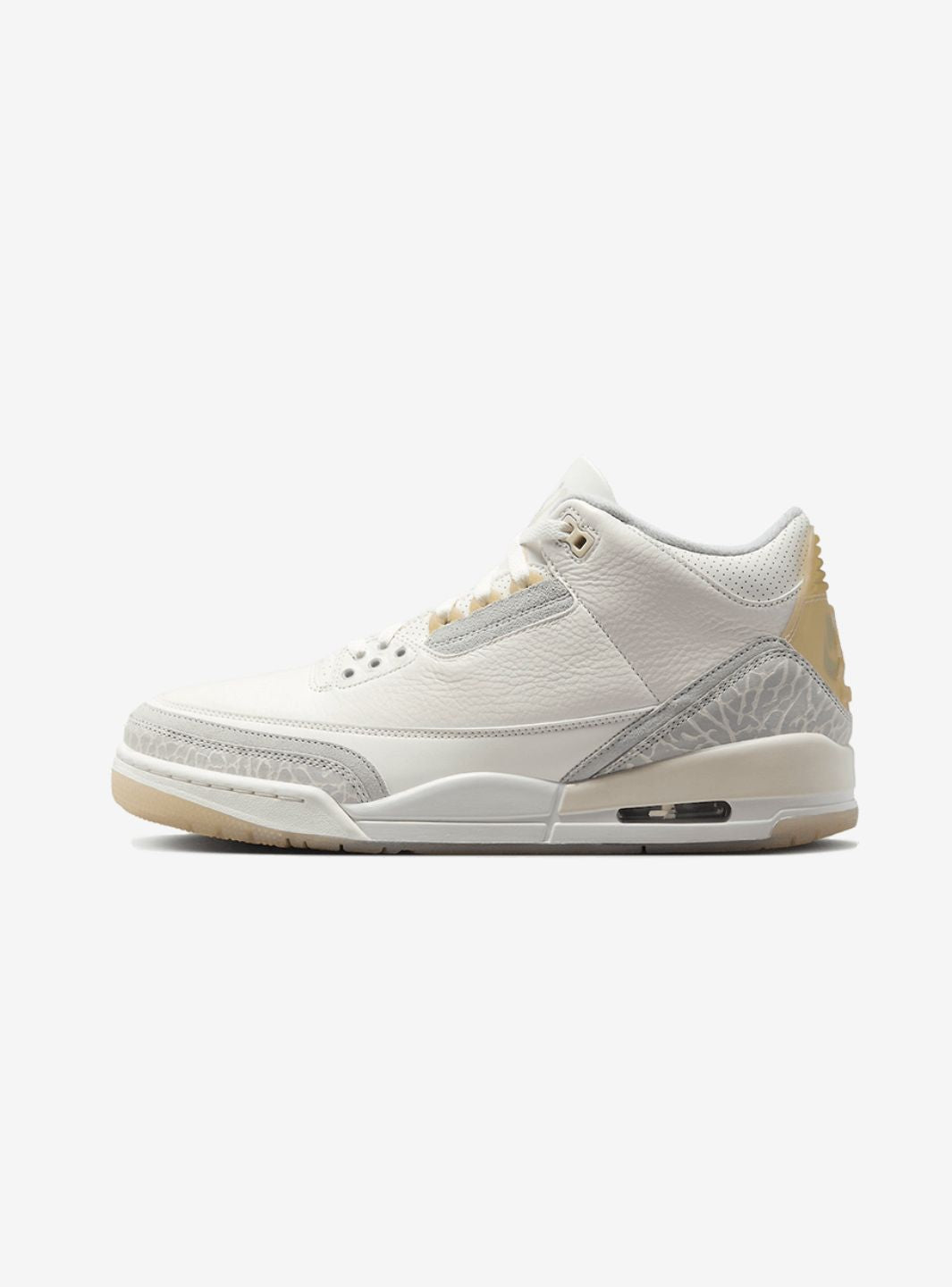
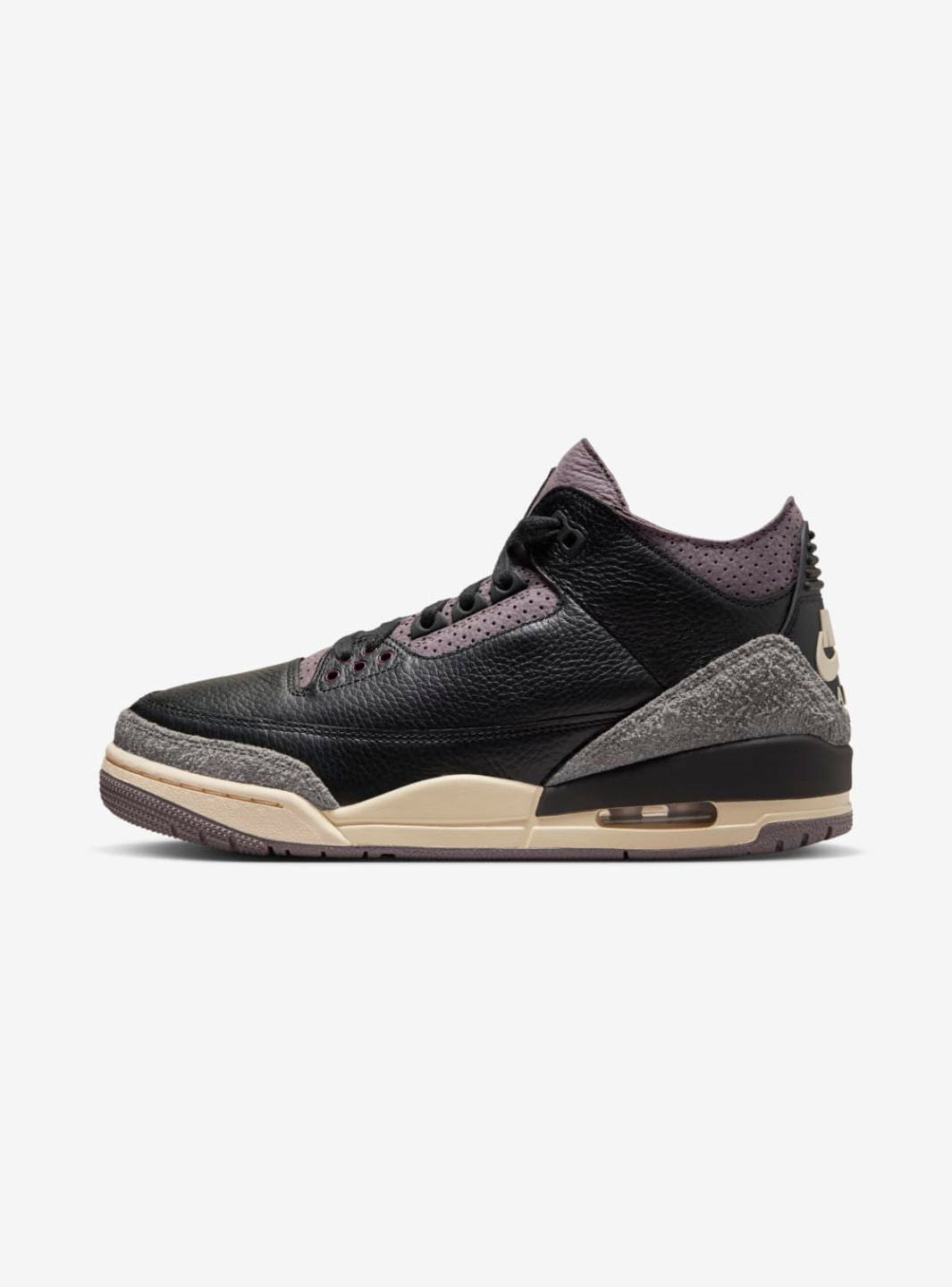

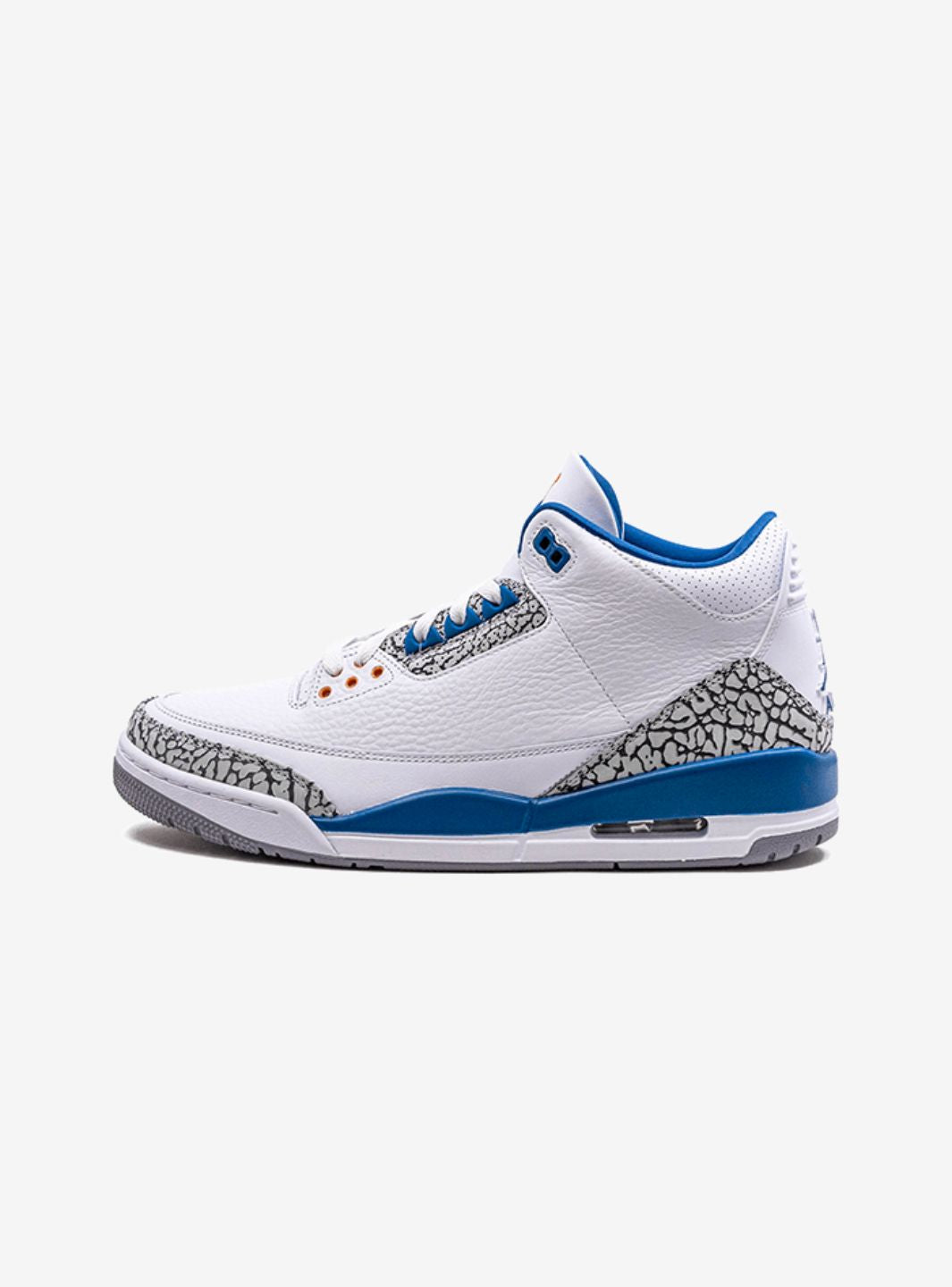
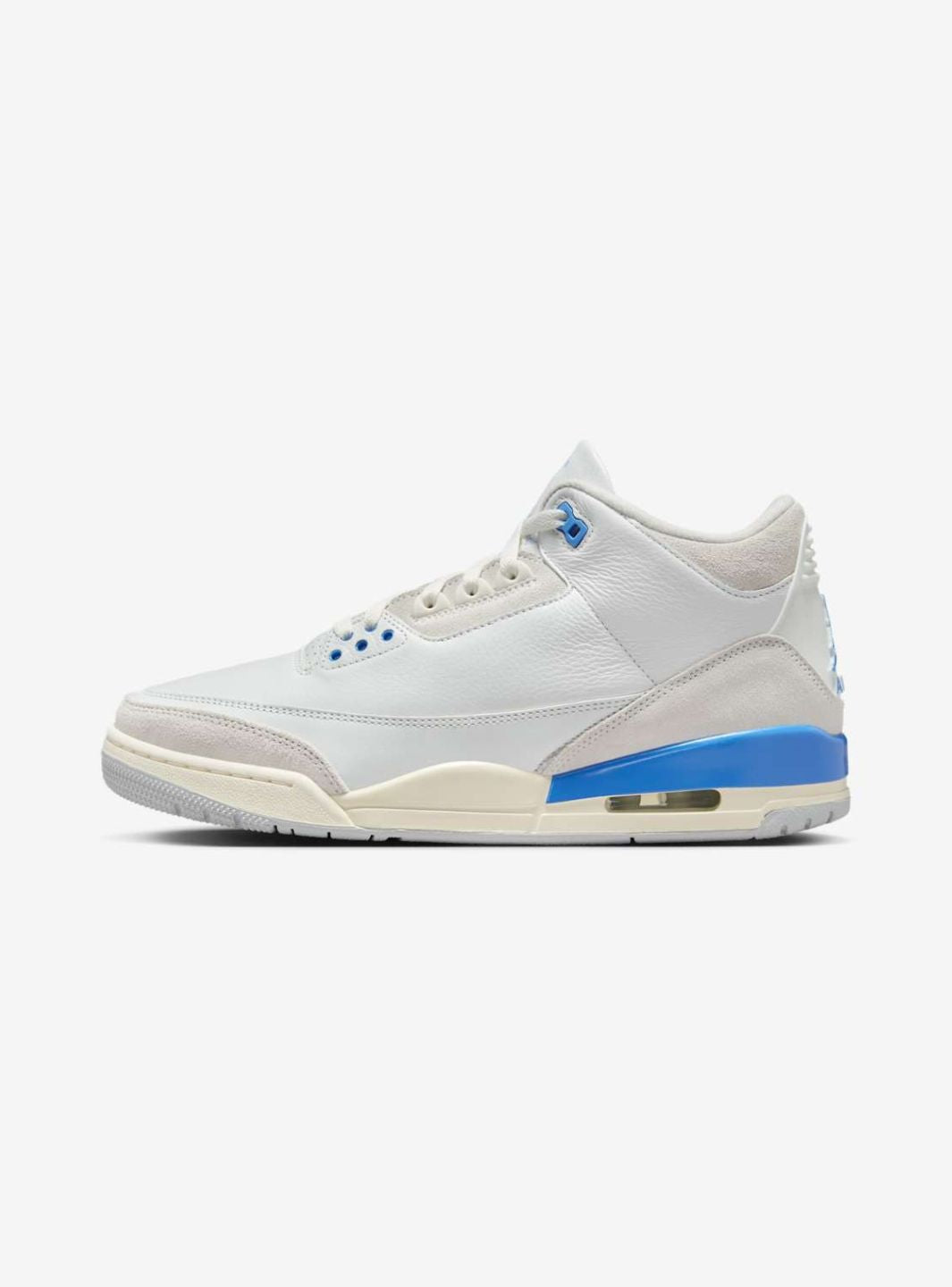

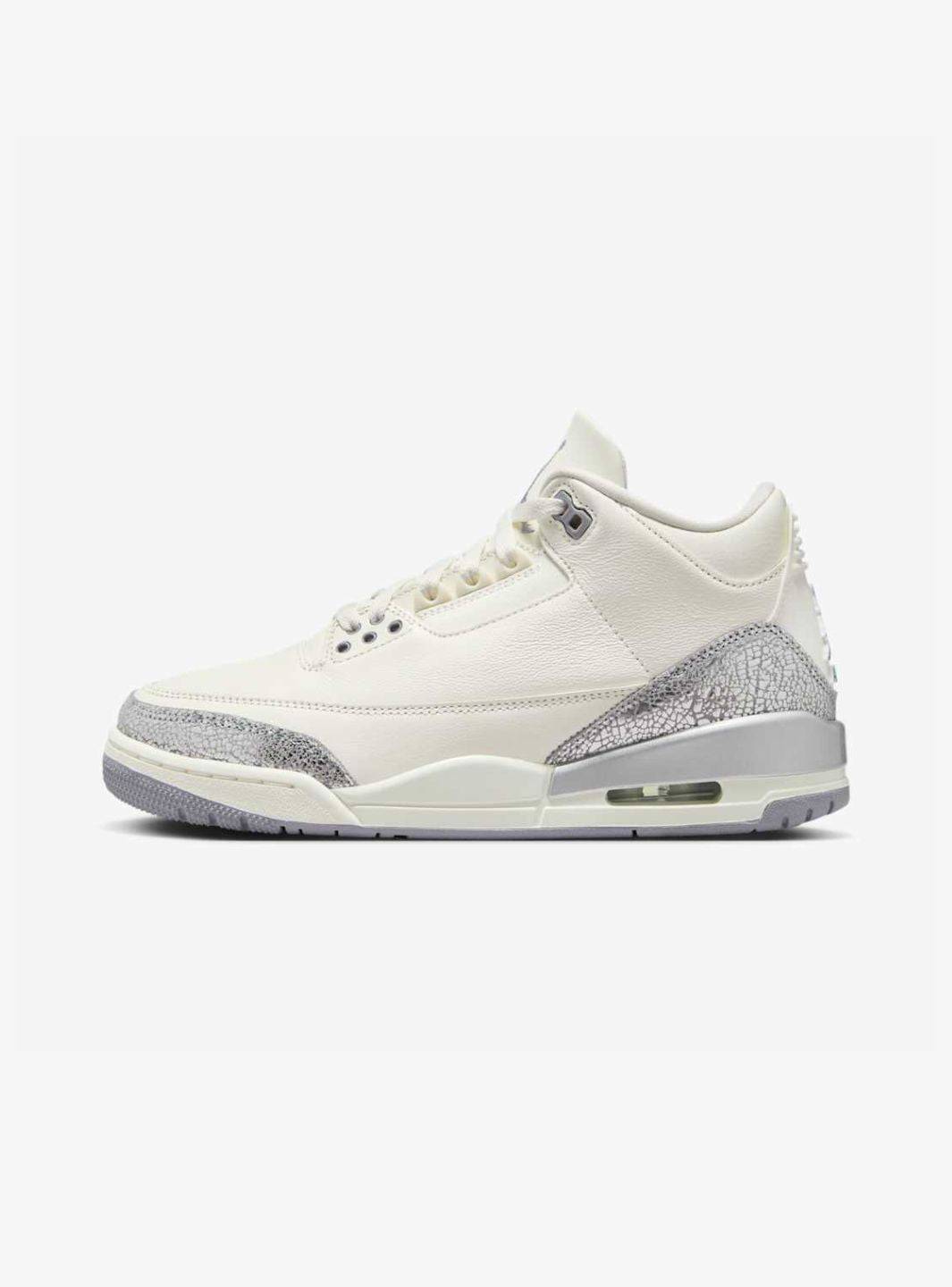
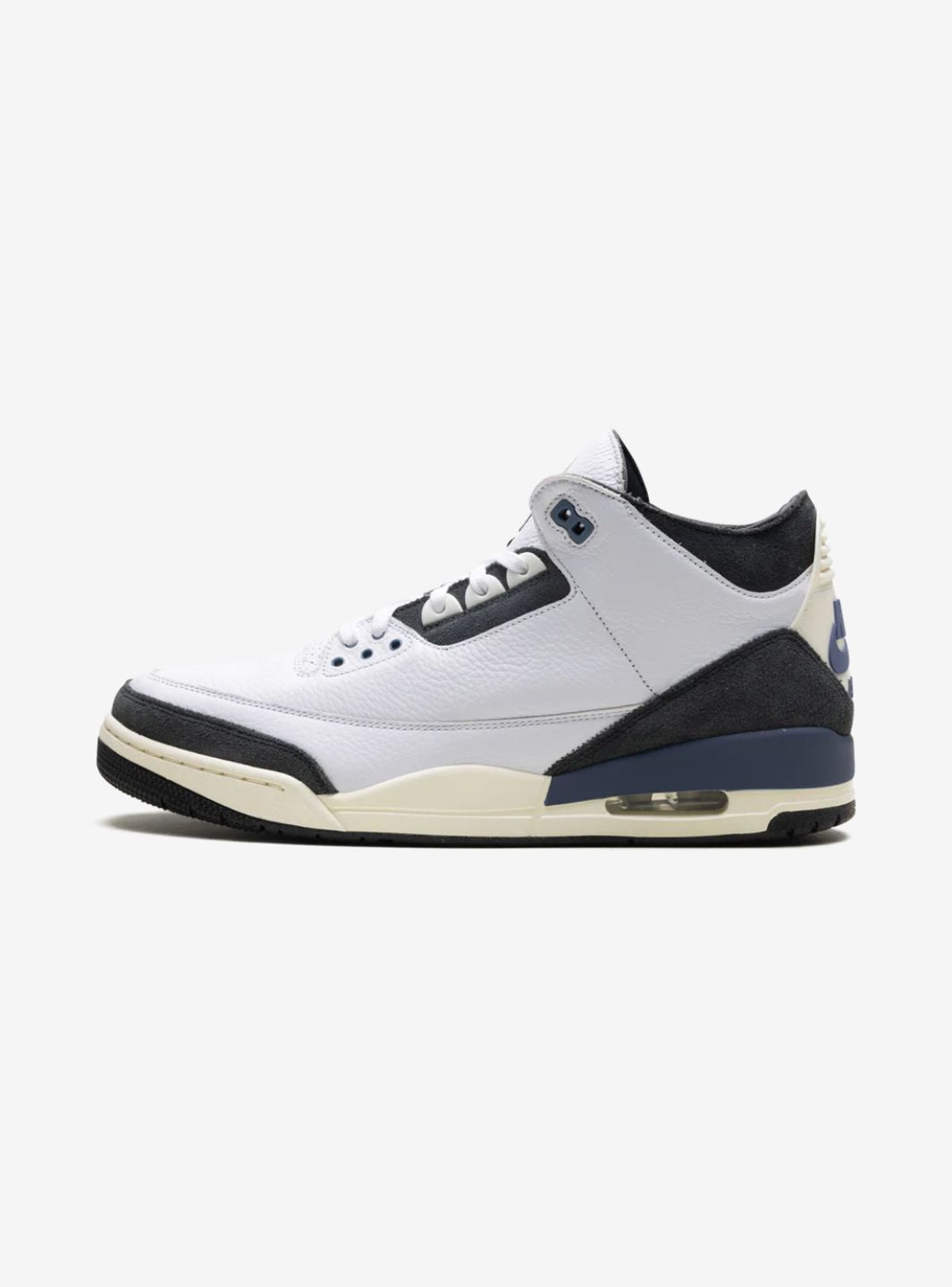
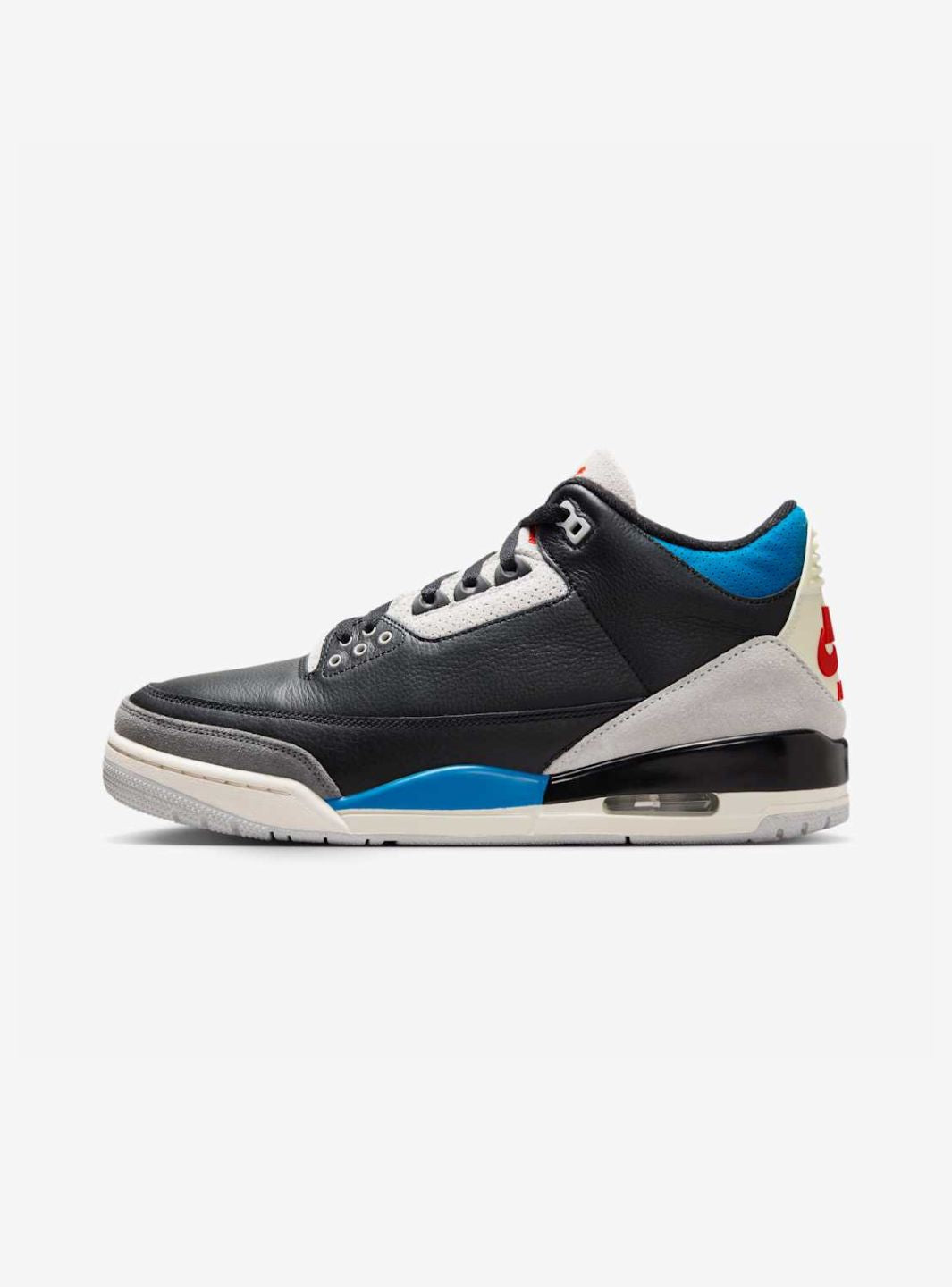
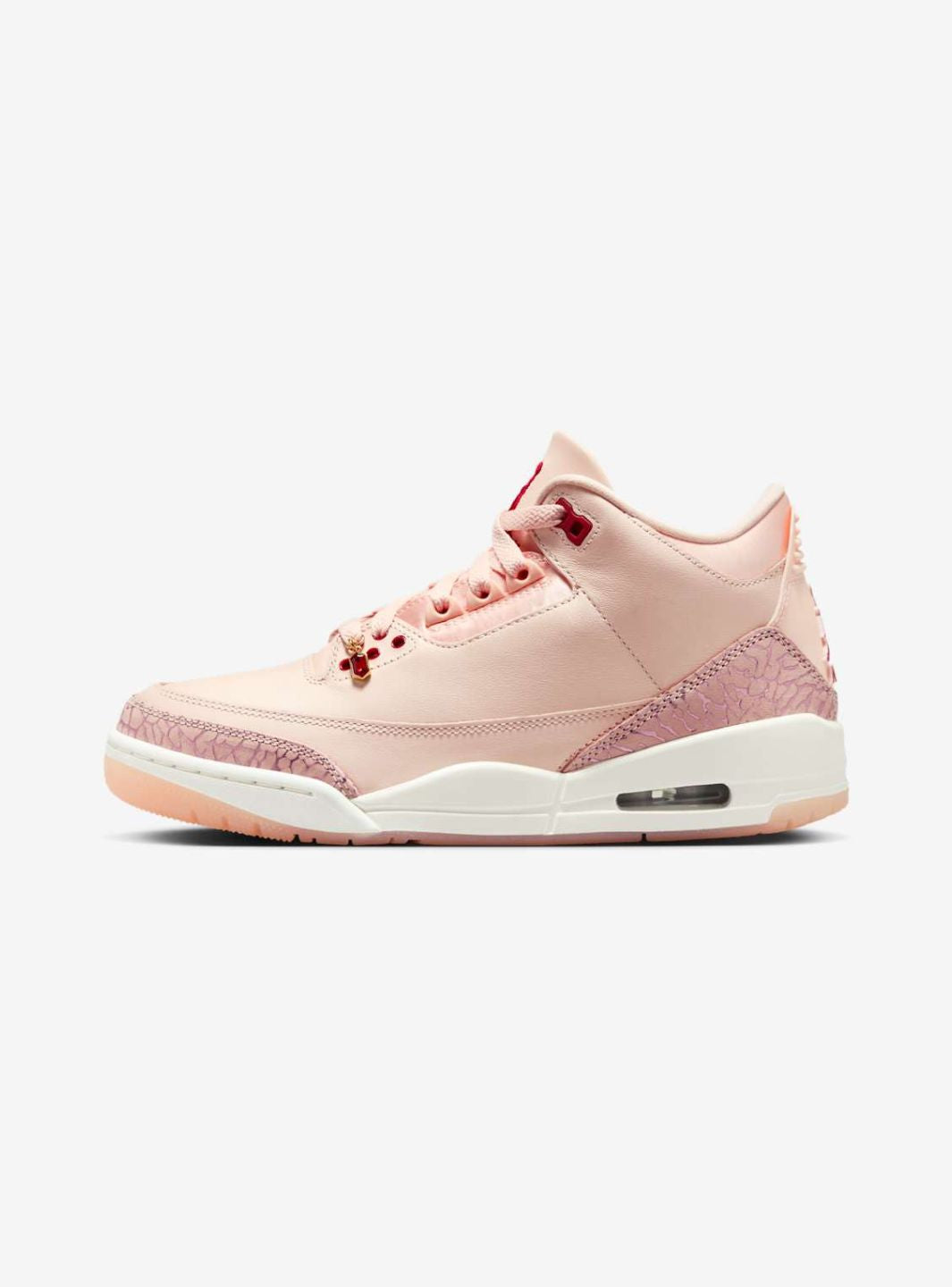



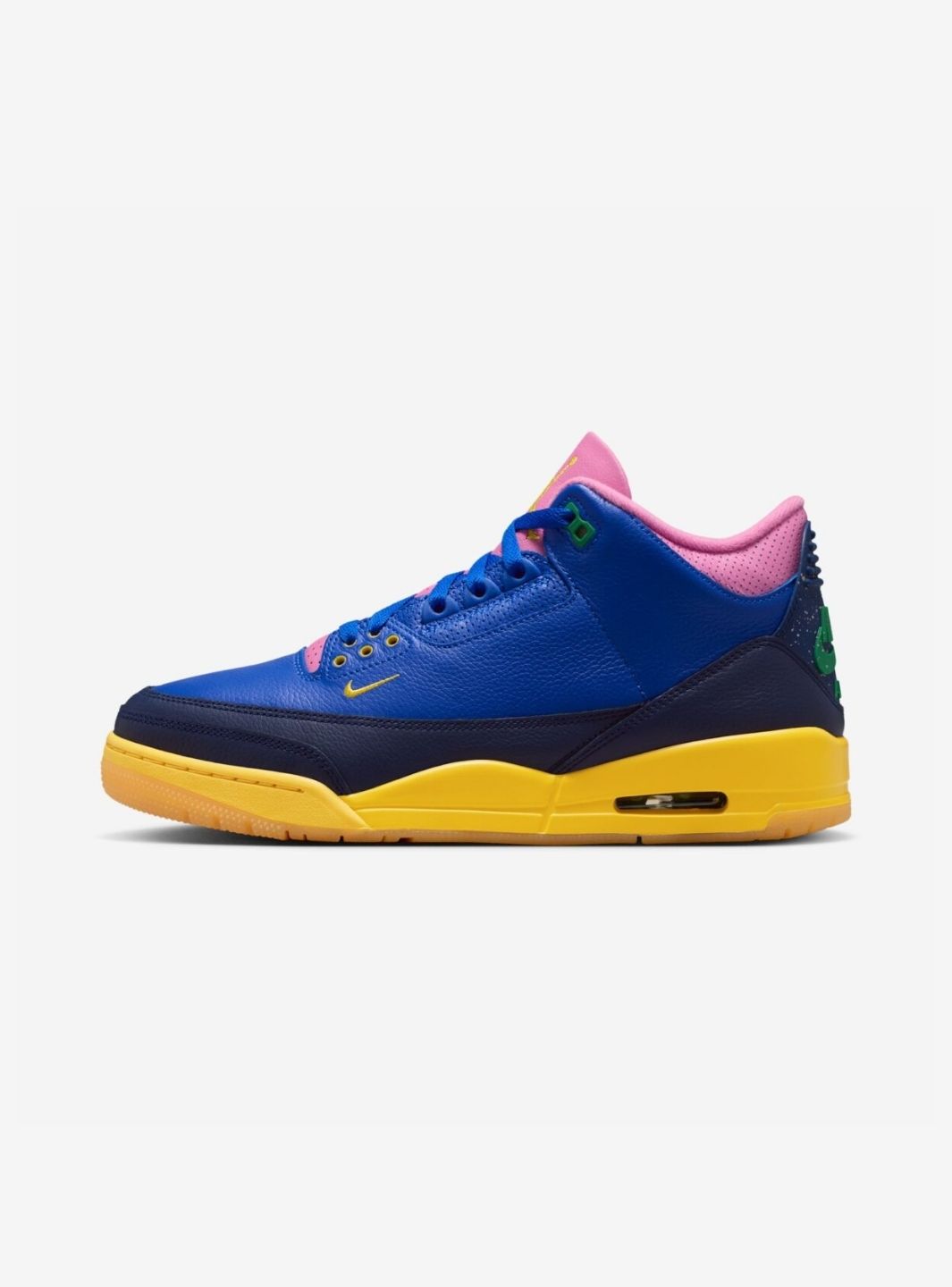
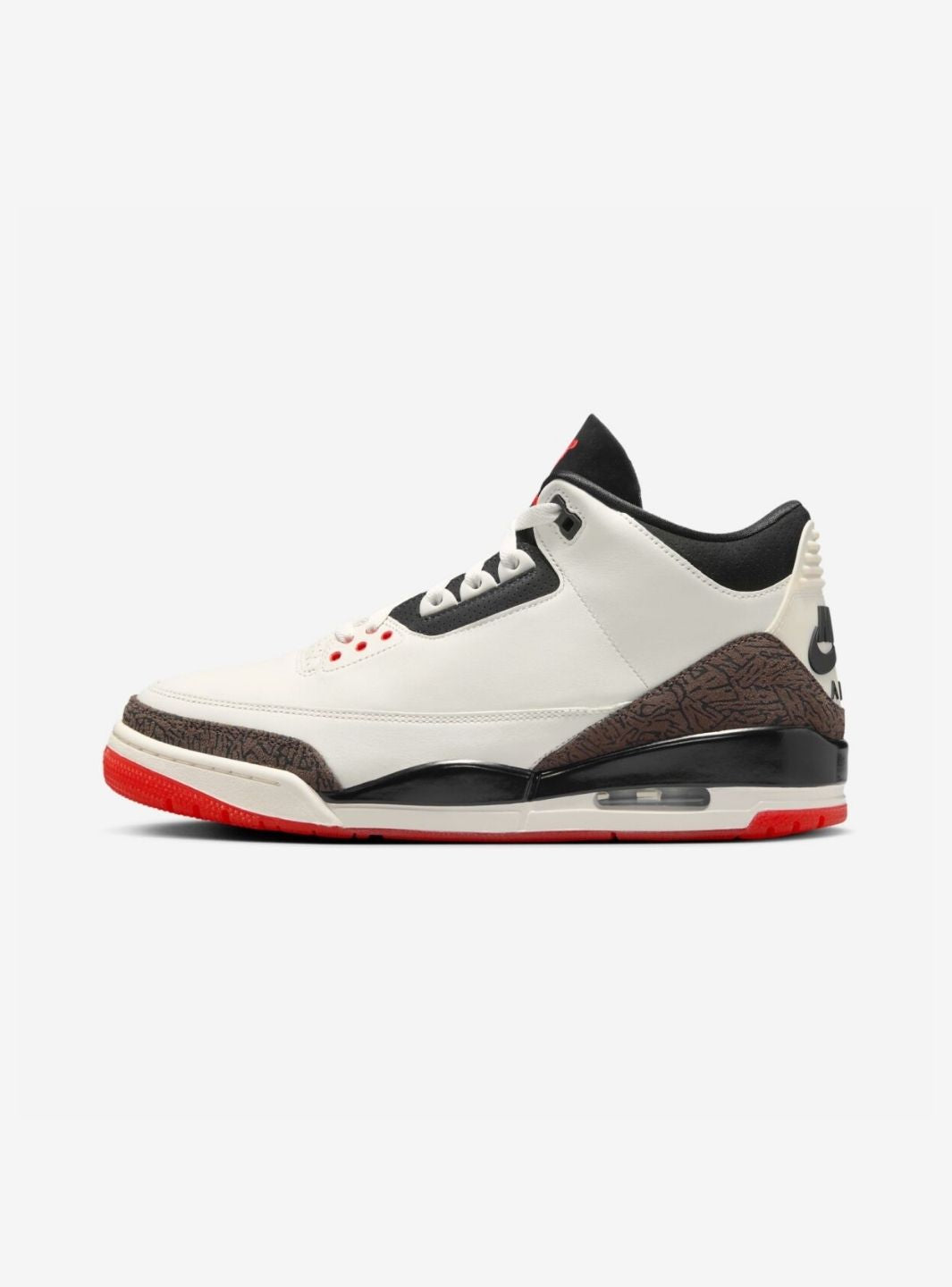
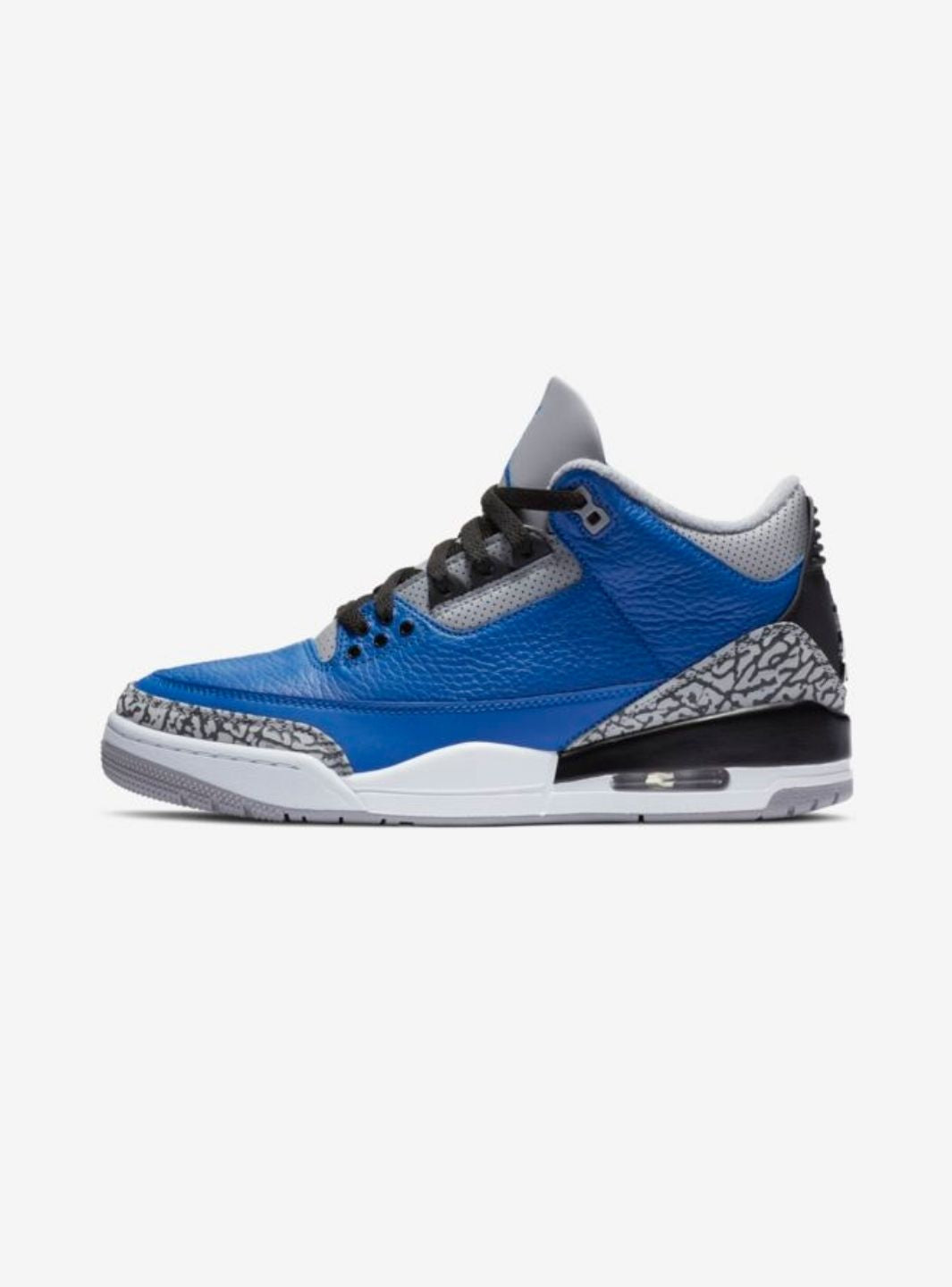
Air Jordan 3: history, design and sneaker culture
The Air Jordan 3 arrived in 1988 and represents one of the most important milestones in Jordan history. It is the first Air Jordan designed by Tinker Hatfield and introduces a visual language deeply different from the first two generations, helping to define many of the aesthetic elements still associated with the brand today.
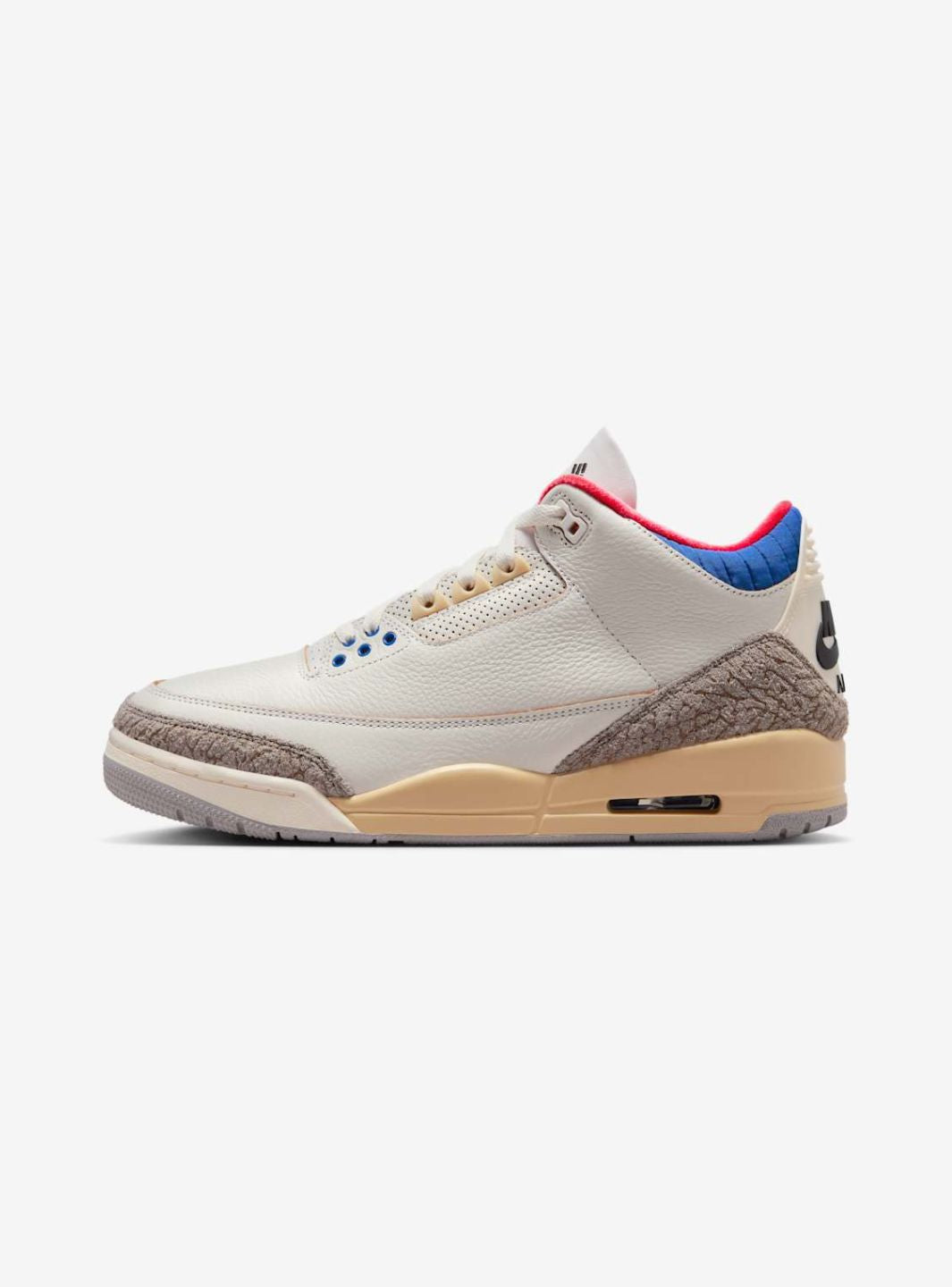
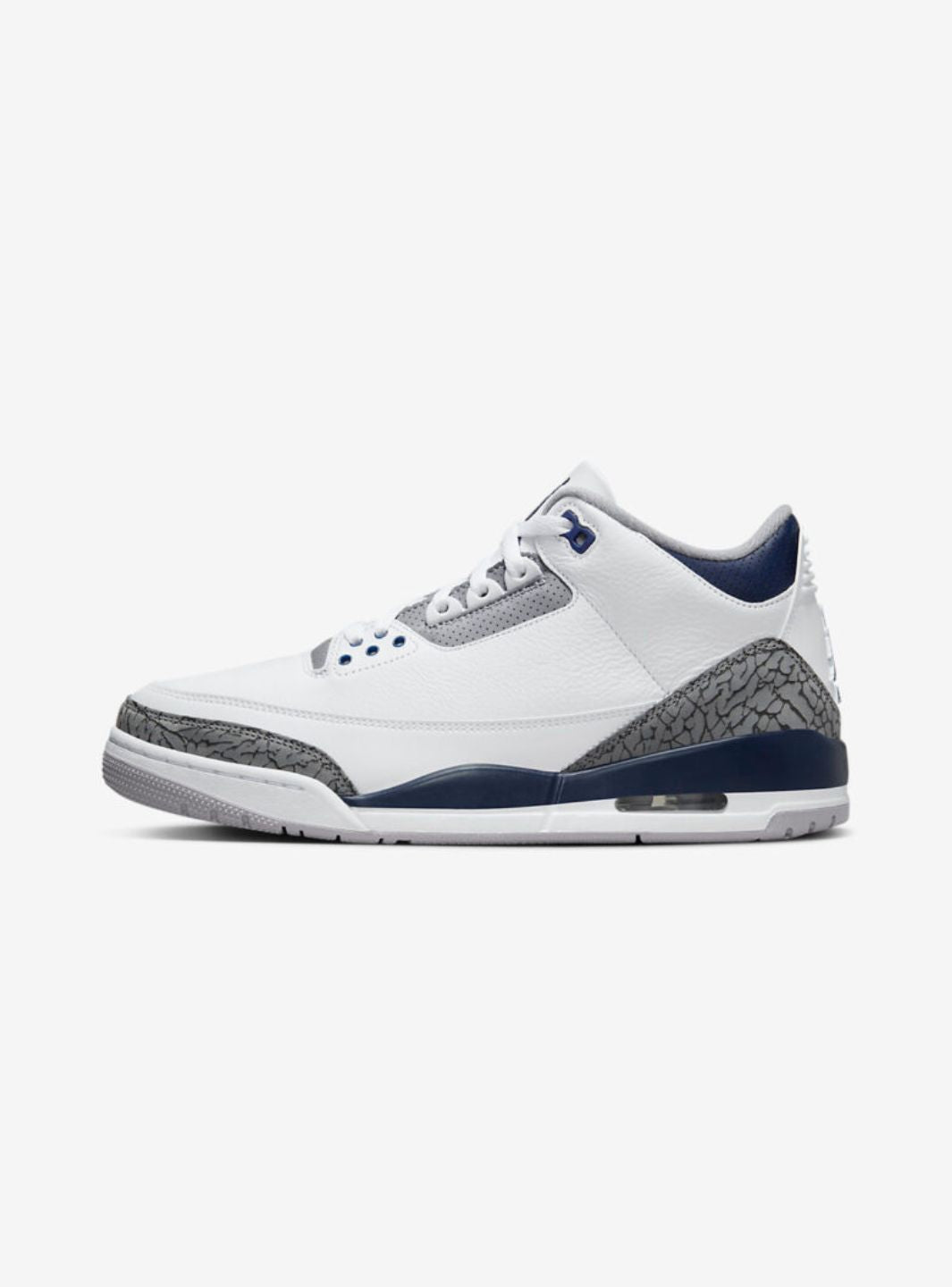
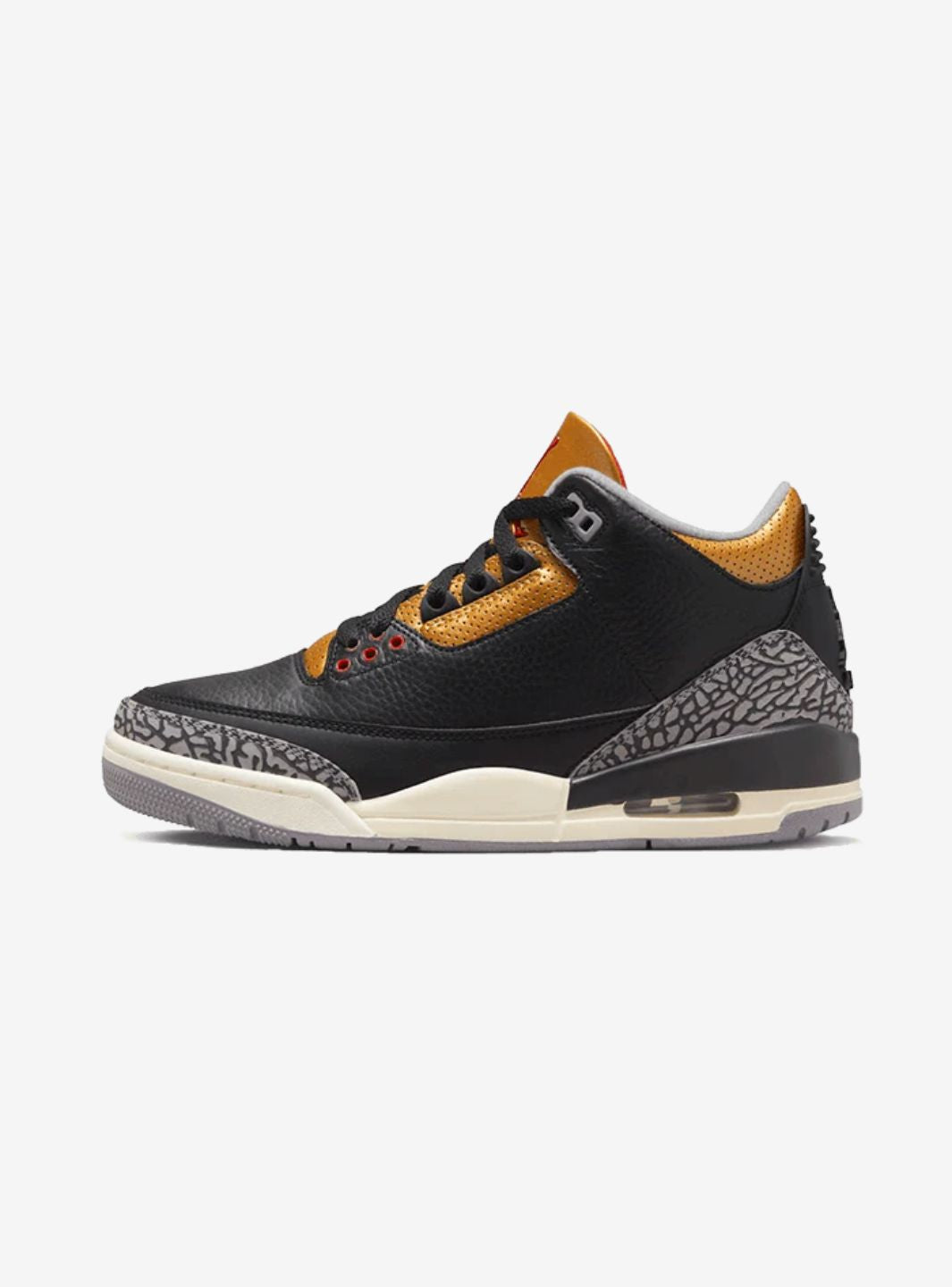
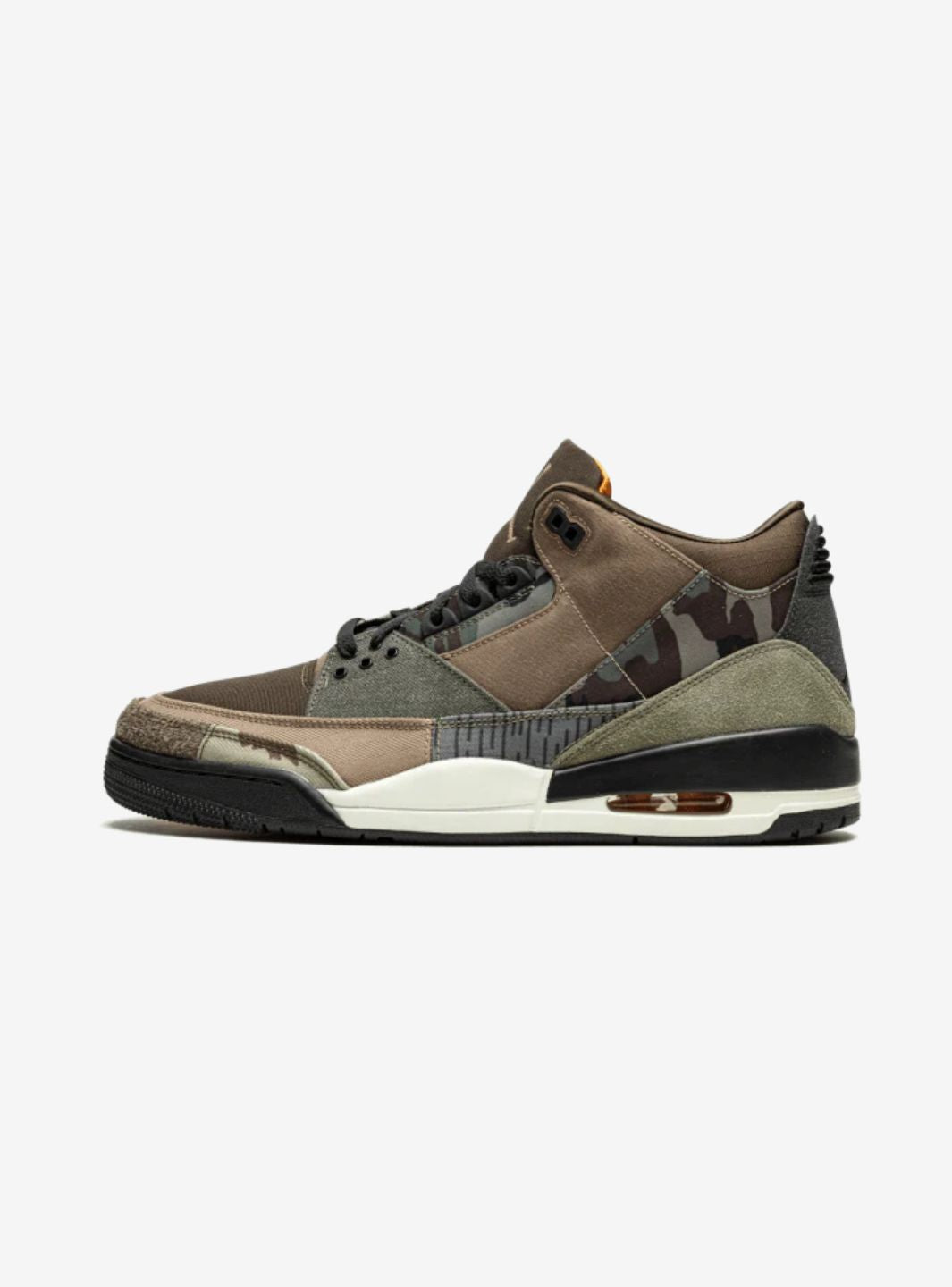
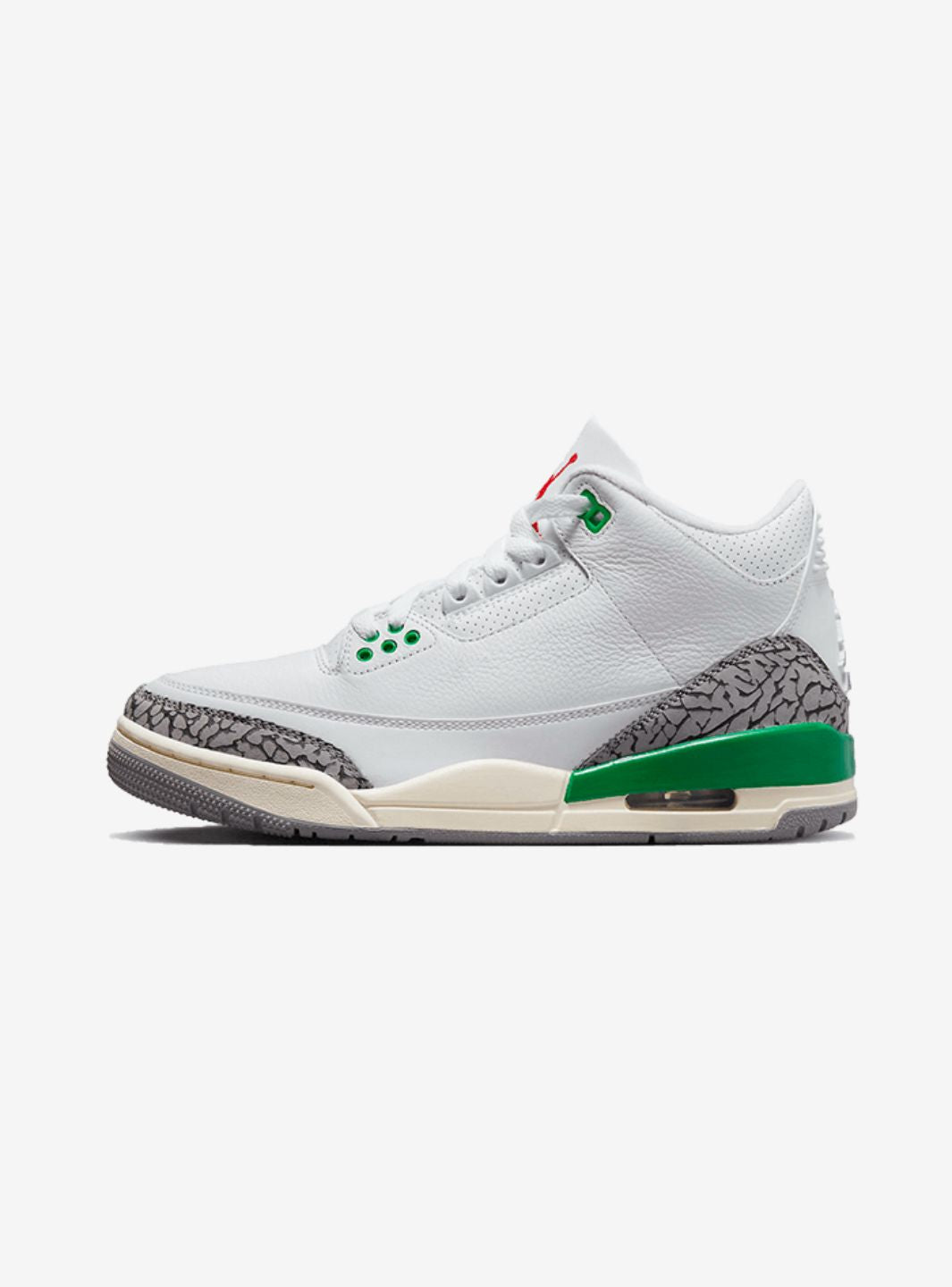
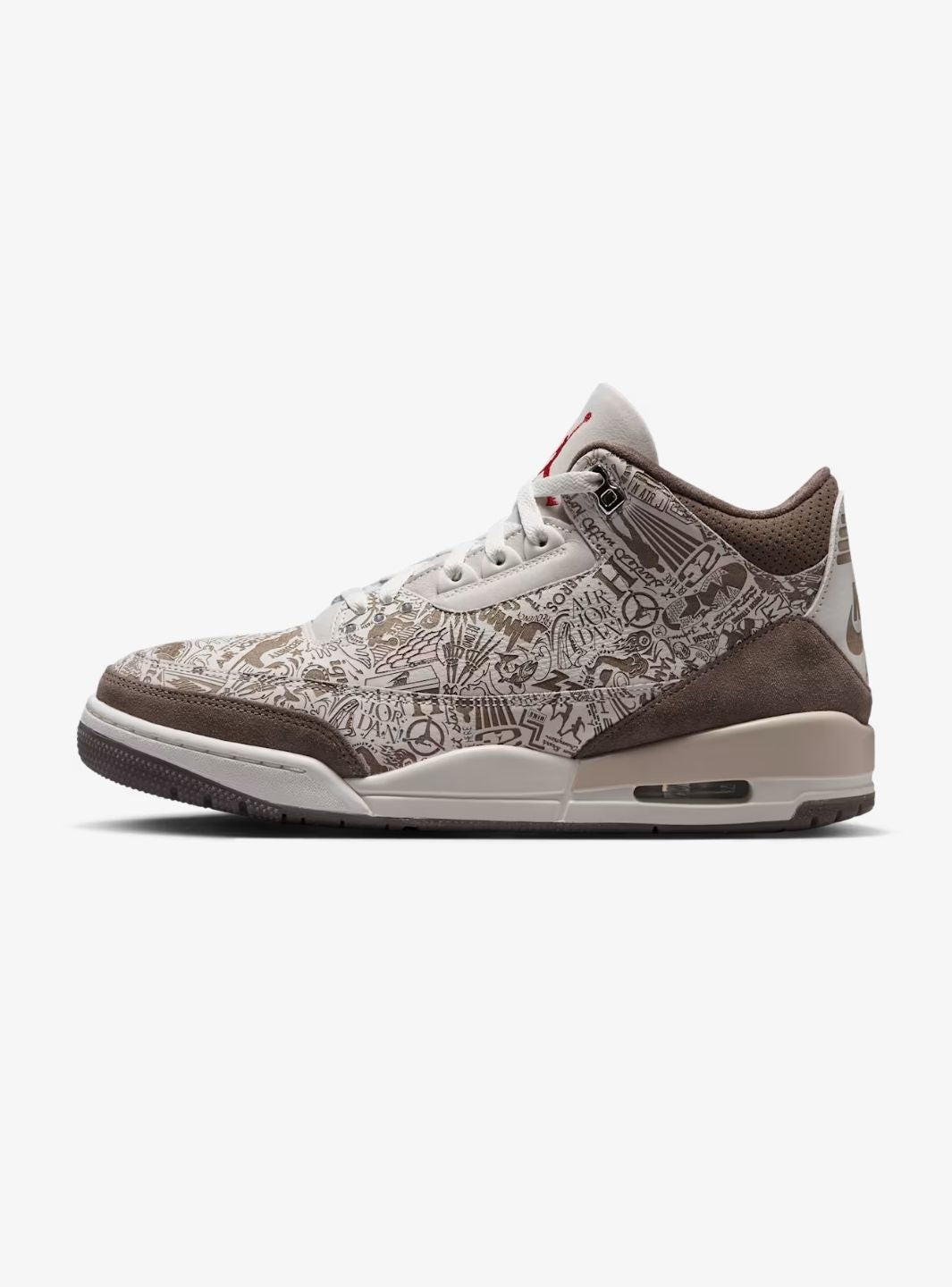
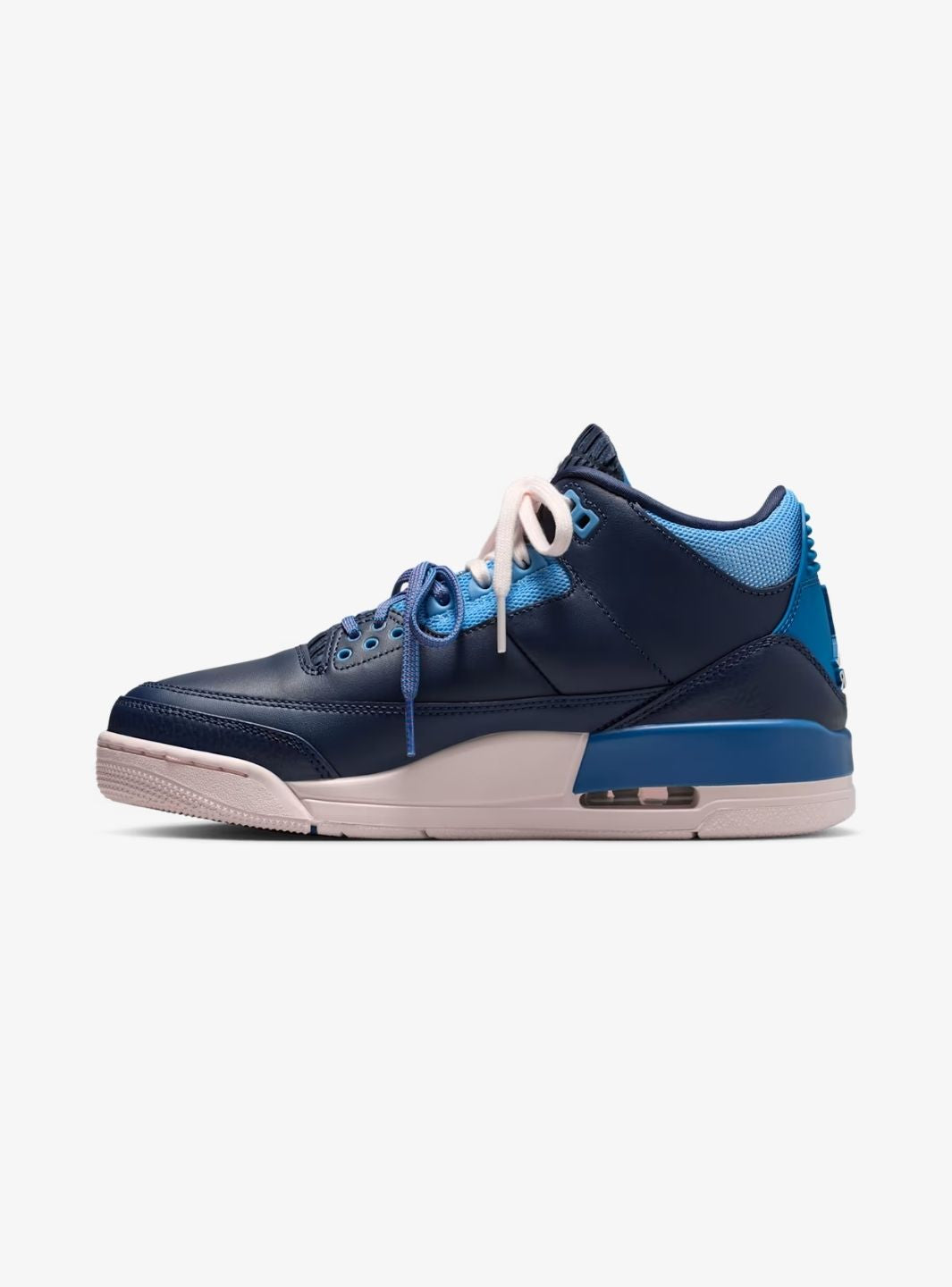
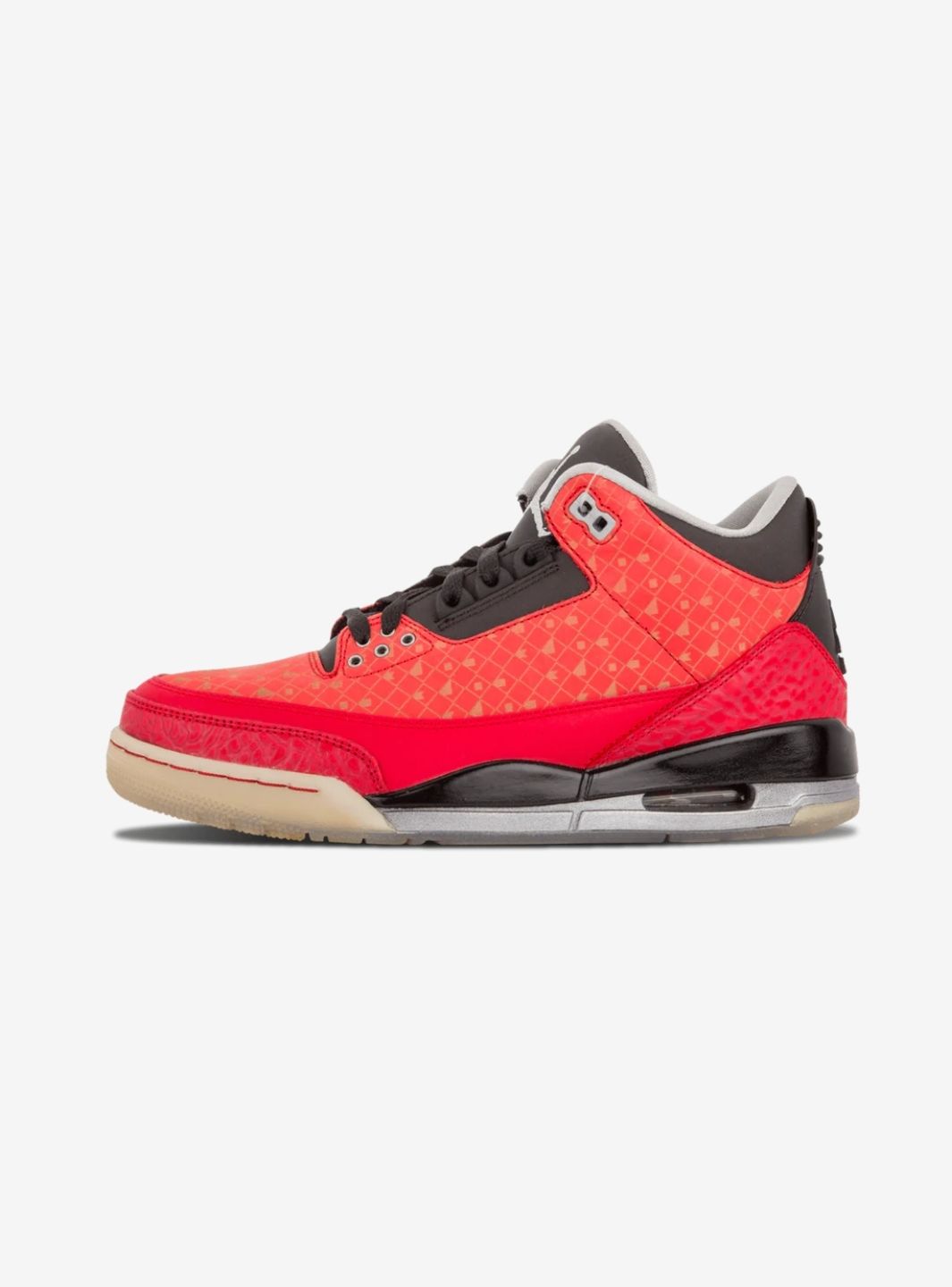
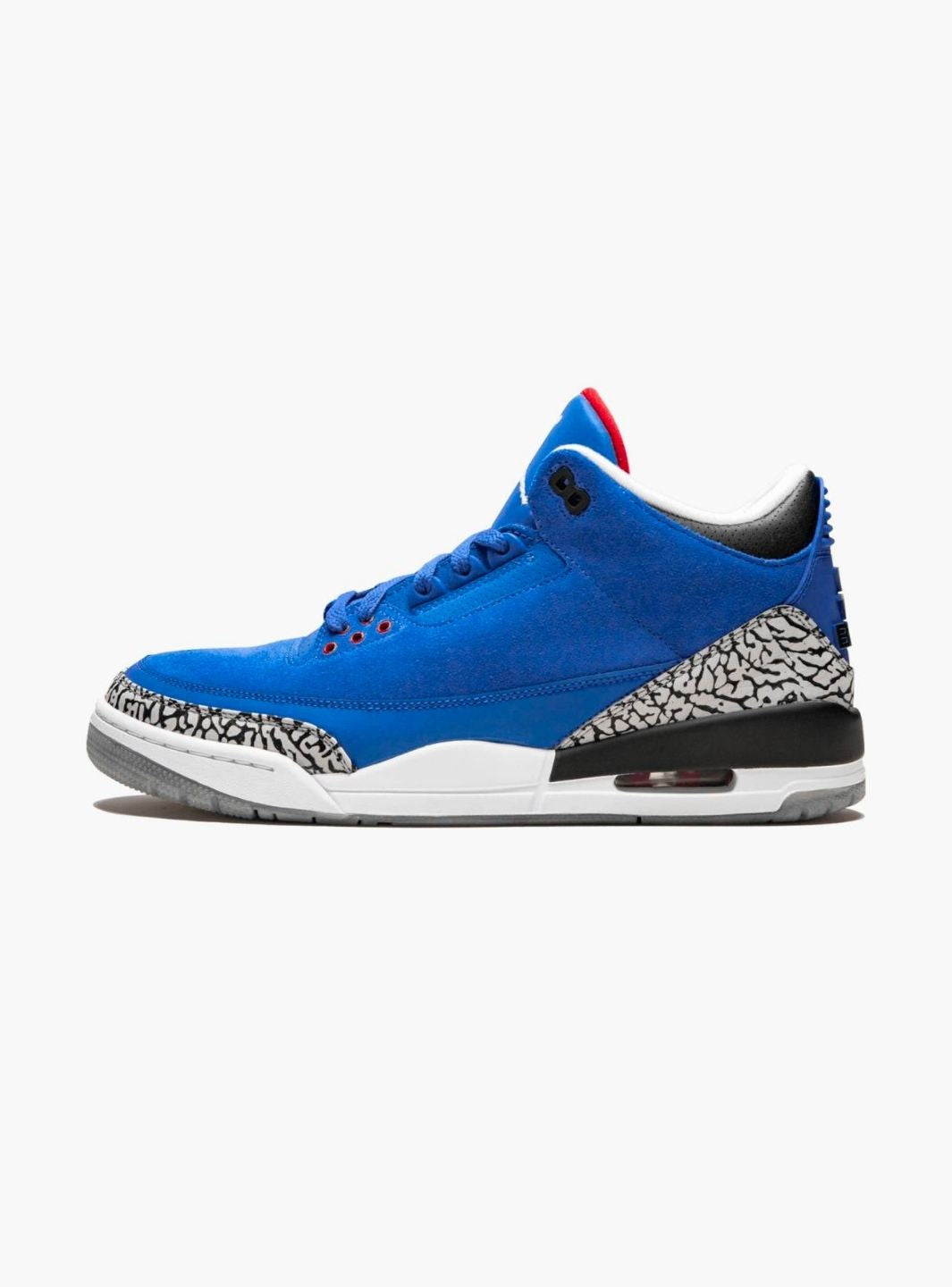
Within the Air Jordan family, the Jordan 3 marks the moment when the line began to build an increasingly autonomous visual identity. Elephant Print, the Jumpman, softer proportions, and a construction different from previous generations make the silhouette instantly recognizable.
The AJ3 was born as a basketball shoe, but its role in sneaker culture has long since transcended its sporting roots. Historic colorways, Retro versions, and contemporary collaborations continue to reinterpret its design to this day.
From Air Jordan 2 to Air Jordan 3
The Air Jordan 2 had already begun to move the line away from more traditional Nike visual codes, removing the side Swoosh and adopting a more refined approach.
With the Jordan 3, this process becomes even more evident. Tinker Hatfield developed a sneaker with its own identity, introducing new graphic and structural elements without merely modifying the previous silhouette.
The result is a model that creates a bridge between the origins of the line and the language that would be further developed with the Air Jordan 4.
AJ2, AJ3, and AJ4 therefore represent three consecutive but deeply different steps in the evolution of Jordan design.
Tinker Hatfield, Elephant Print and Jumpman
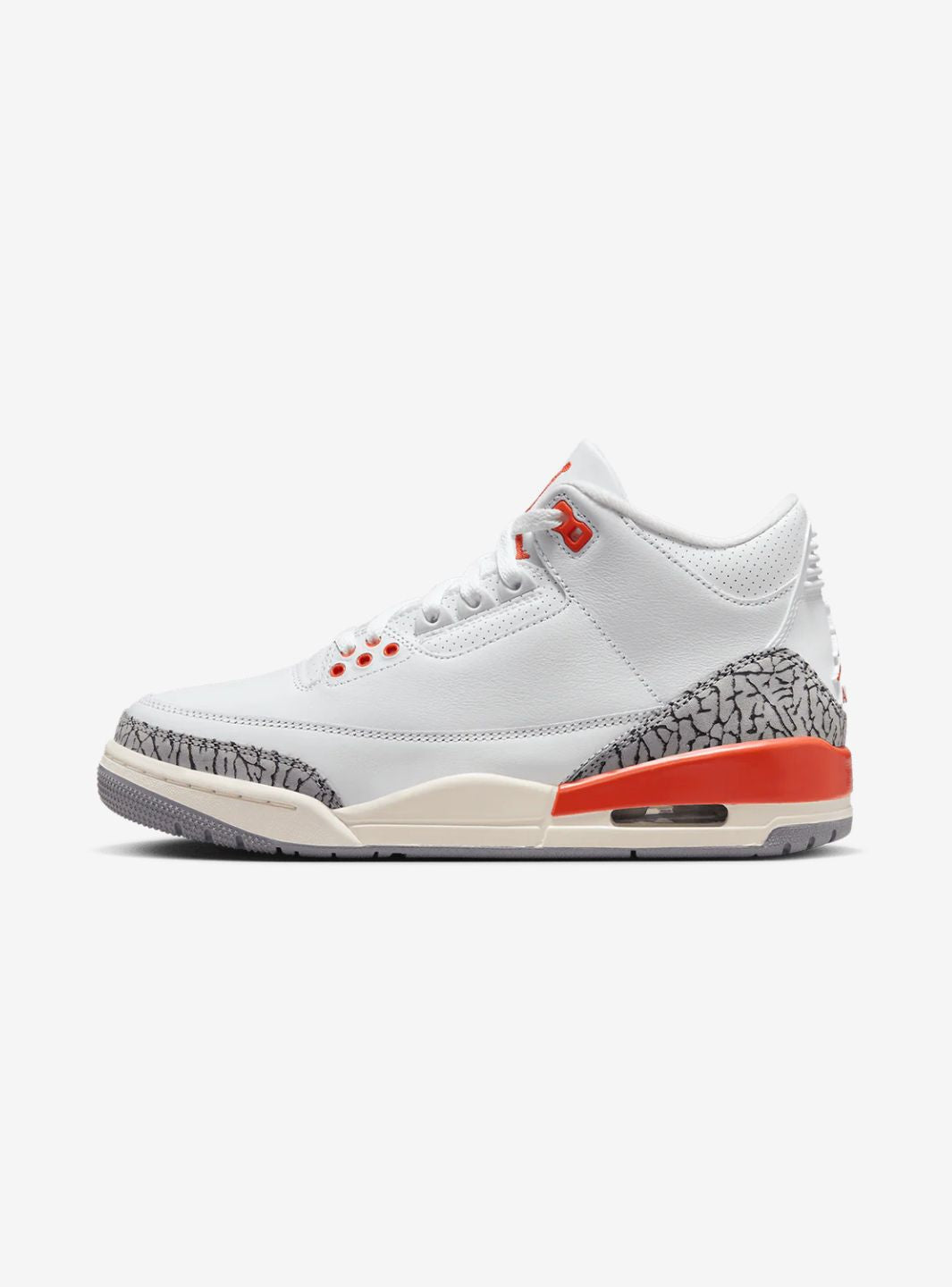
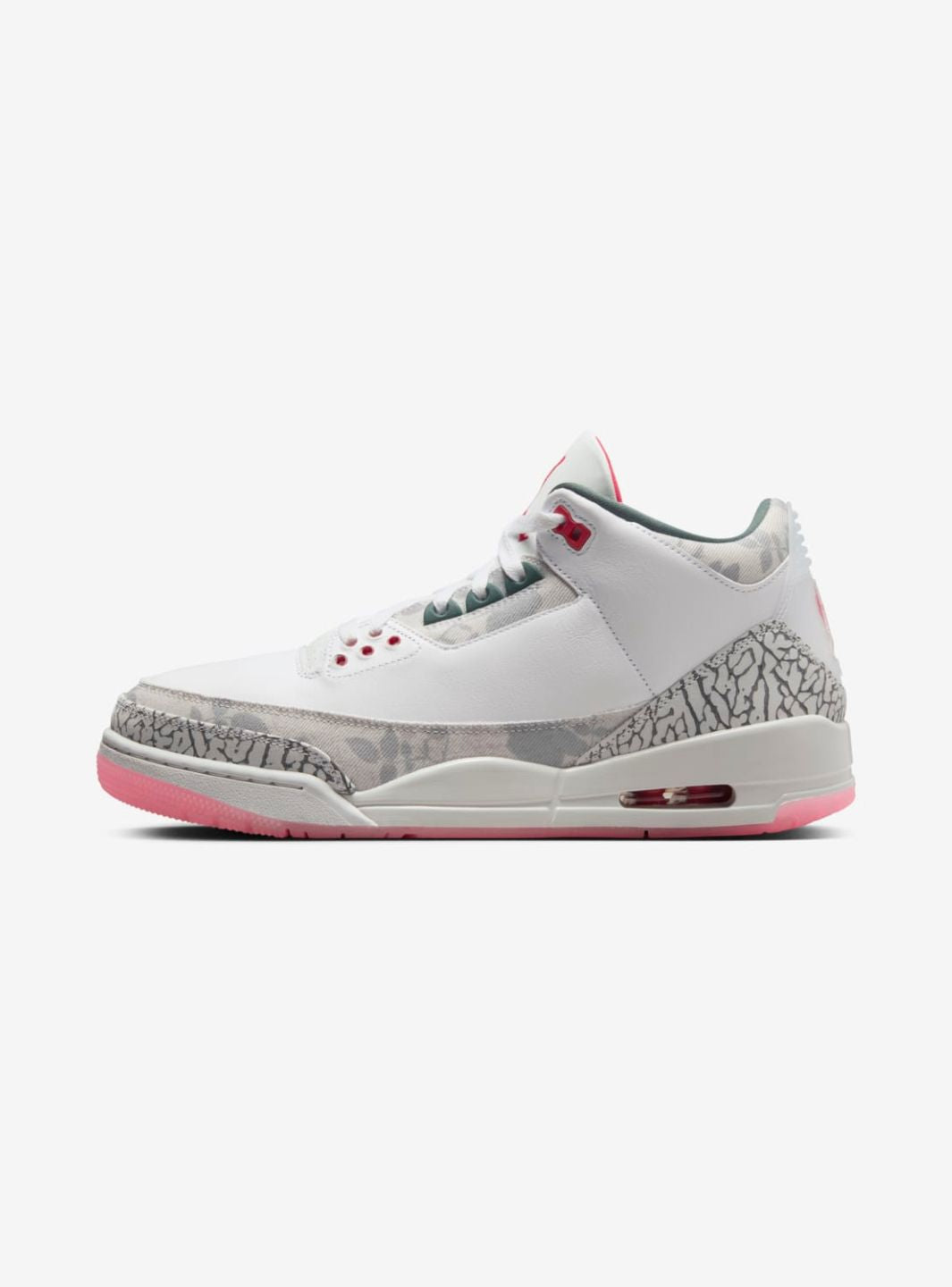
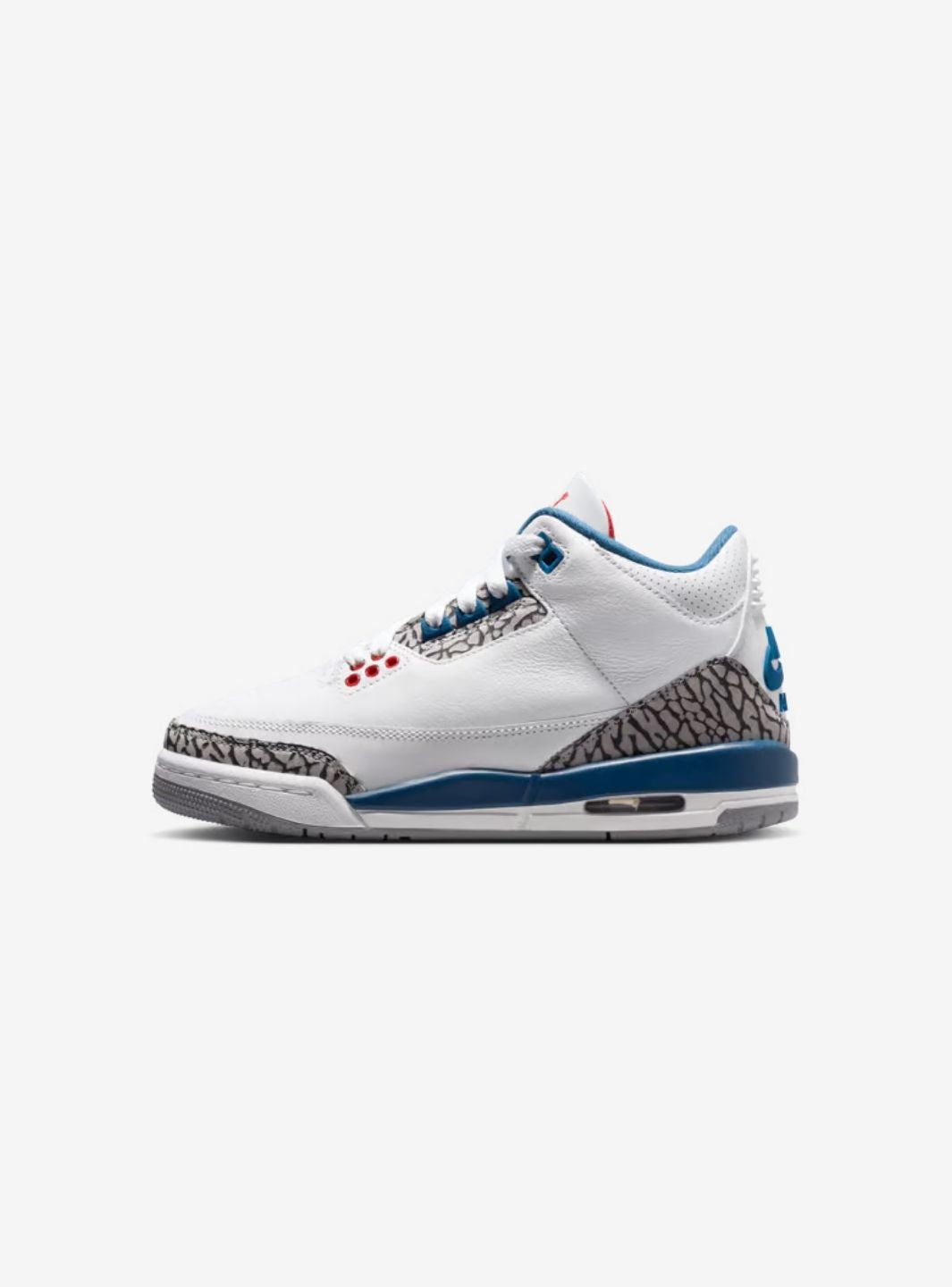
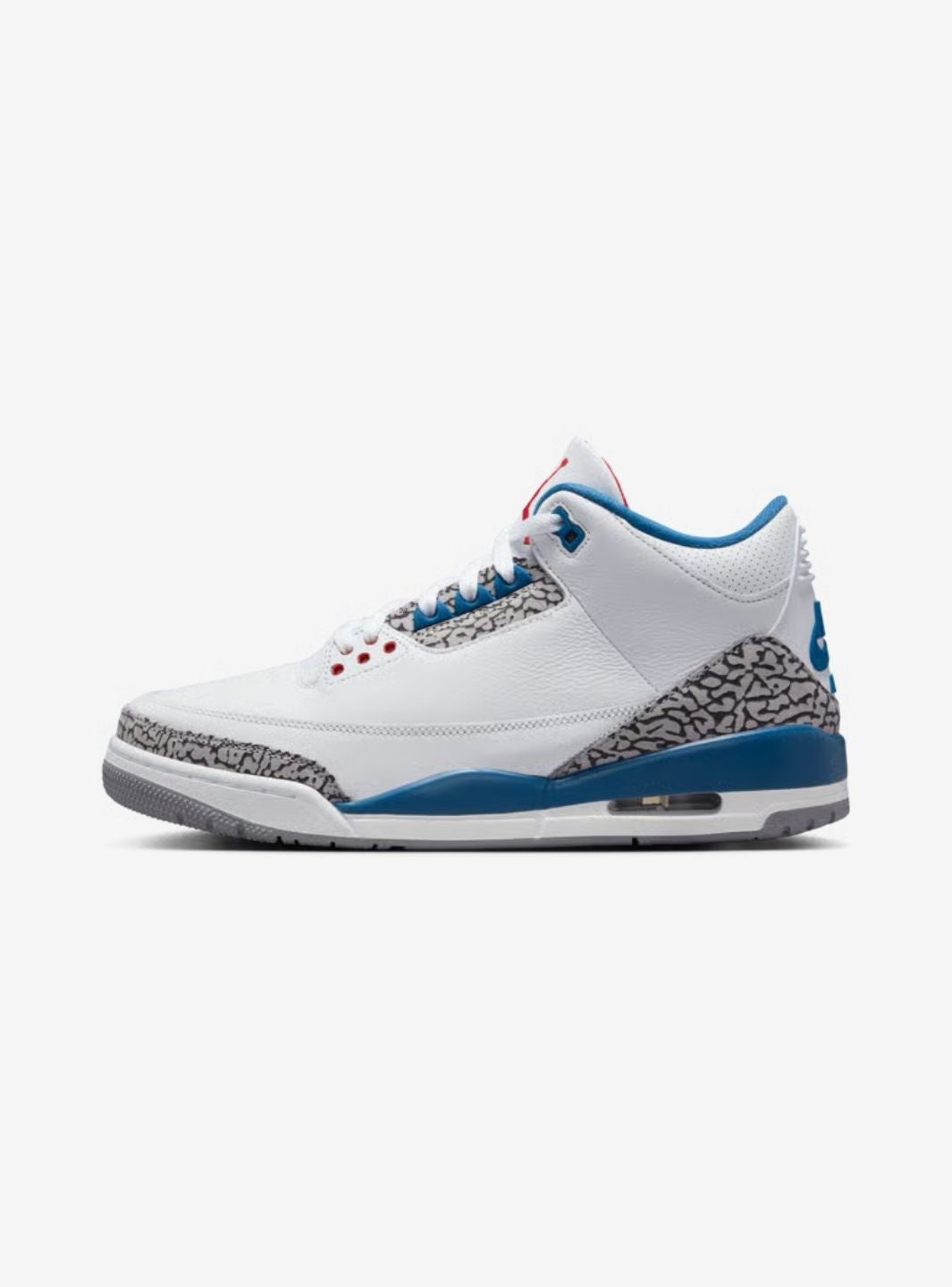
One of the most characteristic elements of the Air Jordan 3 is the Elephant Print, the pattern used on the sneaker's panels that has become one of the silhouette's most recognizable aesthetic references over time.
The Jordan 3 is also closely linked to the birth of the Jumpman imagery. The image of Michael Jordan in flight gradually became one of the central symbols of the Jordan identity, further strengthening the line's visual autonomy.
The structure of the shoe also changed compared to previous generations. The AJ3 combines different materials, a lower collar than the first Jordans, and a construction designed to blend basketball performance with an aesthetic easily recognizable even off the court.
These elements explain why the Jordan 3 has remained relevant even decades after its original release.
Air Jordan 3 Retro
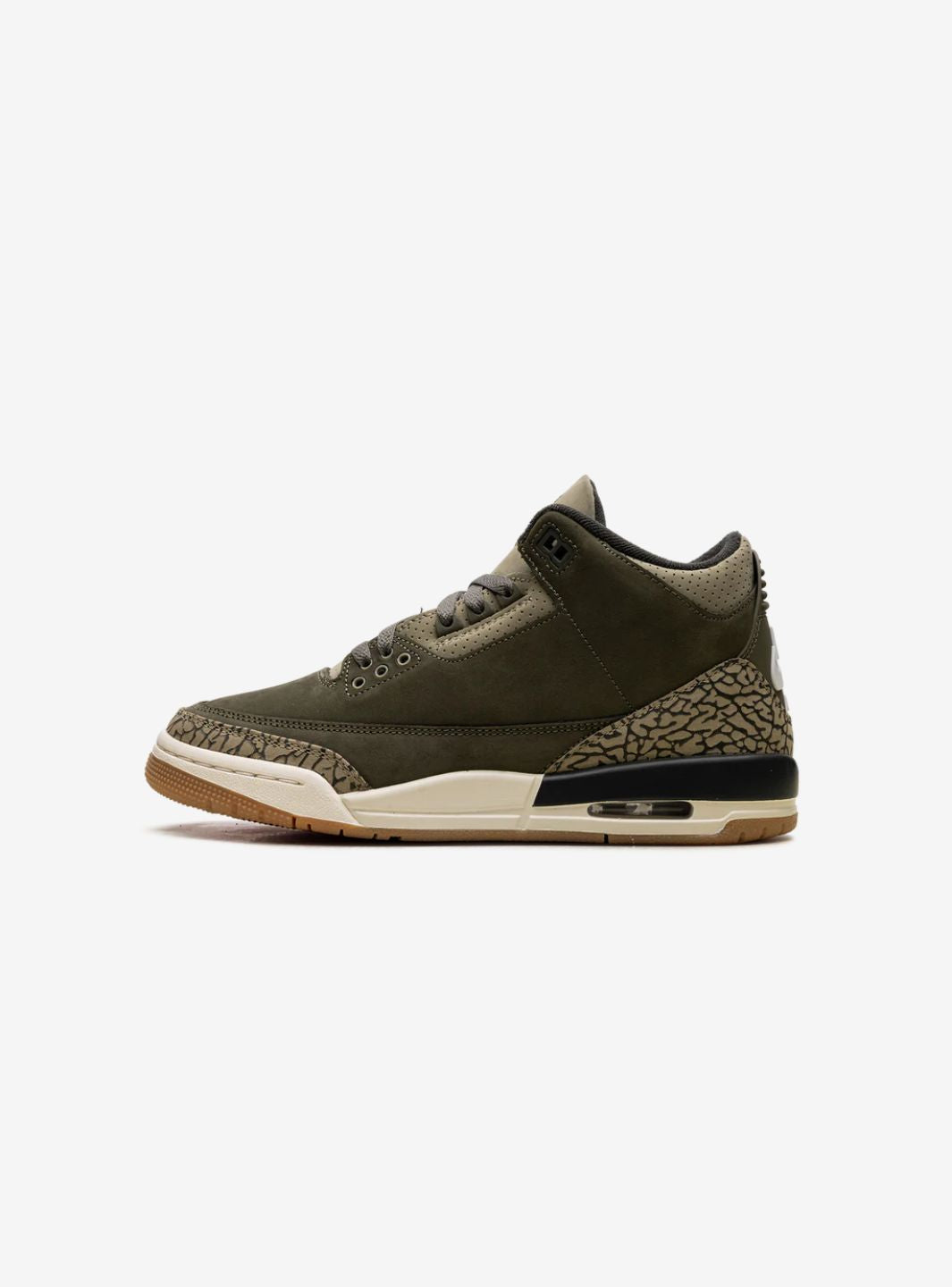
Air Jordan 3 Retro represents the contemporary reissues of the original silhouette.
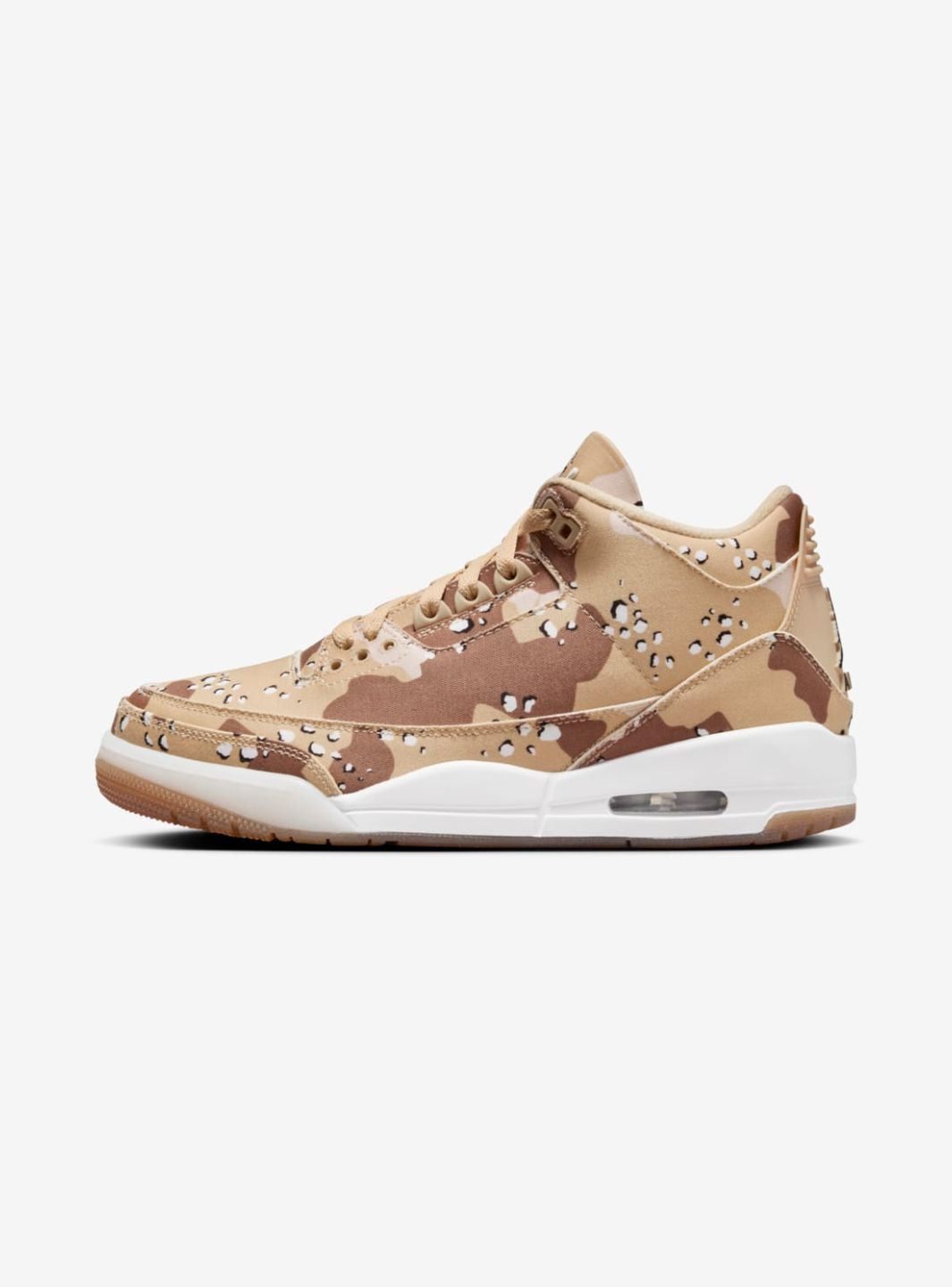
The term "Retro" does not identify a different Jordan 3, but is used for new productions of a model belonging to the Jordan archive. Some releases bring historic colorways back to the market, while others use the same silhouette as a base for completely new color combinations.
Materials, shape, and details can also change between one production and another. A Jordan 3 Retro made today should therefore not be considered automatically identical in every detail to a version produced many years earlier.
It is precisely this continuous relationship between archive and reinterpretation that allows the AJ3 to maintain a stable presence within sneaker culture.
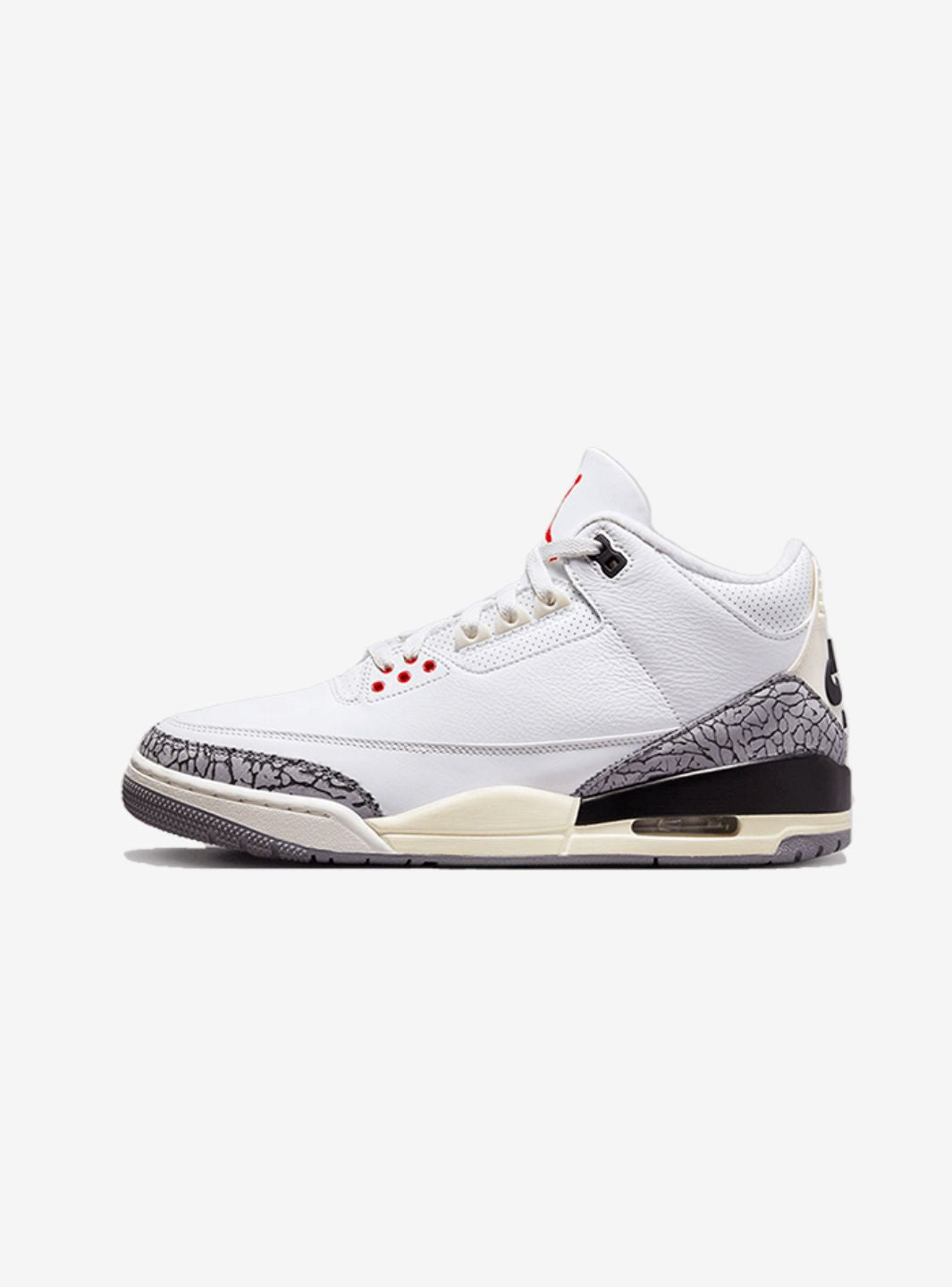
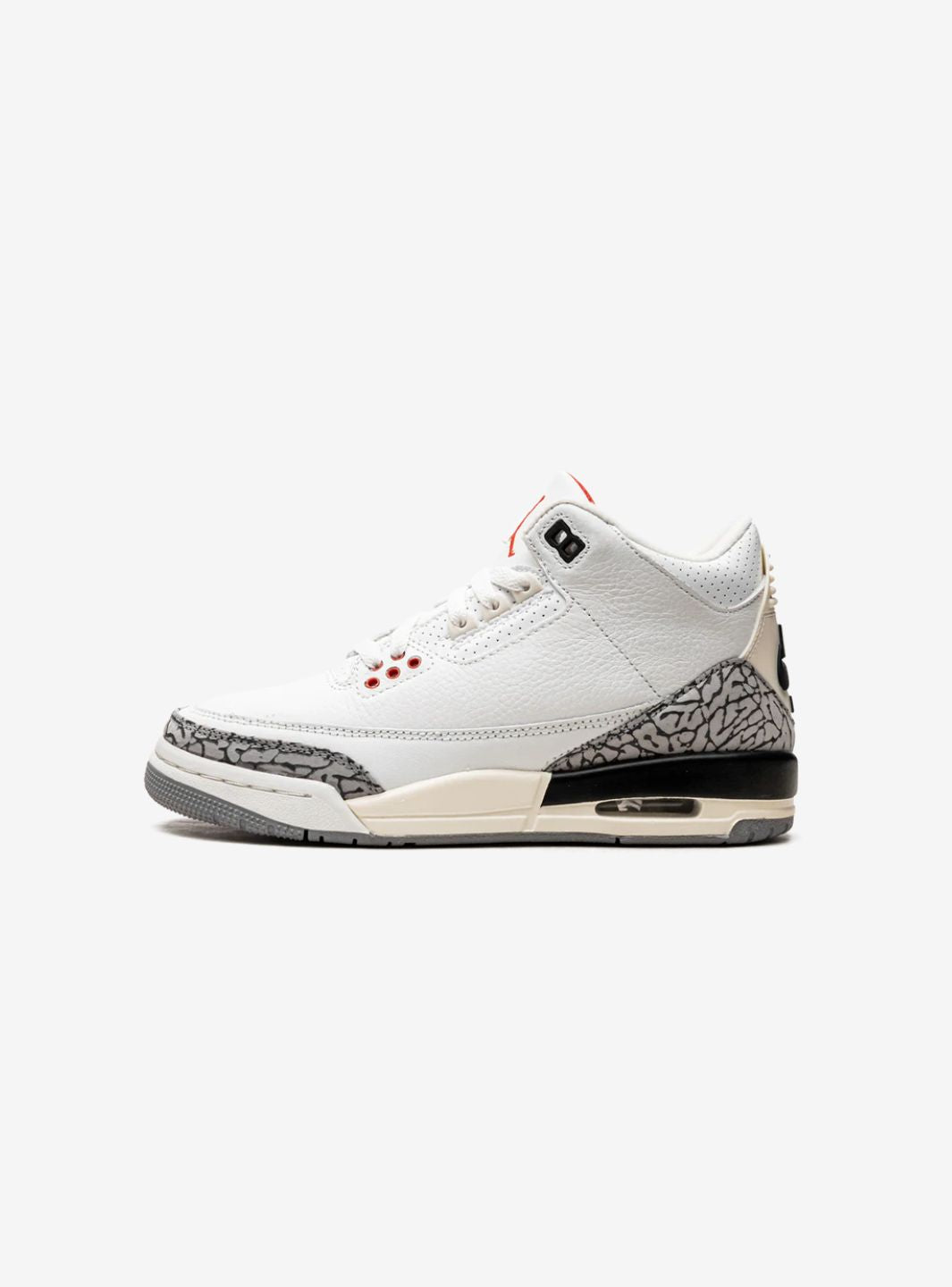
White Cement and Black Cement
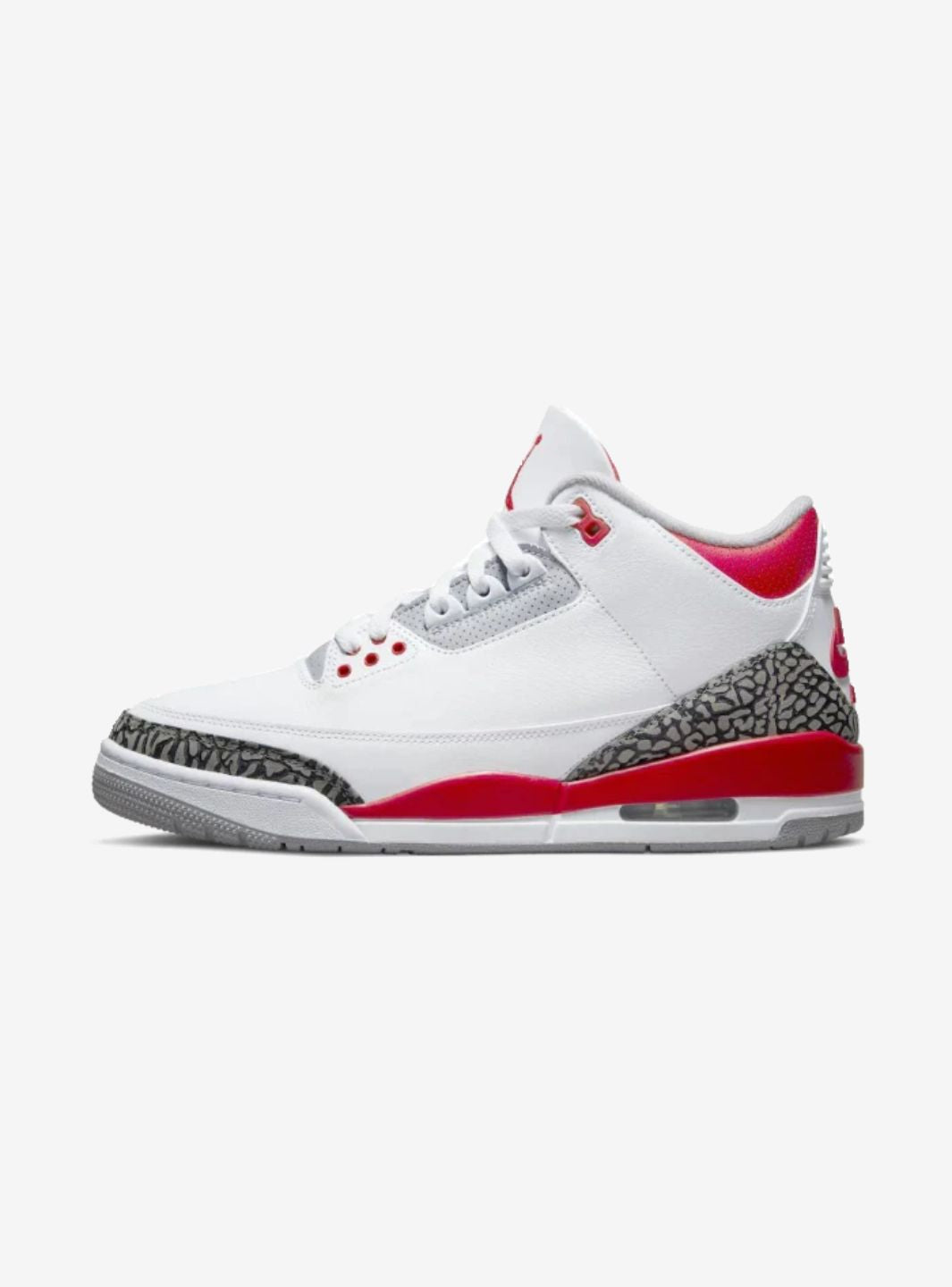
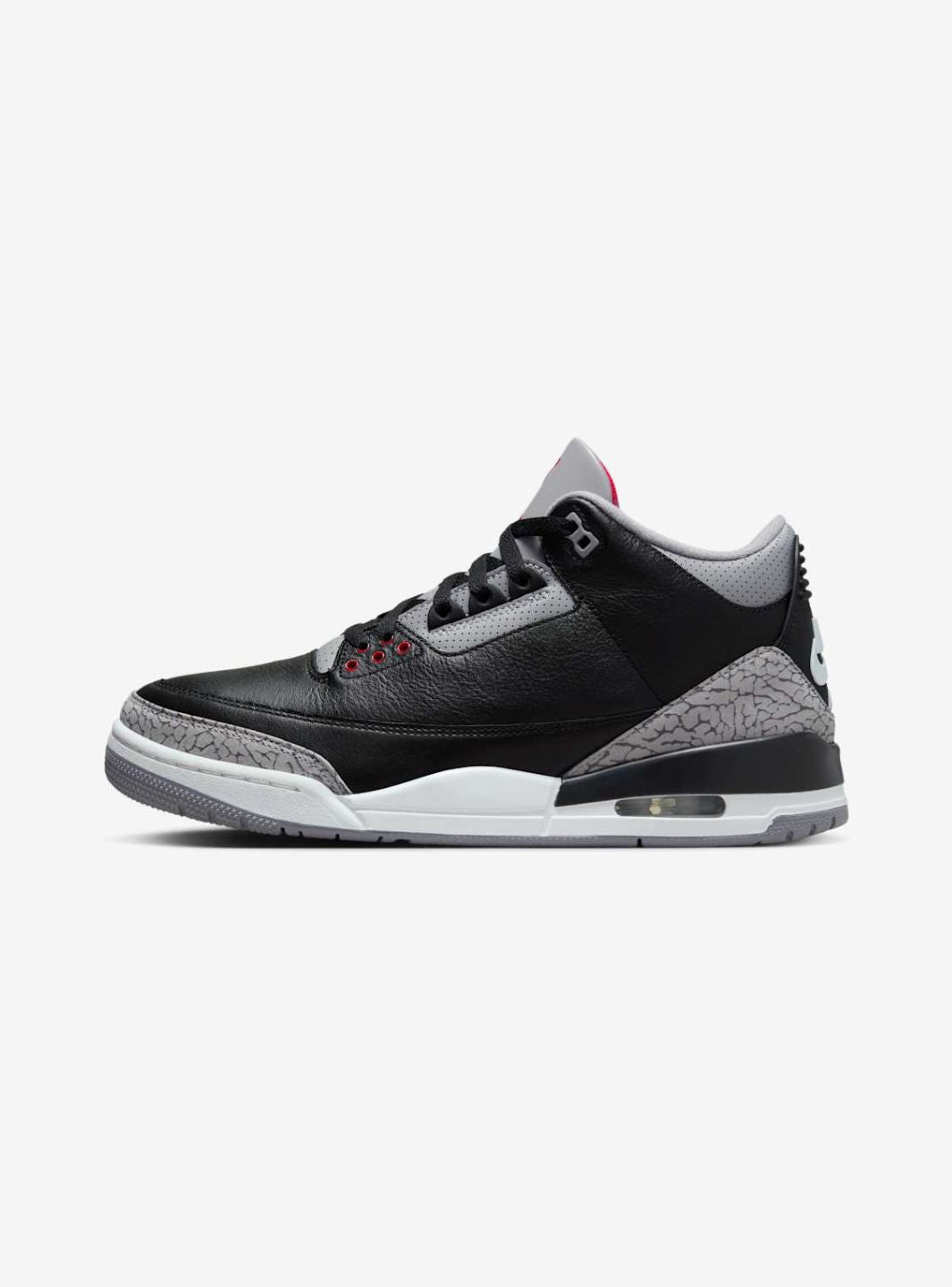
White Cement and Black Cement are two of the colorways most associated with the history of the Air Jordan 3.
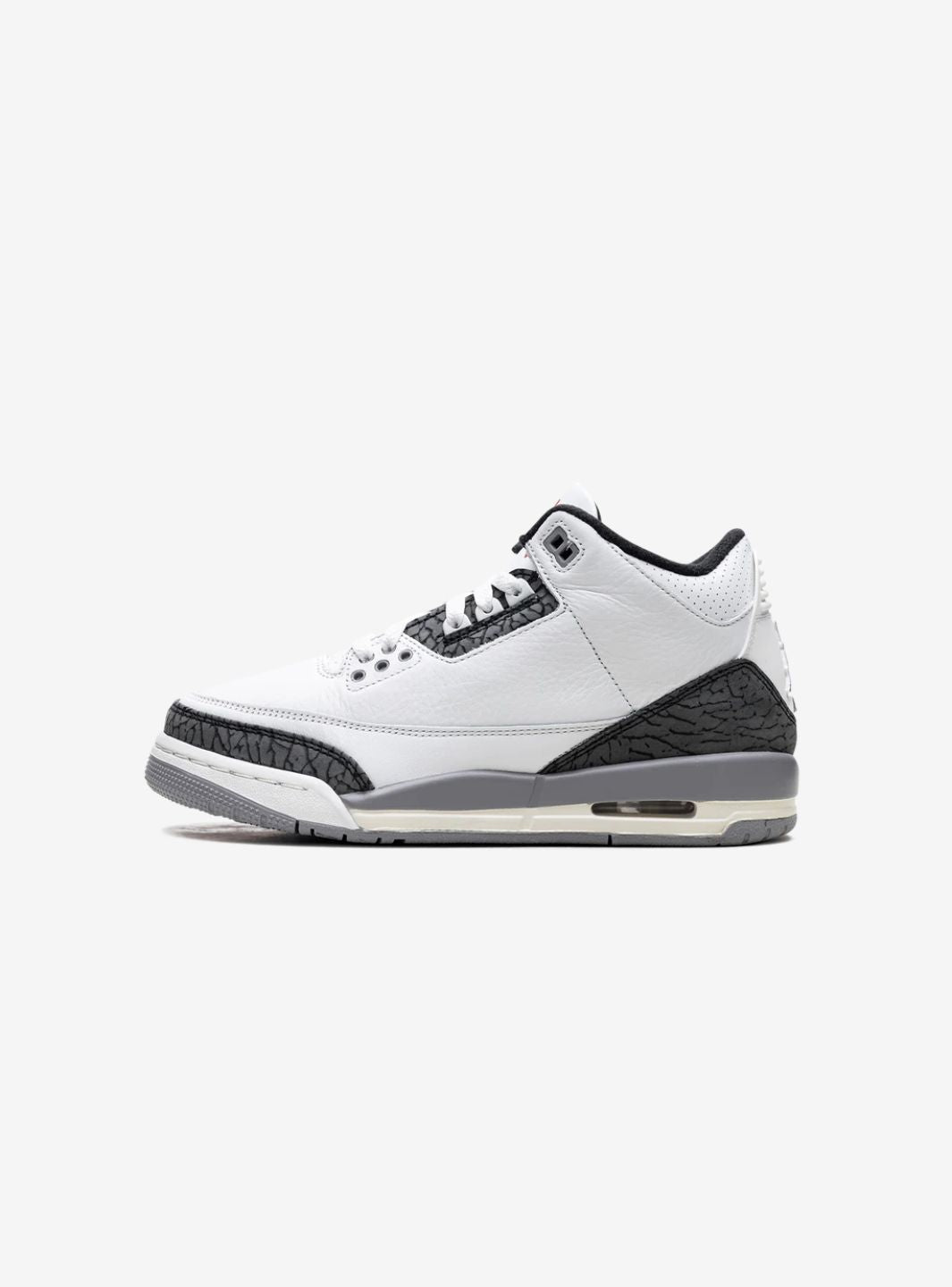
White Cement combines a predominantly white base with black and red details and the characteristic gray Elephant Print, creating one of the most recognizable configurations of the silhouette.
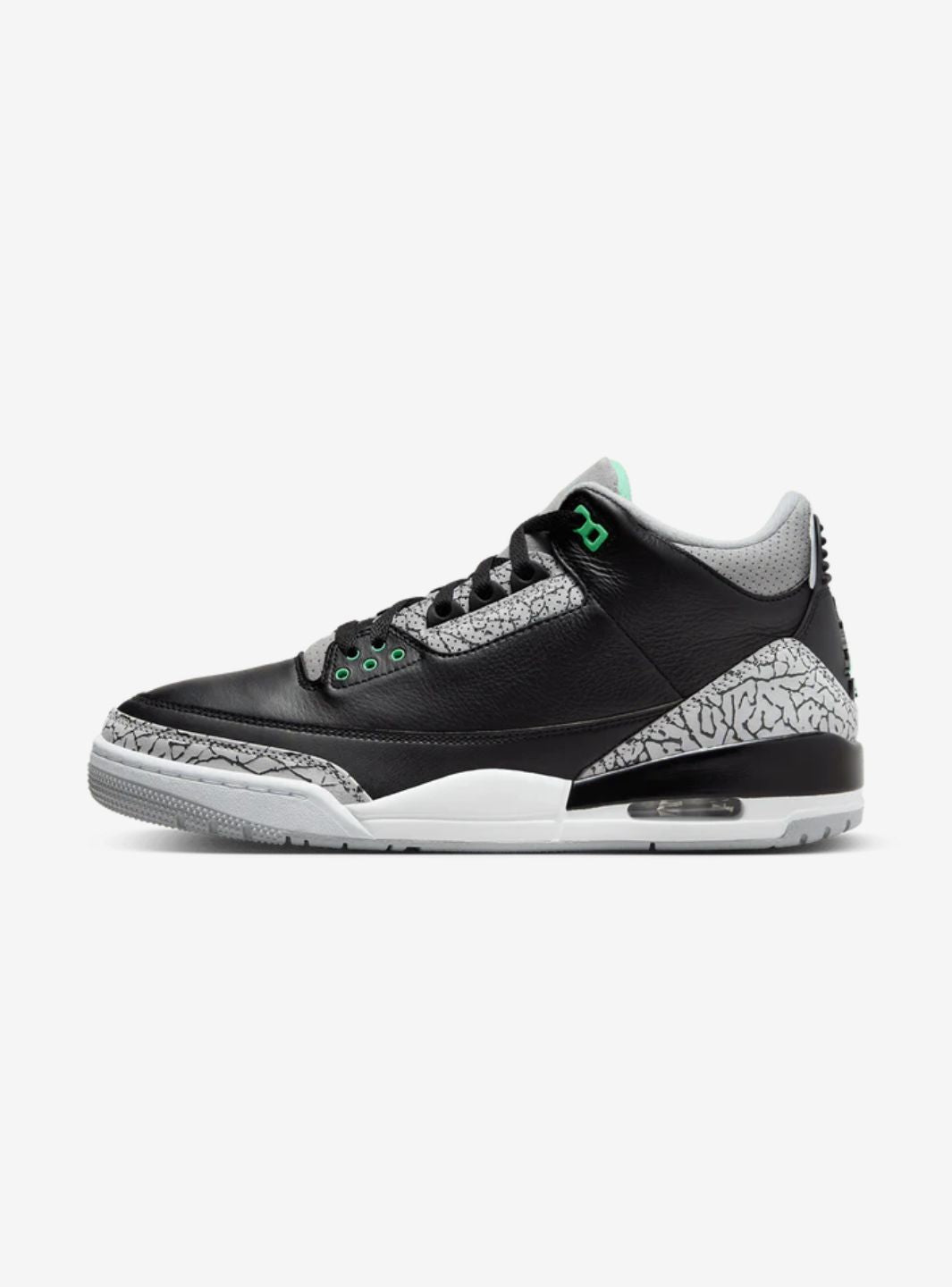
Black Cement starts from a darker base and maintains the contrast between black, Cement Grey, and red details, completely transforming the sneaker's visual presence while preserving its fundamental elements.
The periodic return of these colorways through new Retro versions demonstrates how much the original archive continues to influence the contemporary identity of the Jordan 3.
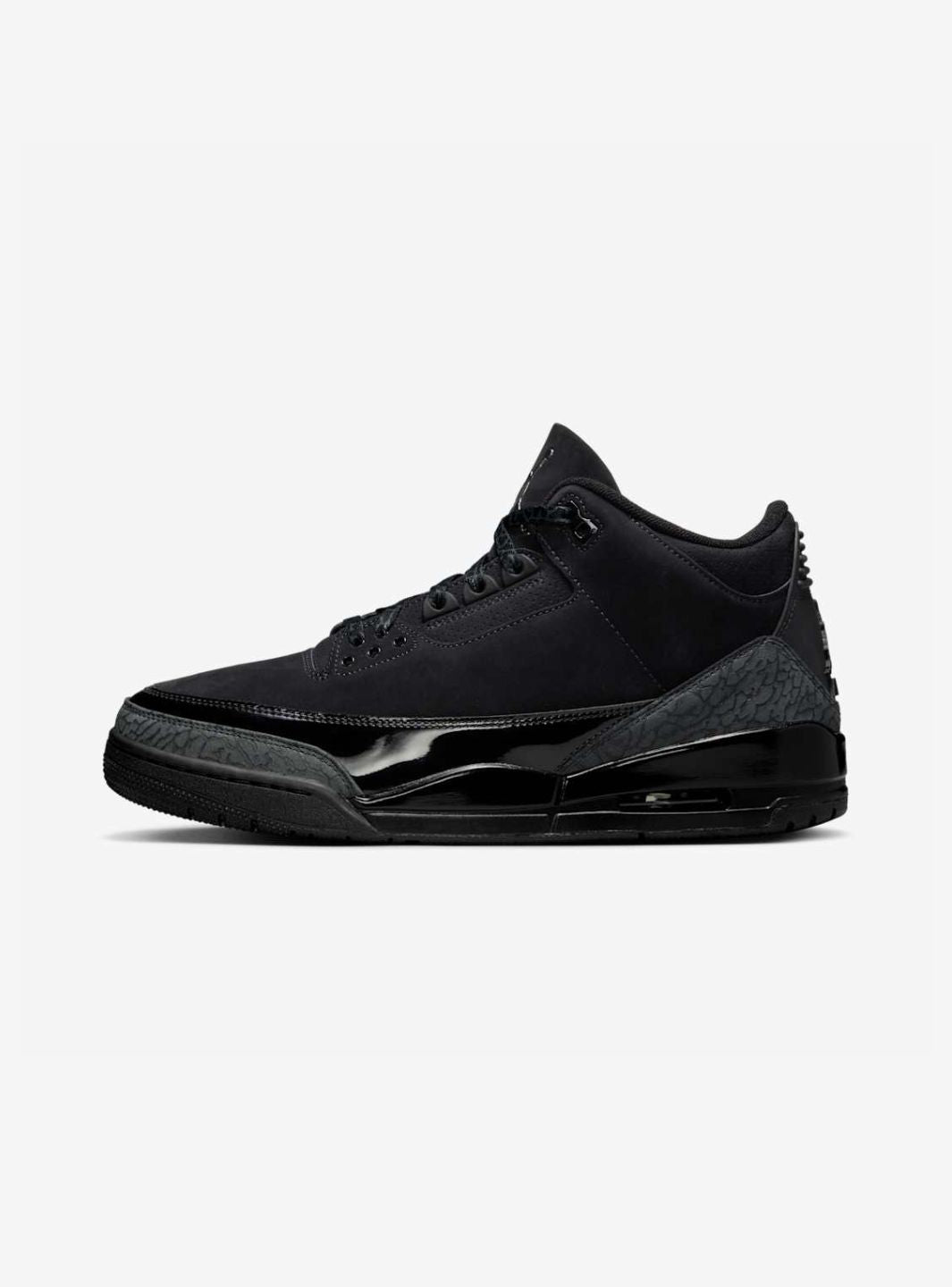
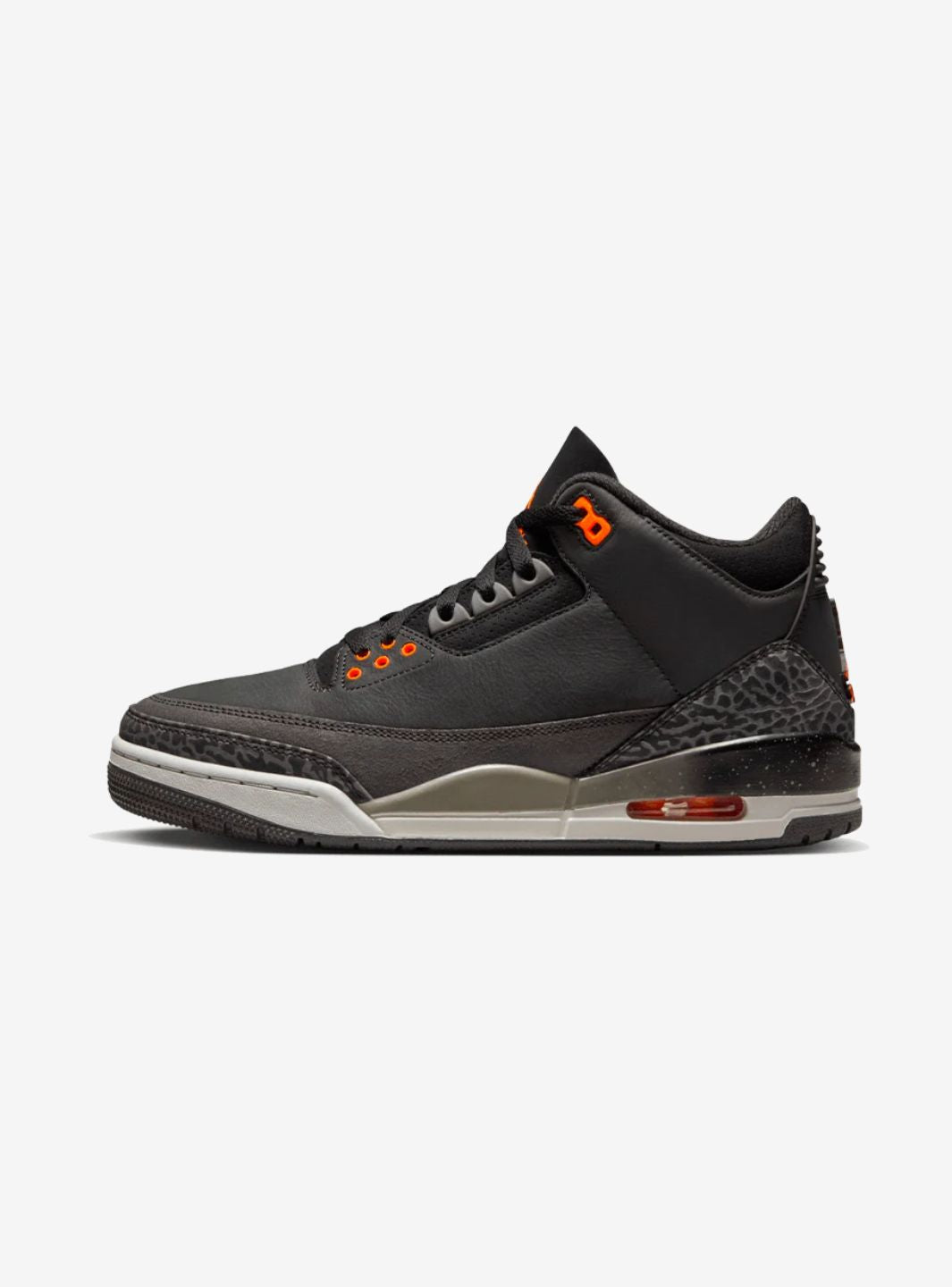
Air Jordan 3 Black Cat
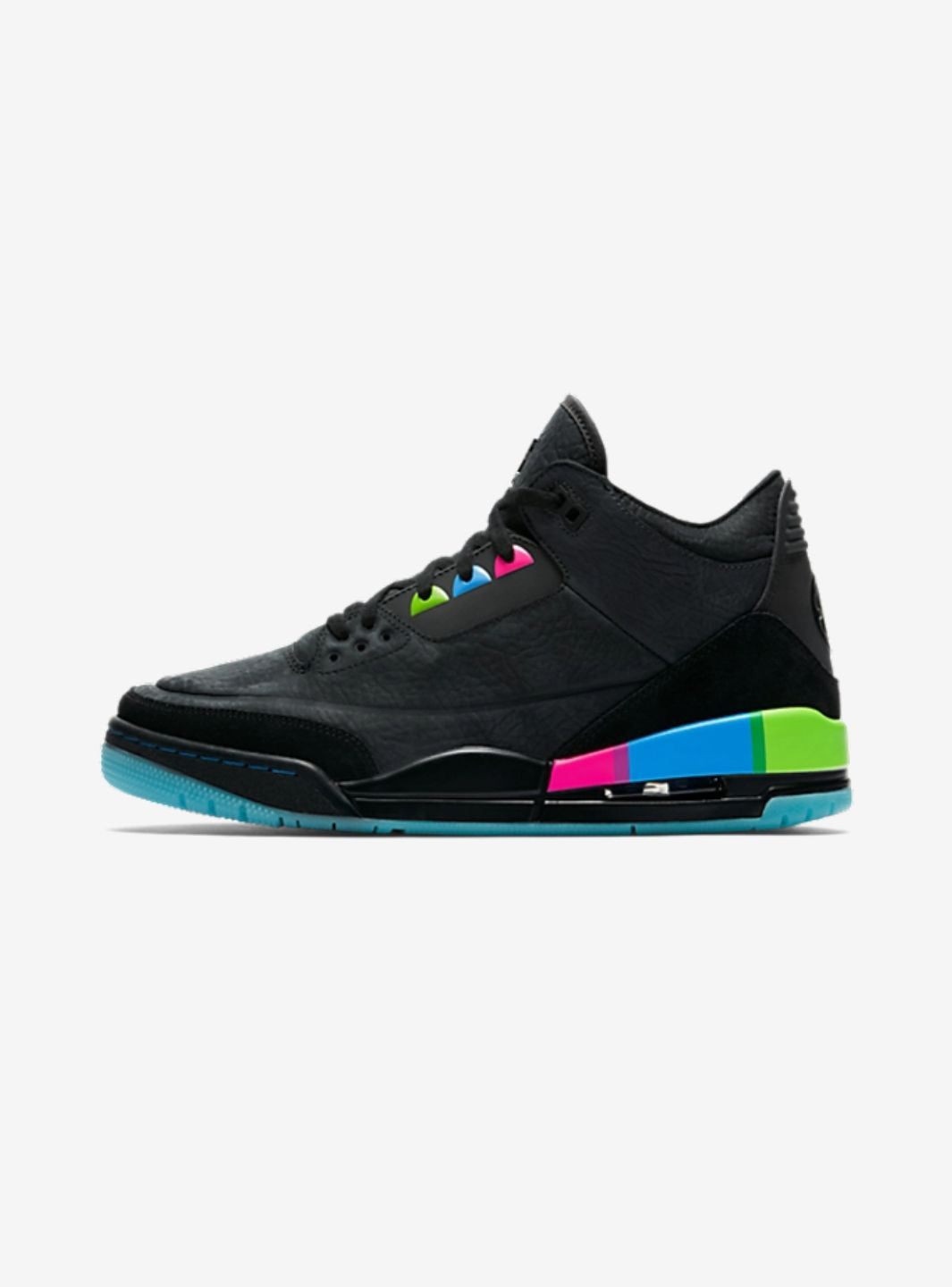
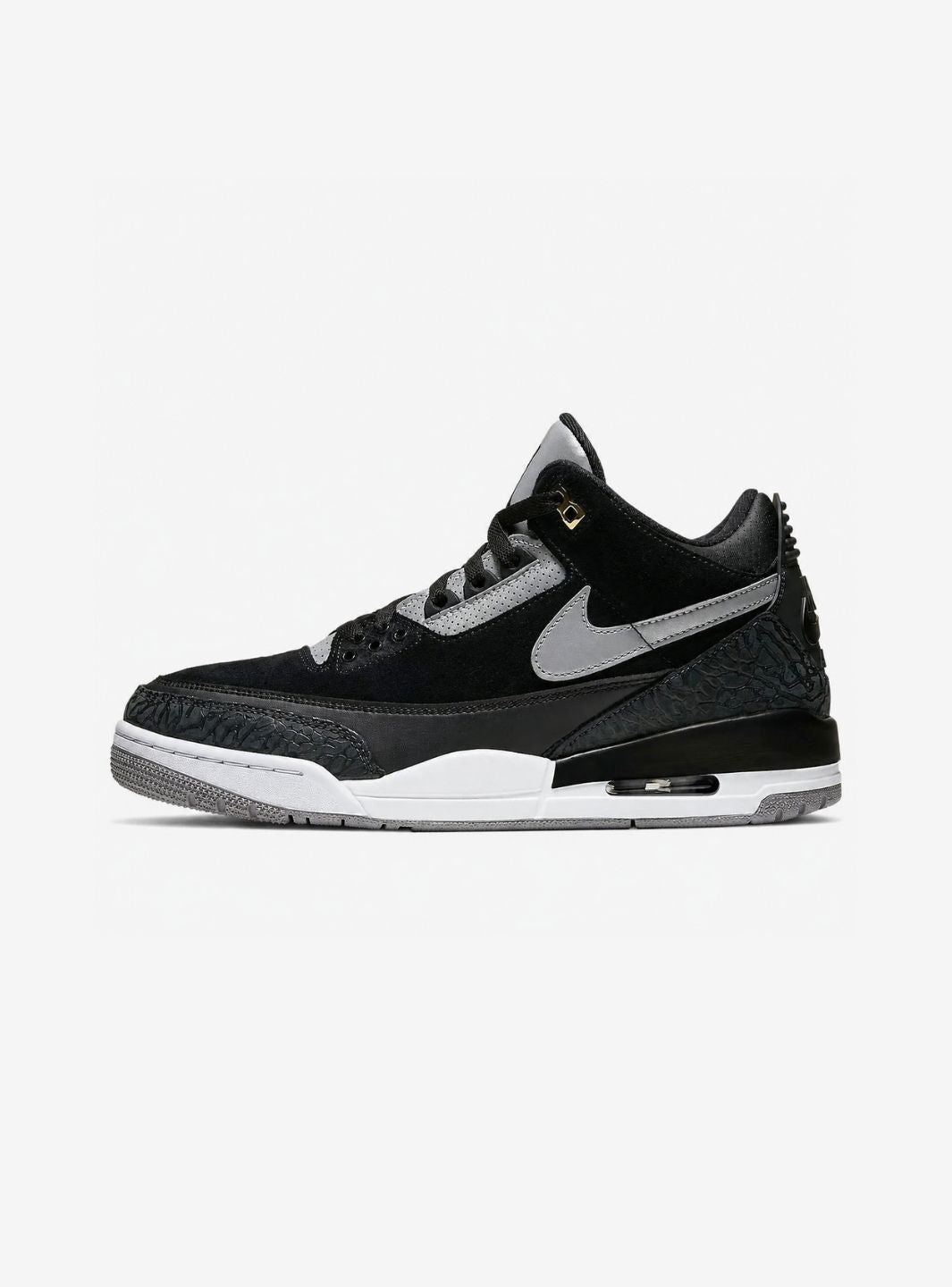
The Jordan 3 Black Cat interprets the silhouette through an almost completely black palette.
The name "Black Cat" recalls one of the nicknames associated with Michael Jordan and has been used on several silhouettes in the Jordan family over time.
On the AJ3, the monochromatic construction allows the materials, Elephant Print, and upper panels to emerge primarily through differences in texture rather than strong chromatic contrasts.
The return of the Black Cat has helped refocus attention on one of the most essential interpretations of the Jordan 3, while keeping the elements that make the silhouette immediately recognizable intact.
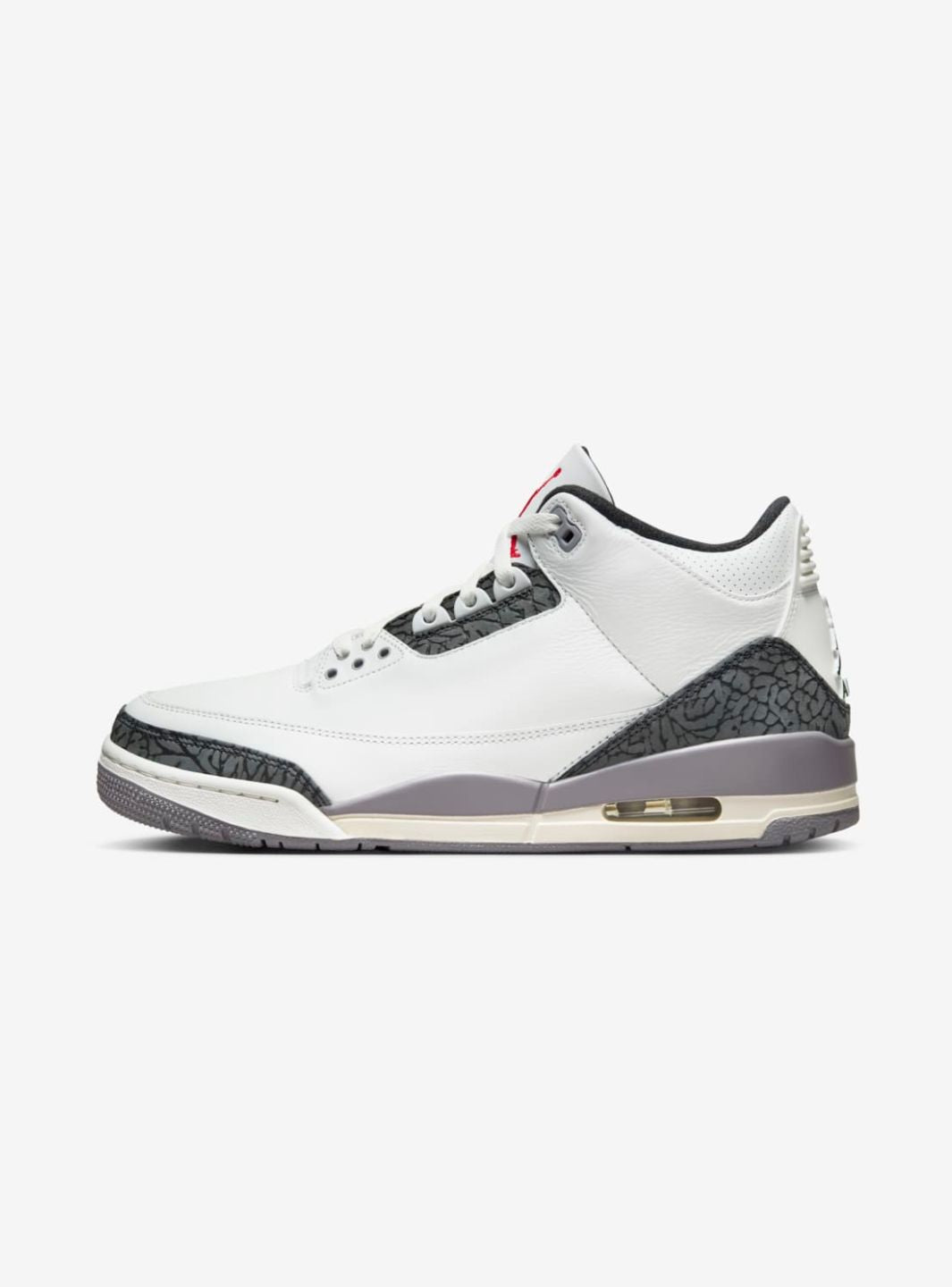
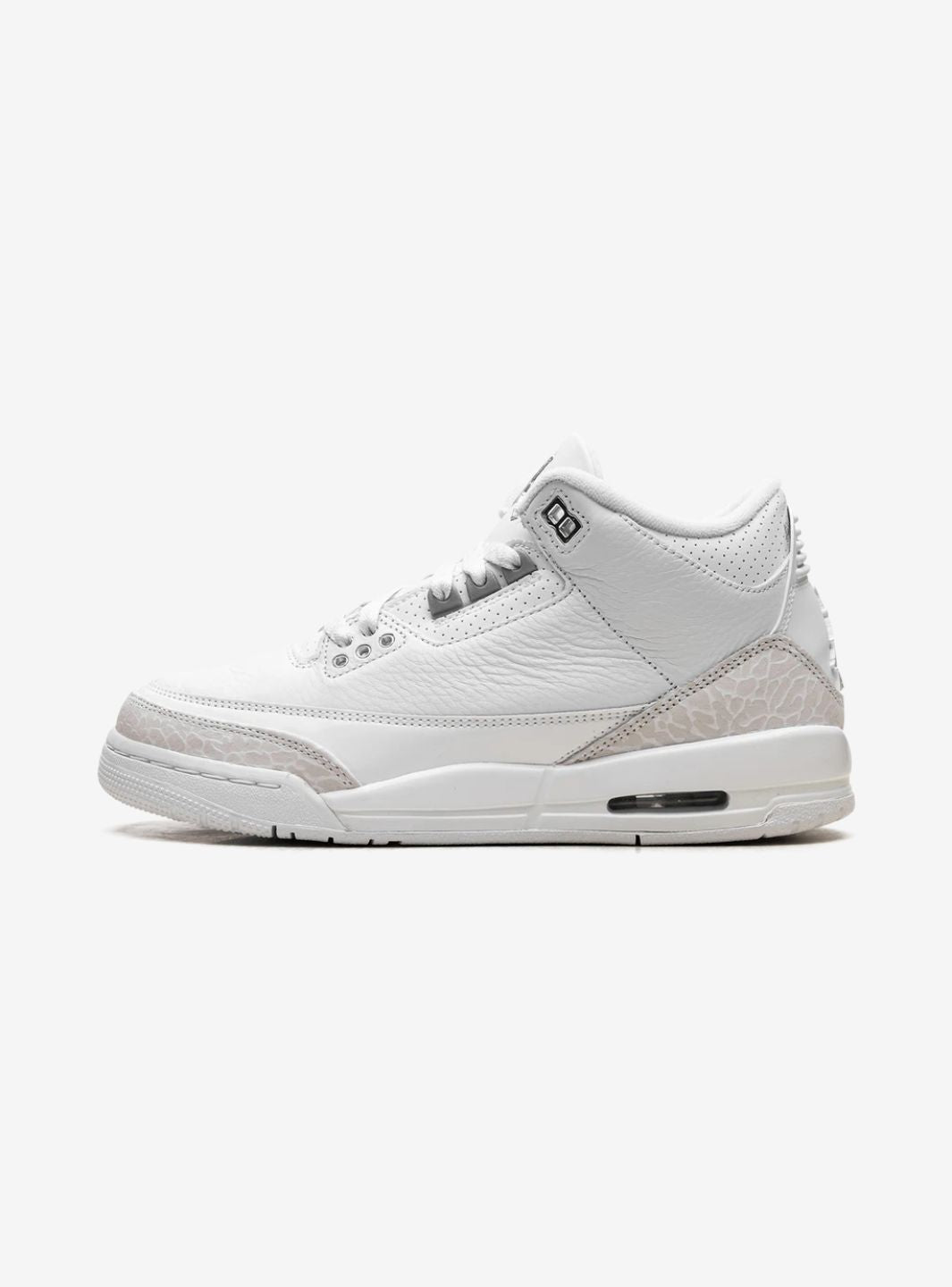
Pure Money and white Jordan 3s
A different approach is that of the Air Jordan 3 Pure Money, built around a predominantly white palette.
Compared to White Cement, where the Elephant Print and chromatic details play an evident role, Pure Money uses much more uniform tones to create a clean and minimal aesthetic.
The Jordan 3 lends itself particularly well to this type of interpretation because the panels, stitching, and materials allow the sneaker's construction to remain legible even when the palette is reduced.
White colorways therefore represent another face of the same silhouette compared to black versions like the Black Cat or Black Cement.
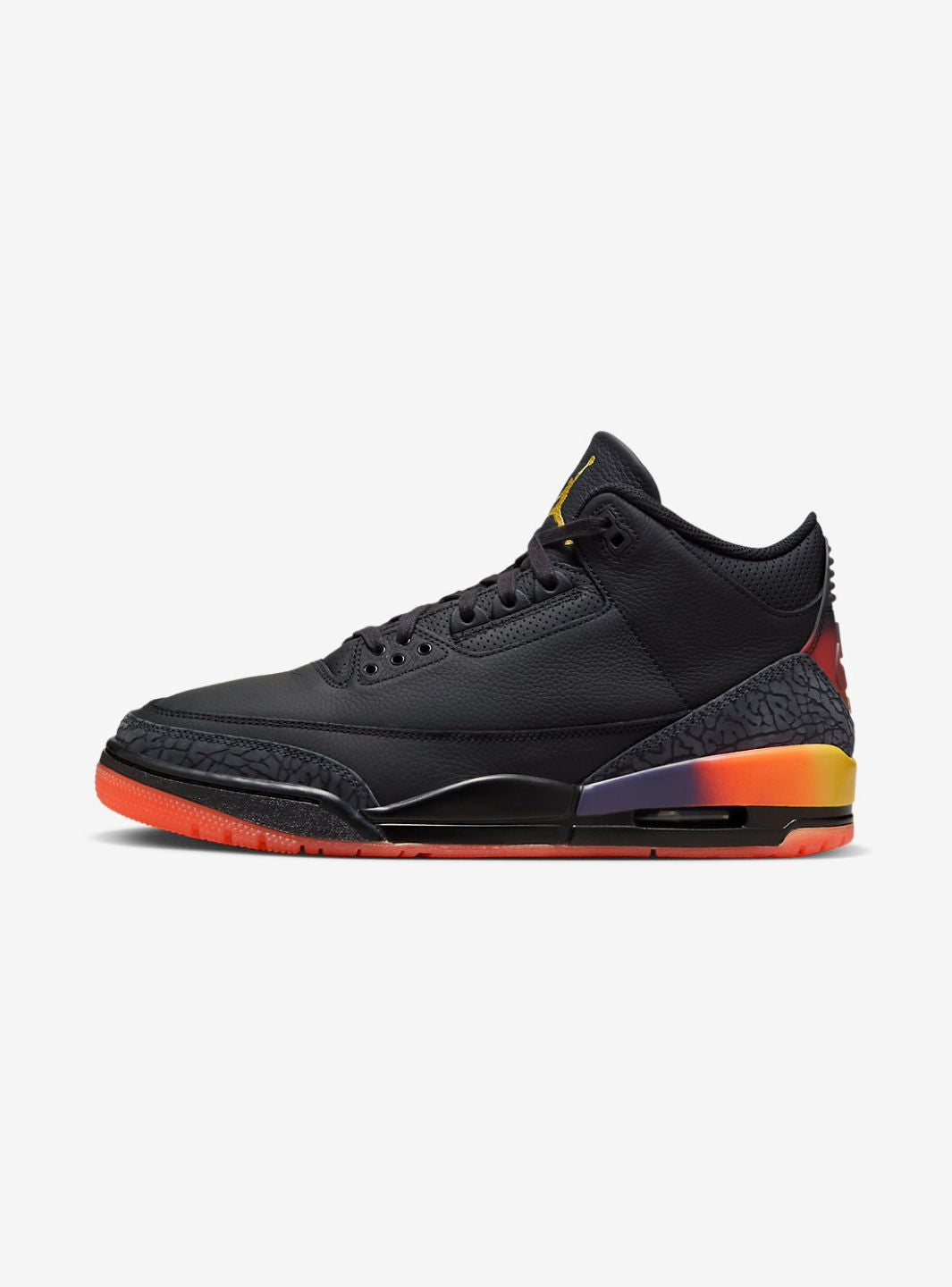
J Balvin and Air Jordan 3
The relationship between J Balvin and Jordan has pushed the Air Jordan 3 toward a language very different from that of the historic colorways.
Releases such as Medellín Sunset and Rio use palettes, gradients, and details inspired by the Colombian artist's visual universe, intervening on the AJ3 without modifying its fundamental structure.
Medellín Sunset works on light tones accompanied by color gradients, while Rio develops the same language through a much darker base.
The collaboration demonstrates how much the Jordan 3 can work both through configurations close to the original archive and as a base for highly characterized contemporary projects.
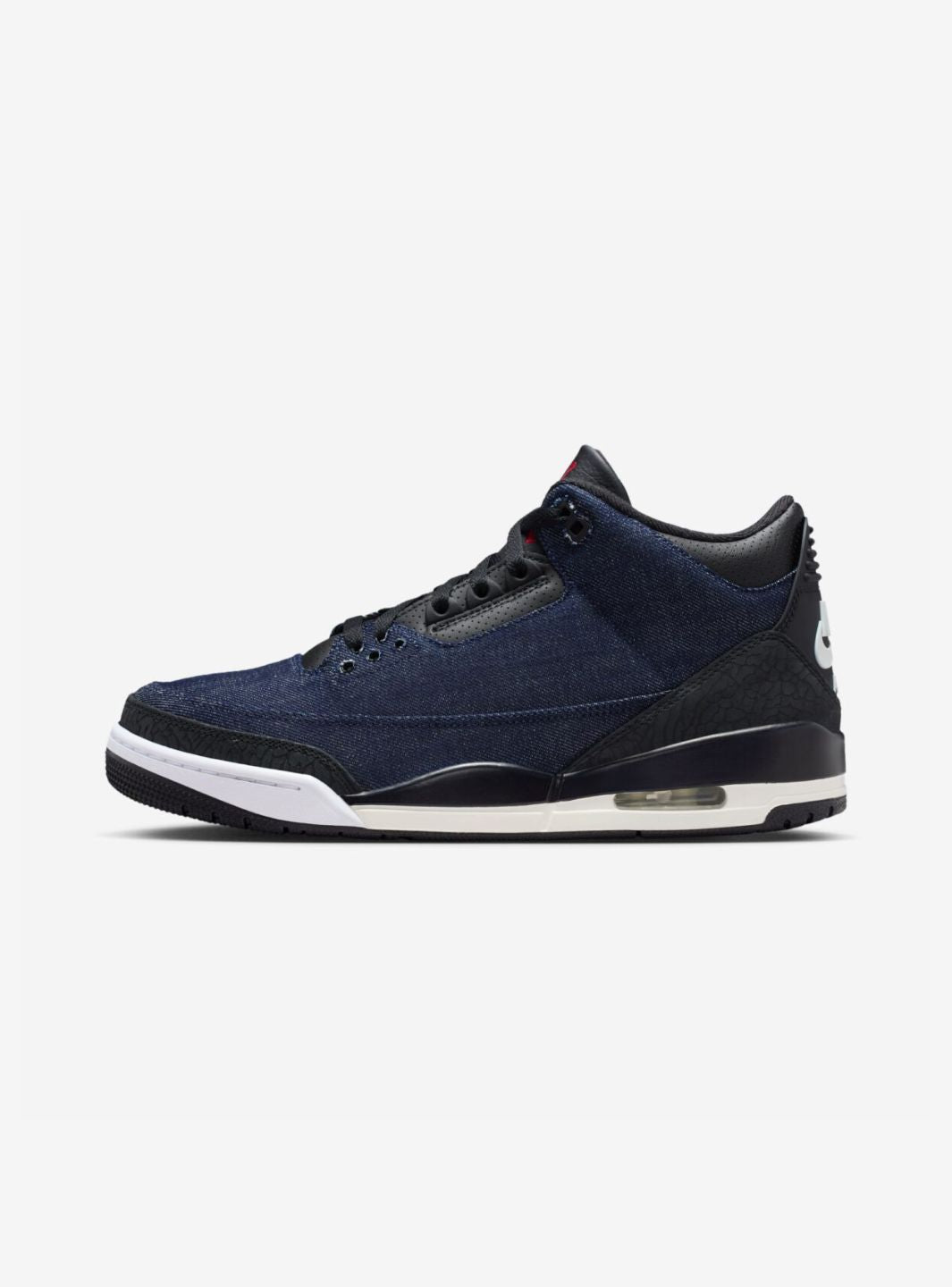
A Ma Maniére and Air Jordan 3
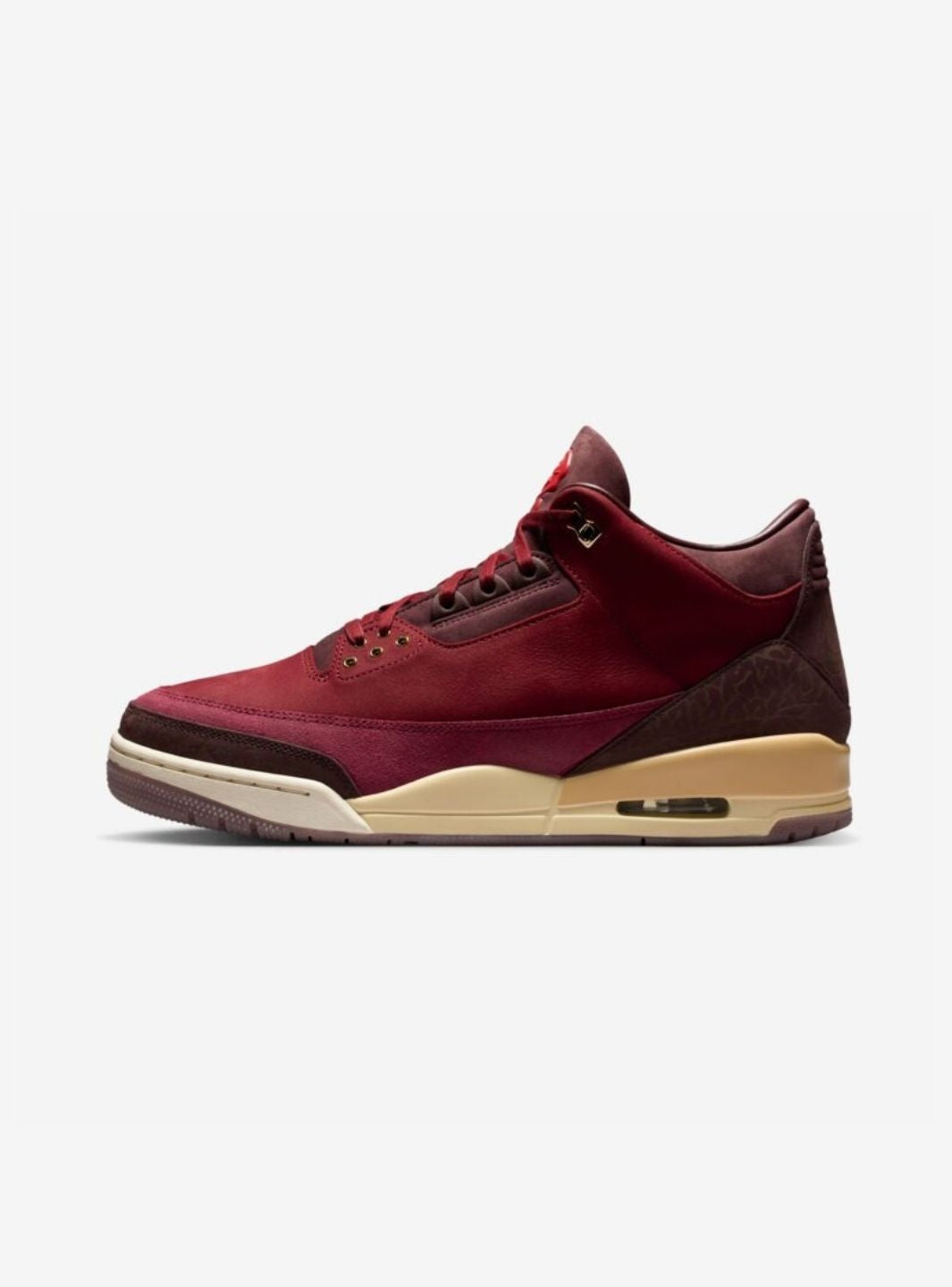
A Ma Maniére also used the Jordan 3 to develop an interpretation deeply linked to materials, personal history, and culture.
One of the most important projects stems from founder James Whitner's relationship with the silhouette: the Jordan 3 was one of the first Jordans his mother bought for him, becoming the narrative starting point for the collaboration.
The project uses premium materials and finishes and brings a more sober language to the AJ3 compared to other contemporary collaborations, while keeping the Elephant Print, structure, and proportions of the original model recognizable.
This interpretation shows how a collaboration can add new meaning to the silhouette without having to radically transform its design.
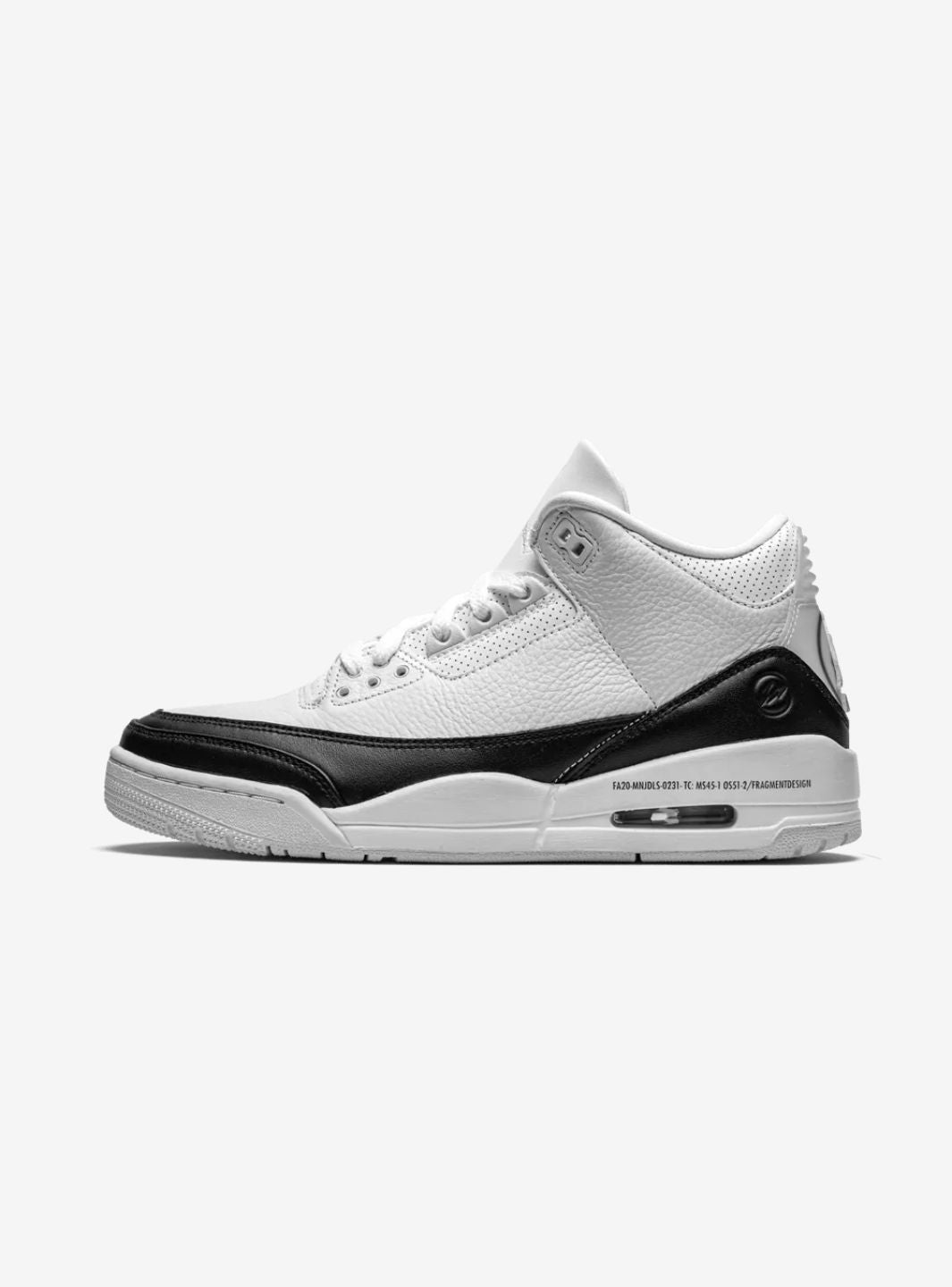
Fragment Design and Jordan 3
Fragment Design Fragment Design has also reinterpreted the Air Jordan 3.
The project maintains an essential aesthetic through a predominantly black and white palette, accompanied by Fragment branding and details that identify the collaboration.
The approach is very different from that of J Balvin or A Ma Maniére: instead of constructing the sneaker through gradients or particularly elaborate materials, Fragment works on simplicity and contrast.
It is another example of how the same Jordan 3 can take on very different identities while keeping its basic structure unchanged.
Men's and Women's Air Jordan 3
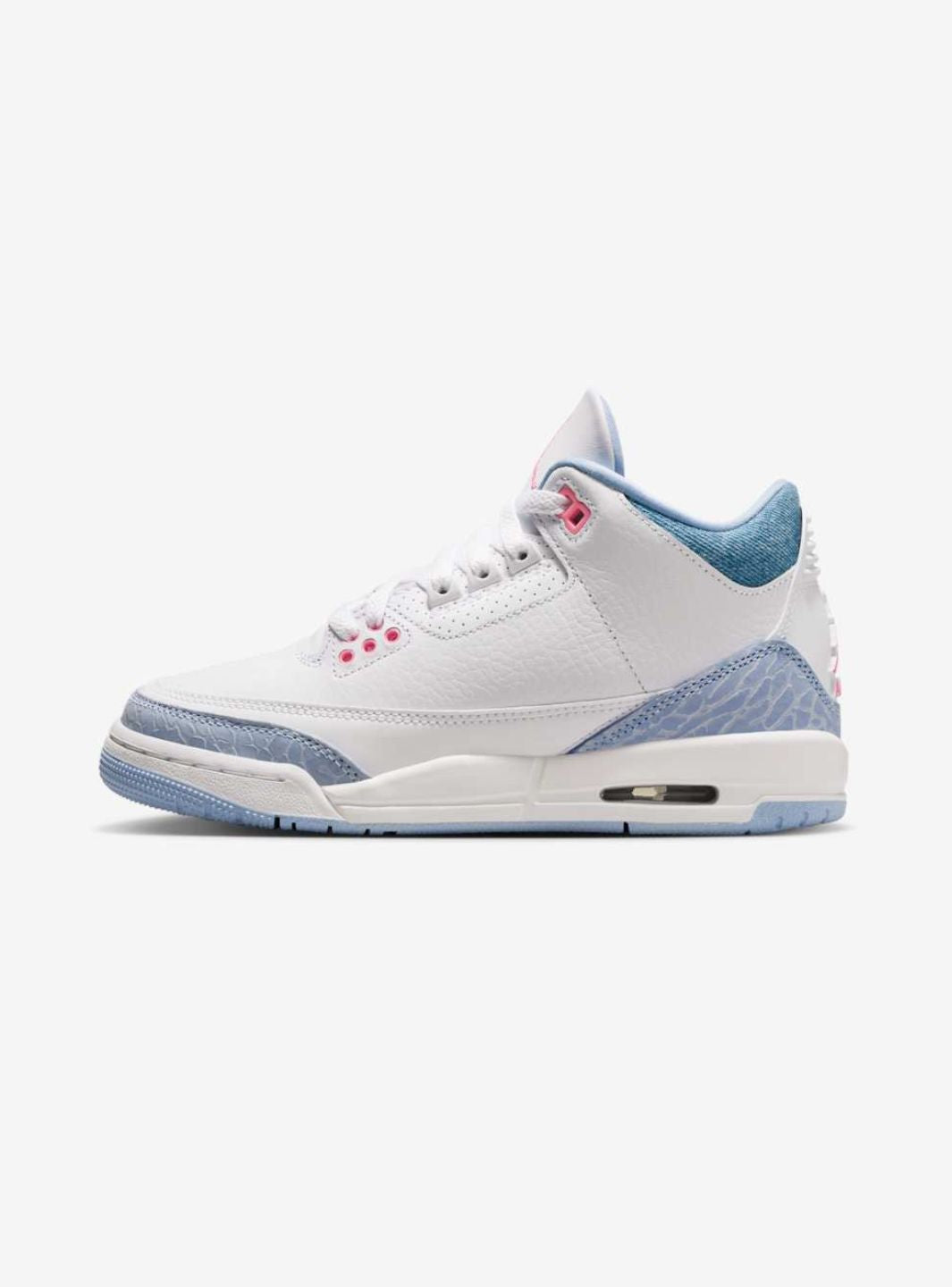
Men's and Women's Jordan 3s are produced through different size ranges and releases.
Some colorways are distributed in Men's sizing, others are launched as Women's, while numerous releases are also available in GS versions dedicated to smaller sizes.
The classification does not necessarily change the fundamental structure of the sneaker. Instead, size ranges, palettes, materials, and some details of the specific release may change.
For this reason, a Jordan 3 must always be identified by considering the colorway, year of release, product code, and full name.
Original Air Jordan 3 and authenticity
The quantity of Retros, historic reissues, and collaborations makes it important to correctly distinguish each original Air Jordan 3.
Elephant Print, materials, upper shape, Jumpman, labels, stitching, product codes, packaging, and internal details can vary between different releases and must therefore be evaluated against the specific configuration of the model.
At ResellZone, every product undergoes the required verification process to check its authenticity and correspondence with the original release. The method used is explained in detail on the page dedicated to product authenticity.