


Air Jordan 7: history, design and sneaker culture
The Air Jordan 7 debuted in 1992 as the seventh generation of the line developed around Michael Jordan. Designed by Tinker Hatfield, it arrived at one of the most important moments in the player's career and simultaneously marked a decisive turning point in the evolution of the Jordan identity.
Within the Air Jordan family, the AJ7 sits between the Air Jordan 6 and the subsequent Air Jordan 8, but it quickly distanced itself from the language of the previous generations.
The silhouette, in fact, does away with two elements that had characterized various Air Jordans up to that point: the visible Nike branding on the exterior and the window showing the Air unit. The Jordan 7 thus contributes to building an increasingly autonomous identity for the Jordan world.
Air Jordan 7 and Michael Jordan's 1992
1992 is one of the most significant years in Michael Jordan's career.
Wearing the Air Jordan 7, Jordan won his second consecutive NBA title with the Chicago Bulls and was named both regular-season MVP and Finals MVP.
That same year, he also joined the legendary US national team that participated in the Barcelona Games, winning the gold medal.
This dual tie with the NBA and international basketball makes the AJ7 one of the silhouettes most associated with the global expansion of Michael Jordan's image.
The sneaker therefore does not just represent a new technical evolution of the line, but coincides with the moment when Jordan definitively became a sporting icon recognized all over the world.
The design of the Air Jordan 7
Tinker Hatfield developed the Air Jordan 7 with a visual approach that is profoundly different from the AJ6.
The upper uses more fluid lines and a construction that reduces the presence of external elements linked to Nike, leaving more space for the Jordan identity.
Particularly recognizable are the shape of the collar, the tongue with a pattern and colors that vary based on the release, and the geometry of the midsole, often used to introduce color combinations that are much brighter than those on the upper part of the sneaker.
The absence of the external Swoosh and the visible Air window makes the AJ7 more essential in some respects, but at the same time allows the colors and details of the silhouette to play an even greater role.
Air Jordan 7 Retro
The Air Jordan 7 Retro are the contemporary re-releases of the silhouette born in 1992.
As with other Jordan generations, the term Retro does not identify a different sneaker, but rather the return to the market of a model from the archive.
A Jordan 7 Retro can revive a historical colorway or use the original structure as a base for a new interpretation.
Materials, shape, branding and small details can also change between productions belonging to different periods. For this reason, two Jordan 7s with the same general name may present differences linked to the year of release.
The Retro versions have allowed the AJ7 to continue to evolve even during periods when the silhouette was less present compared to the Jordan 1, 3 or 4.
Bordeaux, Hare and Cardinal
Among the colorways most associated with the history of the Air Jordan 7 are Bordeaux, Hare and Cardinal.
Bordeaux uses a darker and more complex palette, with gray and black tones accompanied by chromatic accents on the tongue and midsole.
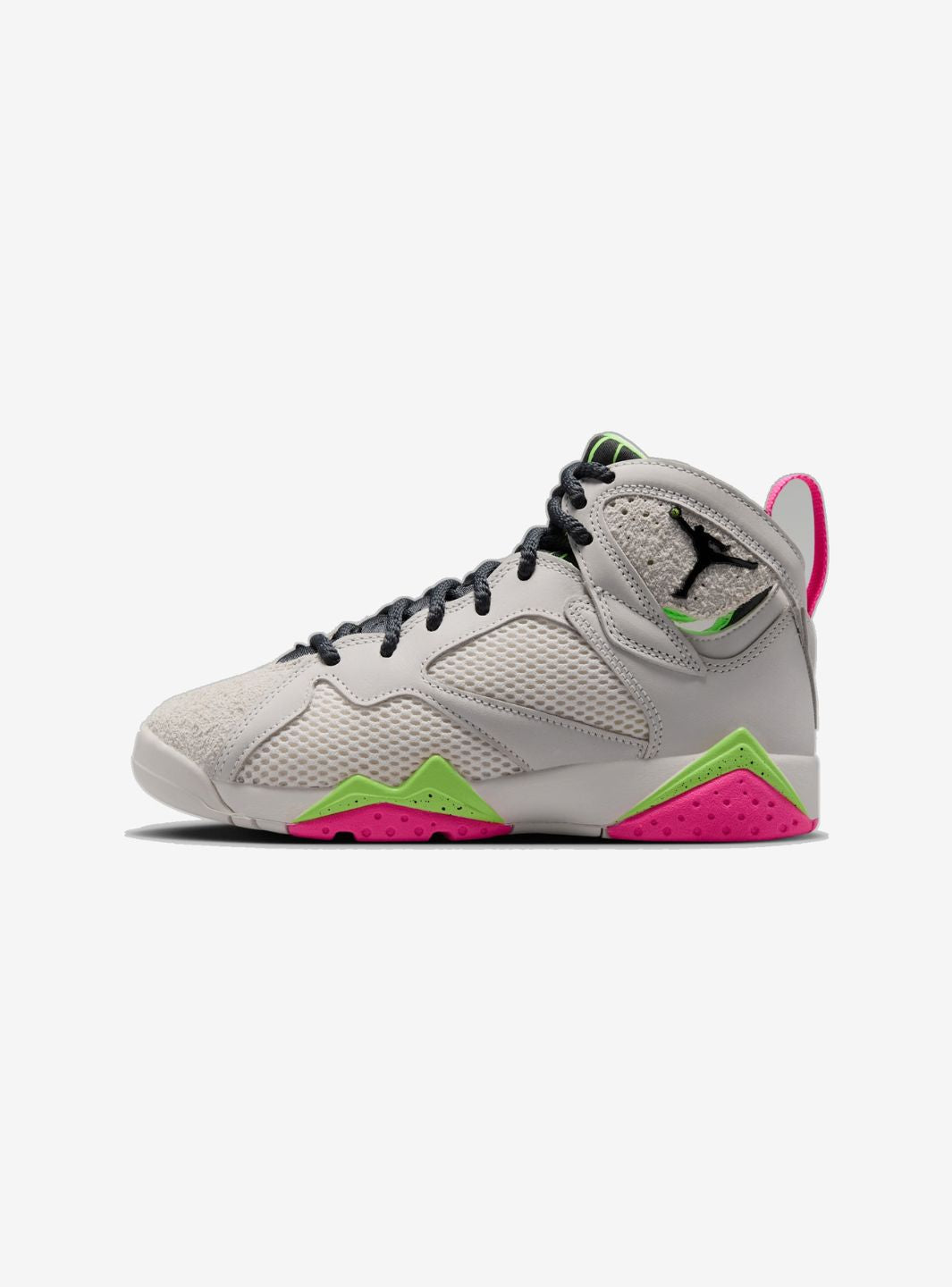
Hare, on the other hand, brings the silhouette towards a lighter and more colorful configuration, becoming one of the most recognizable references of the relationship between Jordan and the Bugs Bunny imagery developed in the nineties.
Cardinal uses a predominantly white base accompanied by red and black details, creating an interpretation closer to the traditional colors associated with Michael Jordan's career in Chicago.
These configurations show how capable the AJ7 is of changing its identity while keeping its fundamental structure unchanged.
Air Jordan 7 Olympic and Barcelona 1992
The history of the Jordan 7 is inevitably also linked to the summer of 1992 and the US national basketball team.
The Olympic configuration recalls the model used by Michael Jordan during Team USA's run at the Barcelona Games.
White, navy, red and metallic details create a palette very different from the Jordans most associated with the Chicago Bulls and directly link the silhouette to one of the most important moments in the history of international basketball.
The bond with Barcelona contributes to distinguishing the Jordan 7 from previous generations: in the same year, the sneaker accompanied Jordan to both an NBA title and a gold medal with the US national team.
Air Jordan 7 Miró
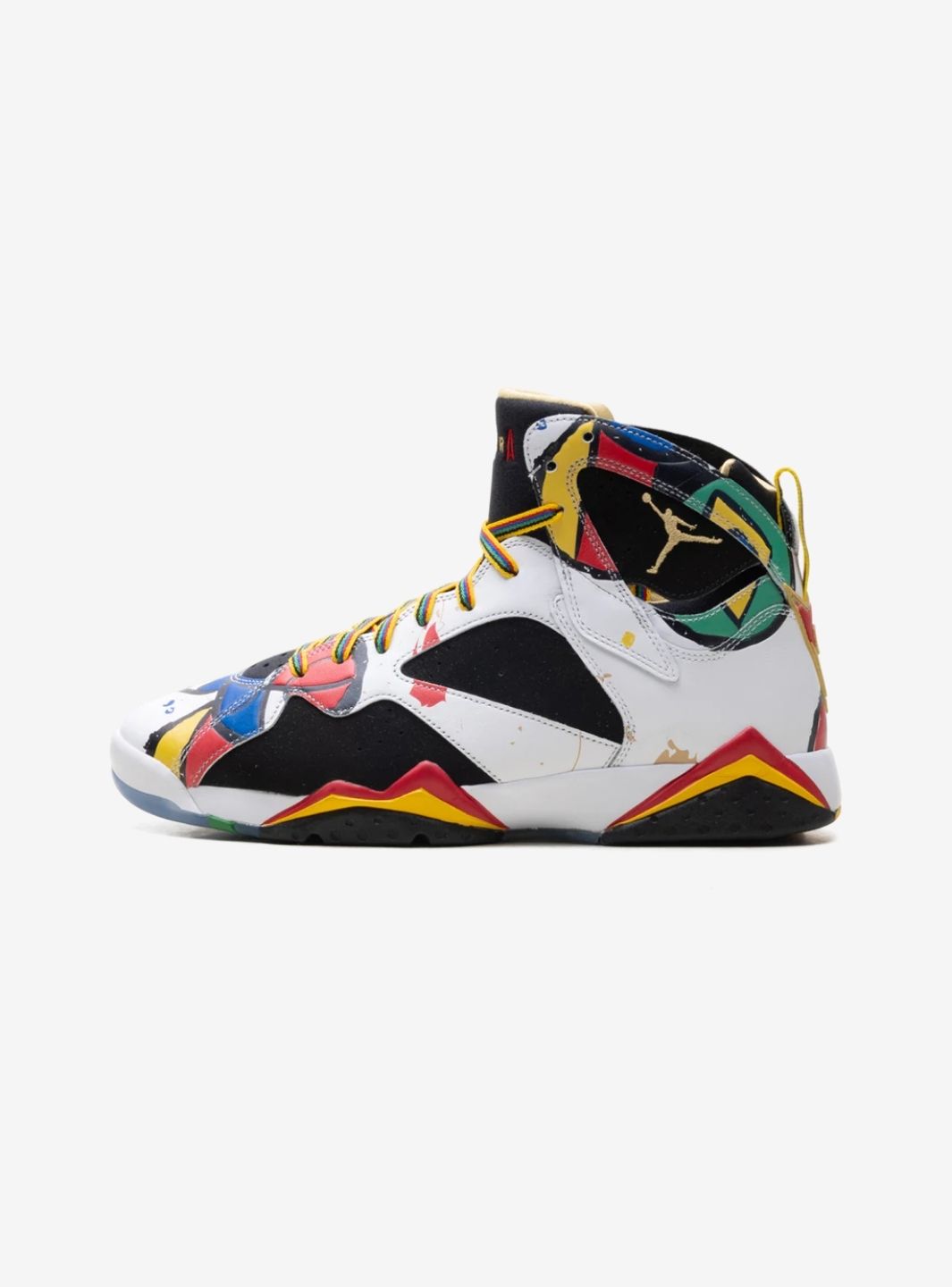
The Air Jordan 7 Miró represents one of the most unique chapters in the history of the silhouette.
The project was born in 2008 by connecting Michael Jordan and the Catalan artist Joan Miró. The design uses primary colors and graphic shapes inspired by the artist's language, transforming the predominantly white surface of the AJ7 into a composition very different from traditional Jordan colorways.
In 2026, the sneaker returns via the Air Jordan 7 Retro Miró, bringing the artistic interpretation of the silhouette back into the contemporary catalog.
The release is also interesting because it creates a direct connection with Barcelona: the city is as central to the artistic history of Joan Miró as it is to the sports history of the Jordan 7 through the 1992 Games.
The Miró thus shows a dimension of the AJ7 very distant from classic basketball colorways, using the silhouette as a surface for a project linked to art and culture.
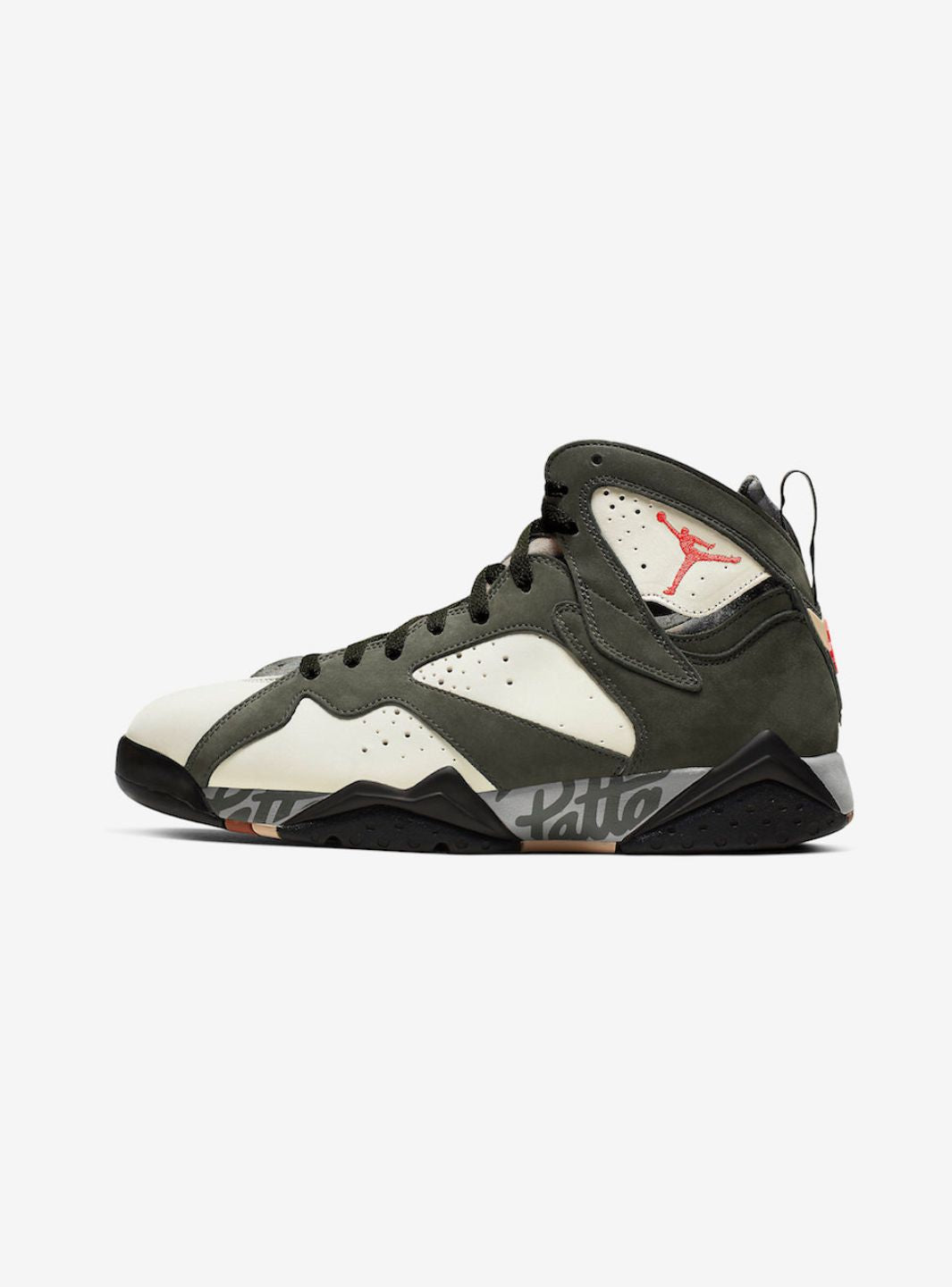
Patta and Air Jordan 7
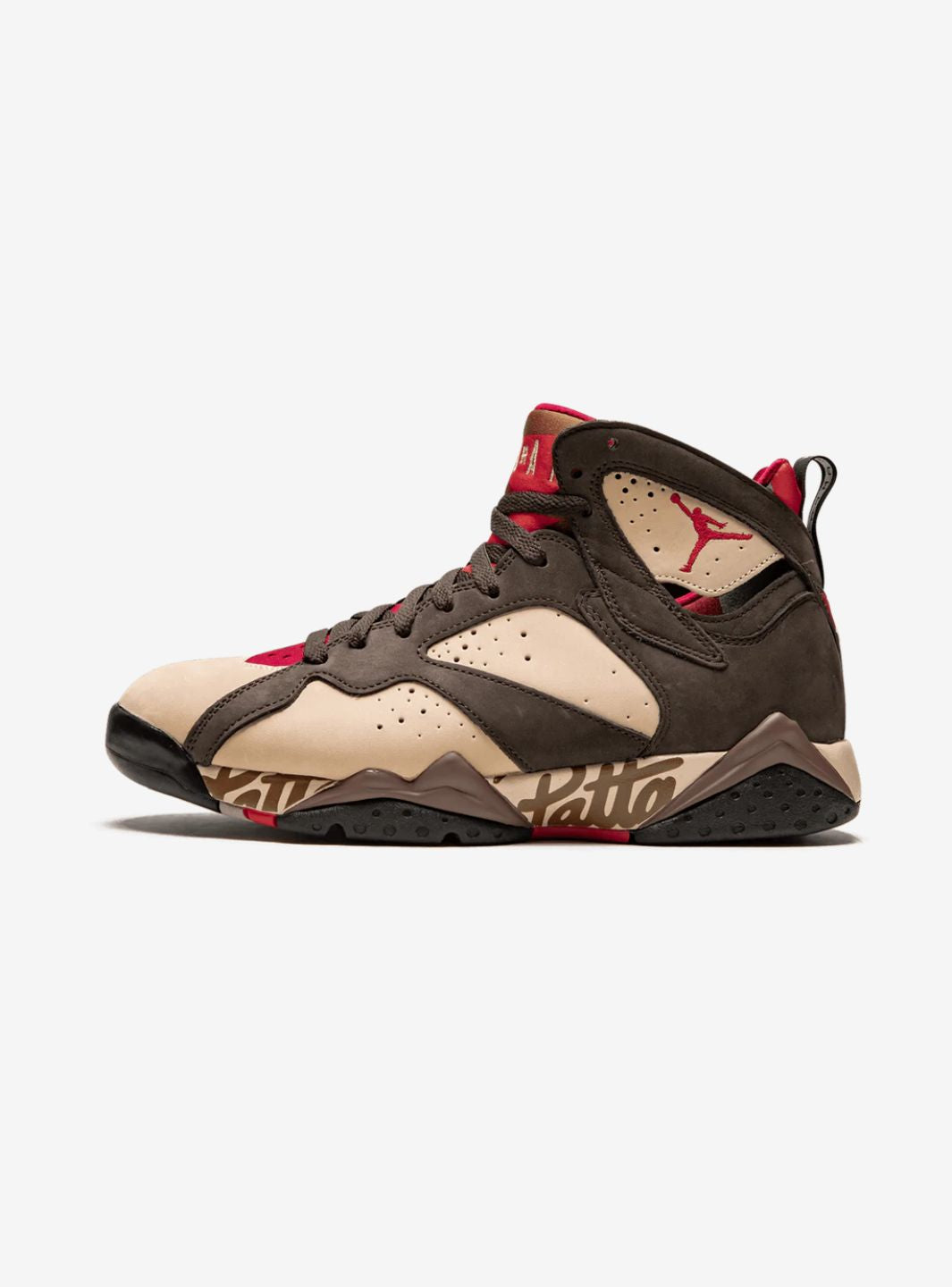
Patta also used the Air Jordan 7 as a base for a collaboration.
The Amsterdam-based brand reinterpreted the sneaker through colorways such as Shimmer and Icicle, inserting its own language into a silhouette historically less used for collaborations than the Jordan 1 or Jordan 4.
The earthy tones of the Shimmer and the lighter tones of the Icicle demonstrate how the construction of the AJ7 can take on very different identities without losing the main features of the model.
The relationship with Patta also contributed to bringing attention back to the Jordan 7 at a time when other silhouettes in the Jordan family were occupying more space in contemporary sneaker culture.
Trophy Room and the Dream Team
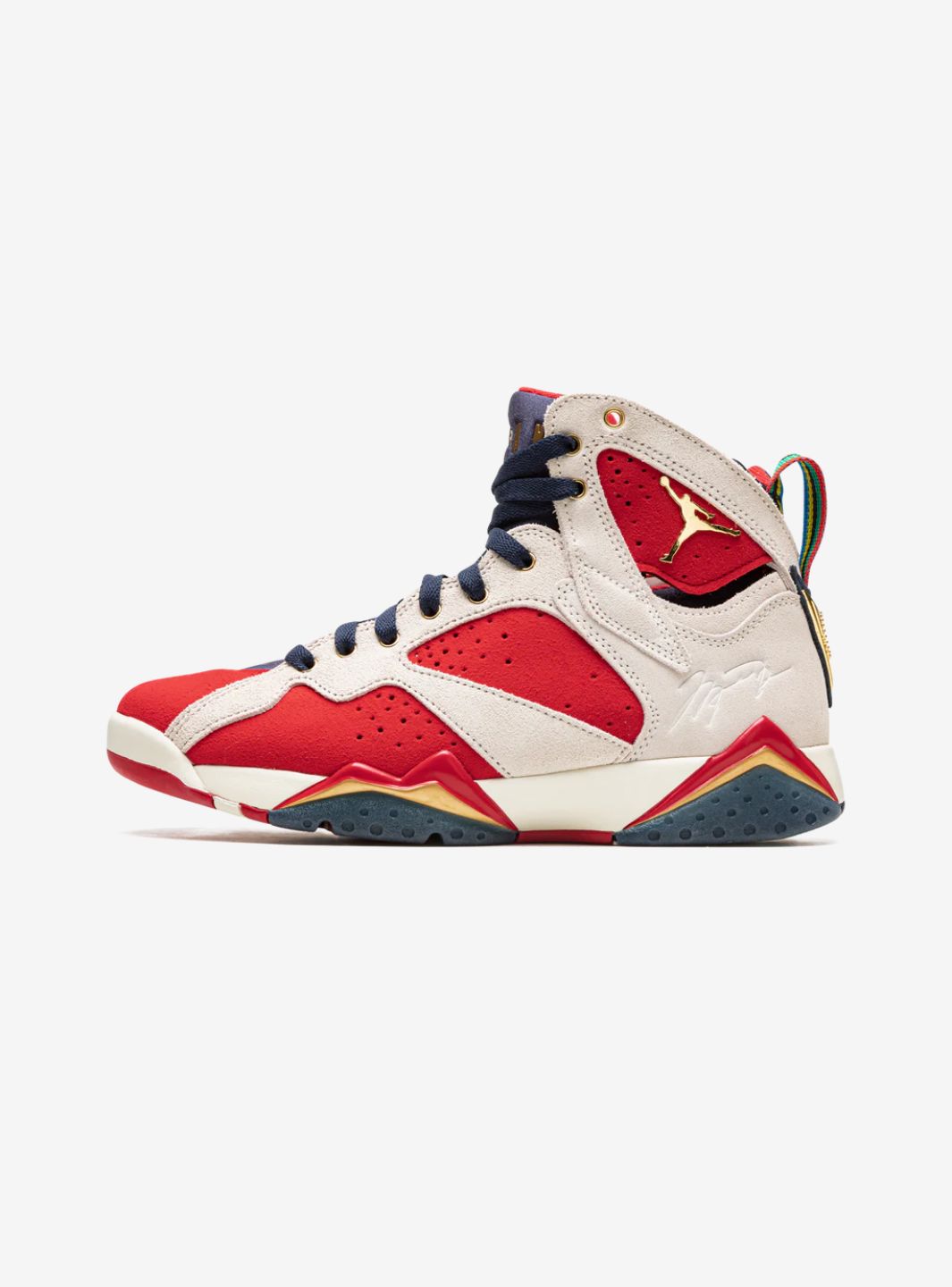
Another project particularly linked to the history of 1992 is the collaboration between Jordan Brand and Trophy Room.
The Jordan 7 Trophy Room “New Sheriff in Town” takes inspiration from the famous internal scrimmage of the US national team before the Barcelona Games, one of the most talked-about episodes in the history of the Dream Team.
The sneaker therefore uses the AJ7 not just as a silhouette, but as a direct connection to a specific moment in Michael Jordan's career.
Dedicated details and references to the US national team transform the collaboration into a reinterpretation of the sports history already linked to the original model.
Air Jordan 7 Flint
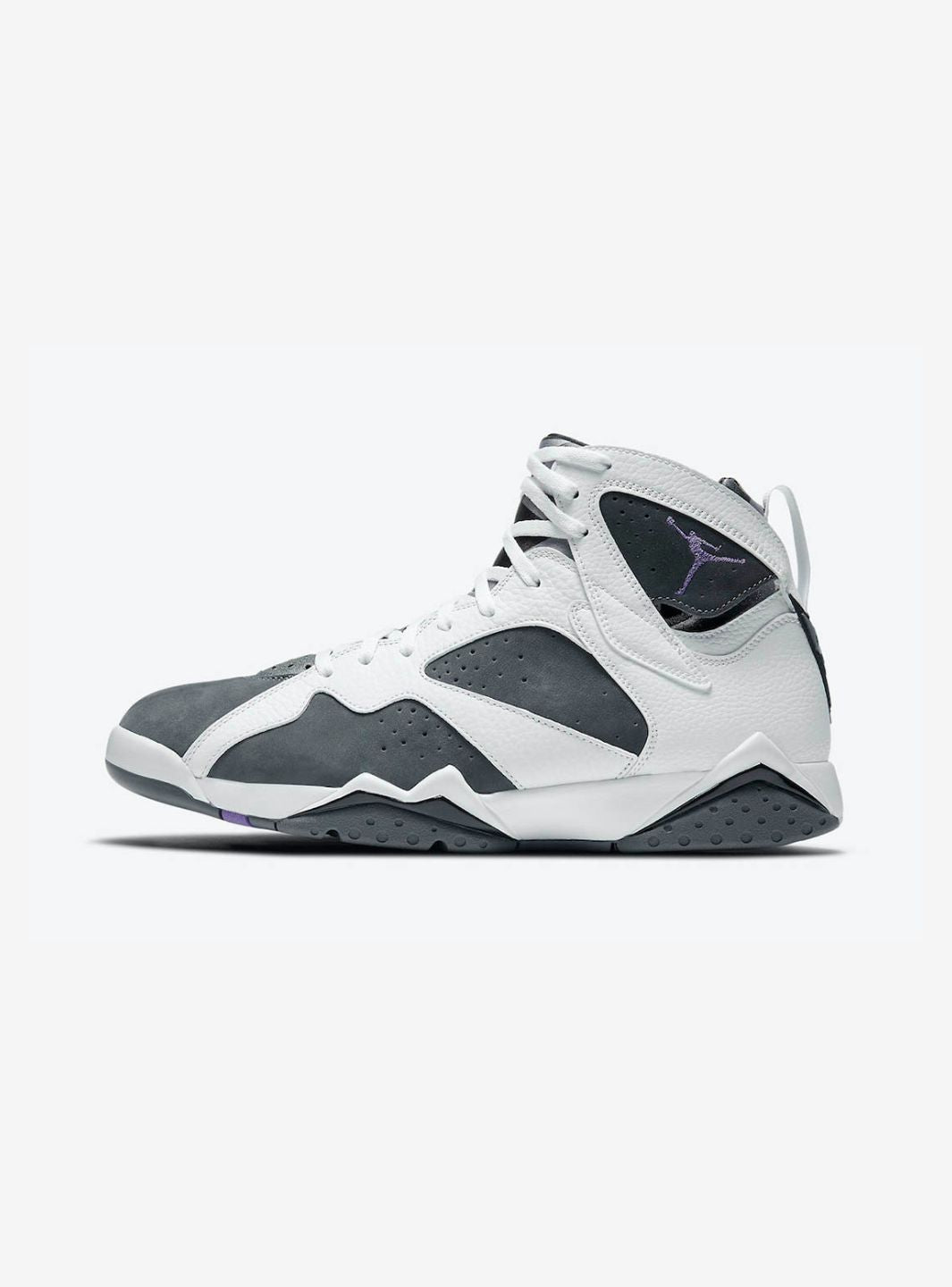
The Jordan 7 Flint, on the other hand, represents an example of a colorway born after the original configurations of 1992.
The version uses a light base accompanied by gray panels and purple details, creating a more sober combination compared to many of the AJ7s characterized by very bright colors.
The colorway has returned via Retro versions, proving how even releases introduced after the original debut can become a stable part of the silhouette's archive.
The relationship between OGs, historical Retros, and subsequent colorways allows the Jordan 7 to have a much broader history than just the 1992 releases.
Air Jordan 7 for men and women
Jordan 7s for men and women are produced through different size ranges and releases.
Many historical versions are associated mainly with Men's sizing, while over the years, Women's and GS releases have also been developed.
The classification does not necessarily modify the fundamental structure of the sneaker, but it can affect the size range, the proportions of some components, and the availability of the specific colorway.
To correctly identify a Jordan 7, therefore, the full name, year of release, product code, and color configuration remain important.
Original Air Jordan 7 and authenticity
The presence of original releases, Retros and collaborations makes it important to correctly identify every original Air Jordan 7.
Shape, materials, tongue, branding, stitching, midsole details, product codes, labels and packaging can change significantly between a historical Jordan 7, a Miró, a Patta, or a Trophy Room collaboration.
At ResellZone, every product undergoes the verification process designed to check its authenticity and correspondence with the specific release. The method used is detailed on the page dedicated to product authenticity.