

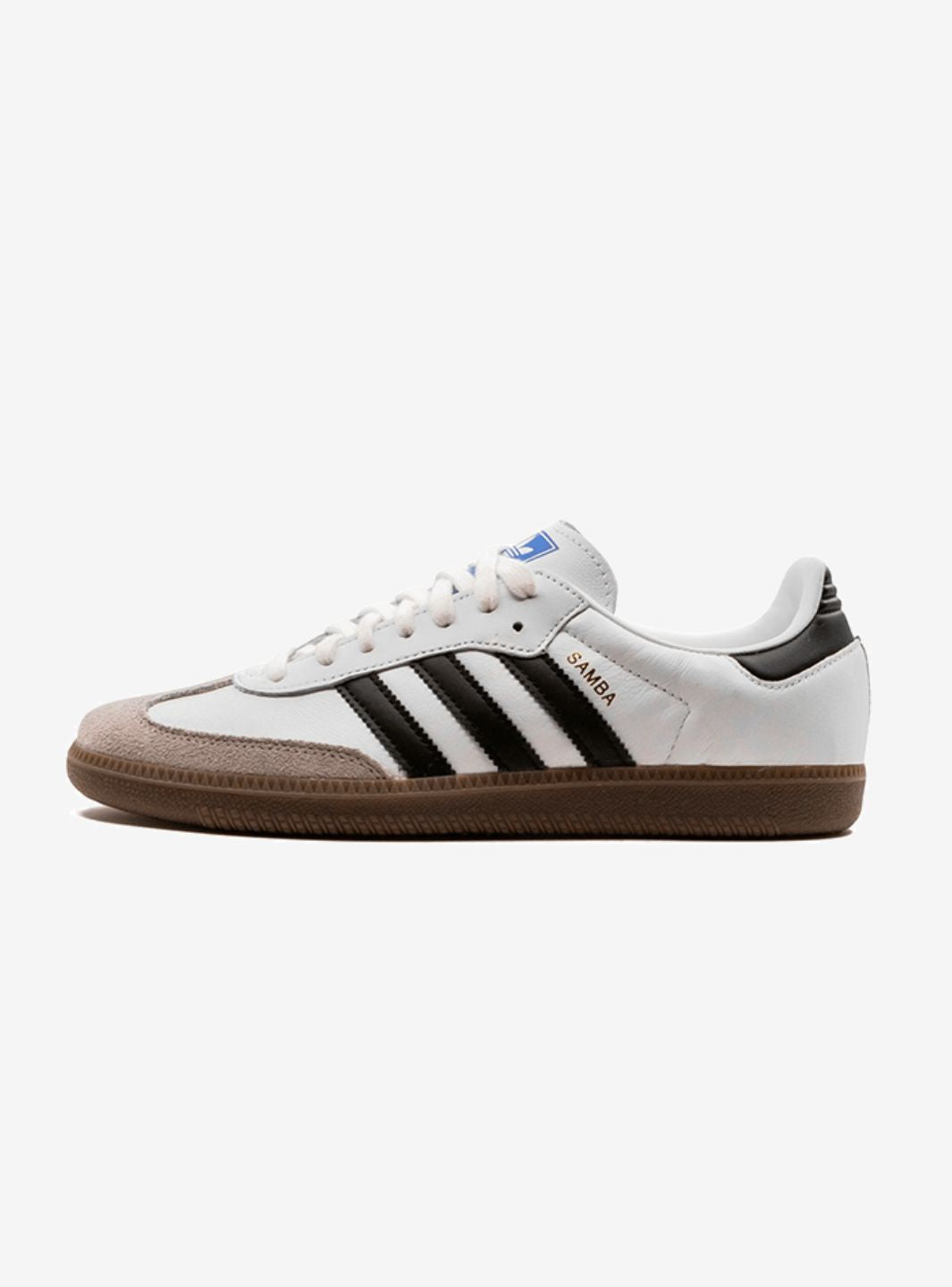
Adidas Samba: history, design and sneaker culture
The Adidas Samba is one of the longest-running silhouettes in the history of the Three Stripes. Its origins date back to 1950, when Adidas developed a football shoe designed to offer greater grip on icy and snowy pitches.
The original model is very different from the Samba we know today. Over the decades, the shoe has been progressively updated until, in the 1970s, it reached a construction much closer to the modern silhouette.
From football pitches, the Samba subsequently entered terrace culture, skateboarding, music, and fashion, becoming one of the most recognizable sneakers in the entire Adidas catalog.
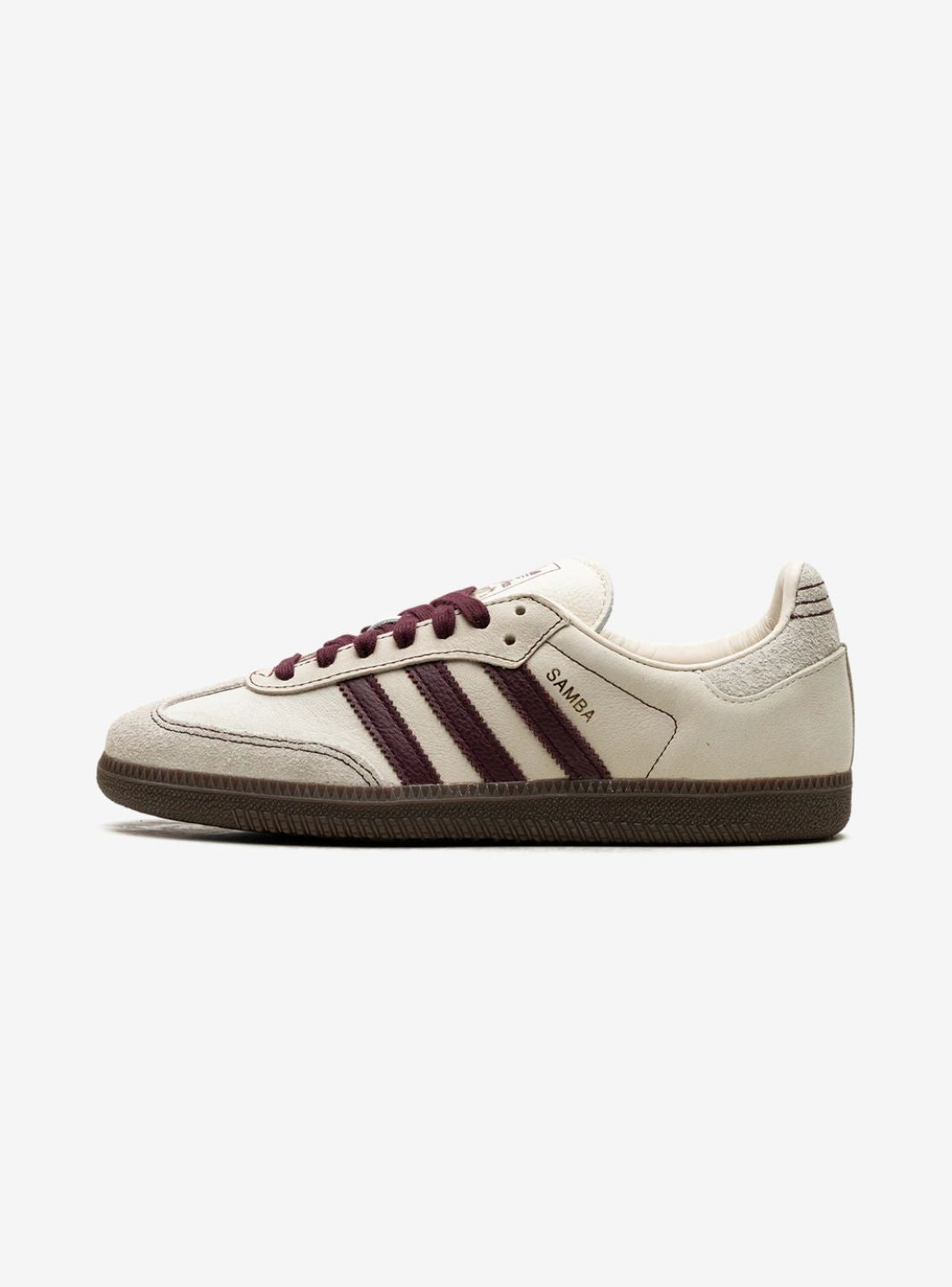
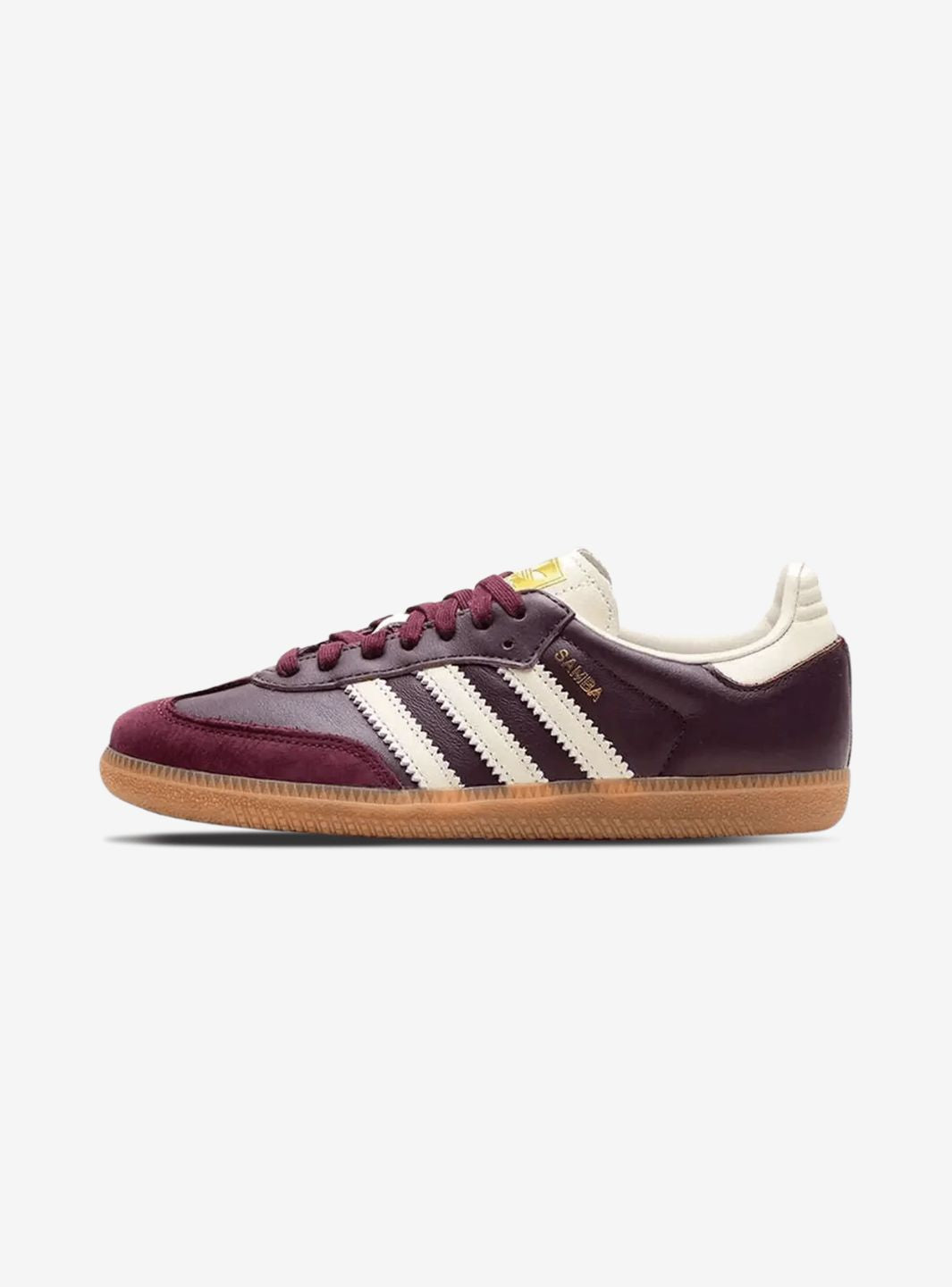
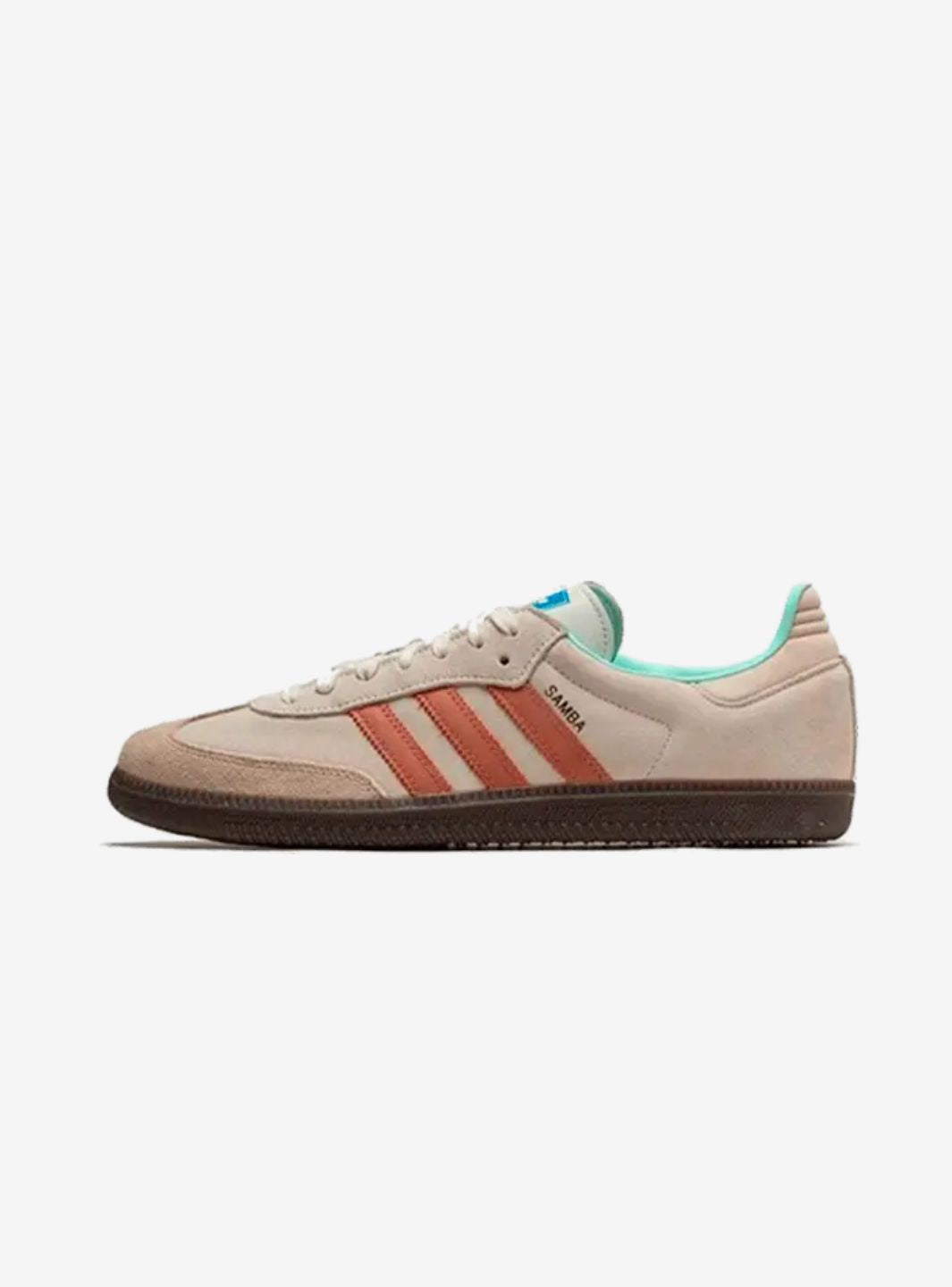
A low profile, side Three Stripes, T-toe, and gum sole remain the fundamental elements of its design to this day.
Why is it called the Adidas Samba?
The name Samba is often linked to the World Cup held in Brazil in 1950, but Adidas has clarified that this explanation does not correctly represent the origin of the model.
The story of the sneaker actually begins in Germany, where an early version was used on cold, icy fields thanks to a sole designed to increase traction and stability.
It is therefore the European football context that represents the true starting point of the Samba.
Over the years, however, the name became much larger than its original sporting function and ended up identifying one of the most globally recognizable Adidas silhouettes.
Adidas Samba OG: what does OG mean?
The Adidas Samba OG designation identifies versions that maintain a particularly direct relationship with the silhouette's historical design.
The classic construction generally uses a low profile, side Three Stripes, a T-toe on the front, and a rubber sole that strongly contributes to the sneaker's retro aesthetic.
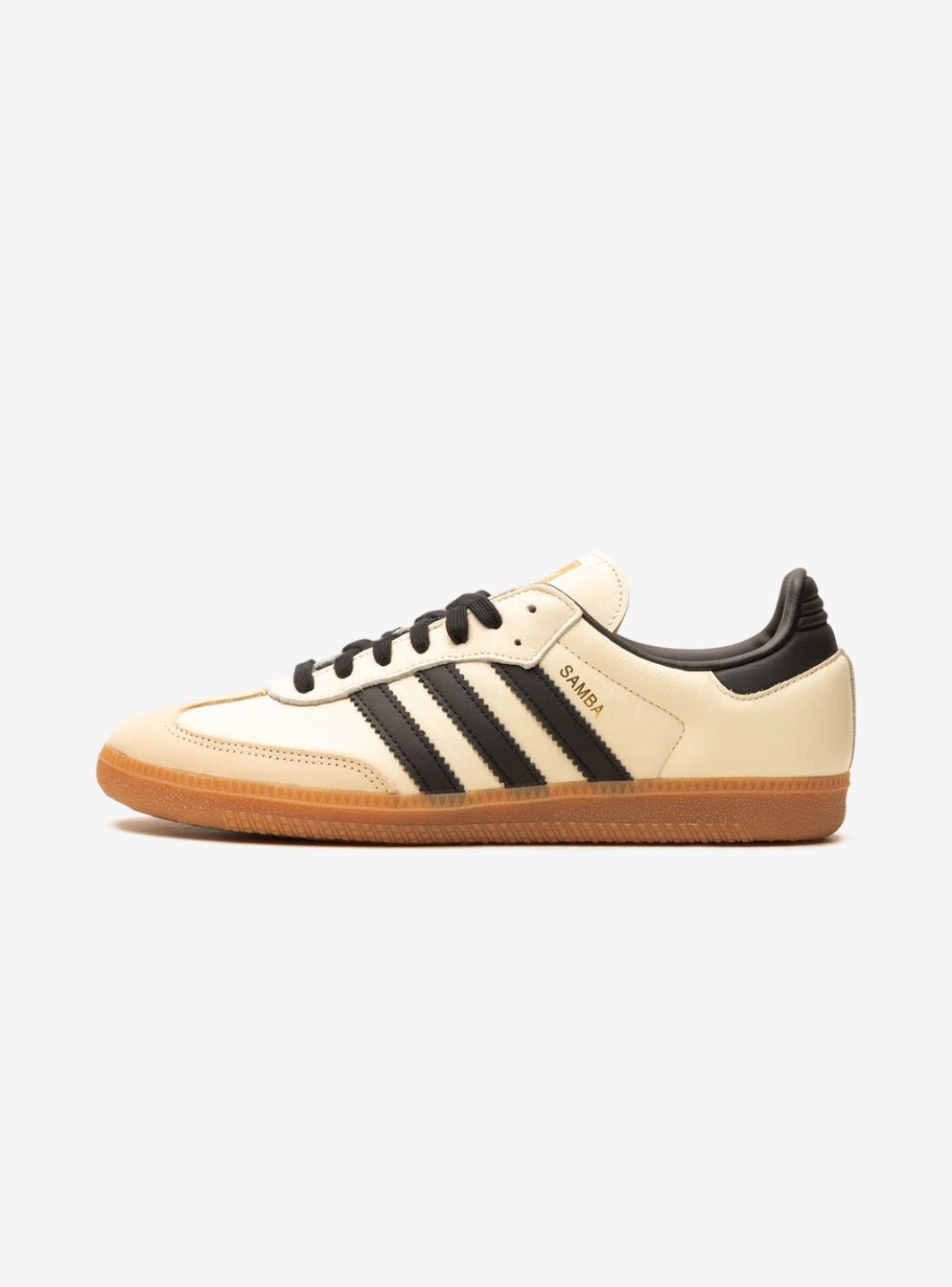
Models like the Adidas Samba OG Cloud White Core Black represent this language well: light leather, black details, and a gum sole make up one of the configurations most associated with the modern Samba.
However, OG does not indicate a completely separate collection. Within the Samba family, OG versions, collaborations, and reinterpretations coexist, all sharing the same design DNA.
Black and white Adidas Samba OG
Black and white combinations represent some of the most recognizable configurations of the Samba.
The light base with black Three Stripes maintains a particularly direct relationship with the sneaker's historical imagery, while the black versions allow for a more uniform result while keeping the T-toe and side branding visible.
Over time, Adidas has used these bases as a starting point for numerous variations in materials, soles, and details.
It is precisely the simplicity of the structure that allows the Samba to change character significantly through relatively small changes to the palette.
Leopard-print, Cow Print and animalier Adidas Samba
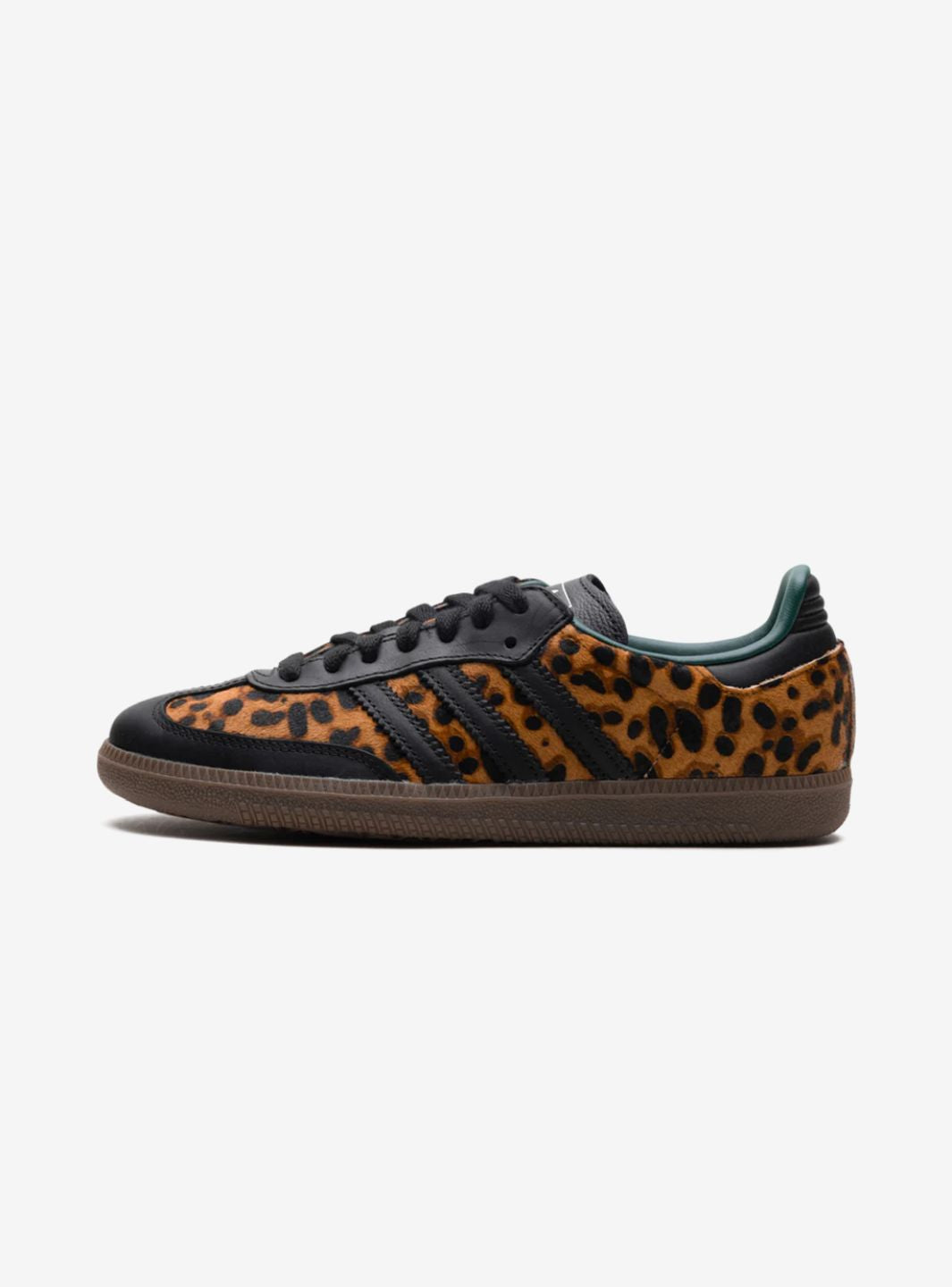
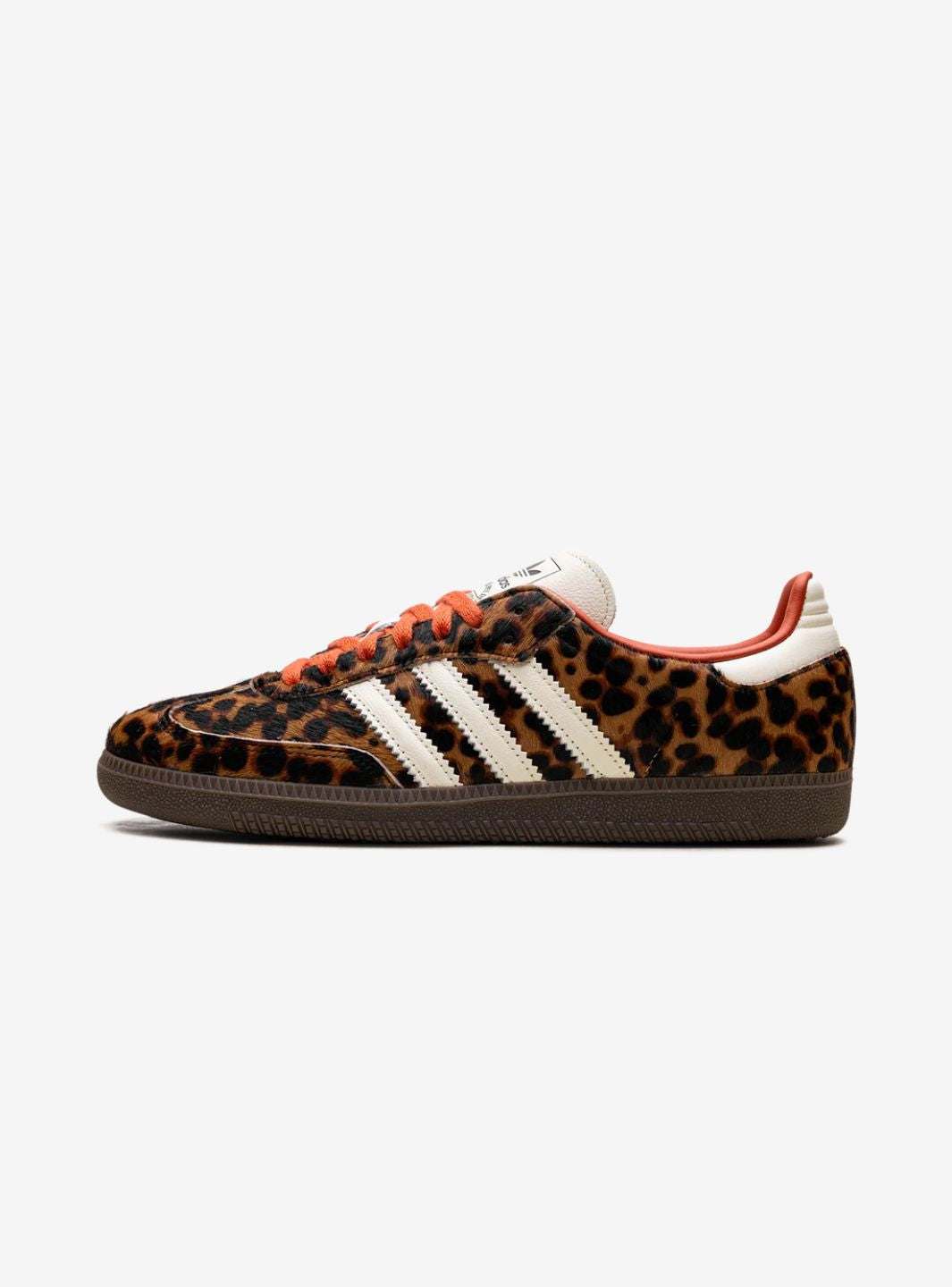
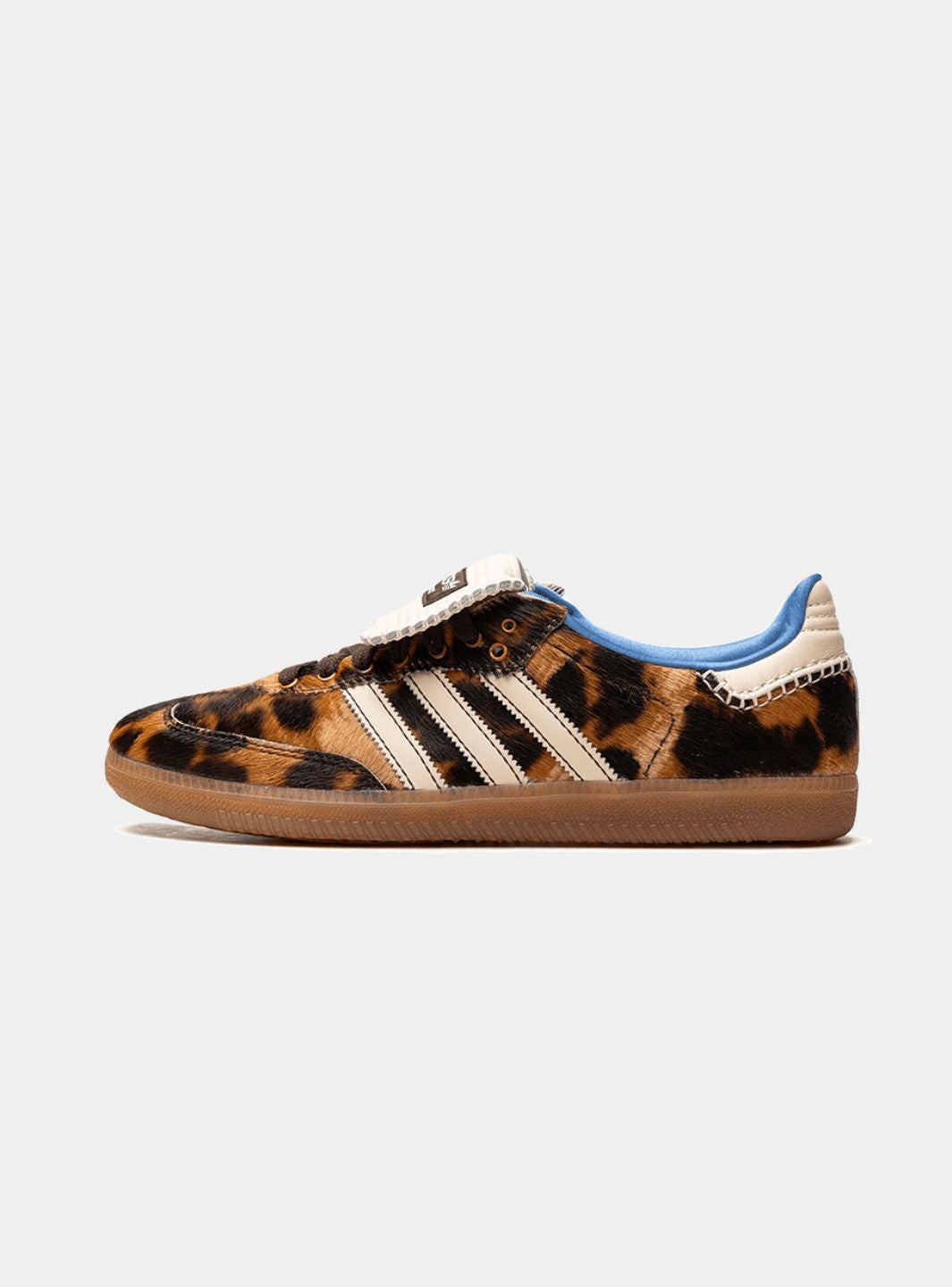
Leopard-print Adidas Samba and animalier variants represent one of the most recognizable contemporary evolutions of the silhouette.
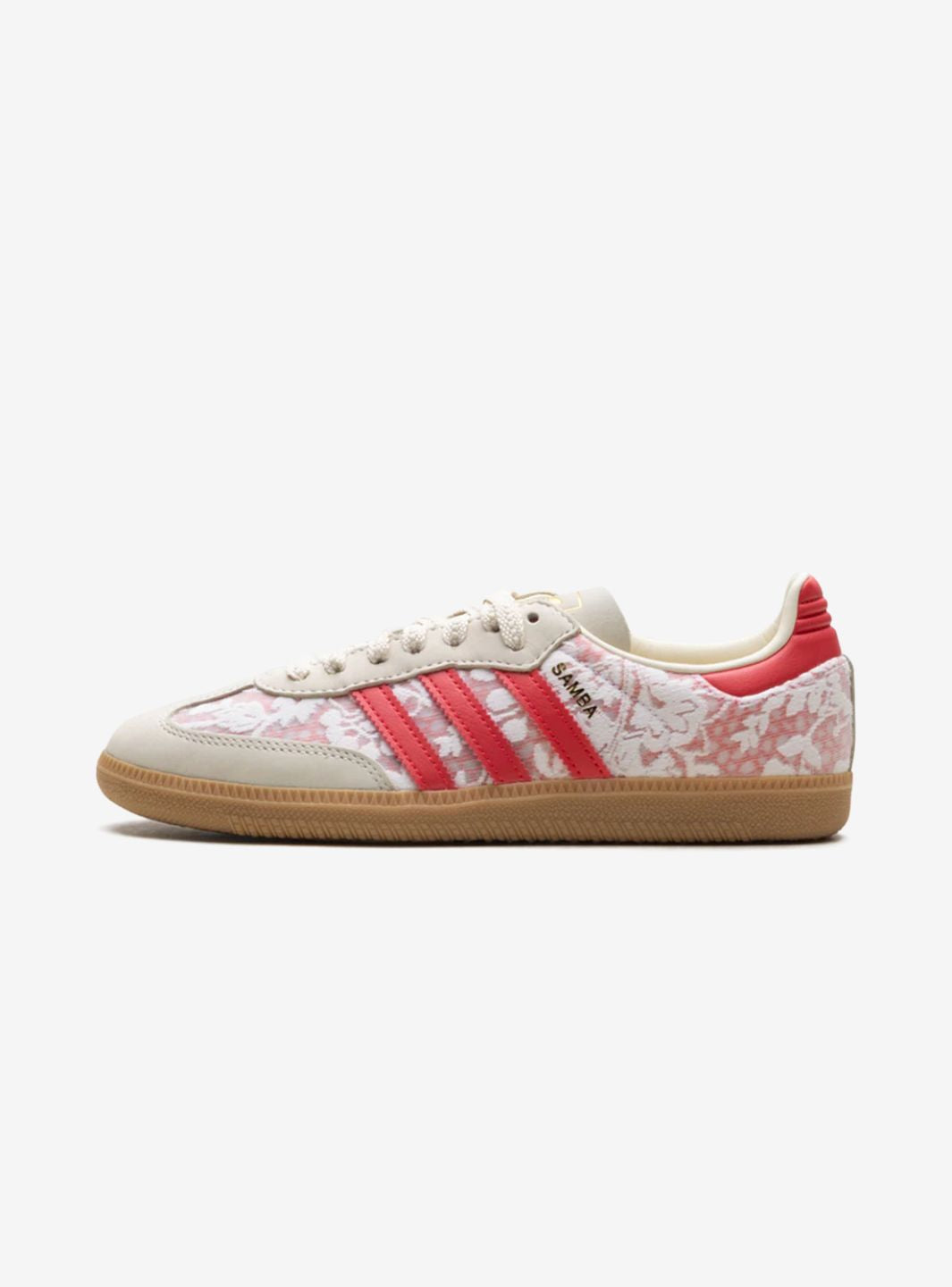
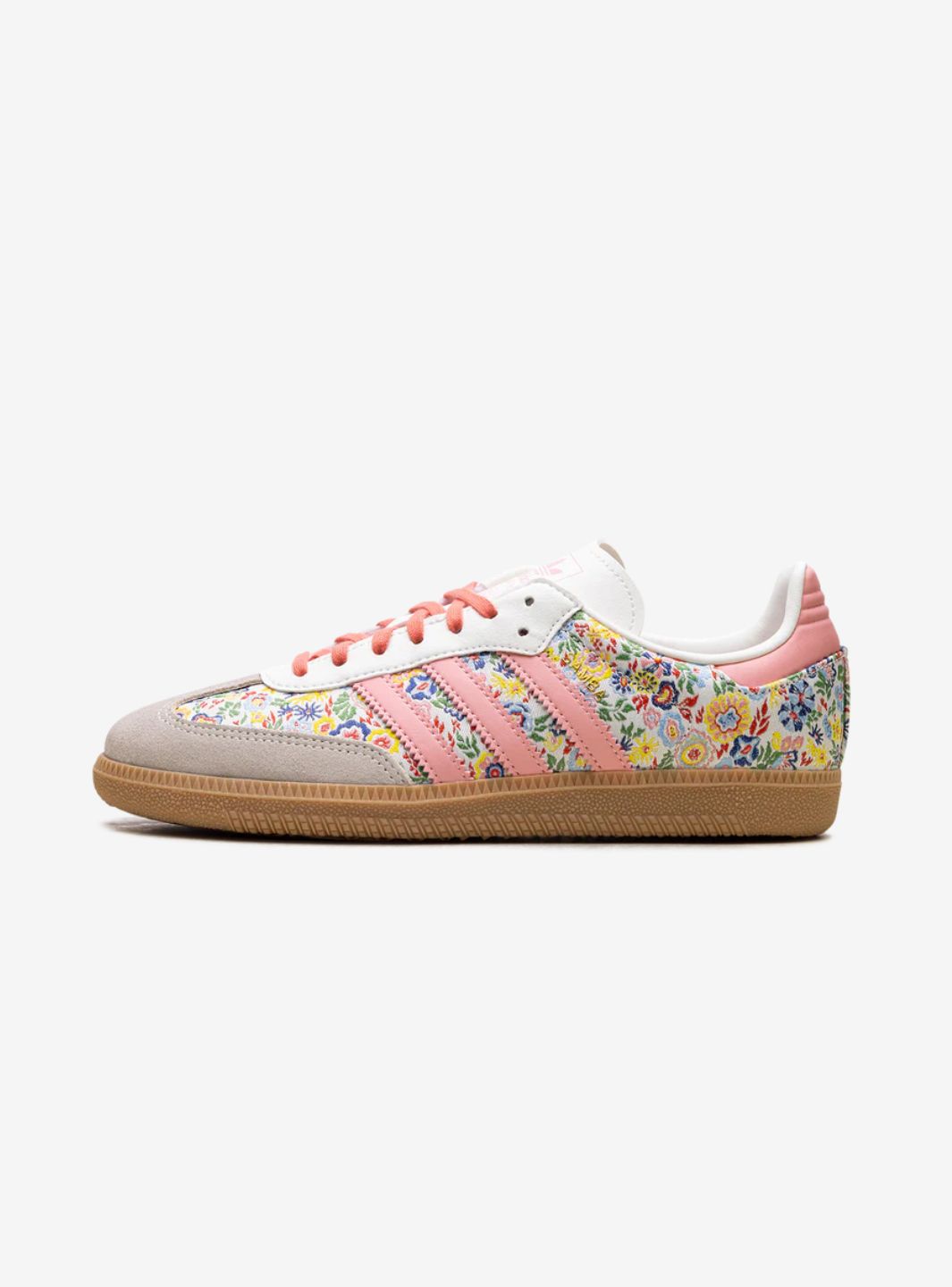
The relatively simple structure of the Samba allows specific patterns and materials to take a central role without changing the fundamental shape of the sneaker.
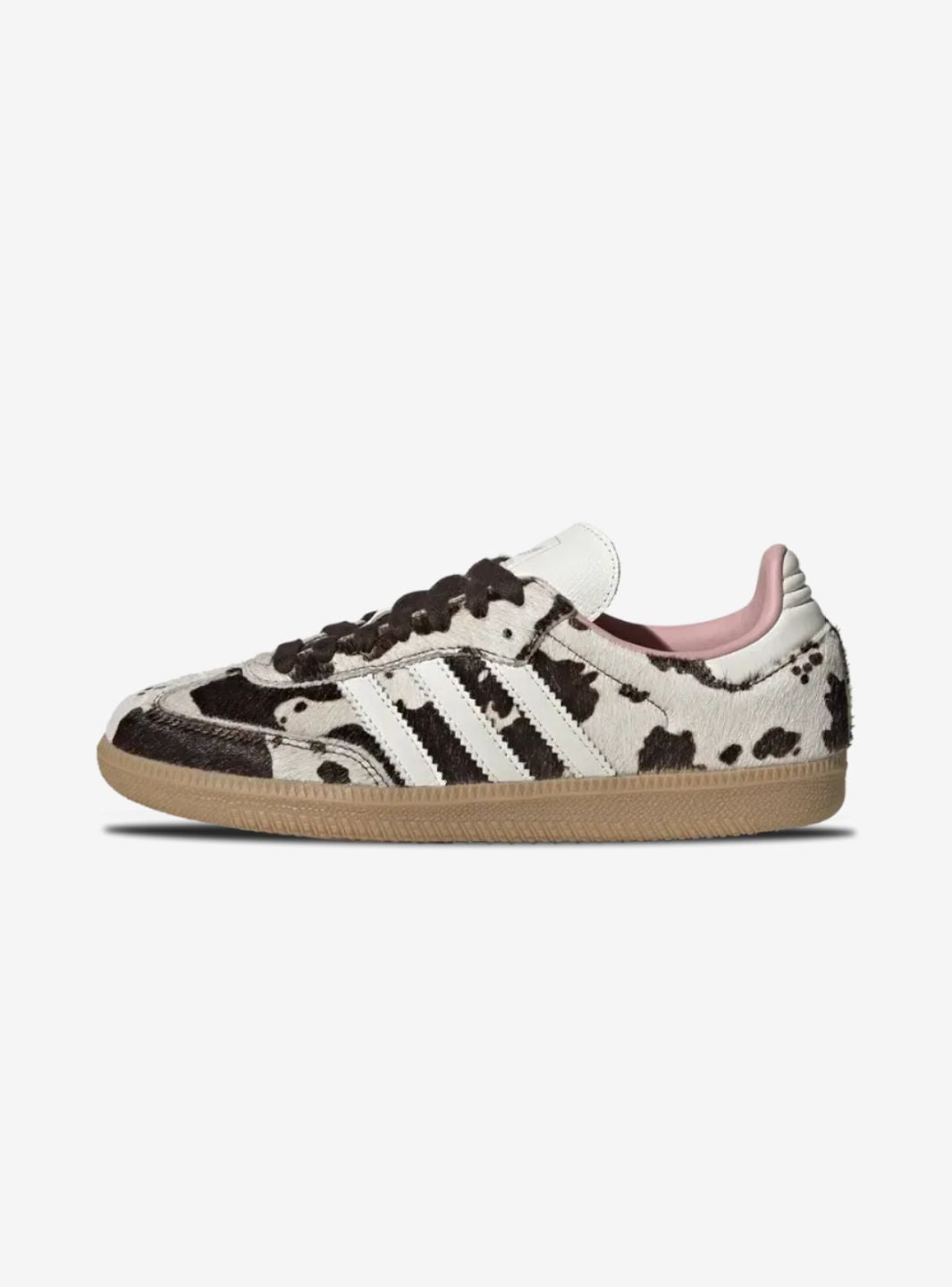
The Adidas Samba OG Cow Print, for example, uses a black and white bovine print while maintaining the Three Stripes and construction typical of the Samba.
Other interpretations use leopard motifs, pony hair, and animal textures, creating a very evident contrast with the more traditional Samba OG versions.
These versions show how a silhouette born over seventy years ago can be reinterpreted through contemporary materials and patterns without losing its identity.
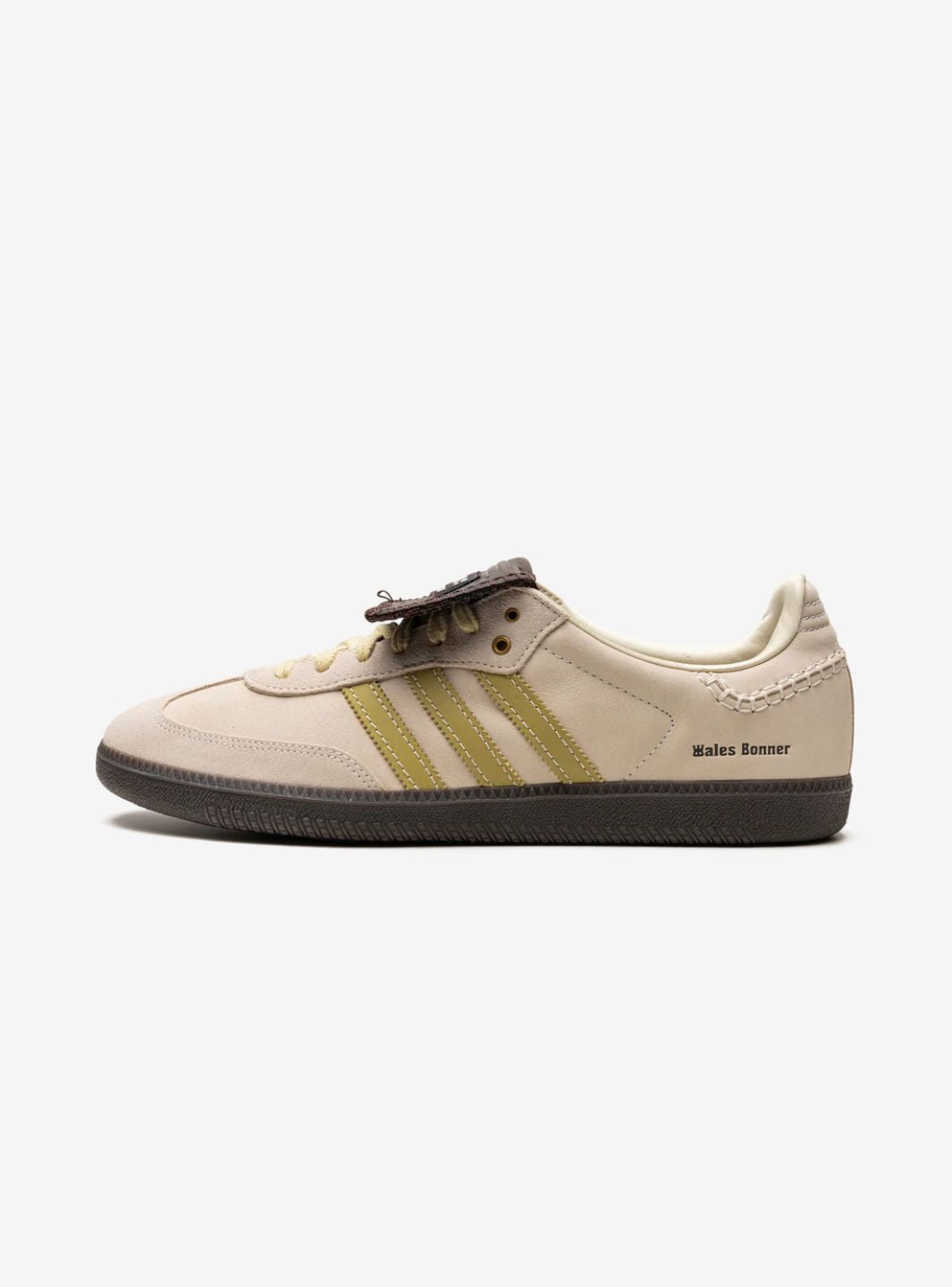
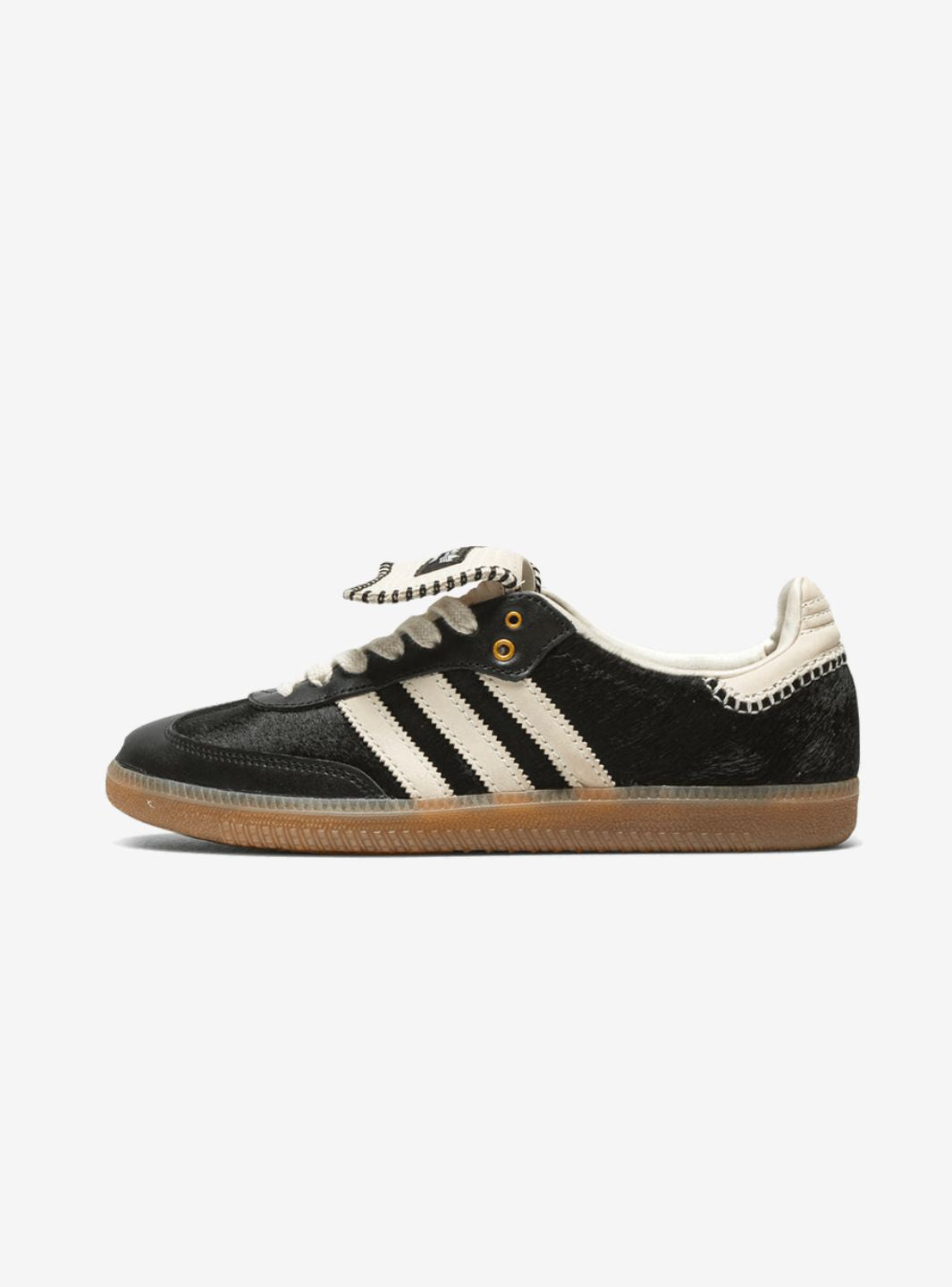
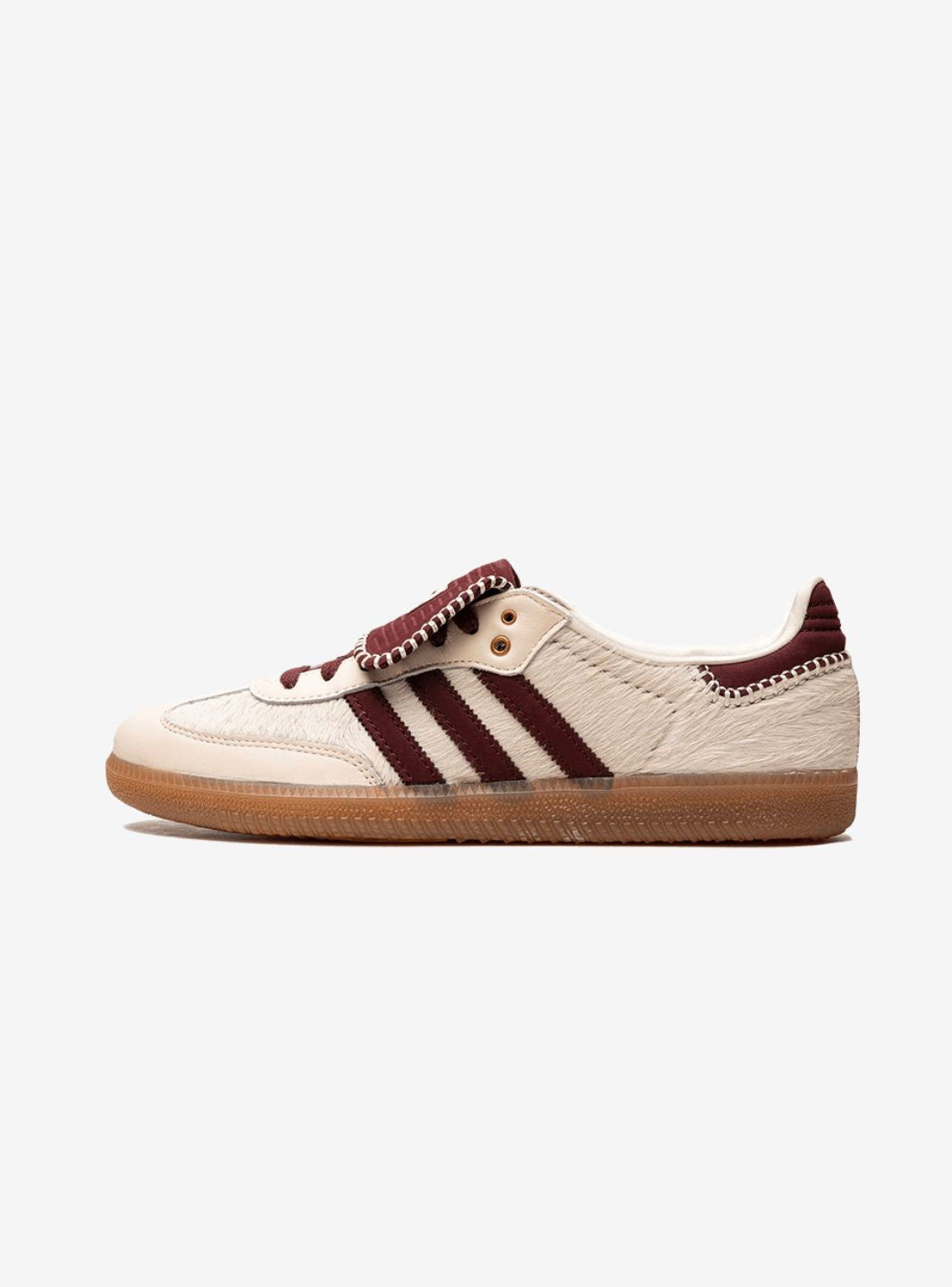
Adidas Samba x Wales Bonner
The relationship between Adidas and Wales Bonner represents one of the most important chapters in the recent history of the Samba.
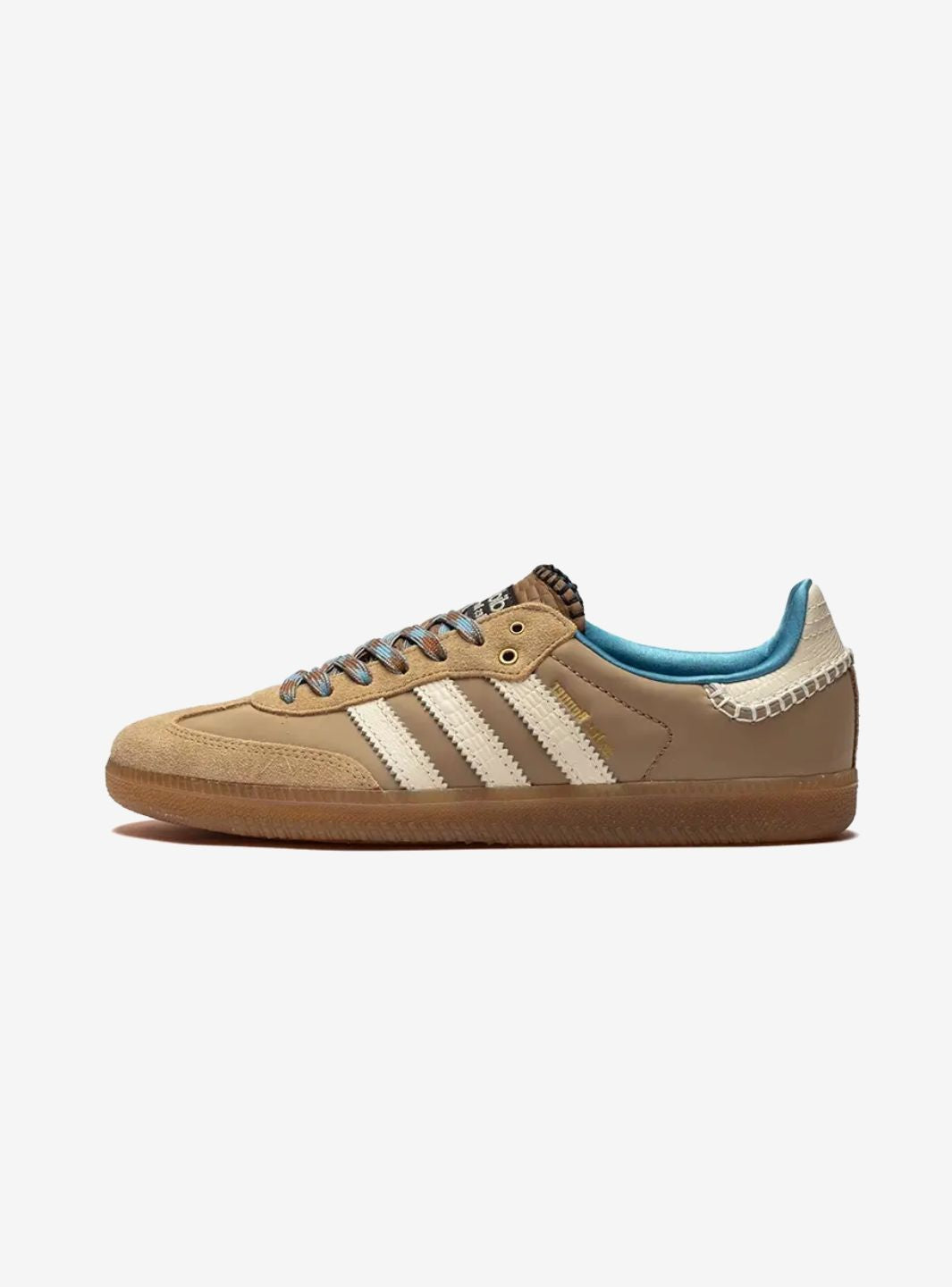
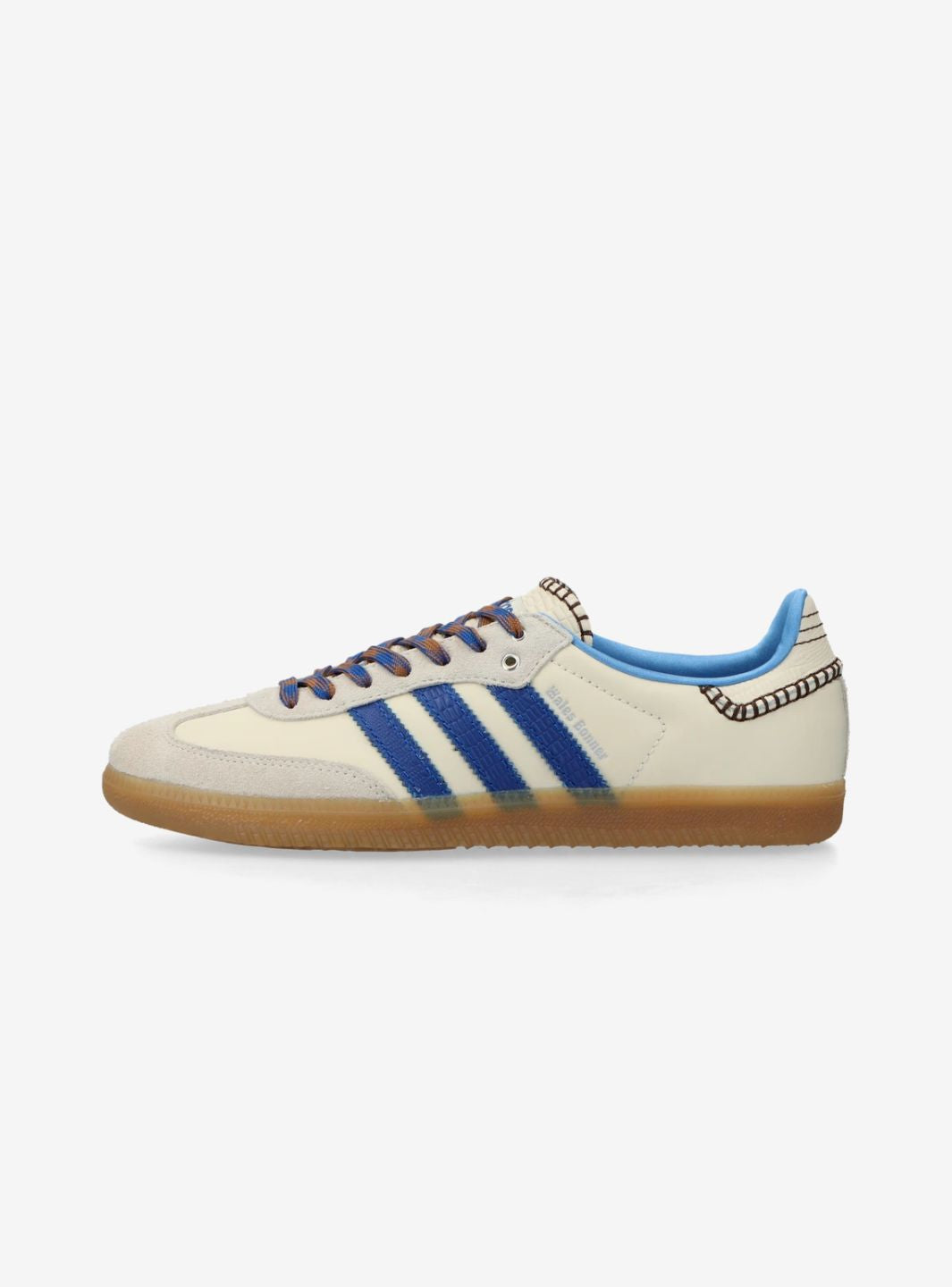
Grace Wales Bonner uses the silhouette as a base to work on materials, textures, tongues, colors, and details that bring the sneaker closer to the territory of fashion.
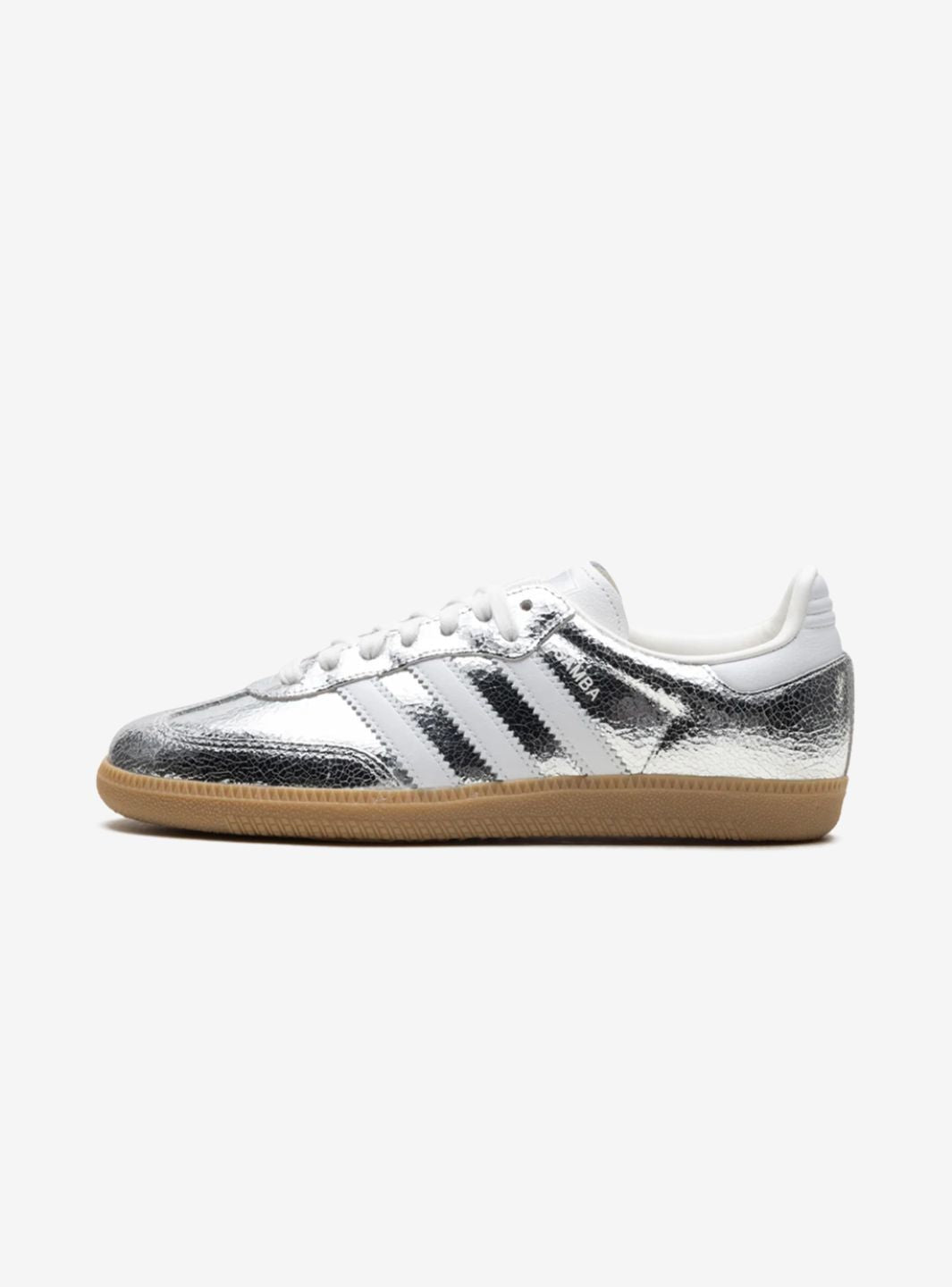
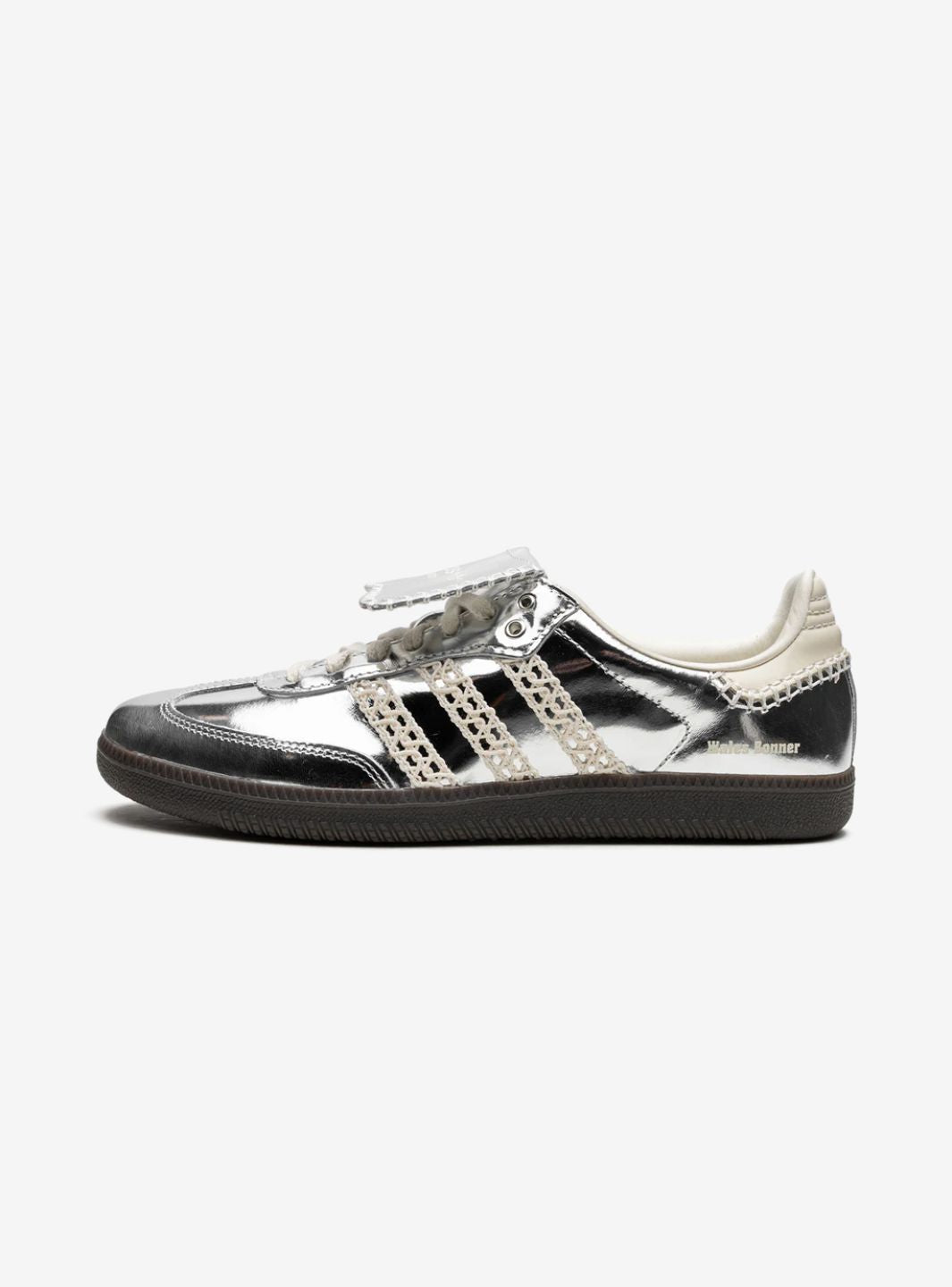
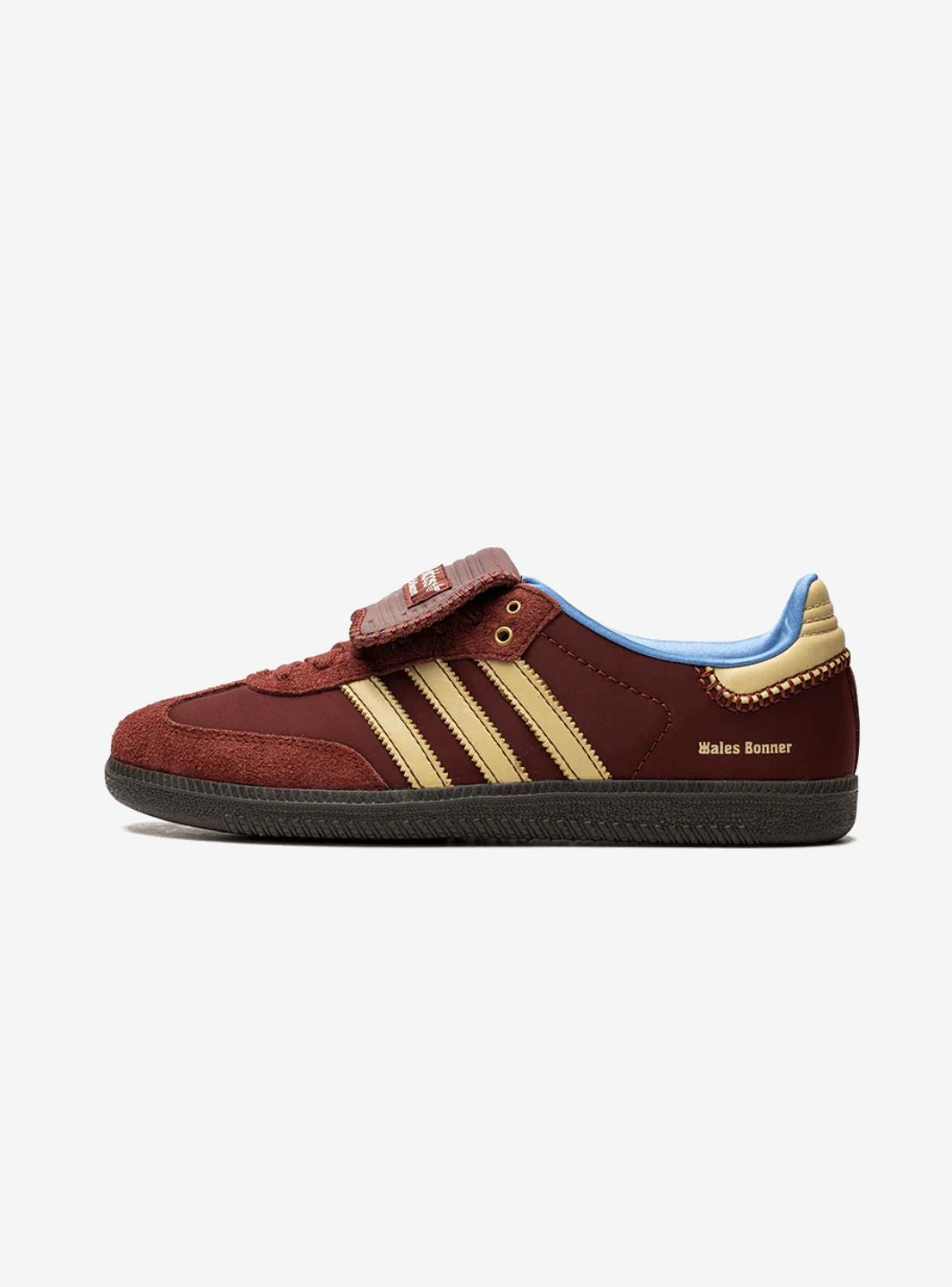
Suede, pony hair, leather, nylon, metallic finishes, and particular constructions progressively transform the Samba without erasing its Three Stripes, T-toe, and fundamental proportions.
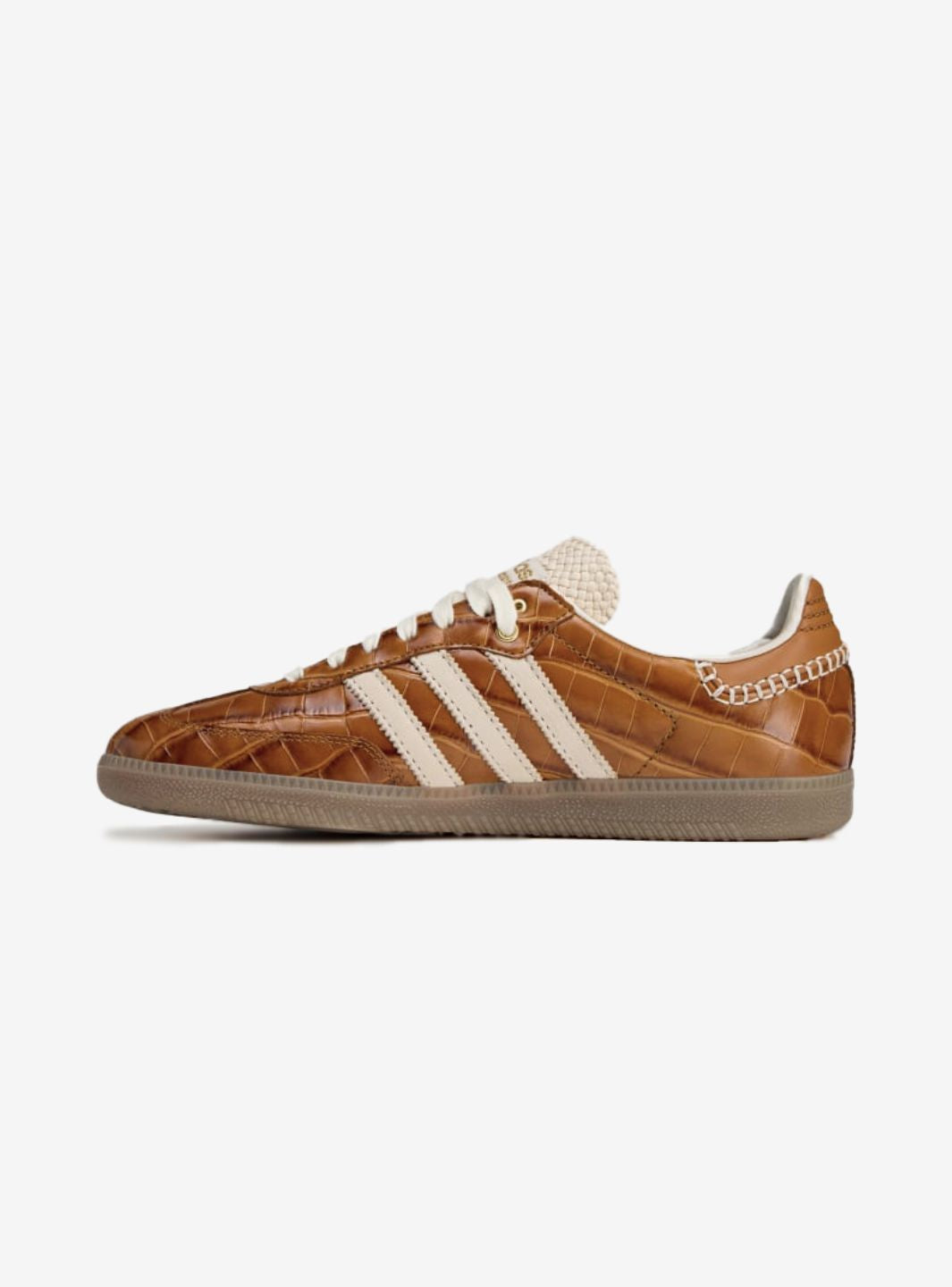
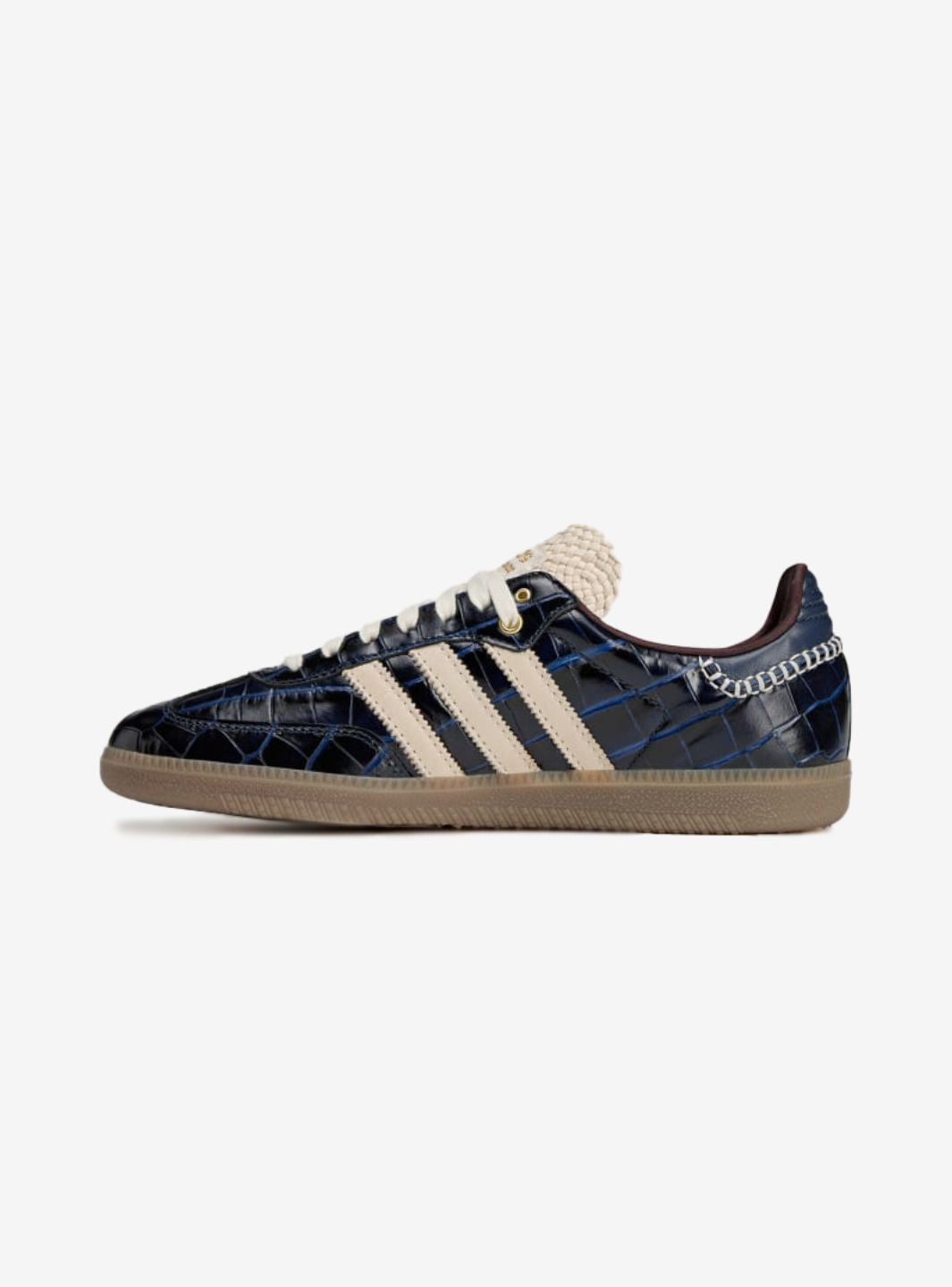
The collaboration includes interpretations such as Navy Croc, Silver, Brown Croc, and numerous Nylon and Pony versions.
The success of the project has made Wales Bonner one of the research efforts most closely associated with the Samba today, but the collaboration maintains its own identity, broad enough to be organized within a dedicated collection.
Samba Wales Bonner in pony hair, nylon and leather
One of the aspects that most distinguishes the Samba Wales Bonner is the variety of materials.
Versions in pony hair use much more evident surfaces and textures compared to the regular Samba OG, while the Nylon versions modify the perception of the sneaker through lighter and more technical materials.
Releases like Navy Croc or Brown Croc instead work on finishes that recall exotic textures, showing how much the same silhouette can be transformed without completely modifying its construction.
This variety also explains why Wales Bonner should not simply be treated as a single colorway of the Samba: the project spans multiple seasons and numerous different interpretations.
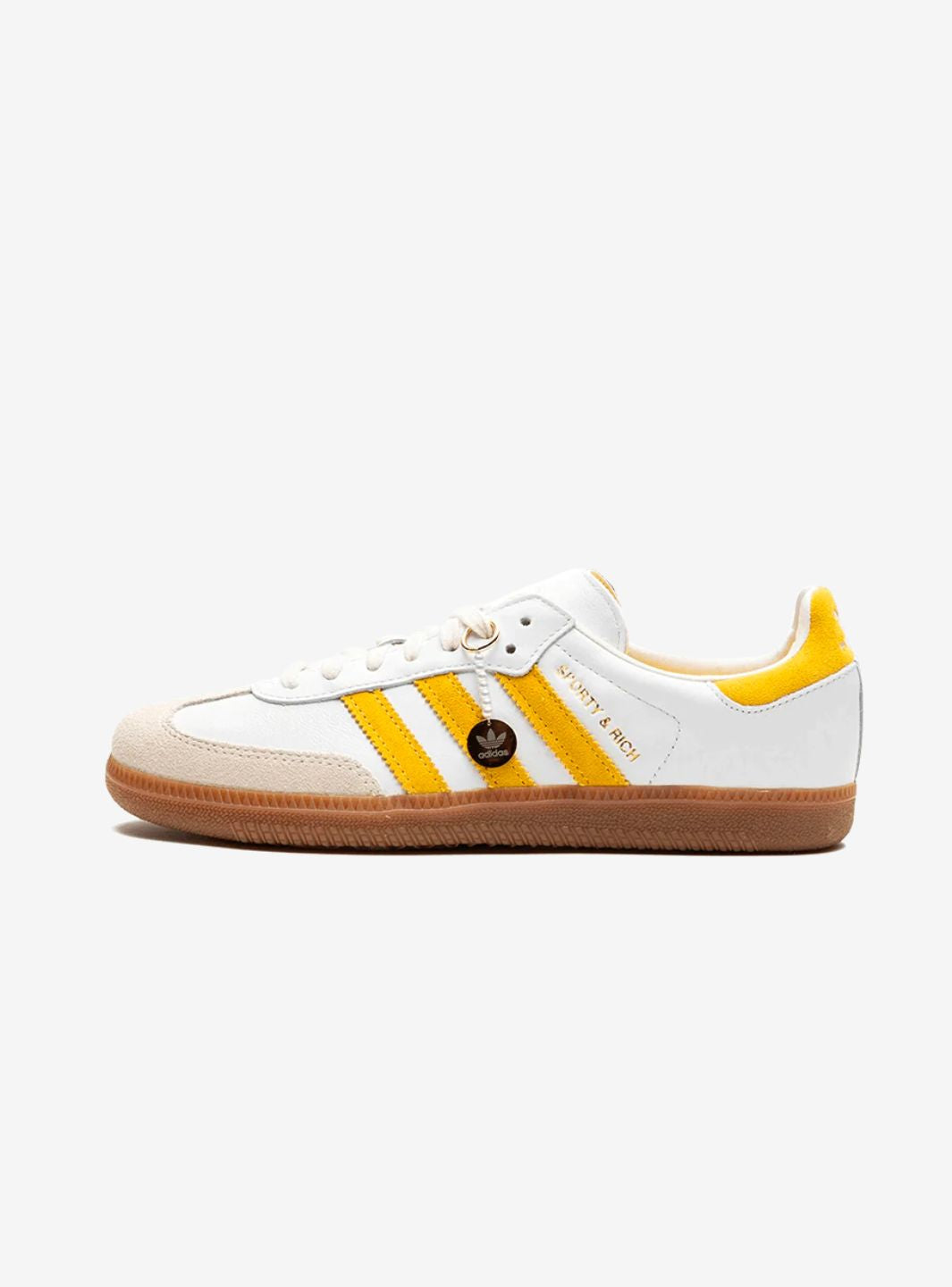
Adidas Samba x Sporty & Rich
Sporty & Rich has also reinterpreted the Samba through several releases.
The brand generally uses relatively clean palettes and retro references, maintaining a strong continuity with the classic character of the silhouette.
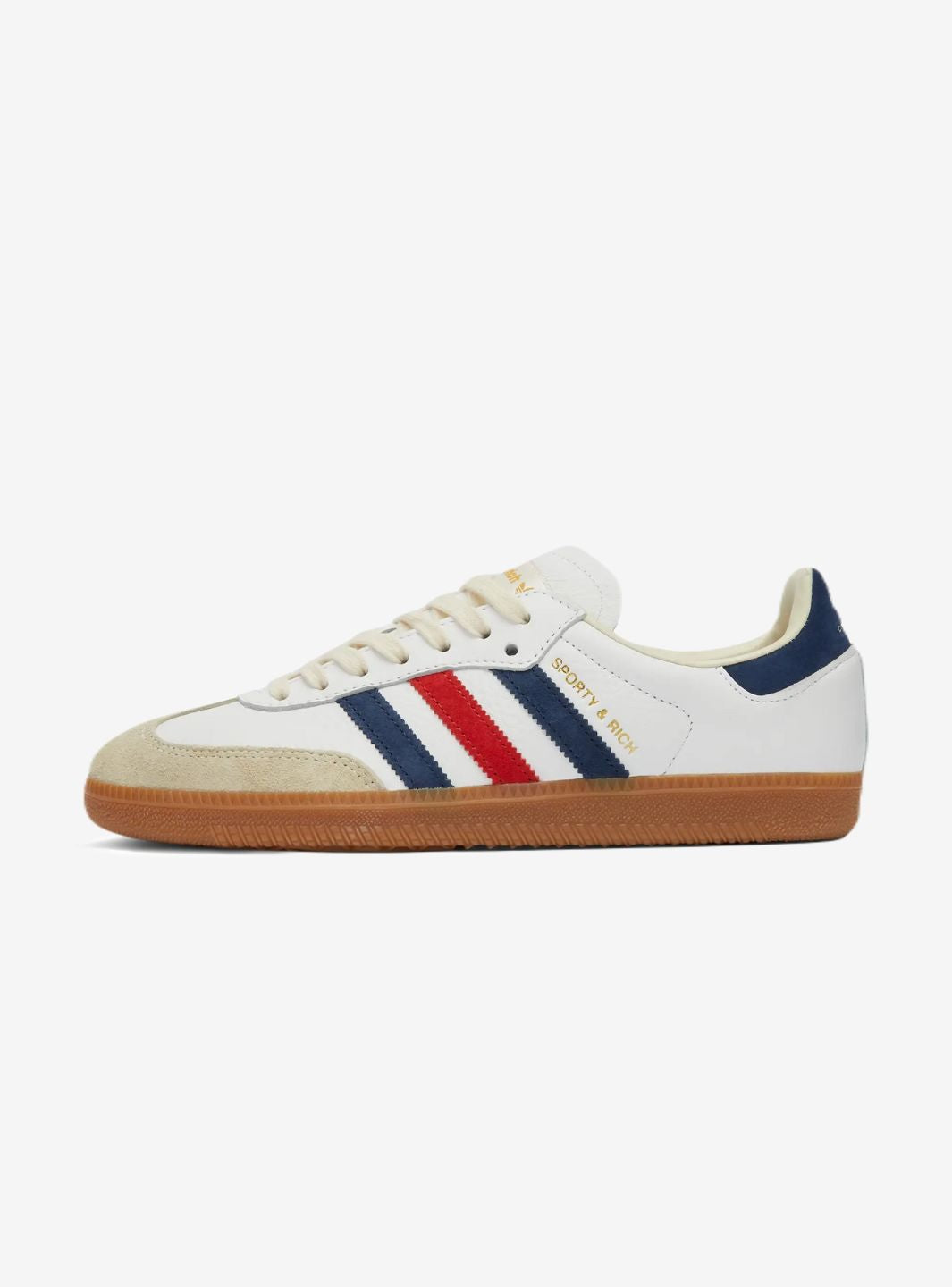
The Adidas Samba OG Sporty & Rich USA is one of the examples present in the range, along with other versions that apply the brand's lifestyle language to the Samba.
Compared to Wales Bonner, the Sporty & Rich project generally intervenes more conservatively on the structure of the sneaker, working primarily on colors, materials, and branding.
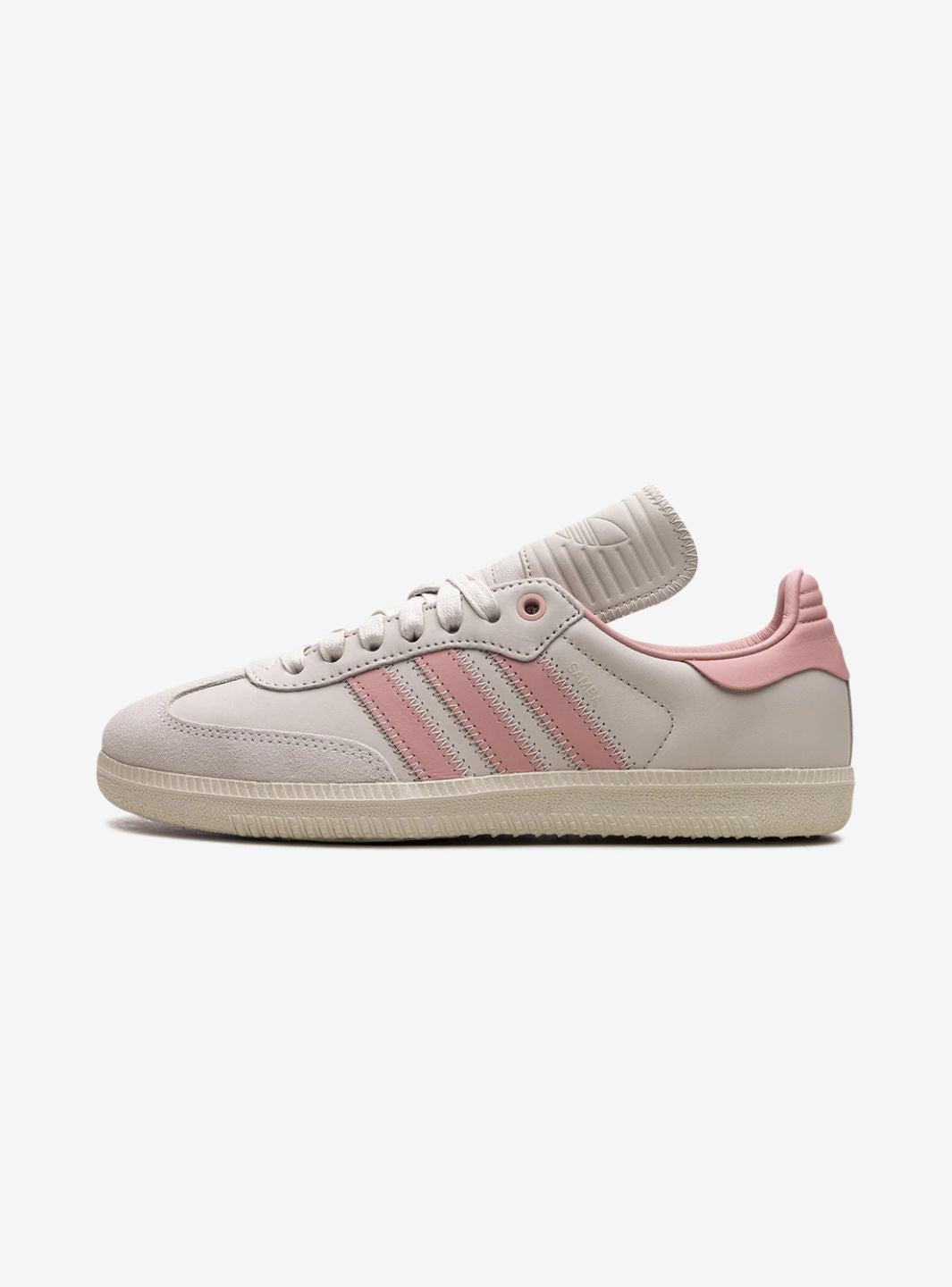
Pharrell Humanrace and Adidas Samba
The Samba has also been reinterpreted within the relationship between Adidas and Pharrell Williams.
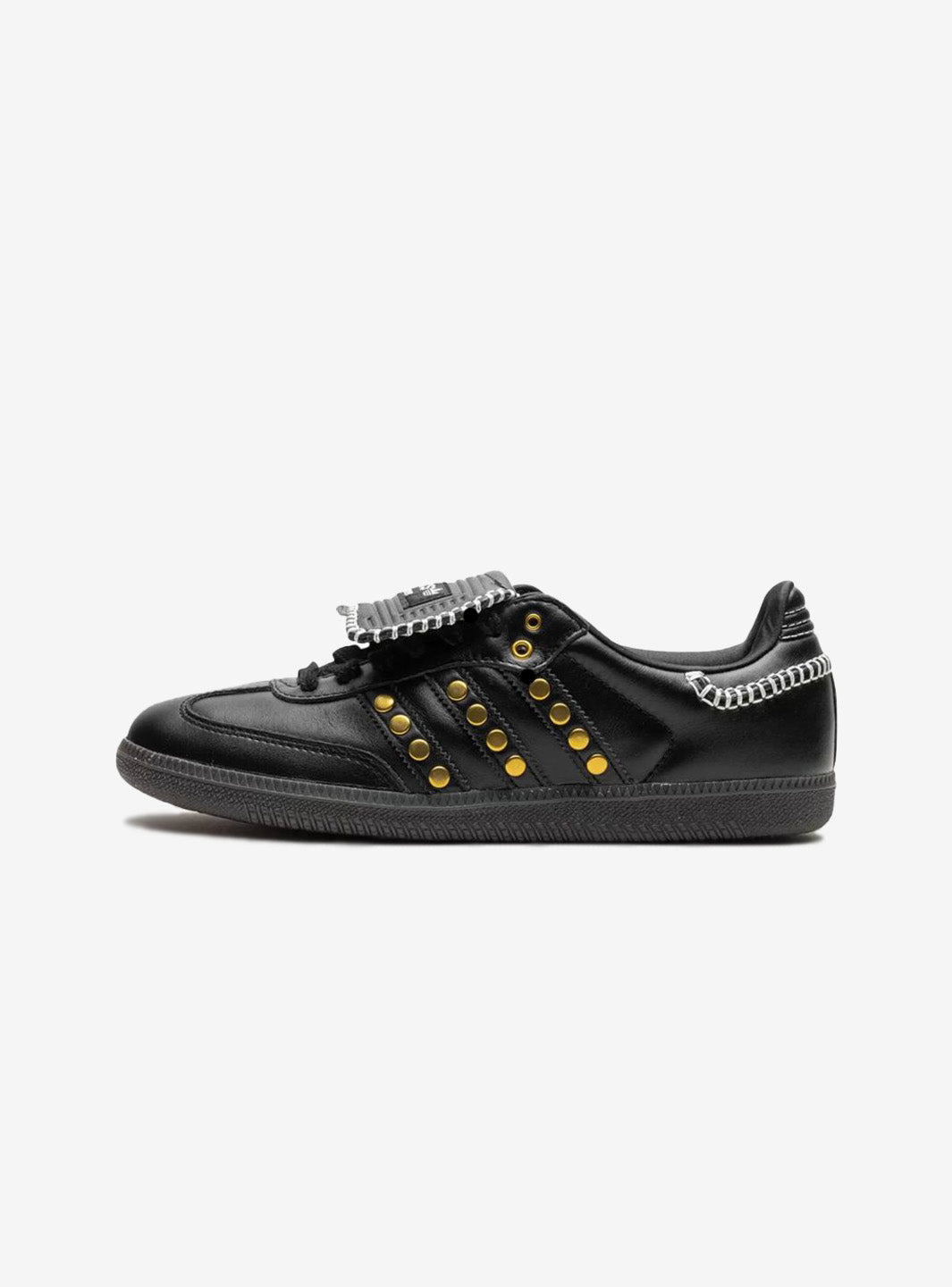
The Humanrace versions use the historical silhouette as a base but can modify materials, proportions, and details to fit it into the language of the Pharrell project.
The presence of a Samba Humanrace alongside the Samba OG and fashion collaborations demonstrates how well the model manages to move between different worlds: sports heritage, streetwear, and contemporary fashion.
This ability to change context represents one of the main reasons for the sneaker's longevity.
Samba, Gazelle and Handball Spezial: what are the differences?
Samba, Adidas Gazelle and Adidas Handball Spezial are often compared due to their low profile and retro aesthetic, but they have different origins and constructions.
The Samba was born from football and is recognized primarily for the T-toe and the strong presence of the gum sole.
The Gazelle, on the other hand, derives from the training world and uses a generally simpler structure and a heavy presence of suede.
The Spezial was created in 1979 for indoor handball and also maintains a low profile, but with its own proportions and paneling.
The aesthetic similarity does not make these silhouettes interchangeable: each one originates from a different discipline and period in the Adidas archive.
Samba and Adidas Campus
The Adidas Campus also belongs to the great lifestyle archive of the Three Stripes, but follows a completely different history.
The Campus derives from the world of basketball and subsequently developed a strong relationship with hip-hop and skate culture.
The Samba remains lower and more tapered, while contemporary Campuses—especially the Campus 00s—can use much more pronounced volumes, tongues, and laces.
Comparing the two families allows one to understand how much Adidas has built its lifestyle catalog starting from very different sports disciplines.
Men's and women's Adidas Samba
Men's and women's Adidas Samba are now offered in a wide variety of sizes and releases.
Most lifestyle Sambas can be worn regardless of the Men's or Women's classification, though one should pay attention to the size conversion used by the specific release.
Materials and construction can also affect the fit. A traditional Samba OG may have a different feel compared to a Wales Bonner version in pony hair, nylon, or more structured leather.
To choose correctly, it is therefore useful to always consider the EU size and the characteristics of the specific release.
How much do Adidas Samba cost?
The price of the Adidas Samba changes according to the version, collaboration, availability, and size.
A regularly distributed Samba OG follows different dynamics compared to a Wales Bonner, a Sporty & Rich, or a release produced in more limited quantities.
In the resale market, demand for a specific colorway, availability of individual sizes, and product condition also play a role.
For this reason, there is no single price that applies to all Sambas: it is always necessary to distinguish between the standard model, the collaboration, and the specific release.
Original Adidas Samba and authenticity
The great popularity of the silhouette makes it important to correctly distinguish each original Adidas Samba.
The shape of the T-toe, Three Stripes, materials, tongue, side logo, stitching, labels, product code, outsole, and packaging can change significantly between a Samba OG and a Wales Bonner collaboration.
The comparison must therefore always be carried out against the specific release and not by using a single Samba as a reference for all versions.
On ResellZone, each product undergoes the planned verification process to check its authenticity and correspondence with the specific release. The method used is detailed on the page dedicated to product authenticity.