

Air Jordan 2: history and design of the second Jordan
The Air Jordan 2 arrived in 1986 as the second generation of the line developed around Michael Jordan. Following the success of the Air Jordan 1, the new model changed direction by choosing a cleaner, more refined aesthetic, with the goal of bridging basketball performance and higher-end materials.
Within the Air Jordan history, the Jordan 2 therefore occupies a unique position. It does not simply attempt to update the design of the AJ1, but introduces a different language that would help establish a fundamental characteristic of the line: every new Jordan generation could have its own identity.
Nike credits Peter Moore and Bruce Kilgore as the designers linked to the original project. The silhouette was born without the traditional side Swoosh and with proportions decidedly different from the first Jordan, marking the progressive development of an autonomous Jordan identity as early as the second generation.
Made in Italy and the Air Jordan 2's premium approach
One of the most characteristic elements of the original Jordan 2 is its production in Italy.
For the 1986 model, materials and finishes were used that were designed to give the sneaker a more sophisticated appearance than many contemporary basketball shoes. The relatively clean lines of the upper, the absence of the Swoosh, and the panels with textures inspired by exotic leather contributed to building this approach.
The choice was not only about aesthetics. Nike describes the original AJ2 as one of the first sneakers to directly relate the language of high-end fashion with that of performance footwear.
The Air Jordan 2 therefore represents an important step in the construction of the Jordan brand: less dependent on traditional Nike visual codes and more focused on creating its own identity.
Air Jordan 2 Retro and Jordan 2 Low
Like many historic Jordan silhouettes, the AJ2 has also returned over time through various Retro versions.
The term Retro identifies reissues of the original model, which may feature historic colorways or reinterpret the silhouette through different materials and color combinations.
Alongside the high-top construction, there are also the Air Jordan 2 Low, which bring the characteristic elements of the AJ2 to a lower profile. The Low version does not represent a completely separate silhouette, but a different configuration of the same Jordan 2 family.
This structure has allowed the model to be reinterpreted in different ways over the years, maintaining the design developed in the eighties as a reference.
Chicago and the origins of the Jordan 2
The history of the Air Jordan 2 is closely linked to the white, red, and black colorway associated with the Chicago Bulls.
The original configuration uses a predominantly white base accompanied by red and black details, maintaining a chromatic link with Michael Jordan's sporting identity while visually distancing itself from the structure of the AJ1.
The return of Retro versions has allowed these historic combinations to re-emerge years later, joined by new colorways and collaborative interpretations.
The relationship between archive and new releases is particularly important for the Jordan 2 because a silhouette that remained less exposed for periods compared to other generations has been progressively re-read through projects that are very different from one another.
Off-White and Air Jordan 2 Low
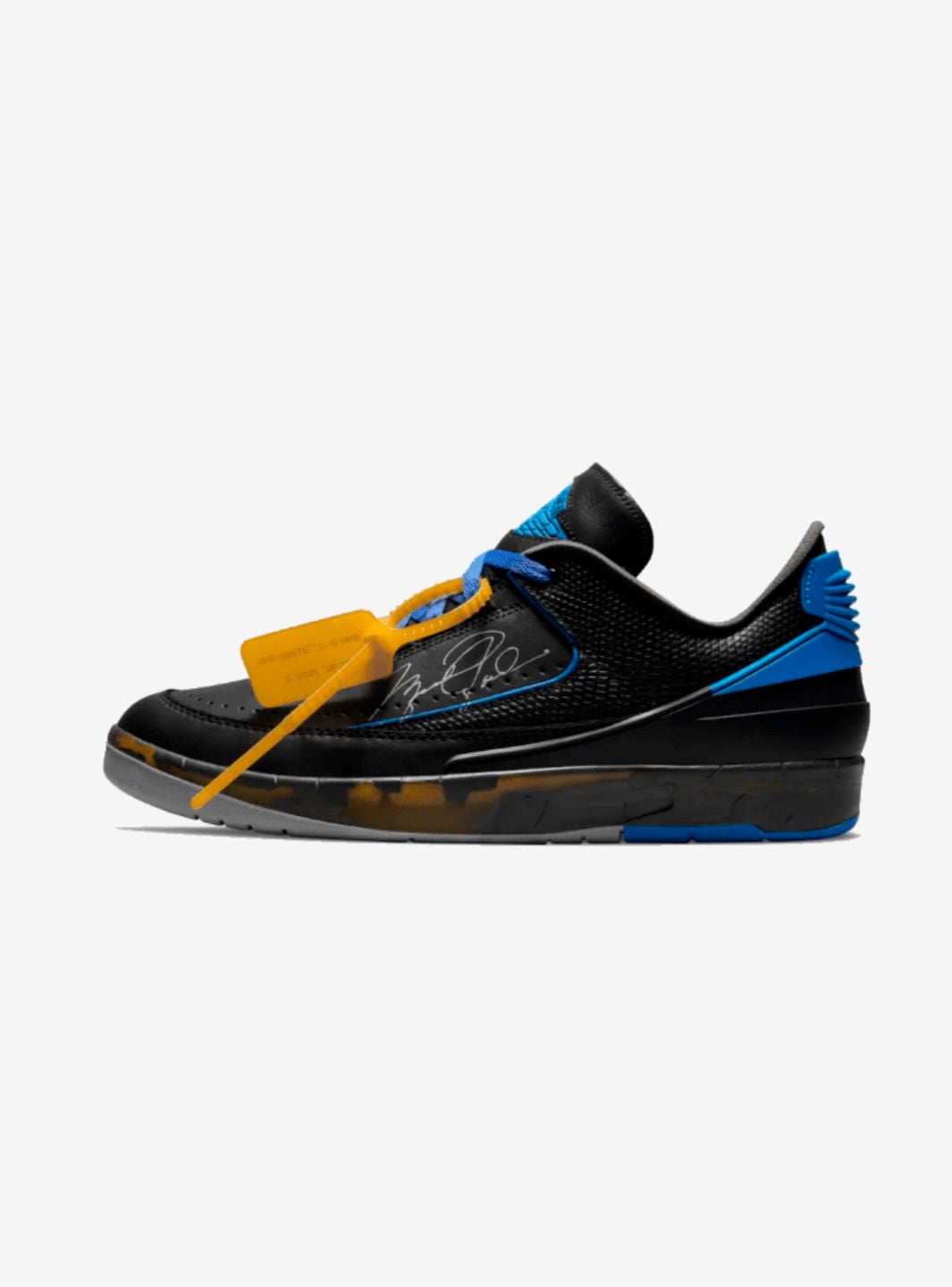
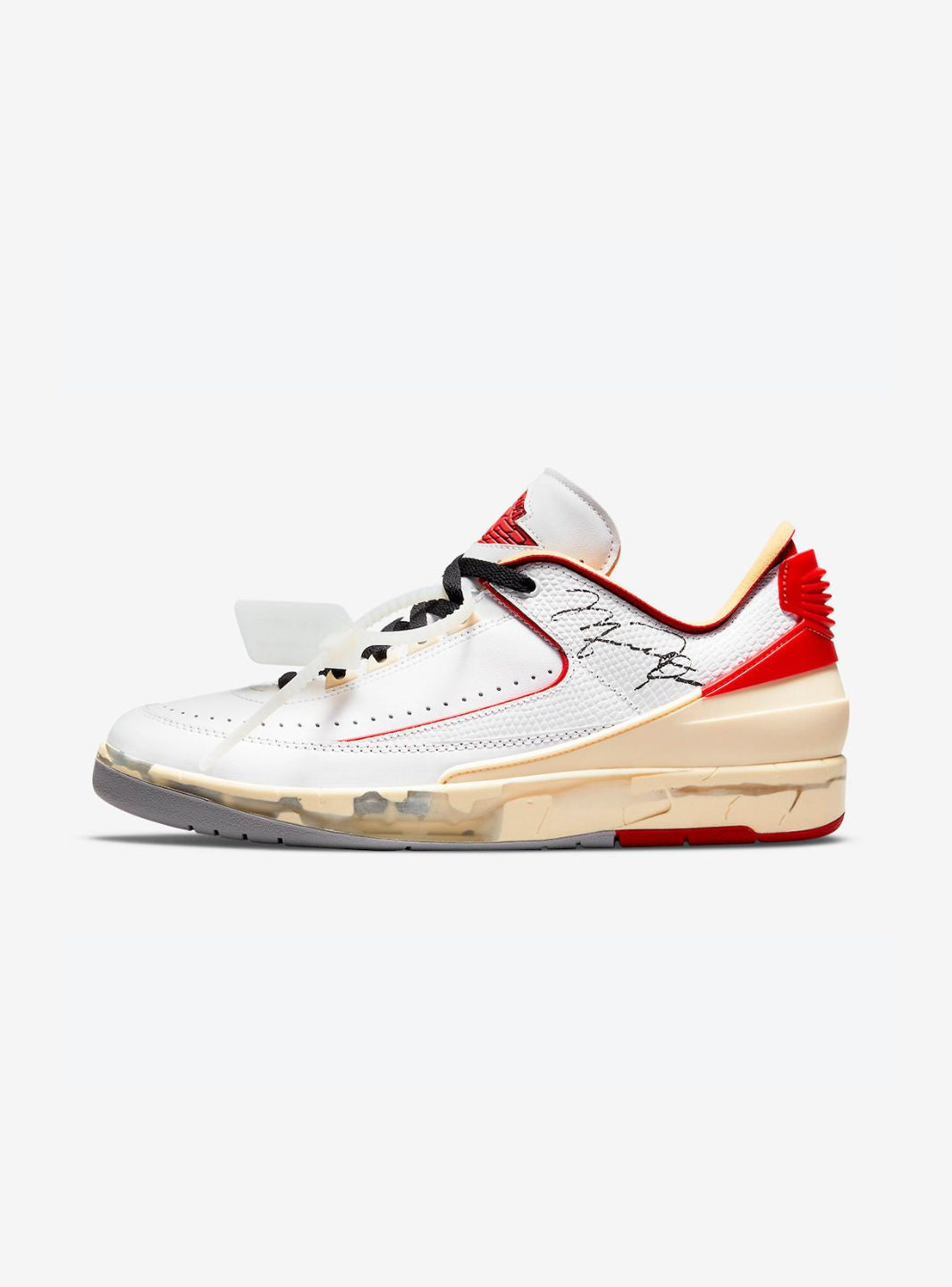
One of the most significant projects in the recent history of the silhouette is the collaboration with Nike x Off-White.
Virgil Abloh chose the Air Jordan 2 Low as a base and developed the project starting directly from the Jordan archive. Nike digitally reconstructed an original pair worn by Michael Jordan, using three-dimensional scans to reproduce even the deteriorated appearance of the midsole.
This process gave rise to one of the most recognizable details of the Off-White Jordan 2: the visually cracked midsole, designed to evoke the aging of a sneaker coming directly from the archive.
The collaboration therefore does not seek to hide the passage of time, but transforms it into part of the design, connecting a contemporary release to the material history of the AJ2.
Union and the reinterpretation of the Jordan 2
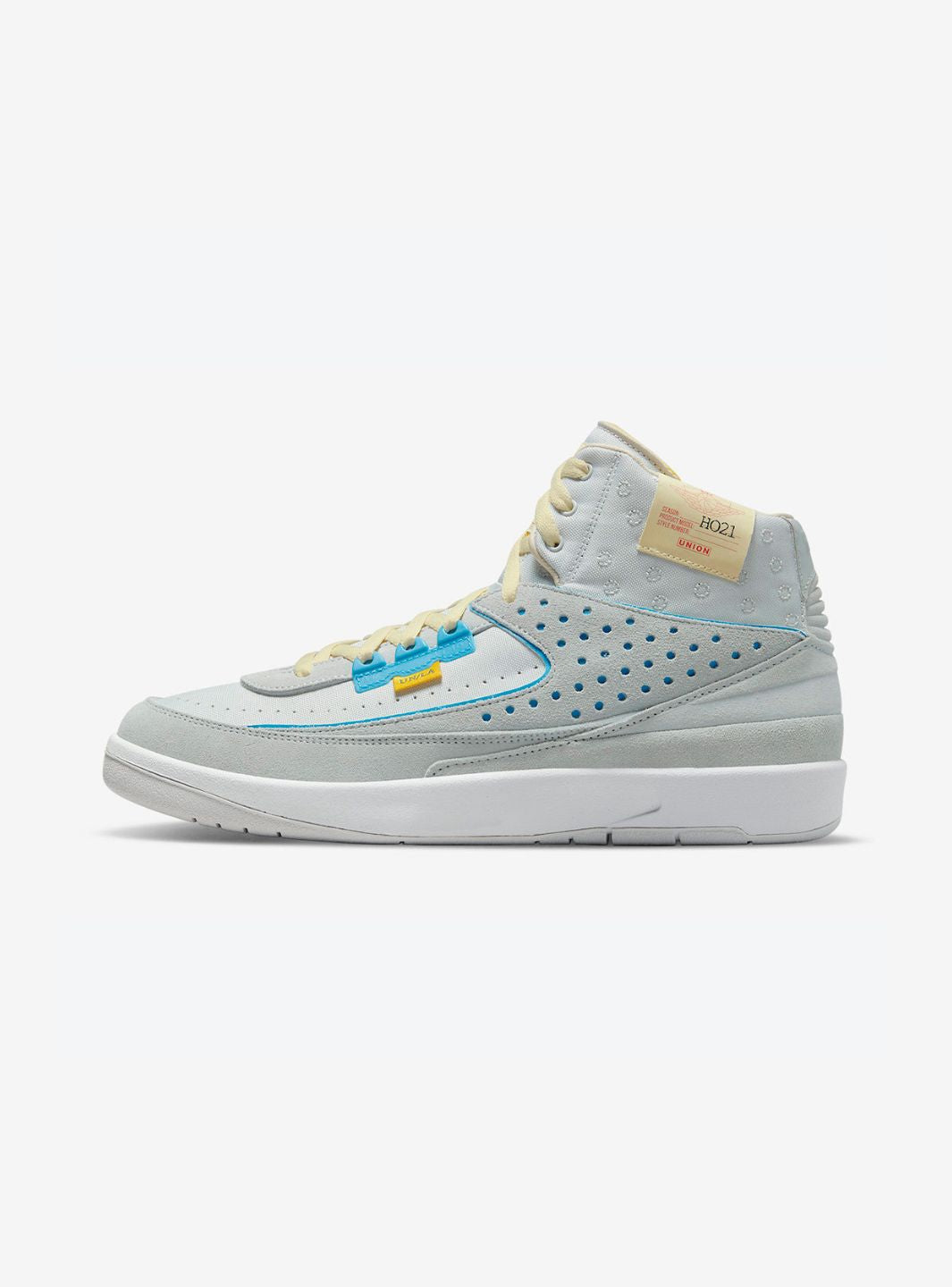
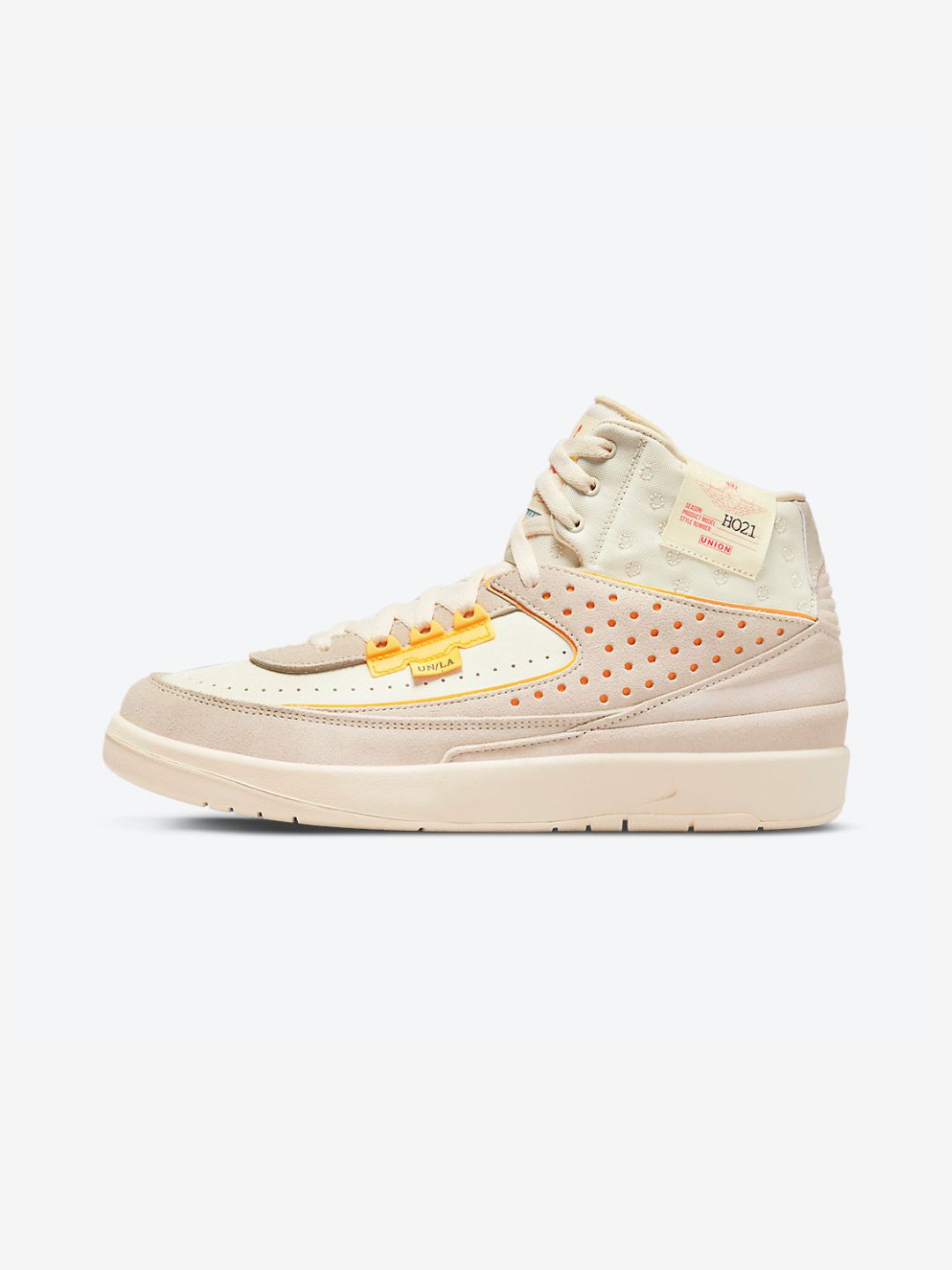
Union Los Angeles has also used the Air Jordan 2 to develop an interpretation distant from the original configuration.
The Grey Fog and Rattan versions work with canvas, suede, and materials different from the traditional leather construction, while keeping the proportions of the silhouette recognizable.
Union also inserts dedicated branding and elements inspired by its own history in streetwear, transforming the premium approach of the Jordan 2 through a more lived-in and contemporary aesthetic.
The project demonstrates how the AJ2 can be reinterpreted without necessarily having to replicate the elegant look of the original version.
A Ma Maniére, Maison Château Rouge and new interpretations
The Air Jordan 2's relationship with the concept of luxury has made it a base particularly suitable for collaborations built around materials, culture, and aesthetic research.
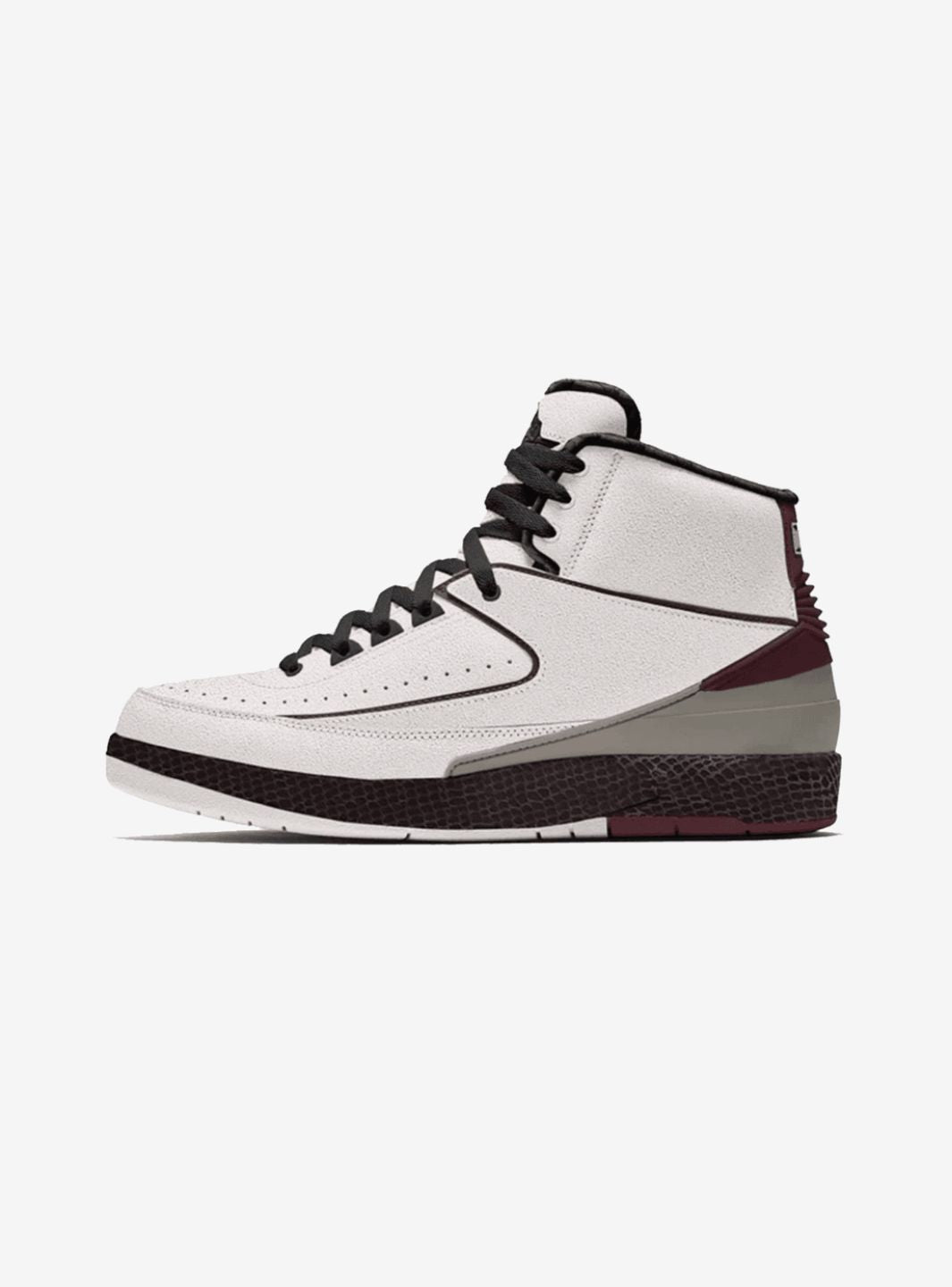
A Ma Maniére directly takes up this theme with the Jordan 2 Airness, using Sail and Burgundy shades and reinterpreting the elements inspired by exotic leather present on the original AJ2. The project starts from the same idea of elegance as the 1986 silhouette, but translates it through a contemporary language.
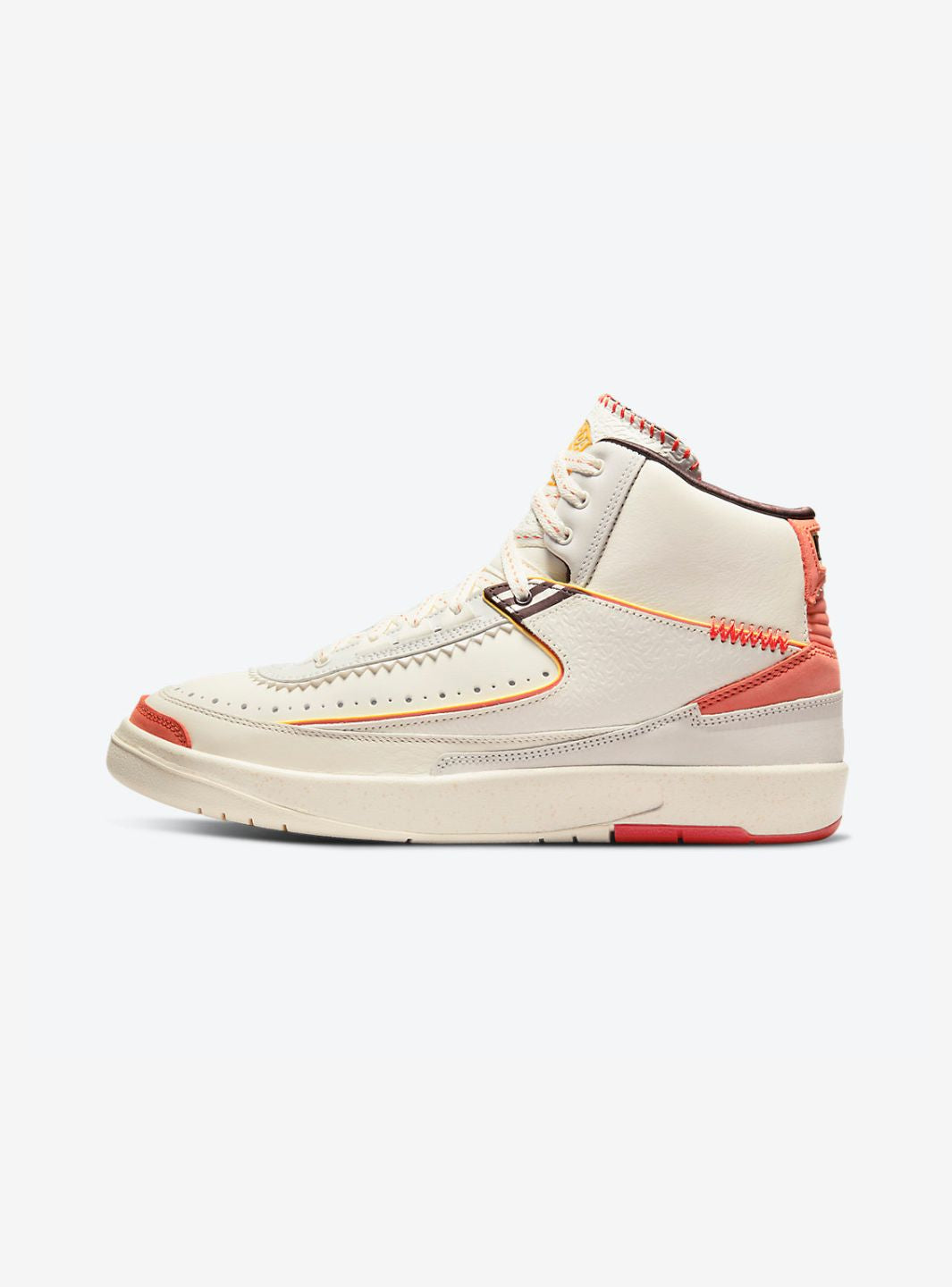
Maison Château Rouge, on the other hand, develops its own Air Jordan 2 through references to the culture of the Château Rouge district of Paris and influences from West Africa, placing the silhouette within a broader project dedicated to the encounter between different cultures.
These projects show how much the relatively essential character of the Jordan 2 leaves room for very different interpretations without making the original model unrecognizable.
J Balvin and the more experimental side of the Jordan 2
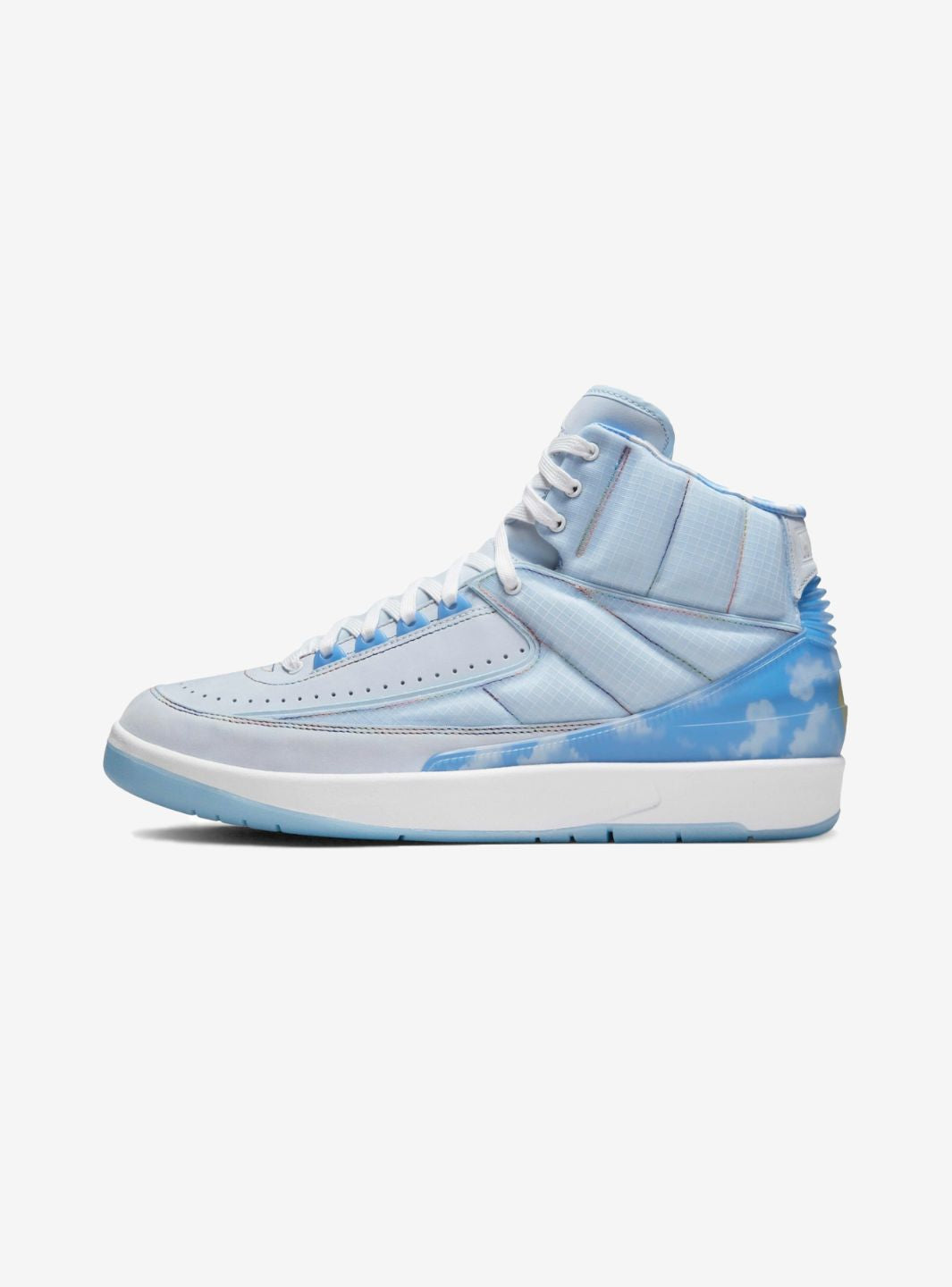
The Air Jordan 2 x J Balvin takes the silhouette in a completely different direction.
The Celestine Blue colorway is accompanied by graphics inspired by clouds, multi-colored stitching, glow-in-the-dark details, and the smiley symbol associated with the Colombian artist.
It is a deliberately more expressive reinterpretation compared to the sober approach of the original AJ2 and demonstrates how much the same structure can work both with minimalist constructions and with much more graphic projects.
From the Air Jordan 1 to the Air Jordan 3
The position of the Jordan 2 in the line's chronology is particularly interesting because it finds itself between two of the most important silhouettes in Jordan history.
The Air Jordan 1 establishes the starting point, while the Air Jordan 3 subsequently introduces a new language under the direction of Tinker Hatfield, along with elements destined to become central to the Jordan identity.
The AJ2 represents the transition between these two moments: it eliminates the side Swoosh, experiments with a more sophisticated aesthetic, and already demonstrates that the line would not be built by repeating the same sneaker every year.
It is precisely this intermediate position that makes the Air Jordan 2 important in the overall history of the brand, even if its contemporary prevalence is lower compared to the Jordan 1, 3, or 4.
Original Air Jordan 2s and authenticity
The presence of Retro versions and very different collaborations makes it important to identify every original Air Jordan 2 by considering the characteristics of the specific release.
Materials, textures, branding, tongue, labels, product code, packaging, and accessories can vary significantly between a Jordan 2 OG-inspired, a Low Off-White, a Union, or an A Ma Maniére collaboration.
On ResellZone, every product undergoes the required verification process to check its authenticity and correspondence to the original release. The method used is detailed on the page dedicated to product authenticity.