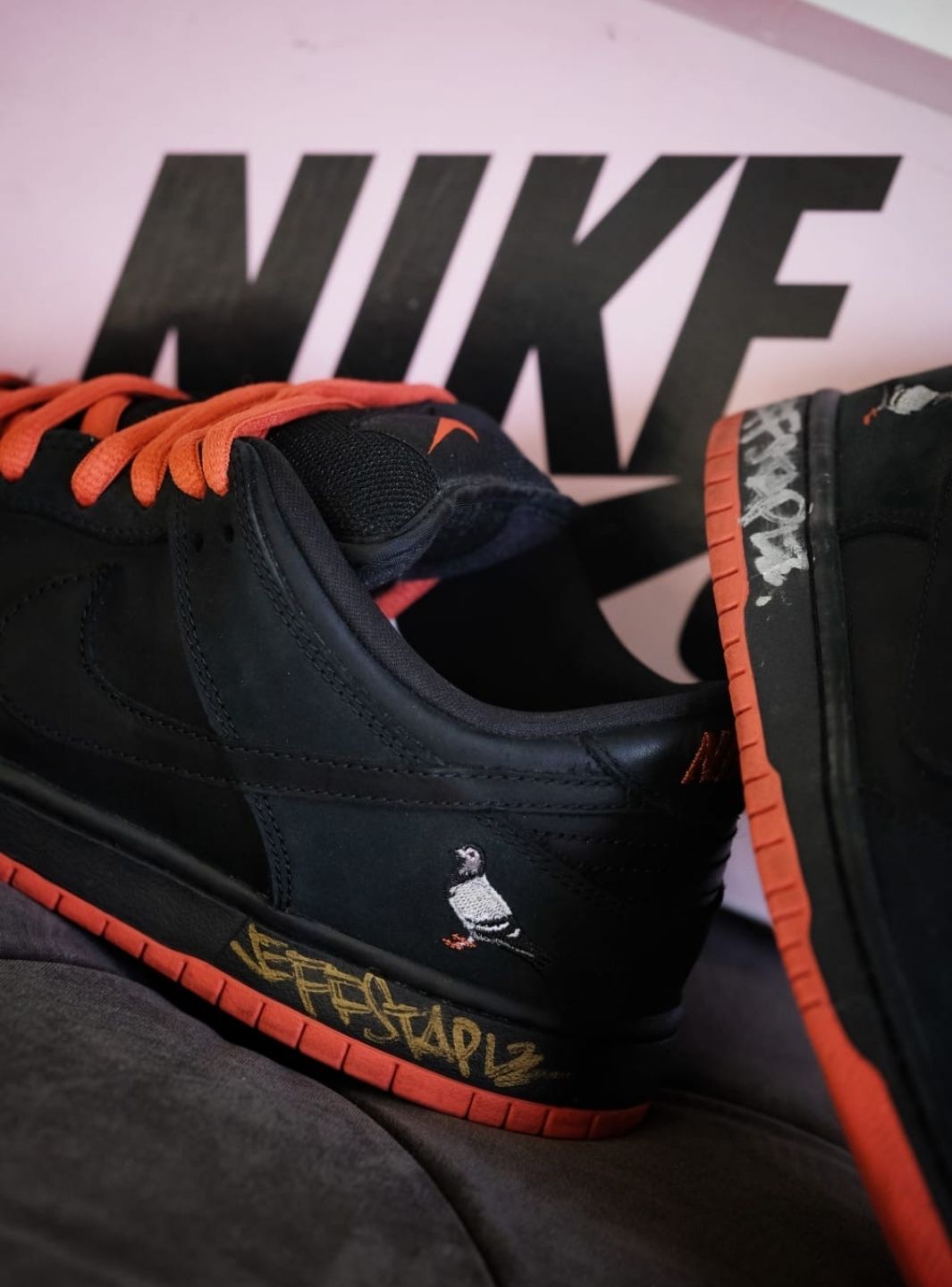
The 2005 Nike SB Dunk Low Staple “NYC Pigeon” is one of the most important sneakers in the history of modern sneaker culture. Not only because of its rarity, but because of what happened during the release: hundreds of people outside New York's Reed Space, police intervention, and the following day, a sneaker on the front page of the New York Post with the headline “Sneaker Frenzy”.
Behind that Dunk was Jeff Staple, a New York designer who turned one of the city's most common and ignored animals — the pigeon — into one of the most recognizable symbols of streetwear.
Produced in approximately 150 pairs, with just 30 numbered pairs destined for the famous Reed Space drop, the Pigeon helped take phenomena like camp-outs, limited releases, and resale out of the sneakerhead niche and into mainstream culture.
Who is Jeff Staple?
Jeff Staple, born Jeffrey Ng, is a New York designer and creative entrepreneur who has been linked to streetwear, graphic design, footwear, and urban culture for nearly thirty years.
The story of STAPLE began in 1997, when Jeff was attending the Parsons School of Design in New York.
During a screen printing course, he printed a T-shirt himself and wore it while entering a downtown boutique. He wasn't trying to create a brand, but the store ordered 12 shirts from him.
From that episode, STAPLE was born.
What was initially a small T-shirt project gradually developed into a brand, a creative studio, and a platform capable of collaborating with some of the most important companies in the world.

Why did Jeff Staple choose a pigeon?
The Pigeon gradually became the symbol of Jeff Staple's project.
The choice is intentionally distant from the polished image with which New York is often depicted.
The pigeon is everywhere. It lives among sidewalks, buildings, subways, and crowds of people. It is resilient, adaptable, and continues to occupy the city even if almost no one pays attention to its presence.
For Jeff, those characteristics perfectly represented the energy of New York and the people who inhabit it.
The same philosophy is later summarized in the concept of “A Positive Social Contagion”: ideas and creativity capable of spreading from one person to another just like something contagious.
Reed Space: the shop at the center of the story
At the beginning of the 2000s, Jeff also opened Reed Space in Manhattan's Lower East Side.
It was not just a clothing store. The project was conceived as a meeting point for streetwear, art, design, music, publishing, and sneaker culture.
That very small boutique on Orchard Street would become the site of one of the most talked-about releases in sneaker history in 2005.
It is important to remember the context: there were no SNKRS, global digital raffles, or apps through which thousands of people could participate in a drop simultaneously.
A limited release often meant knowing the store, showing up physically, and lining up.
2005: Nike asks Jeff Staple to represent New York
In 2005, Nike involved Jeff Staple in a project dedicated to different international cities.
The designer received the task of creating a Nike SB Dunk Low capable of representing New York.
Instead of resorting to the skyline, the Statue of Liberty, yellow taxis, or other tourist references, Jeff chose something much more everyday: the pigeon.
Thus, the Nike SB Dunk Low Pro “NYC Pigeon” was born.
The concept is simple but extremely effective: take the colors and characteristics of the animal and transfer them directly onto the sneaker.
What does the 2005 Nike SB Dunk Low Pigeon look like?
The official colorway is Medium Grey / White / Dark Grey.
The upper uses different shades of gray that recall the plumage of a New York pigeon. The white Swoosh creates contrast, while the lining and outsole use a reddish-orange shade inspired by the animal's feet.
Finally, the detail intended to make the collaboration immediately recognizable appears on the heel: the embroidered pigeon.
The design does not try to be spectacular. Compared to many contemporary collaborations, it is almost minimal.
And it is precisely this simplicity that makes it so effective: the sneaker really seems built starting from the animal it wants to represent.

Nike SB Pigeon 2005: SKU, production, and retail price
The original Pigeon is identified by the SKU 304292-011.
Historical sources indicate a total production of about 150 pairs, an extremely small quantity even by the Nike SB standards of the time.
Of these, just 30 numbered pairs were destined for the famous launch at Reed Space in the Lower East Side.
The retail price reported for the model was $200.
Scarcity was therefore real from the start: it was not a normal Dunk that became rare many years later, but a sneaker that was practically impossible to find on the day of the release.
February 22, 2005: the Reed Space drop
The moment destined to enter history arrived on February 22, 2005.
News of the release had spread through the community, and some people had started lining up several days prior.
With only 30 pairs planned for the store and demand that was enormously higher, the situation quickly became difficult to manage.
On the day of the launch, hundreds of people occupied the area in front of Reed Space. The New York police intervened to control the crowd, and the buyers who managed to secure a pair were escorted out of the area to avoid theft and aggression.
To understand the importance of the episode, one must remember that in 2005, sneaker culture was still much less visible to the general public than it is today.
What was happening in front of a Lower East Side skate and streetwear store suddenly became city news.
“Sneaker Frenzy”: when a Dunk ends up on the front page of the New York Post
The following day, February 23, 2005, the New York Post dedicated space on its front page to the affair.
The headline has become part of the history of sneaker culture: “Sneaker Frenzy – Hot shoe sparks ruckus”.
For many people who had never heard of Nike SB, Jeff Staple, or limited releases, that front page represented one of the first encounters with the idea that someone could wait for days and create a huge crowd simply to buy a sneaker.

Did the Pigeon Dunk really invent hype?
To say that a single sneaker “invented” hype, camp-outs, or resale would be excessive.
Collecting and a secondary market already existed, and other releases had generated lines and strong demand.
However, the Pigeon is one of the most important episodes in the transformation of these phenomena into something visible even outside the sneaker community.
A shoe produced in very few units, a physical line, demand enormously higher than supply, secondary prices immediately higher, and above all, the attention of the mainstream press: many elements that we consider normal in major drops today were already present there.
This is why the Pigeon is often considered a turning point, rather than the exact moment when sneaker hype was born.
Why was the Nike SB Dunk perfect for this project?
In the early 2000s, the Nike SB Dunk had become an ideal platform for telling stories.
The relatively simple structure of the Dunk allowed skate shops, artists, brands, and creatives to reinterpret it through colors, materials, and small details without making the silhouette unrecognizable.
The Pigeon represents that philosophy perfectly.
You don't need dozens of logos or a completely new construction: gray, white, orange, and a tiny embroidered pigeon on the heel are enough.
The meaning comes from the story surrounding the product.
Why is the original Pigeon so rare today?
Over twenty years have passed since the release, and the original production was only about 150 pairs.
Some were worn, others may have been damaged or lost, and only a portion of the remaining specimens still retain the original box and accessories.
This is why finding an authentic 2005 Pigeon in high condition is exceptionally difficult.
Valuations can reach very high figures, but there is no single price for the Pigeon: size, condition, provenance, and completeness of the pair have a huge weight on a sneaker produced in such small quantities.
It is therefore more correct to consider it a historical grail rather than speaking of a guaranteed future value.
2017: the Nike SB Dunk Low Black Pigeon arrives
For over twelve years, the original Pigeon remained without a true sequel.
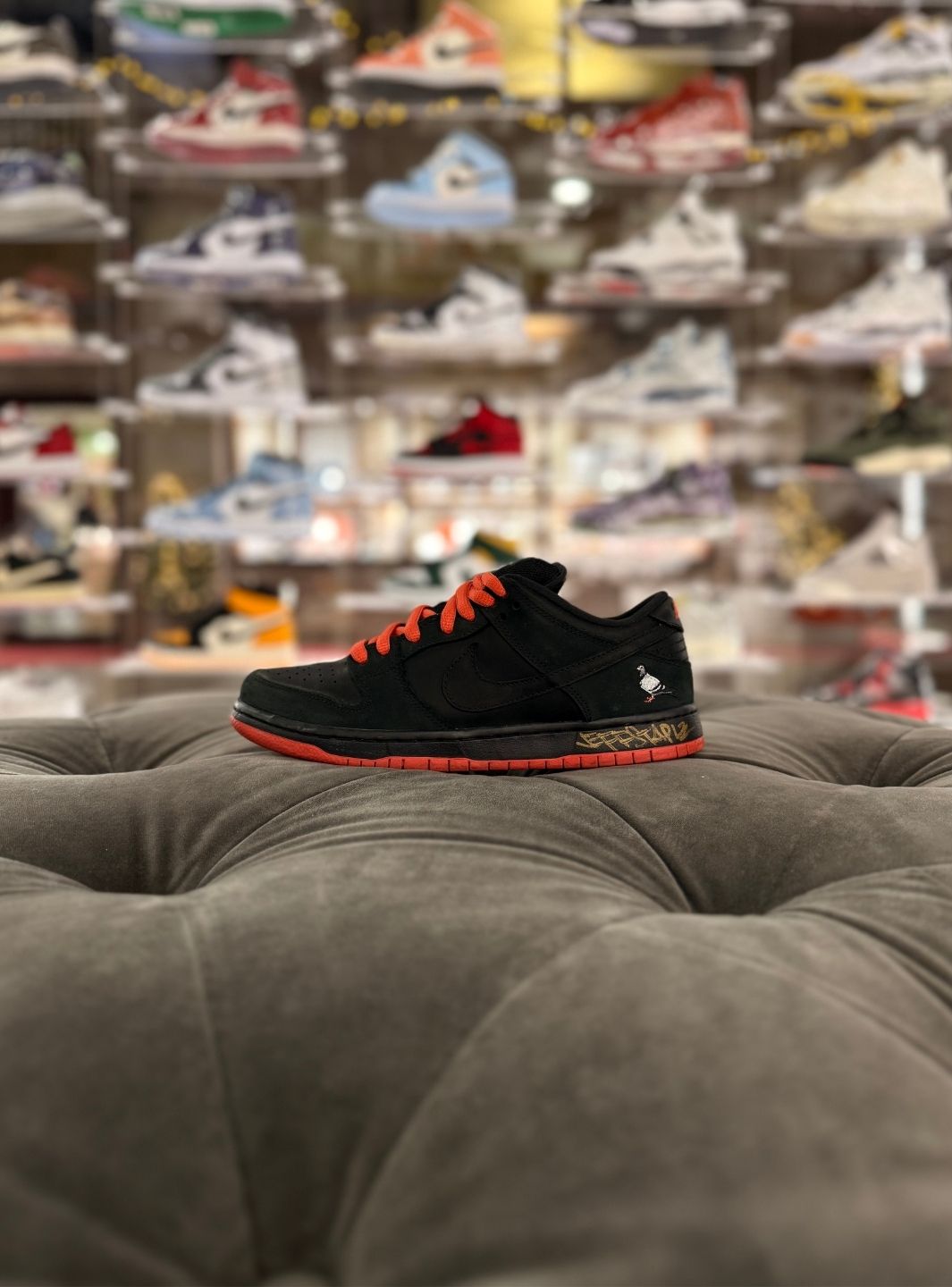
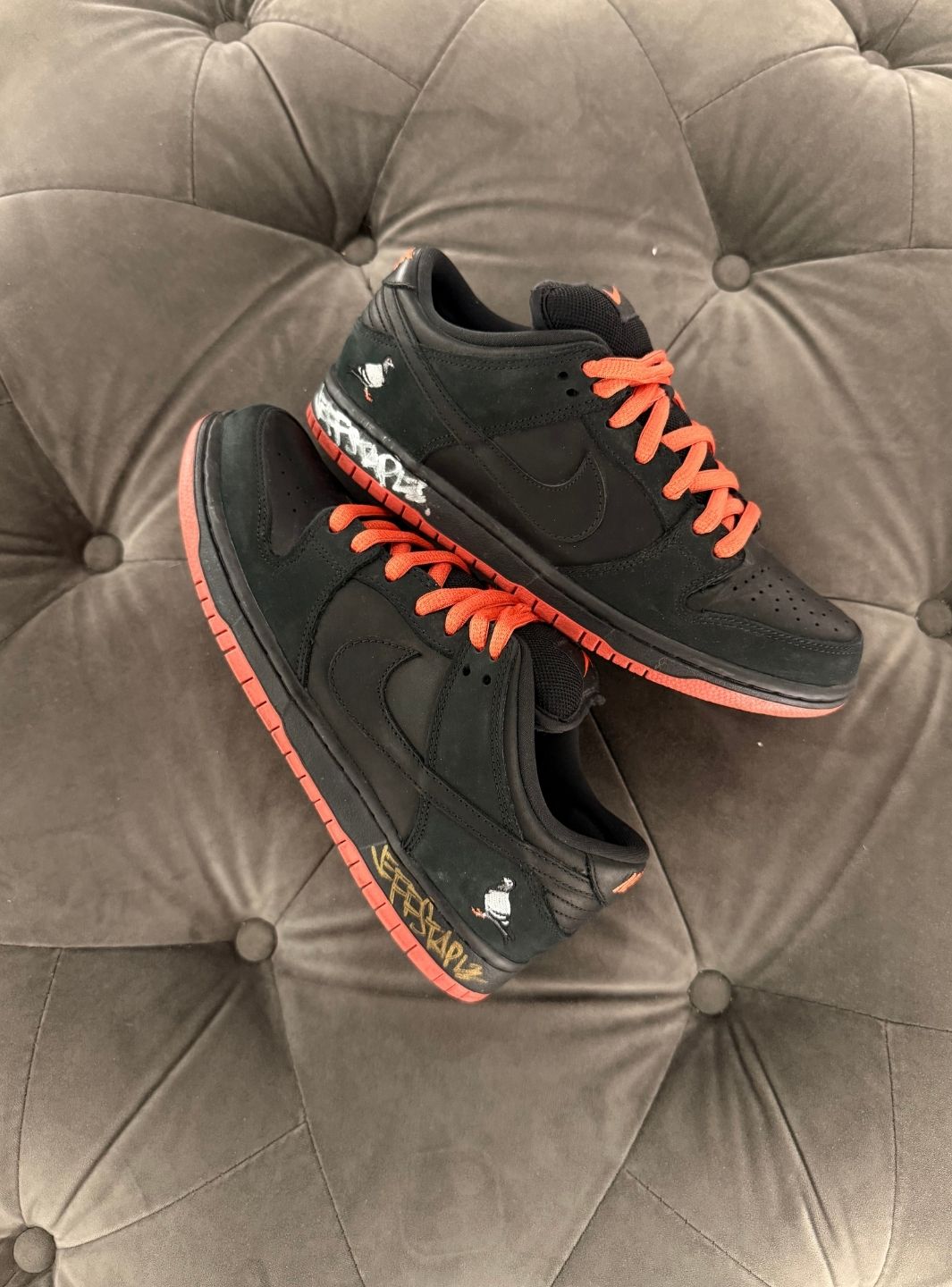
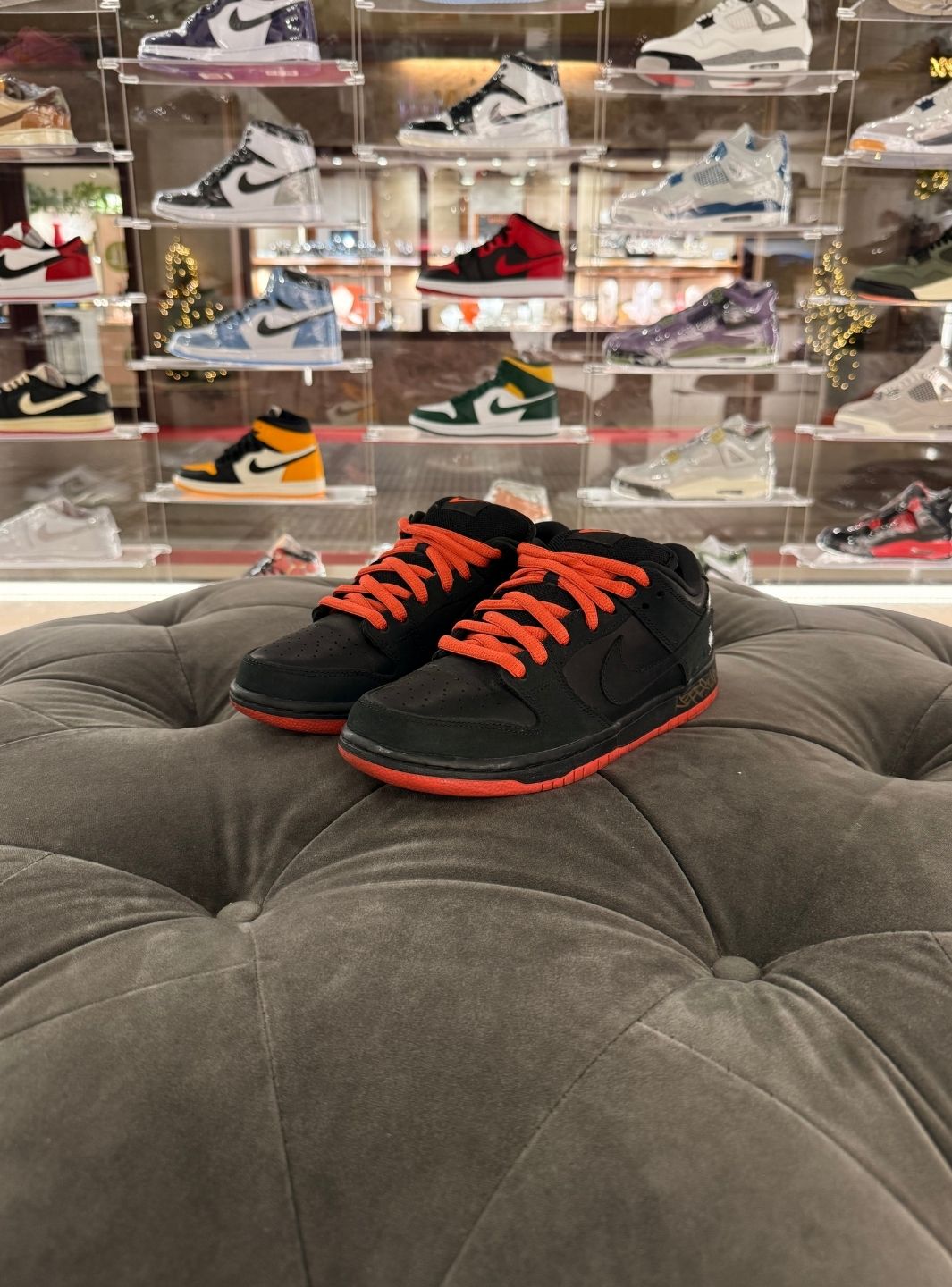
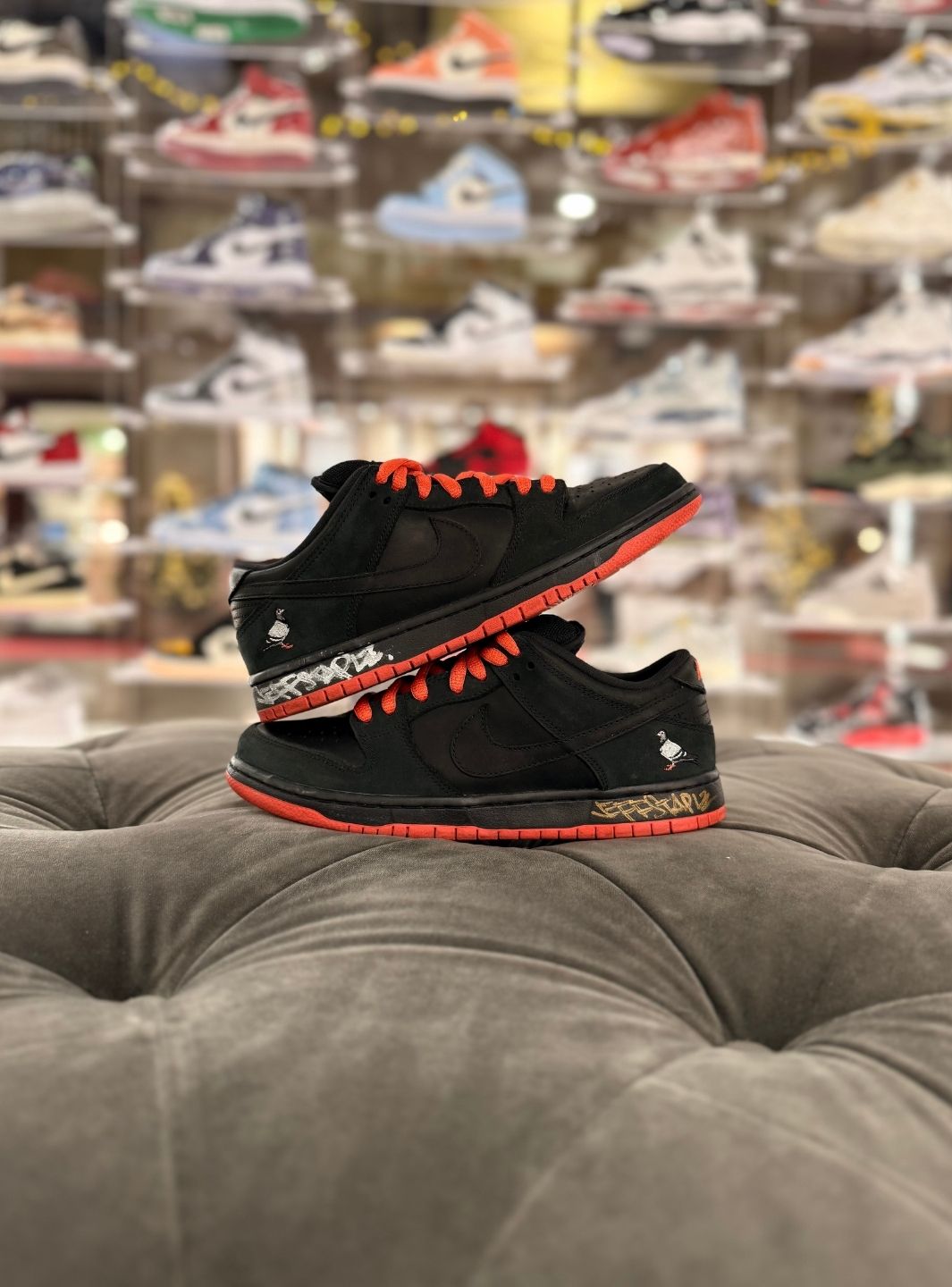
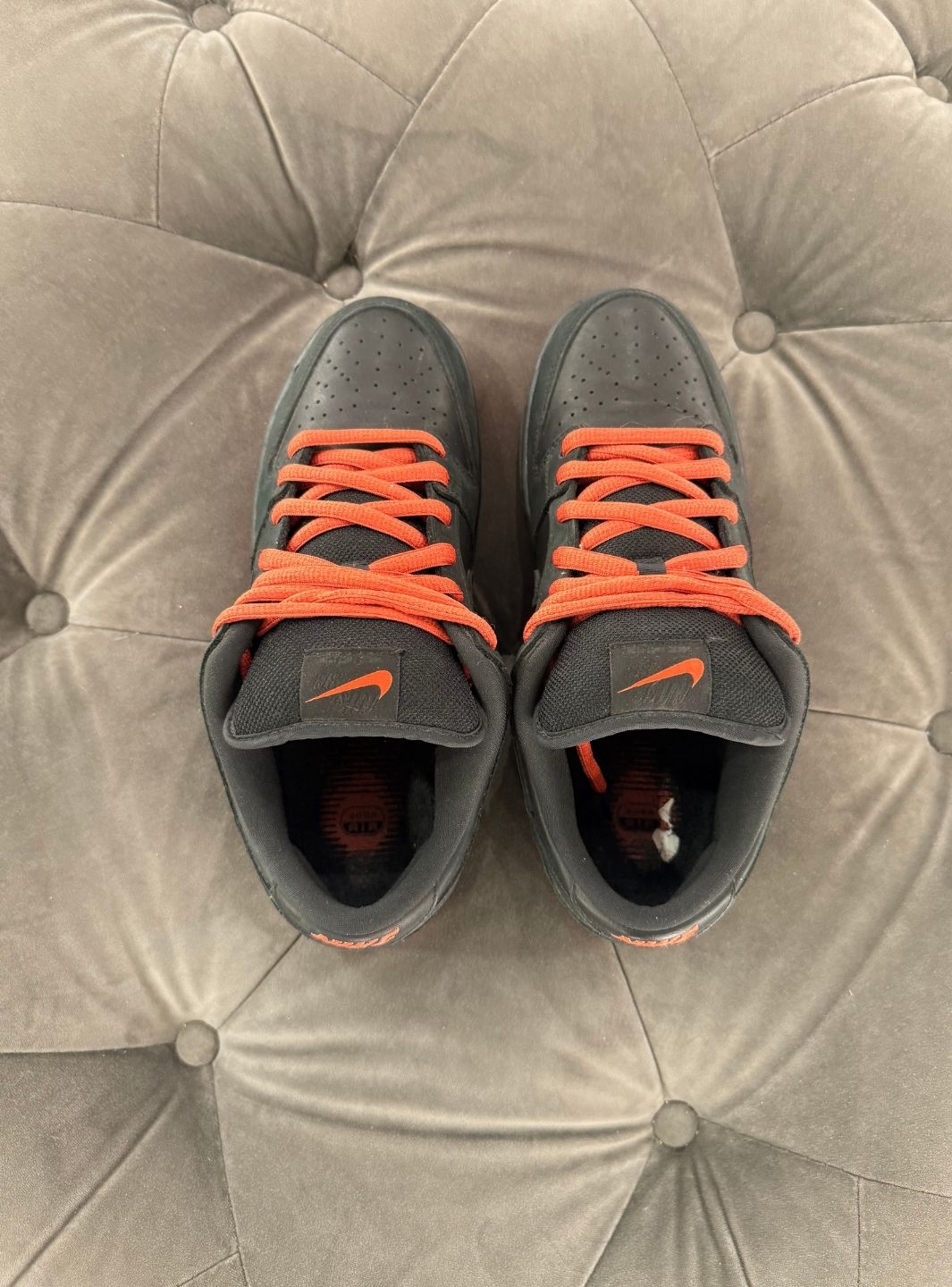
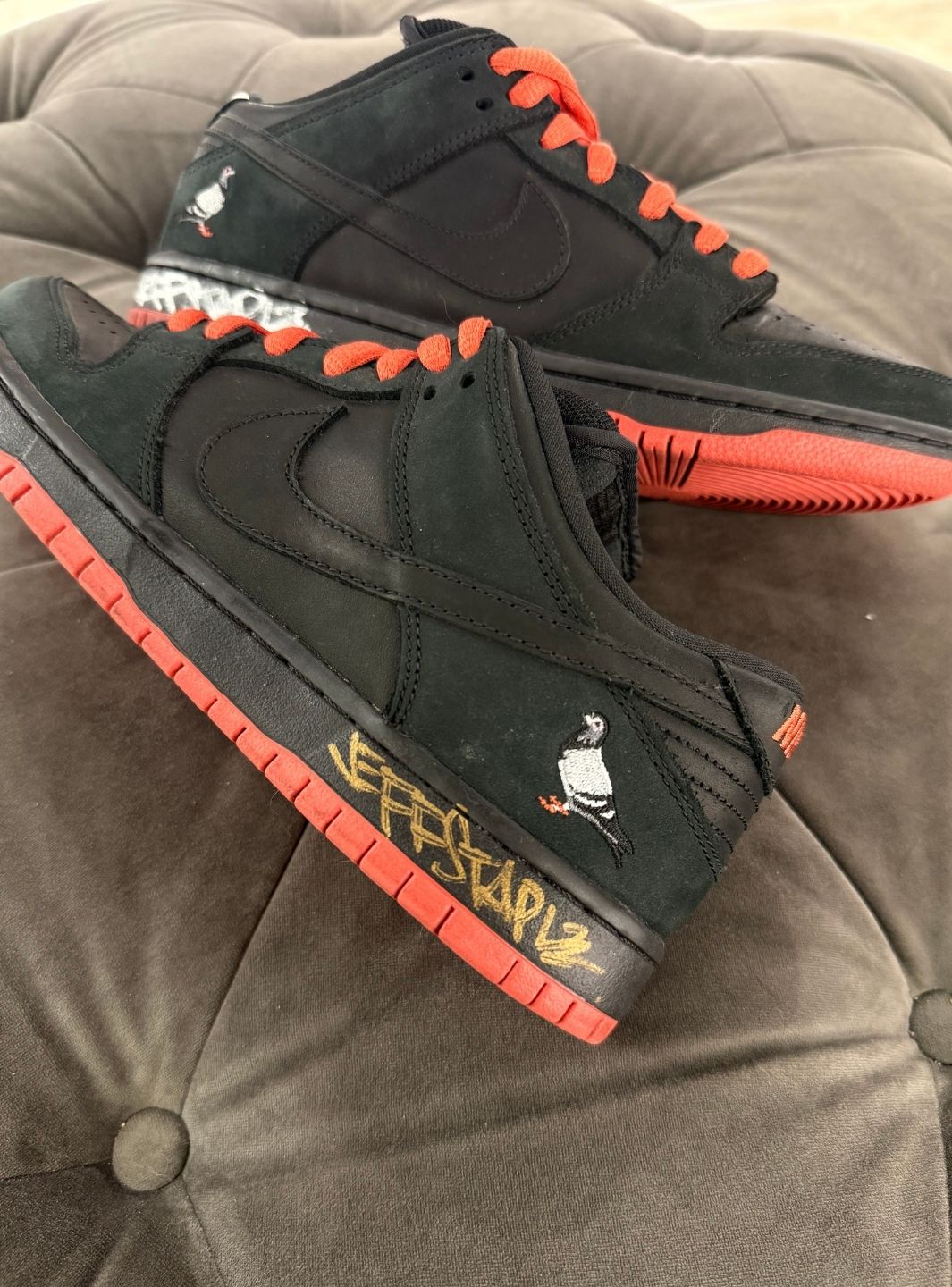
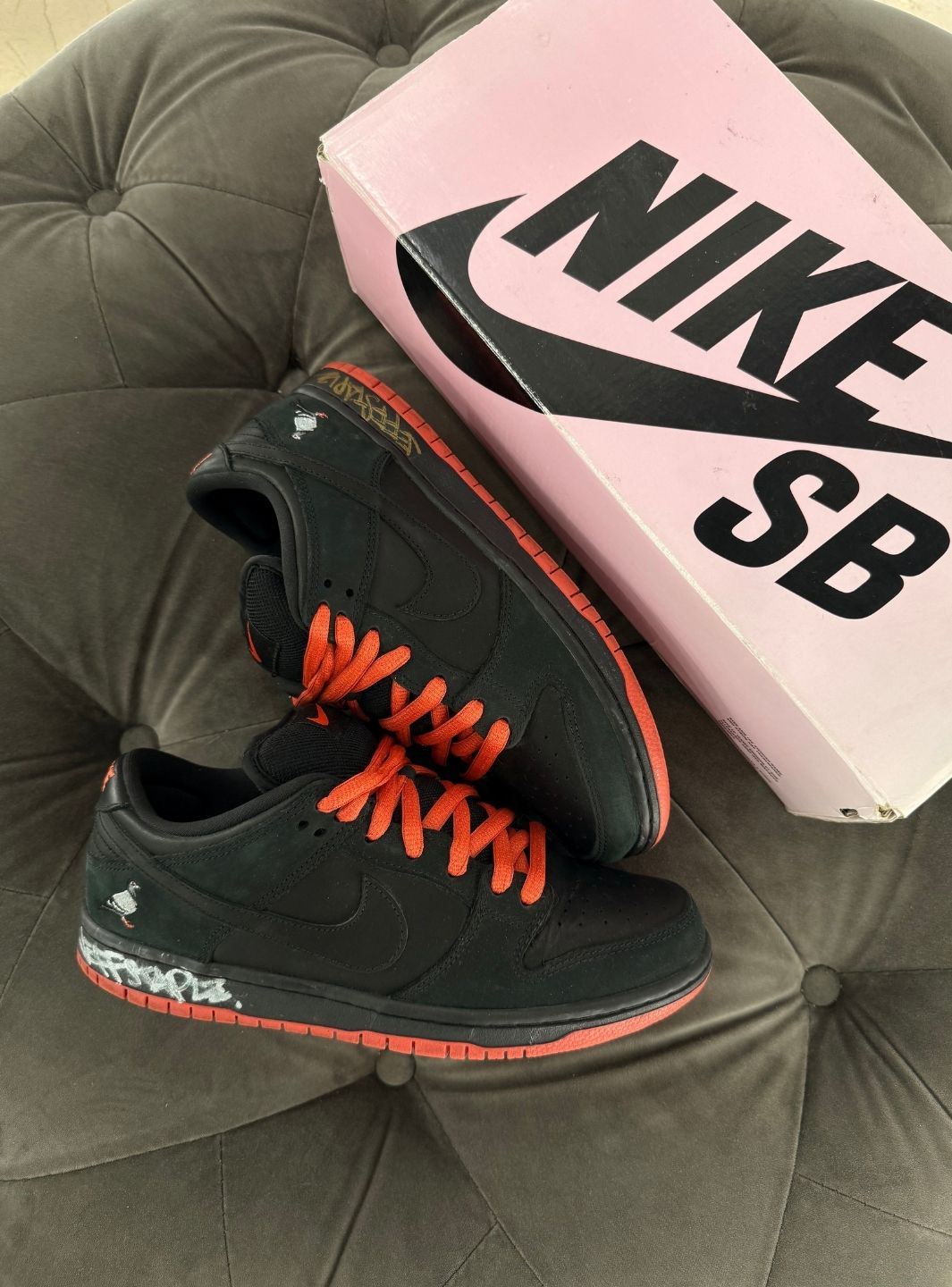
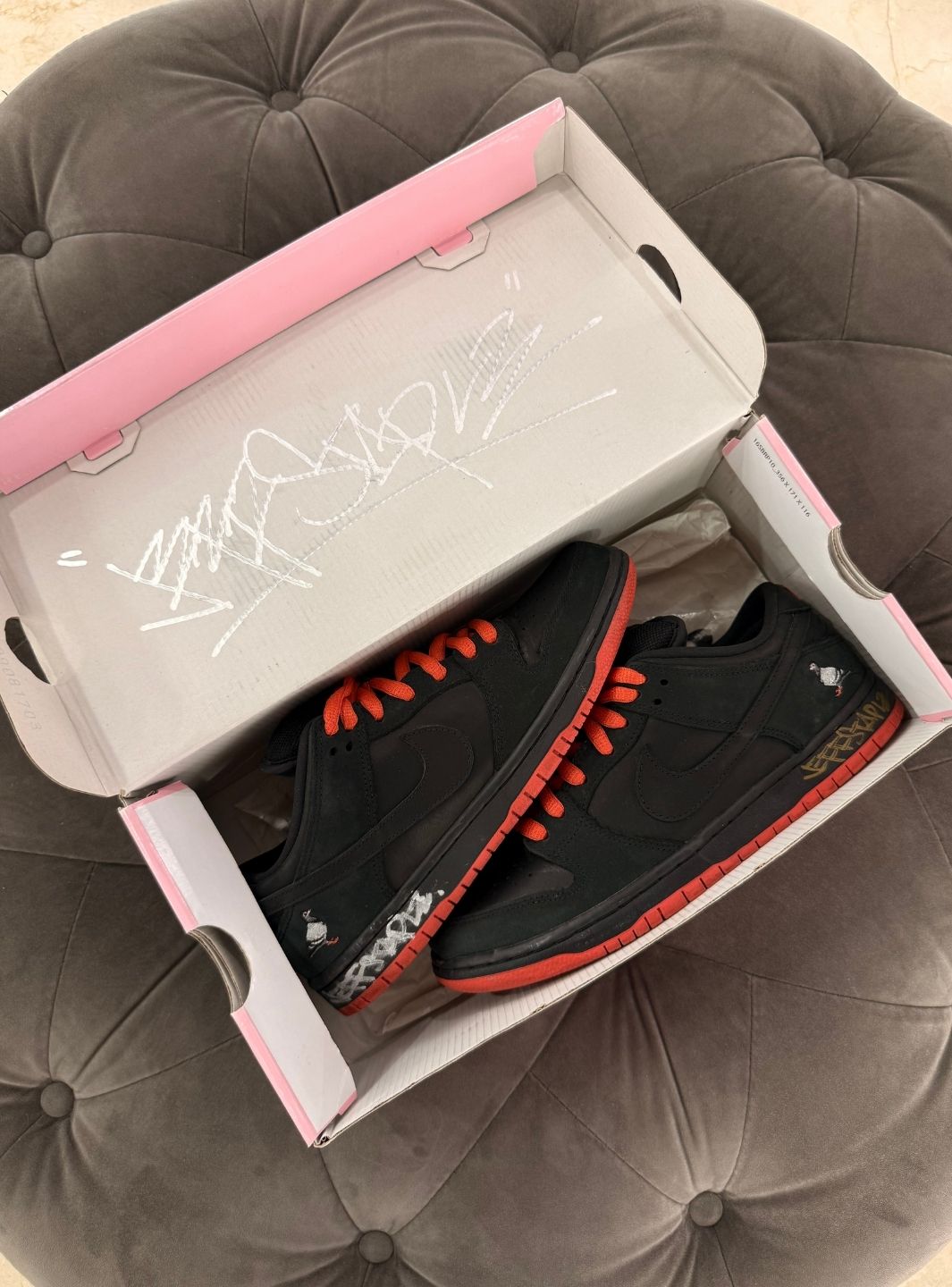
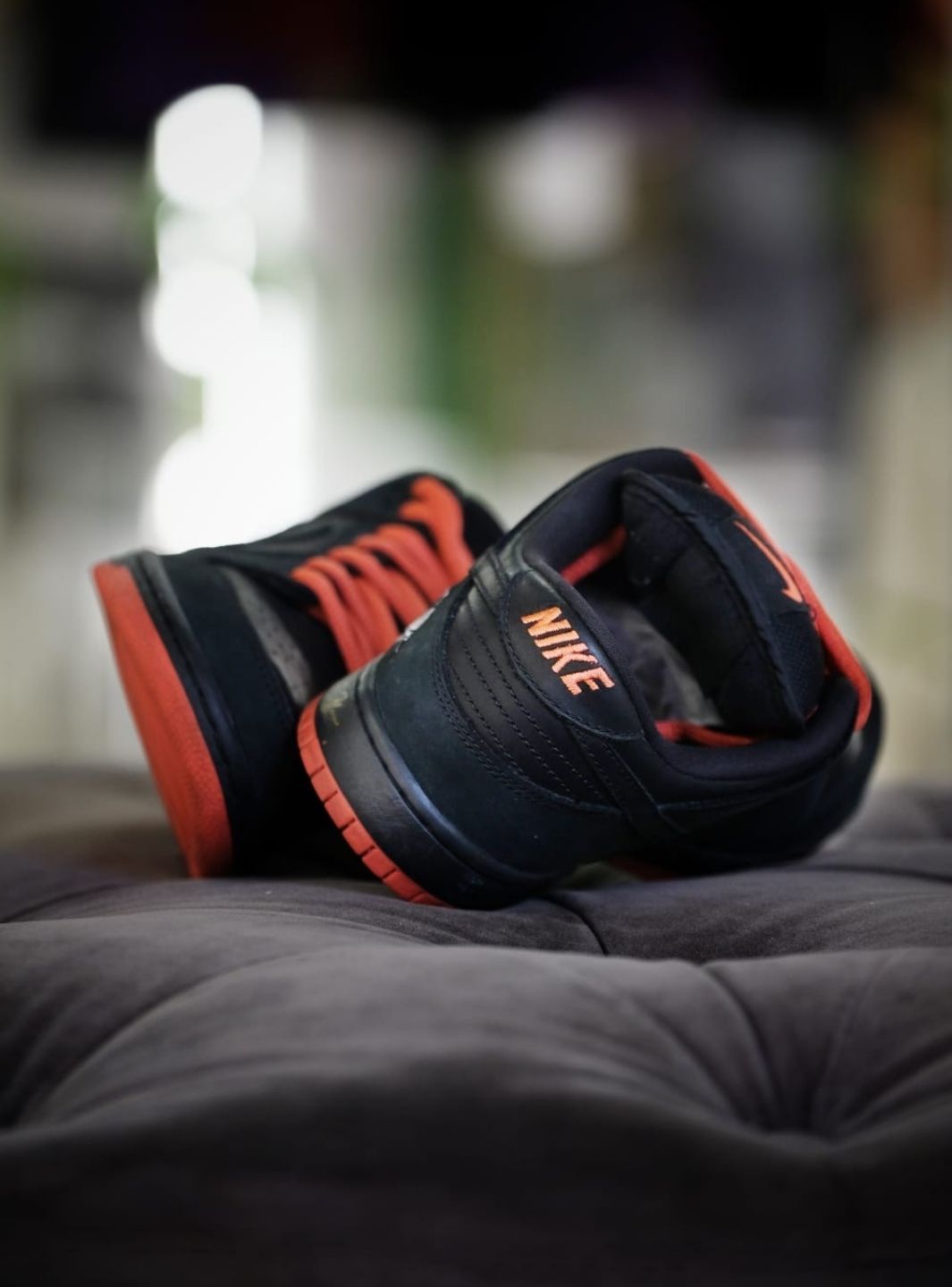
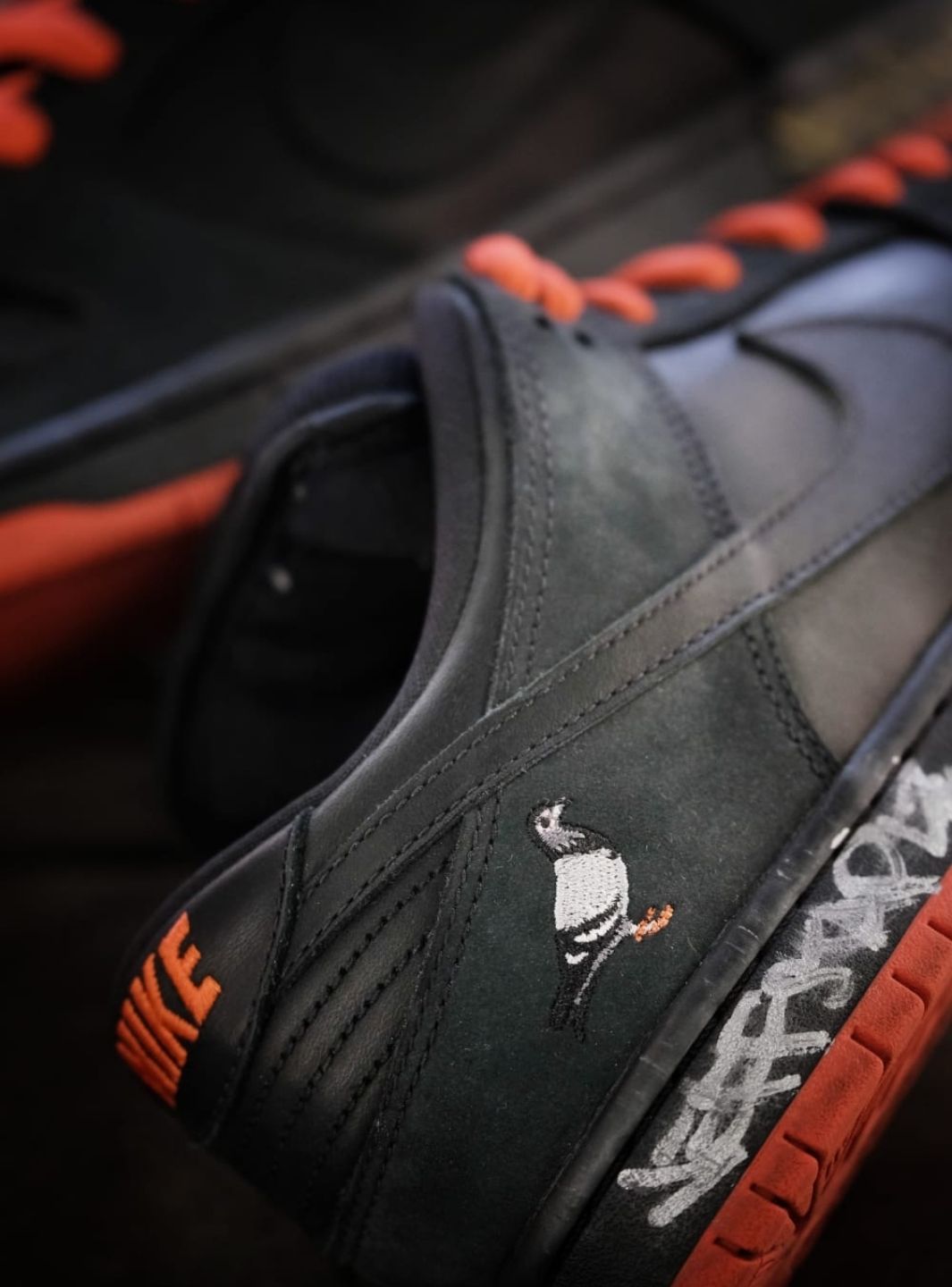
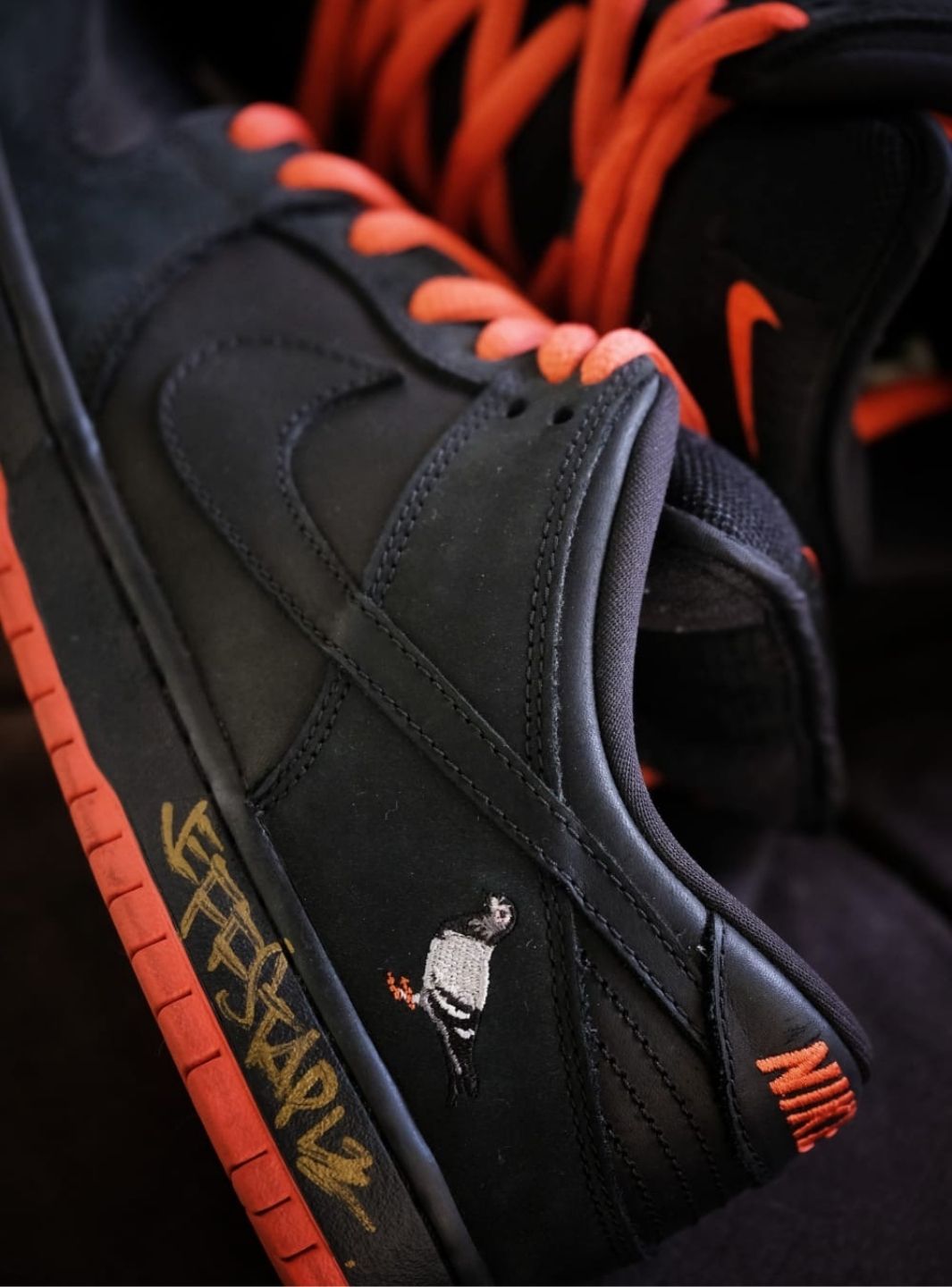
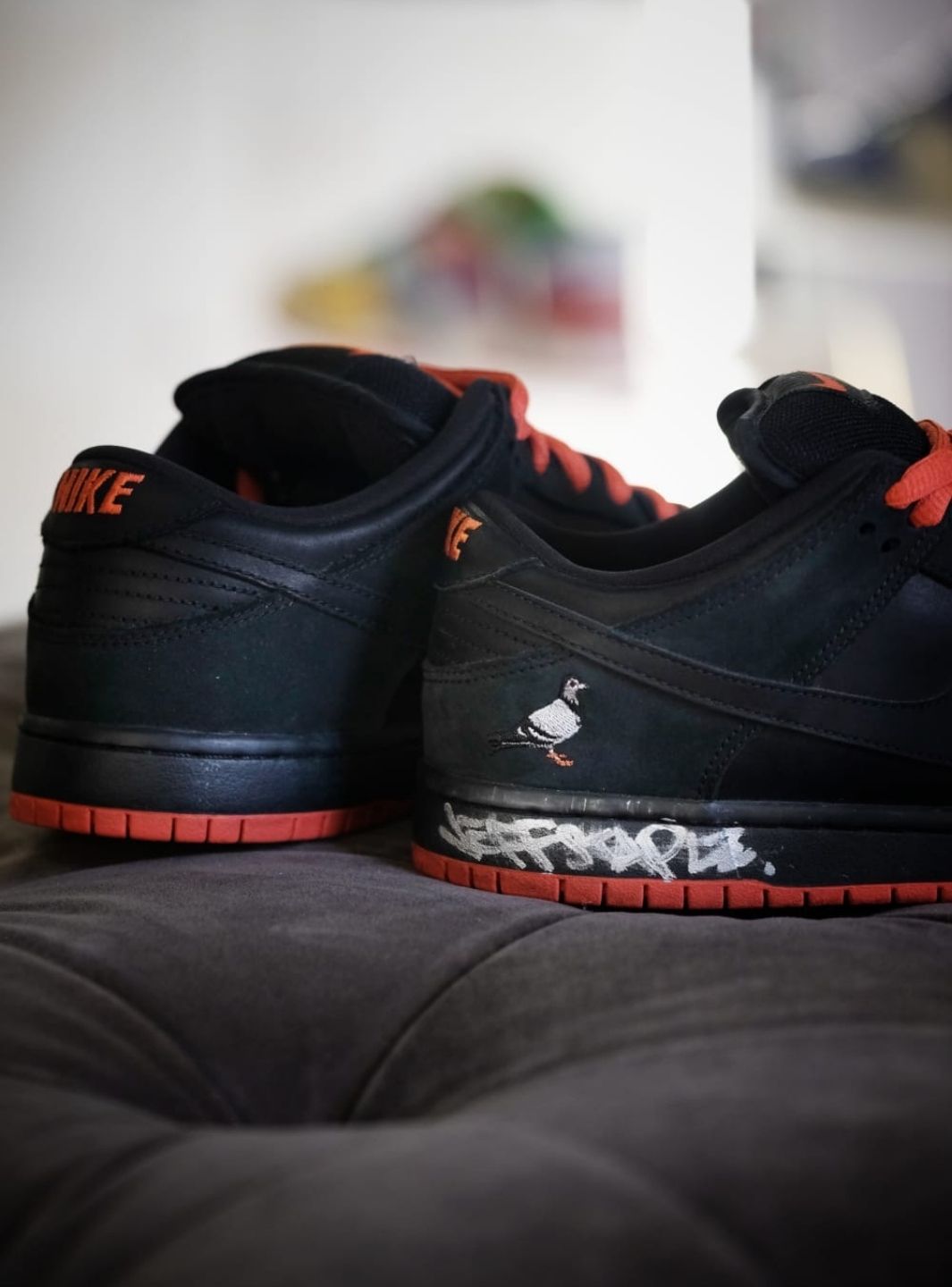
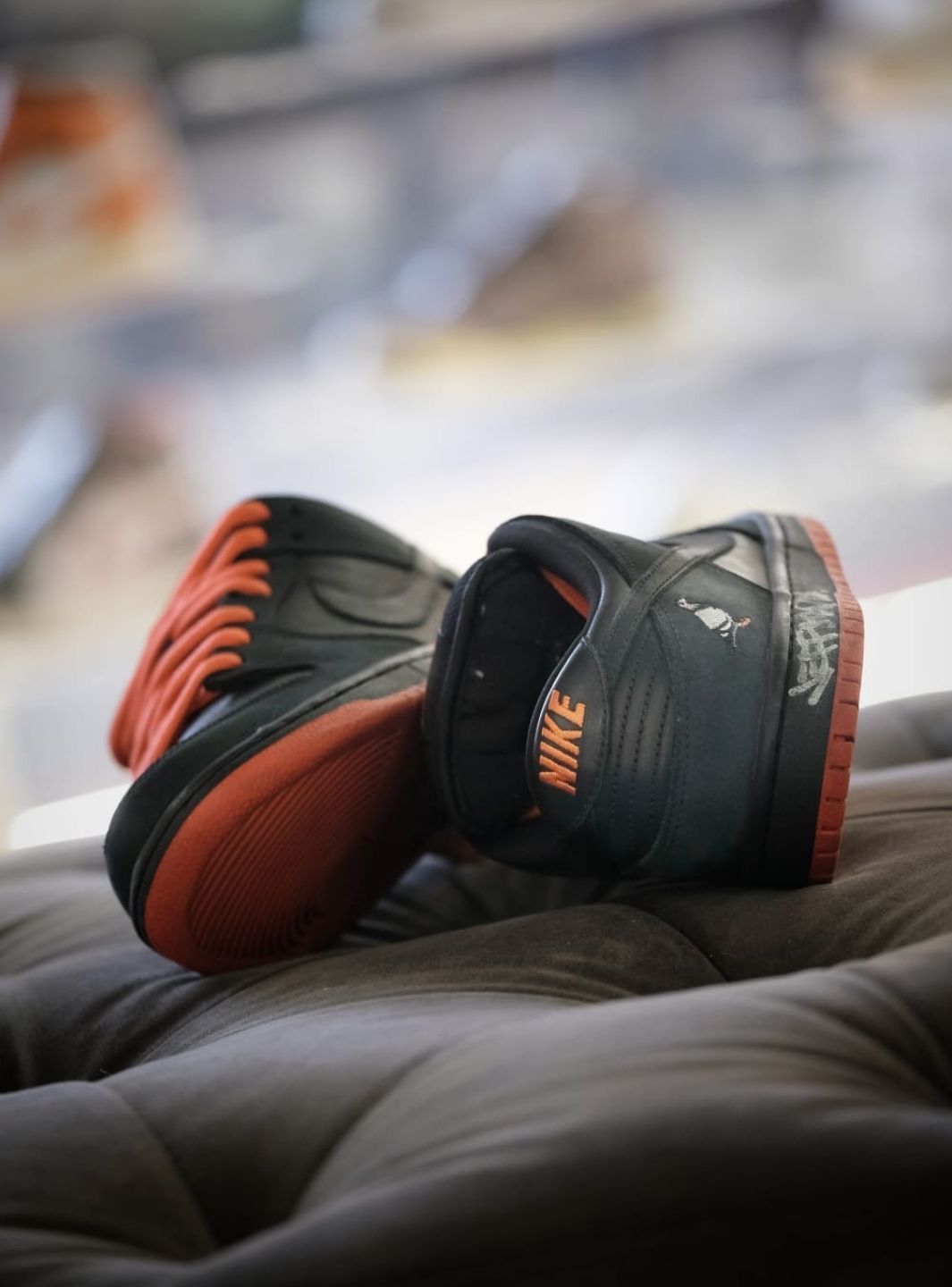
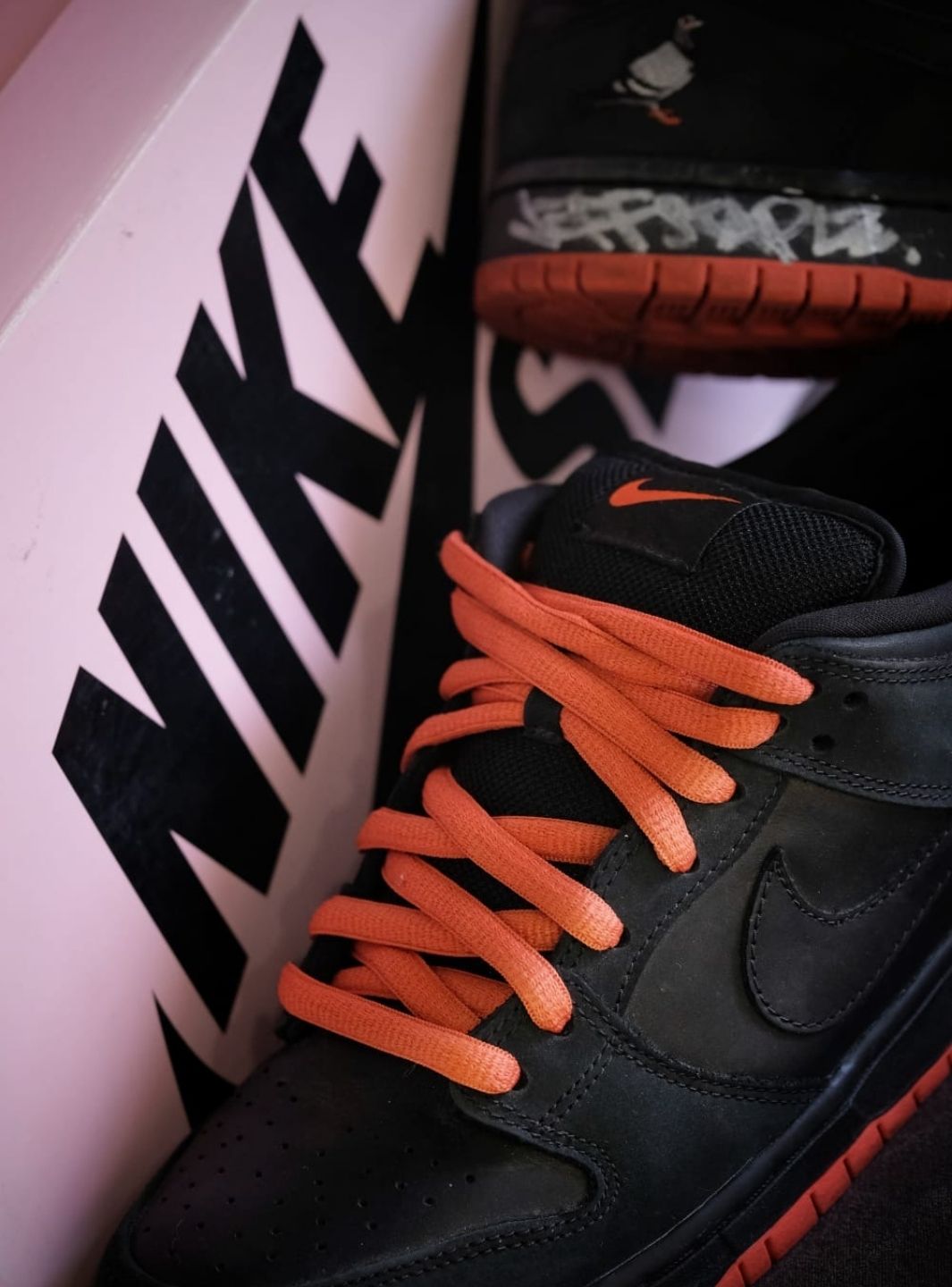
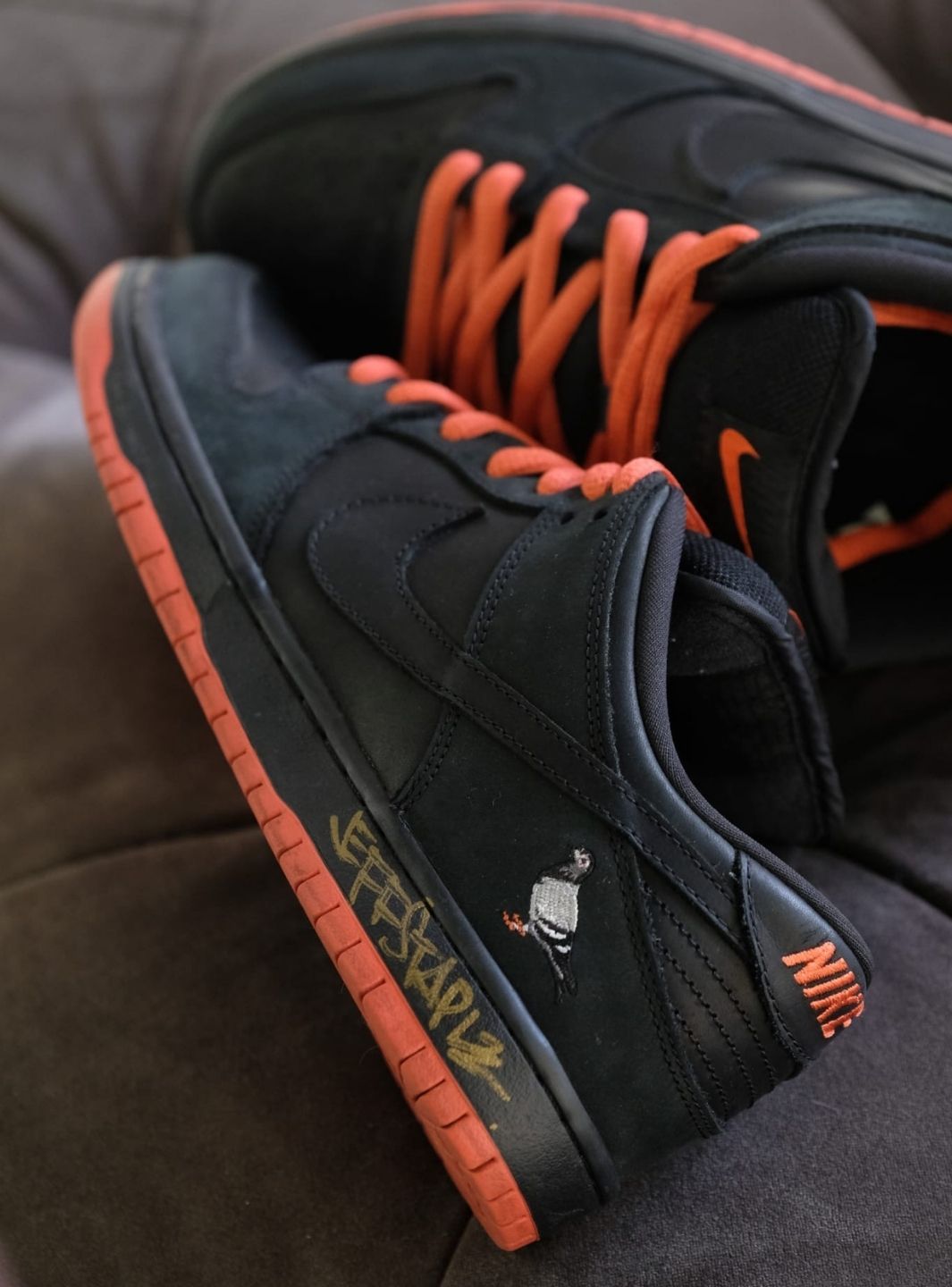
The situation changed in November 2017, when Jeff Staple and Nike SB presented the Black Pigeon, SKU 883232-008.
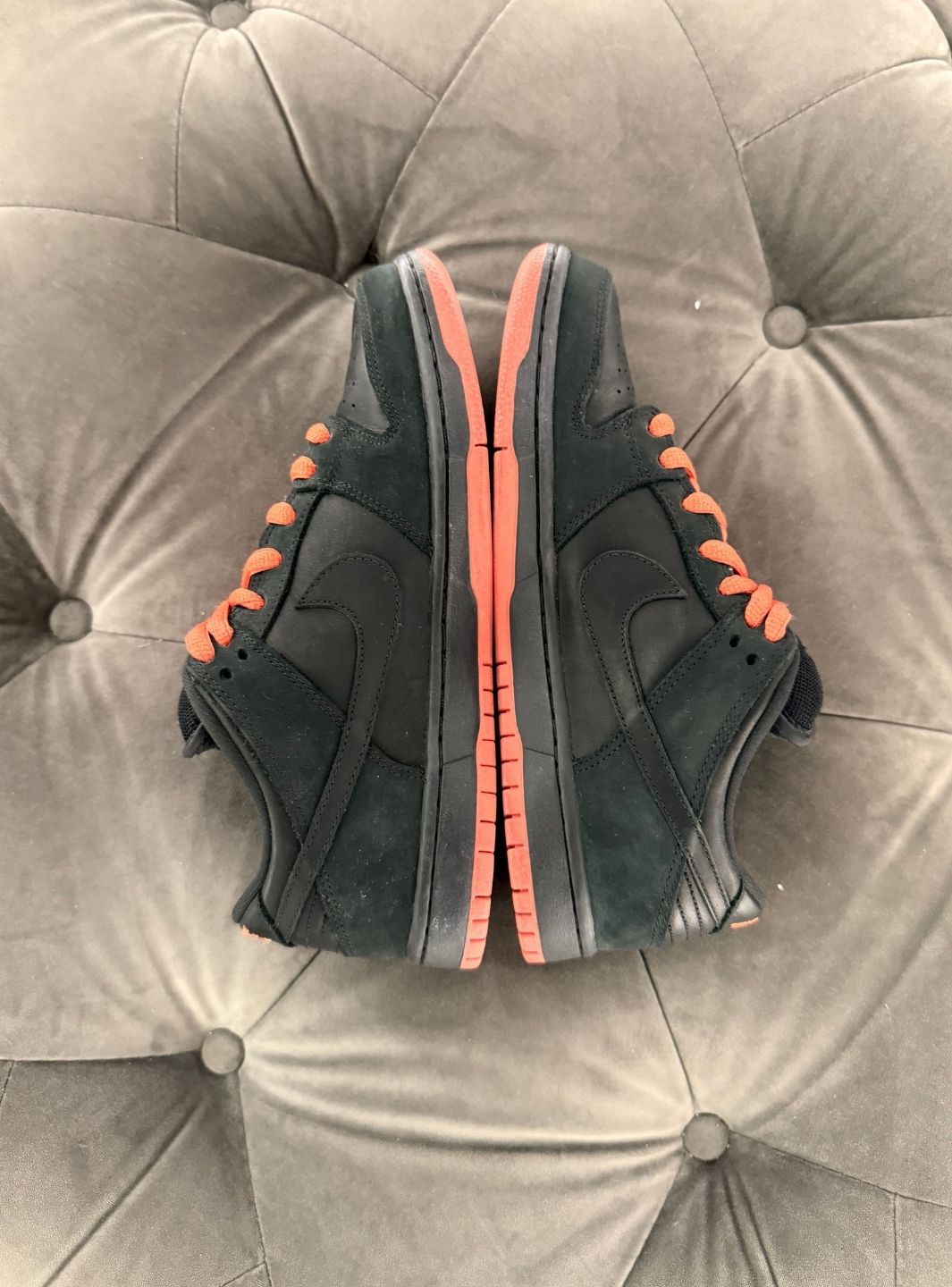
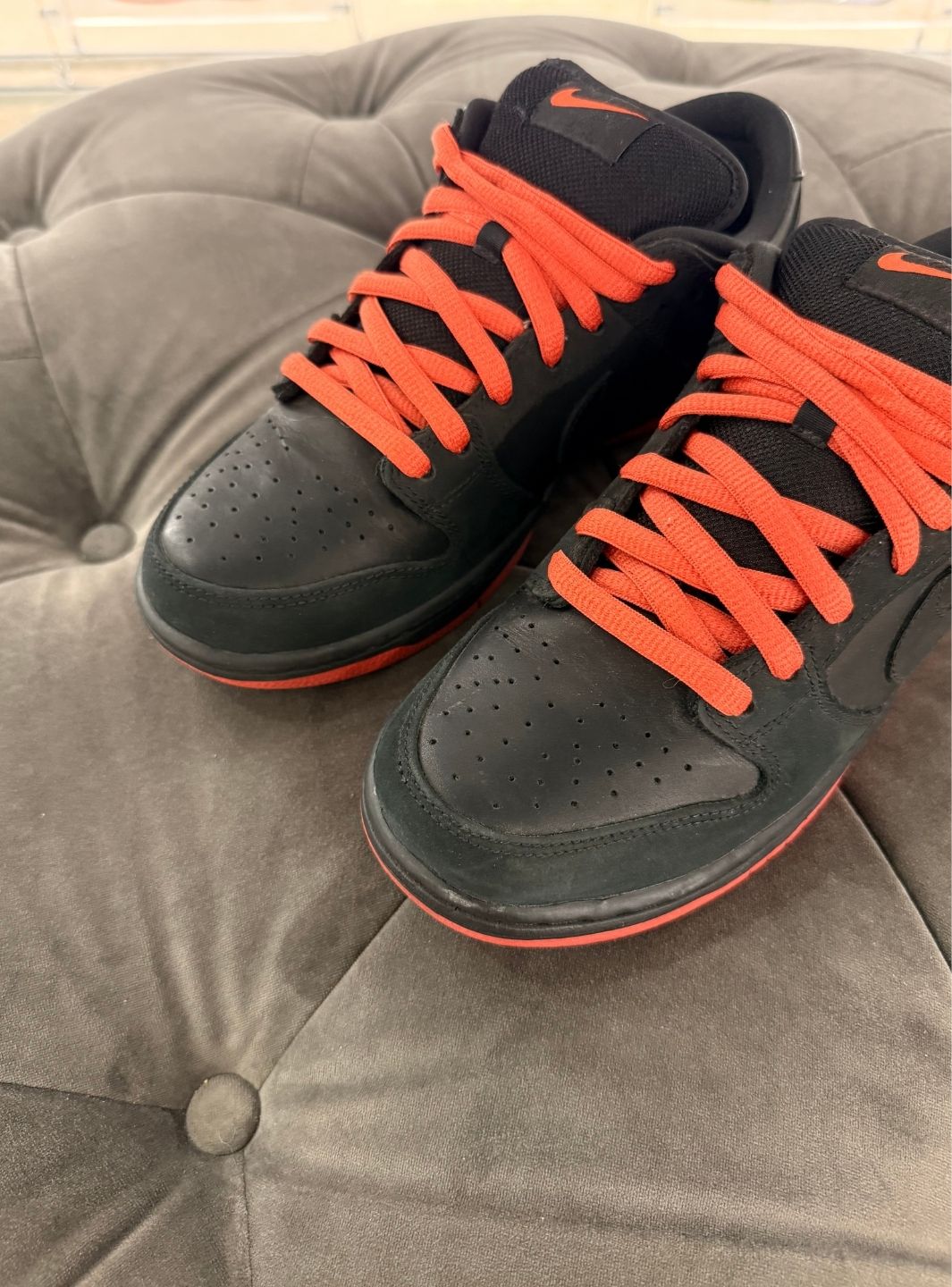
This time, Jeff decided to almost completely eliminate the gray of the original and build the sneaker around black.
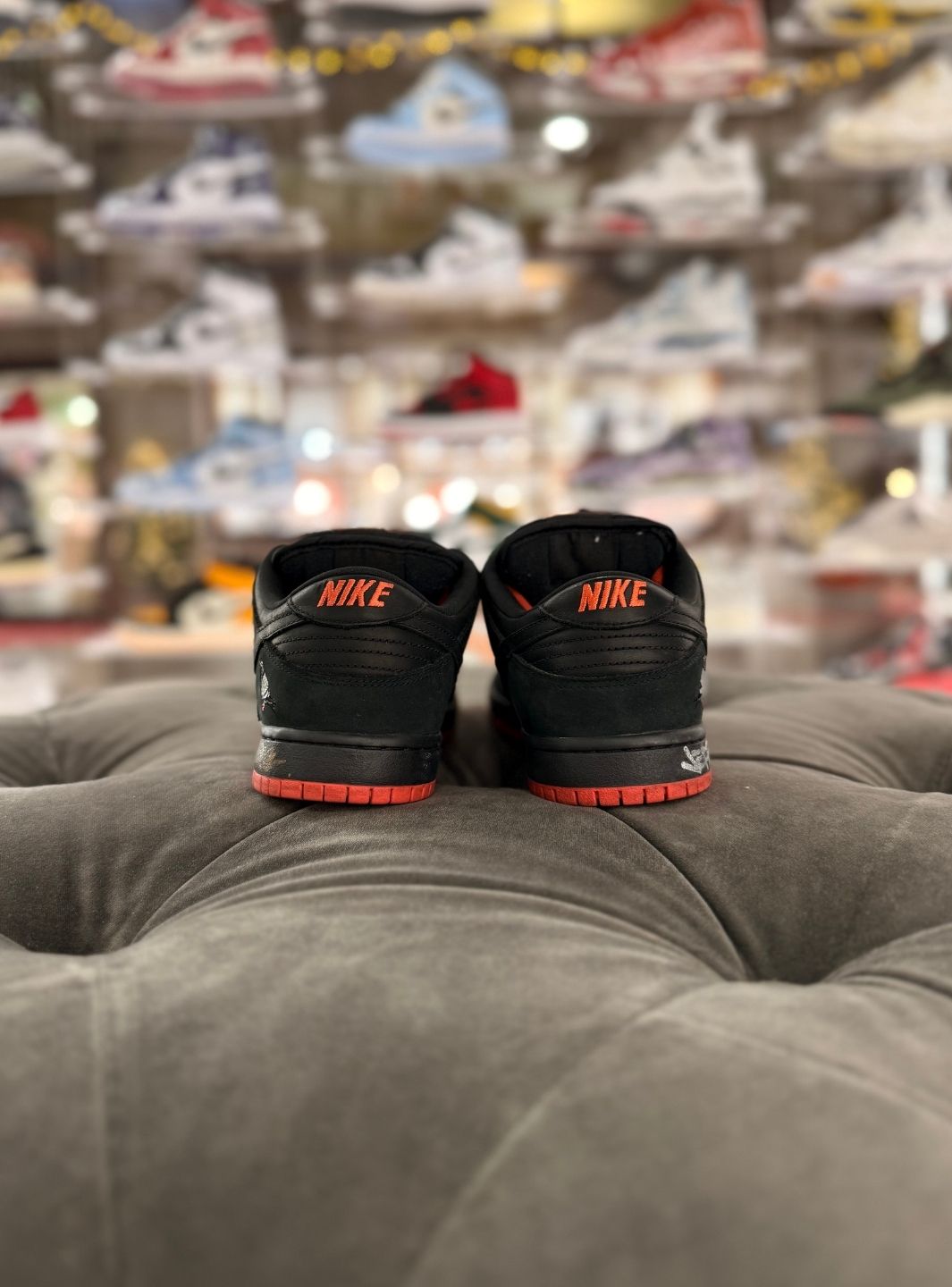
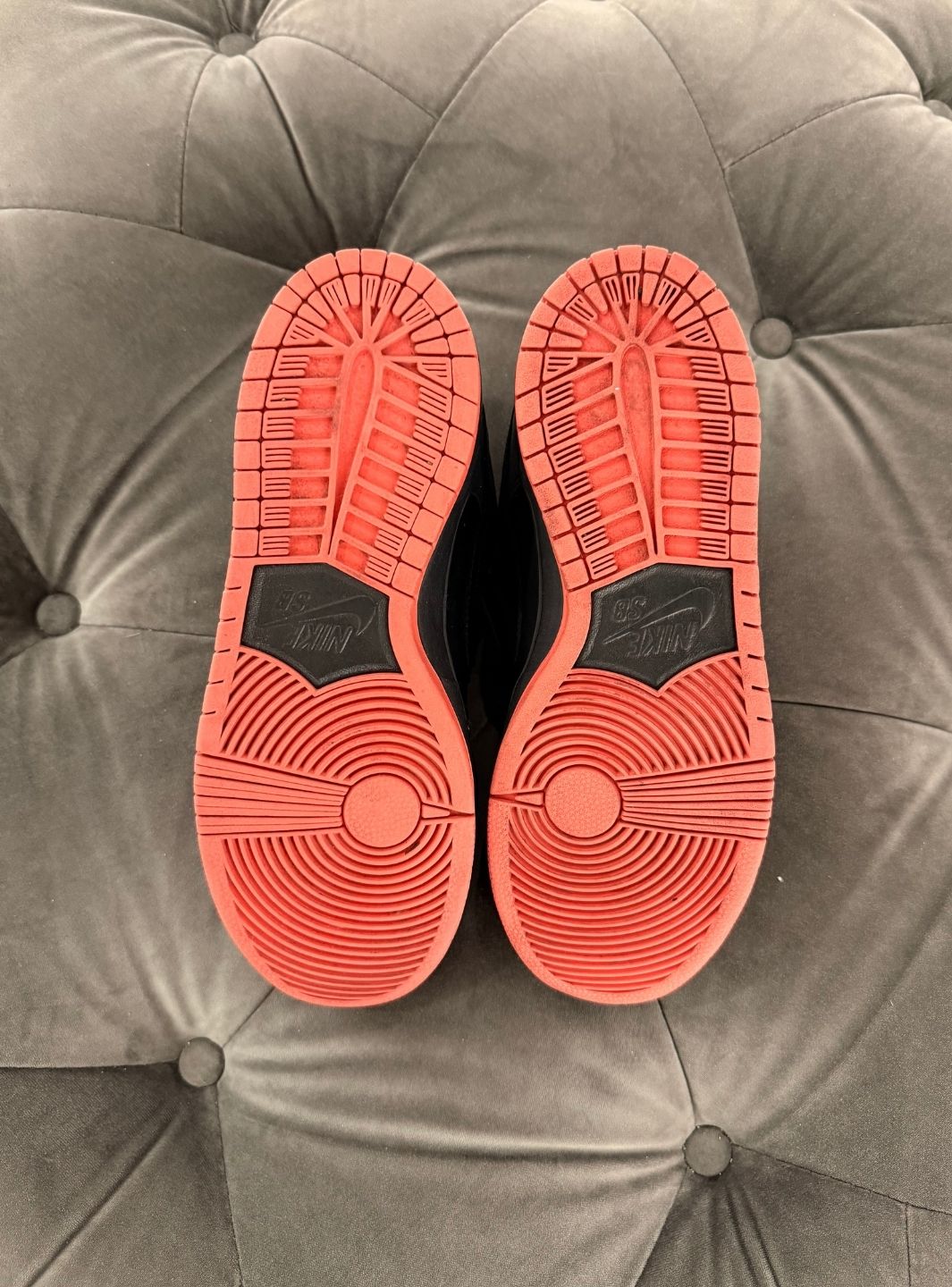
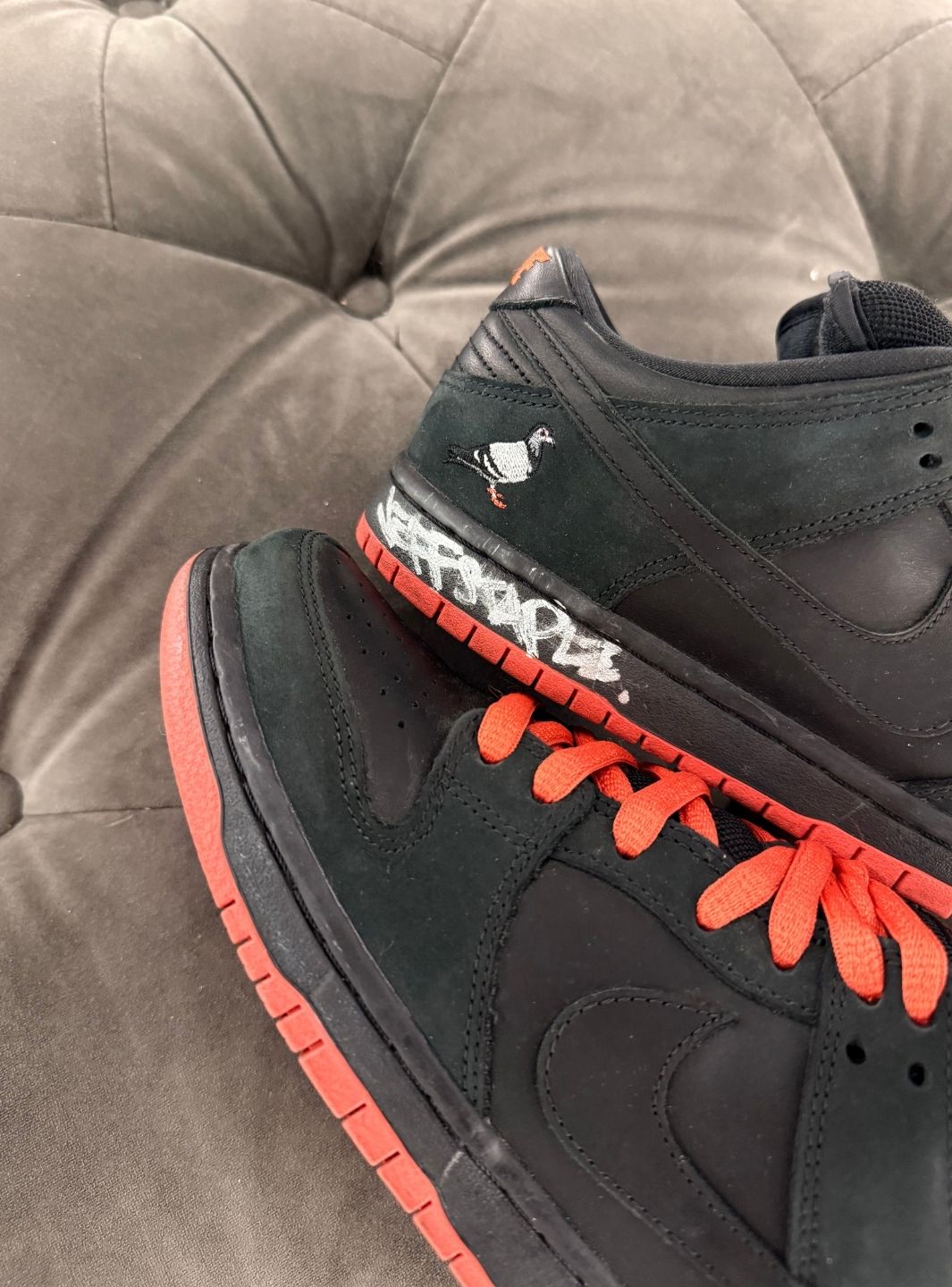
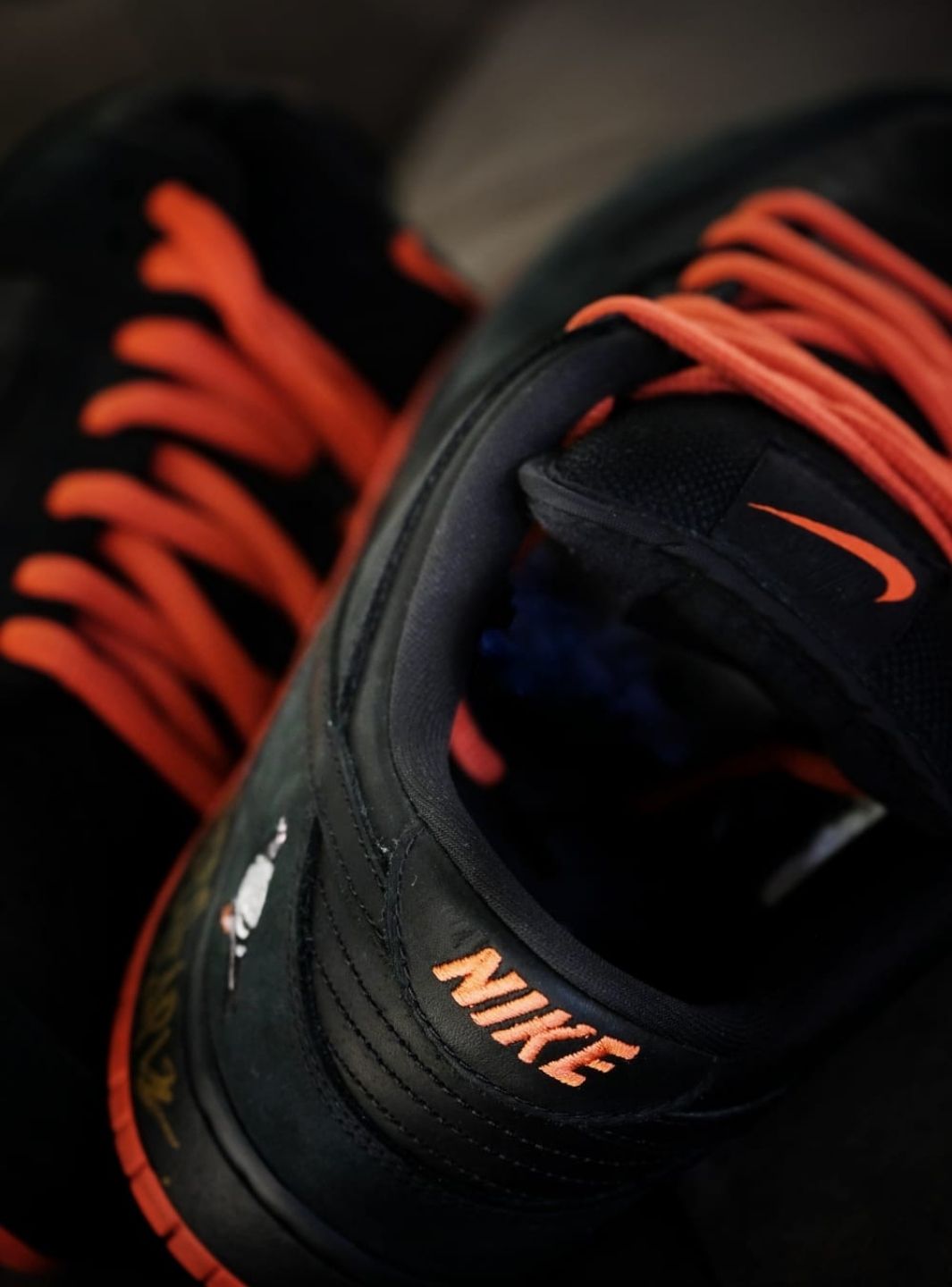
The official colorway is Black / Black / Sienna. The upper combines nubuck and waterproof Stetson leather, while the outsole and small Sienna details maintain a chromatic link with the 2005 Pigeon.
Naturally, the pigeon returns on the heel.

Pink Box: Tiffany, Pigeon, and the explosion of sneaker culture
During the same period, the Nike SB Dunk Low Pigeon by Jeff Staple contributed to making the phenomenon of lines, limited drops, and the competition to purchase certain sneakers visible on a much larger scale.
The Dunk SB was gradually moving out of skate shops alone to become one of the symbols of 2000s sneaker culture.
In that same year, 2005, the Nike SB Dunk Low Stussy Cherry also arrived, born within the Team Manager project and having become one of the most recognizable grails of the so-called Nike SB golden era over the years.
The Black Pigeon signed by Jeff Staple on ResellZone
The history of the collaboration also has a direct connection to ResellZone.
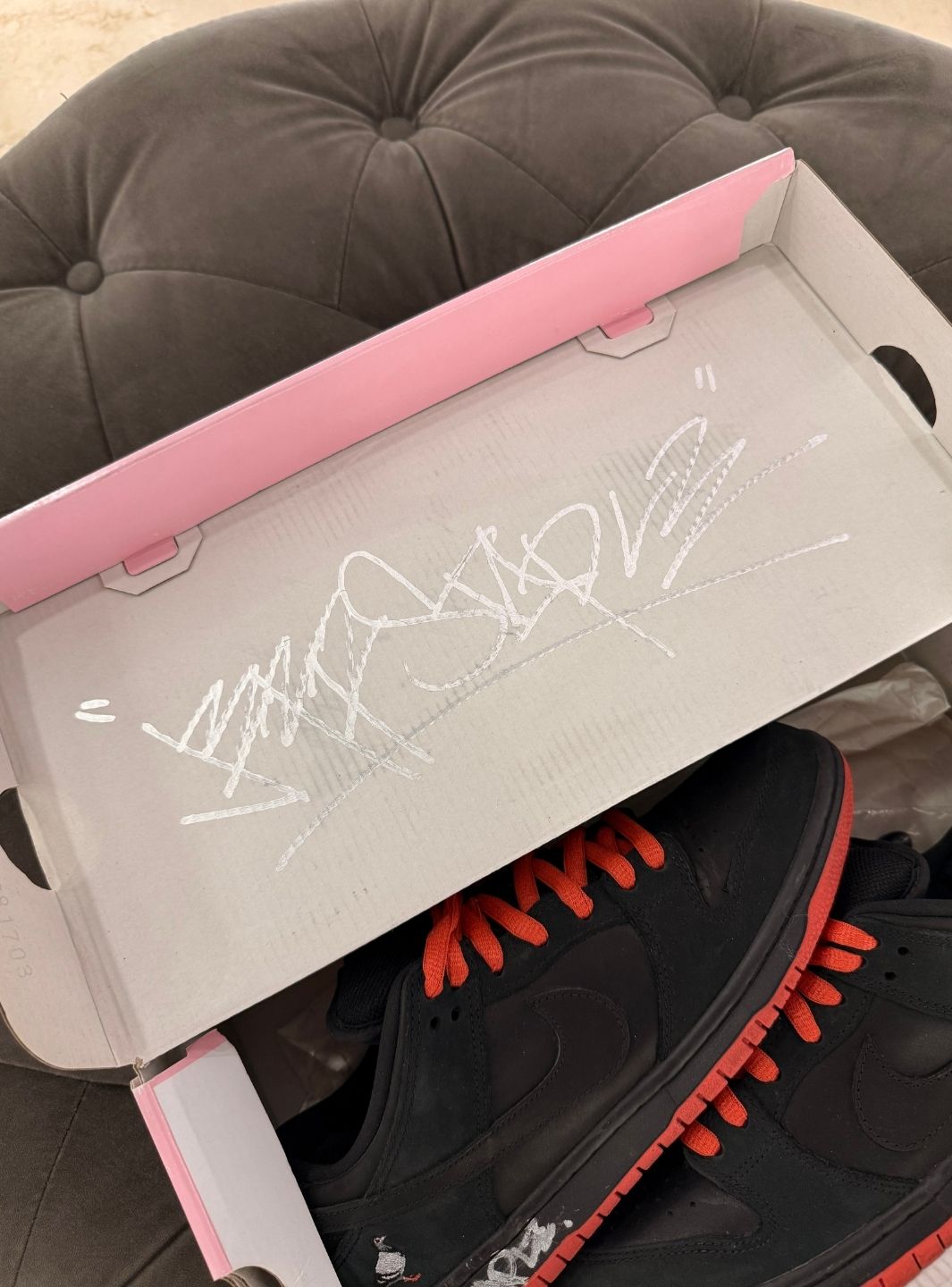
Among the sneakers that have passed through our store is a Nike SB Dunk Low Black Pigeon signed by Jeff Staple.
On a model of this type, the signature naturally adds a particular element to the story of the individual pair, but the condition, authenticity of the sneaker, and provenance of the signature must always be considered separately when evaluating a collector's item.
2019: Panda Pigeon
In 2019, the third great chapter of the series arrived: the Nike SB Dunk Low Panda Pigeon, SKU BV1310-013.
The design combines two symbols from completely different contexts.
The pigeon continues to represent New York and the Staple universe, while the black and white palette and internal graphics introduce the panda as a reference to China.
The result uses a black and white base with green details, an embroidered pigeon on the heel, and numerous hidden elements.
The outsole also incorporates graphics inspired by the newspaper headlines published after the chaos of the 2005 release, transforming the history of the first Pigeon into a physical part of the new shoe.

The details of the Panda Pigeon
The Panda Pigeon contains numerous references intended especially for those who already know the story of the project.
- Embroidered pigeon: returns on the lateral heel as on the previous releases.
- Panda palette: black and white become the main colors of the upper.
- Green details: introduce a nod to bamboo.
- Internal graphics: the insoles continue the panda and bamboo reference.
- Outsole: uses graphics linked to the newspaper headlines generated by the 2005 drop.
- “Staple Not For Resell”: directly pokes fun at the resale culture that grew enormously in the years following the first Pigeon.
Distribution took place through different drops in January 2019, with a Nike SNKRS launch on January 15 and an American retail price of $110.
Pigeon 2005, Black Pigeon, and Panda Pigeon: what changes?
The three sneakers tell of very different moments in Nike SB culture.
The 2005 Pigeon was born when the sneaker community was still relatively small and communication happened primarily through forums, stores, and word of mouth.
The 2017 Black Pigeon arrived in a completely different world, in which social media and resale had already transformed the way people discover and buy sneakers.
The 2019 Panda Pigeon can even afford to poke fun at resale, because that mechanism is now an integral part of the culture.
Observed together, they tell the story not only of Jeff Staple's evolution but also that of the sneaker game.
Jeff Staple beyond the Pigeon Dunks
Reducing Jeff Staple to just one collaboration would be limiting.
STAPLE was born in 1997, and his work spans graphic design, clothing, footwear, retail, creative consulting, and communication.
Reed Space became one of the first concept stores capable of placing product and culture on the same level, while the Pigeon continues to be used as a symbol of the brand in collaborations developed with companies belonging to different worlds.
The 2005 Nike SB remains the most famous project primarily because it manages to concentrate all these ideas into an extremely simple object.
Did the Pigeon really change the resale market?
Here too, it is important to avoid simplification.
Sneaker resale already existed before 2005, and it would be incorrect to claim that Jeff Staple invented it.
However, the Pigeon demonstrated with enormous visibility how a very limited production could create an immediate gap between retail price, demand, and value on the secondary market.
In an era before the major contemporary resale platforms, eBay was one of the main places where this demand became visible.
The combination of rarity, media coverage, and a strong story thus contributed to transforming the Pigeon into a benchmark for modern collecting.
Why did the pigeon become a streetwear icon?
The success of the logo probably stems from the fact that it doesn't look like it was designed to be luxurious.
The pigeon is ordinary, urban, and even annoying. Precisely for this reason, it manages to represent a type of streetwear far from the perfect and constructed images of traditional fashion.
When it is embroidered on the heel of one of the rarest sneakers of its generation, the contrast becomes even stronger.
An animal that nobody usually looks at suddenly becomes the detail everyone is searching for.
It is the same idea upon which STAPLE has built much of its identity: finding cultural value in what truly belongs to the street.
Why the Nike SB Pigeon still matters after more than twenty years
The Nike SB Dunk Low Pigeon remains relevant because its story does not depend solely on rarity.
The design captures New York without using the city's most obvious symbols. The drop tells the story of a moment when sneaker culture was becoming large enough to attract the attention of mainstream media. Subsequent iterations like the Black Pigeon and Panda Pigeon show how that story was reinterpreted when hype and resale had already become global phenomena.
The Pigeon did not invent the modern sneaker game on its own, but on February 22, 2005, it made something visible that had previously belonged mostly to enthusiasts.
And that is why, over twenty years later, Jeff Staple and his little embroidered pigeon on the heel continue to hold a fundamental place in Nike SB history.