In 2026, Travis Scott returned to the Nike Air Force 1, a silhouette that holds a special place in the history of his collaboration with Nike.
After years dominated primarily by the Air Jordan 1, Jumpman Jack, and models developed directly around the Cactus Jack universe, the new Air Force 1 Low Ice Blue reopens a chapter that began almost ten years earlier.
This time, however, the context is completely different: the sneaker is part of Cactus Court, a project built around the 2026 US Open and the meeting between Cactus Jack and Nike Tennis, with Carlos Alcaraz starring in the campaign.
On one side, we therefore find a lifestyle Air Force 1 designed for sneaker culture and streetwear. On the other, a performance Zoom Vapor 12 actually intended for the tennis court.
Travis Scott and Air Force 1: a story that began in 2017
The return to the Air Force 1 is particularly significant because this very silhouette hosted one of the first major footwear projects between Travis Scott and Nike. From the 2017 AF100 to the Sail, through the Cactus Jack and Utopia, you can trace the entire evolution in our guide to the history of the Travis Scott x Nike Air Force 1.
In 2017, Travis participated in the AF100 project, created to celebrate the 35th anniversary of the sneaker designed by Bruce Kilgore in 1982.
His version used a white canvas base with interchangeable Swooshes, reflective details, and removable patches, already introducing that idea of customization that would become recurrent in subsequent collaborations.
In 2018, the Sail version arrived, while in 2019, the Air Force 1 Cactus Jack radically transformed the silhouette through canvas, suede, corduroy, flannel, leather, and numerous references to workwear and Travis’s Texan roots.
From that moment on, the AF1 practically disappeared from his catalog of collaborations, while the relationship with Nike focused mainly on the Jordan Brand and Cactus Jack silhouettes.
The 2026 Ice Blue, therefore, represents a true return to one of the models that had characterized the first phase of the partnership.

Cactus Court brings Cactus Jack into the world of tennis
The new Air Force 1 was born within Cactus Court, a project presented during the 2026 US Open.
The capsule brings together two very different souls. The Air Force 1 represents the lifestyle component, while the Nike Zoom Vapor 12 takes the project directly onto the court.
Carlos Alcaraz becomes one of the main links between these worlds, appearing in the collection's communication and in the performance side developed around Nike Tennis.
It is precisely this structure that makes Cactus Court more interesting than a simple collection aesthetically inspired by tennis.
Nike and Travis Scott pair one of the Swoosh's most important lifestyle silhouettes with a true performance shoe, building a project that connects sneaker culture and sport through two products with completely different functions.
The design of the Travis Scott Air Force 1 Ice Blue
Aesthetically, the new Air Force 1 is almost the opposite of the 2019 Cactus Jack.
Where that sneaker accumulated different fabrics, prints, zips, and details, the Ice Blue uses a much cleaner construction.
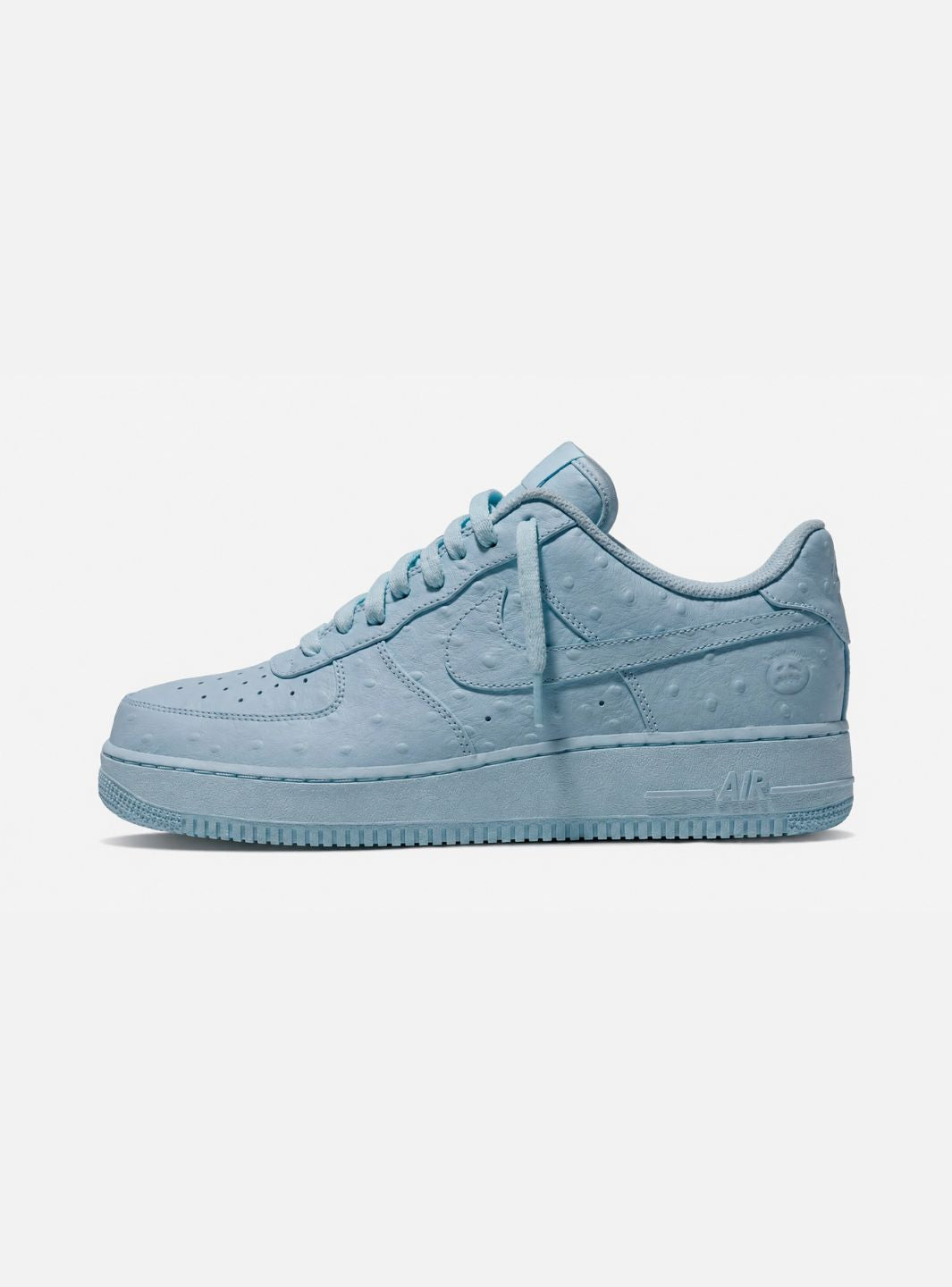
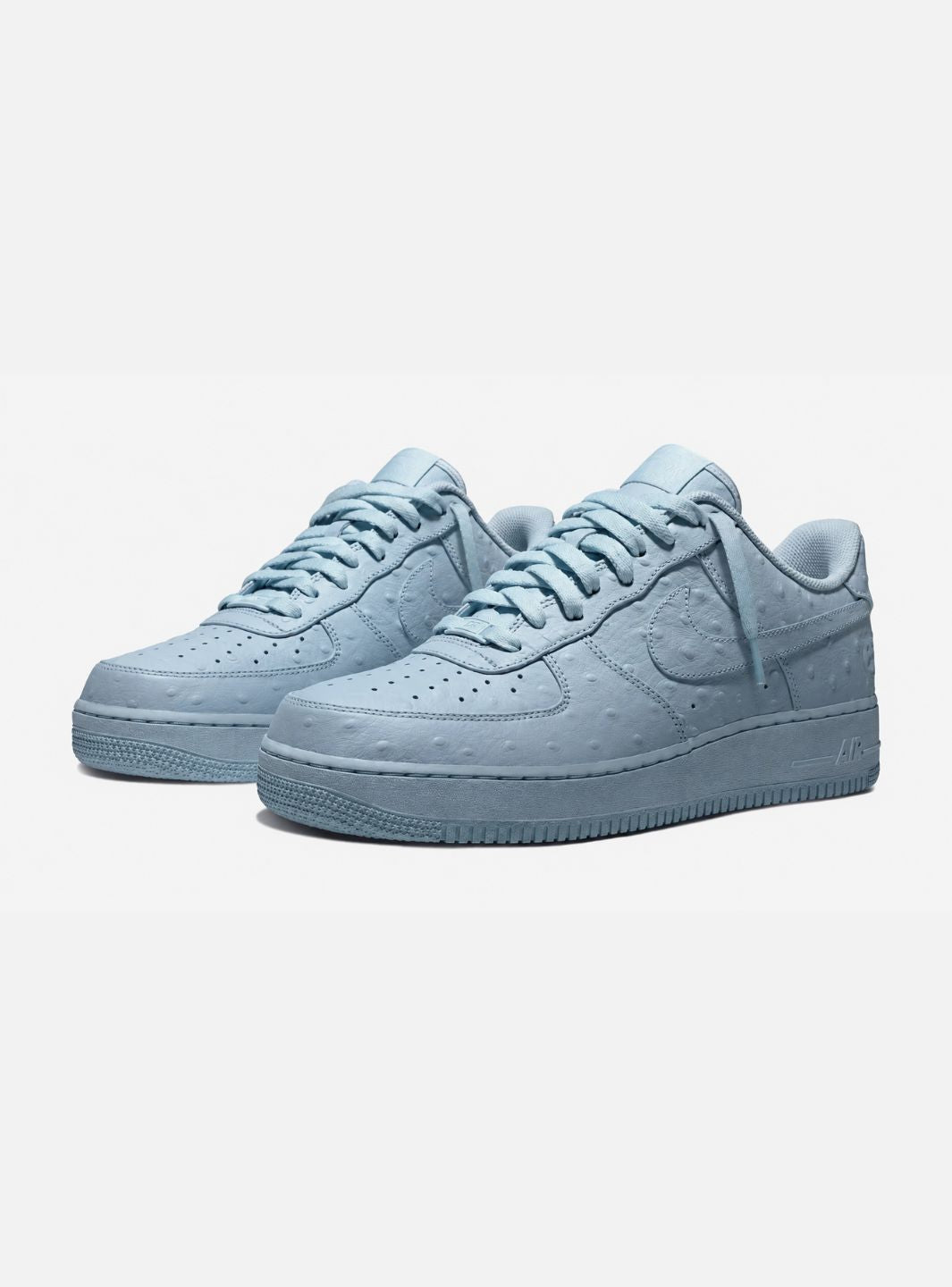
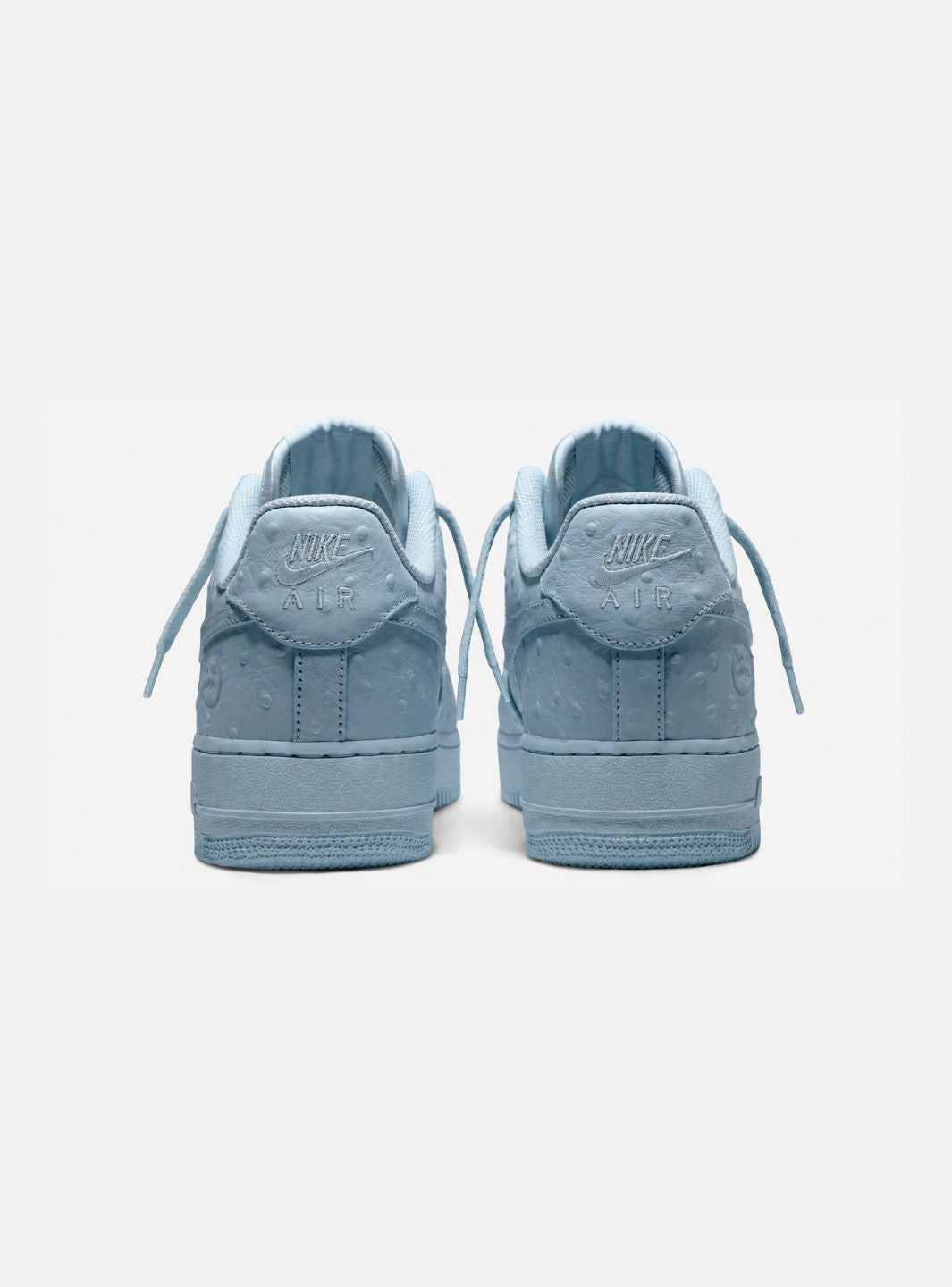
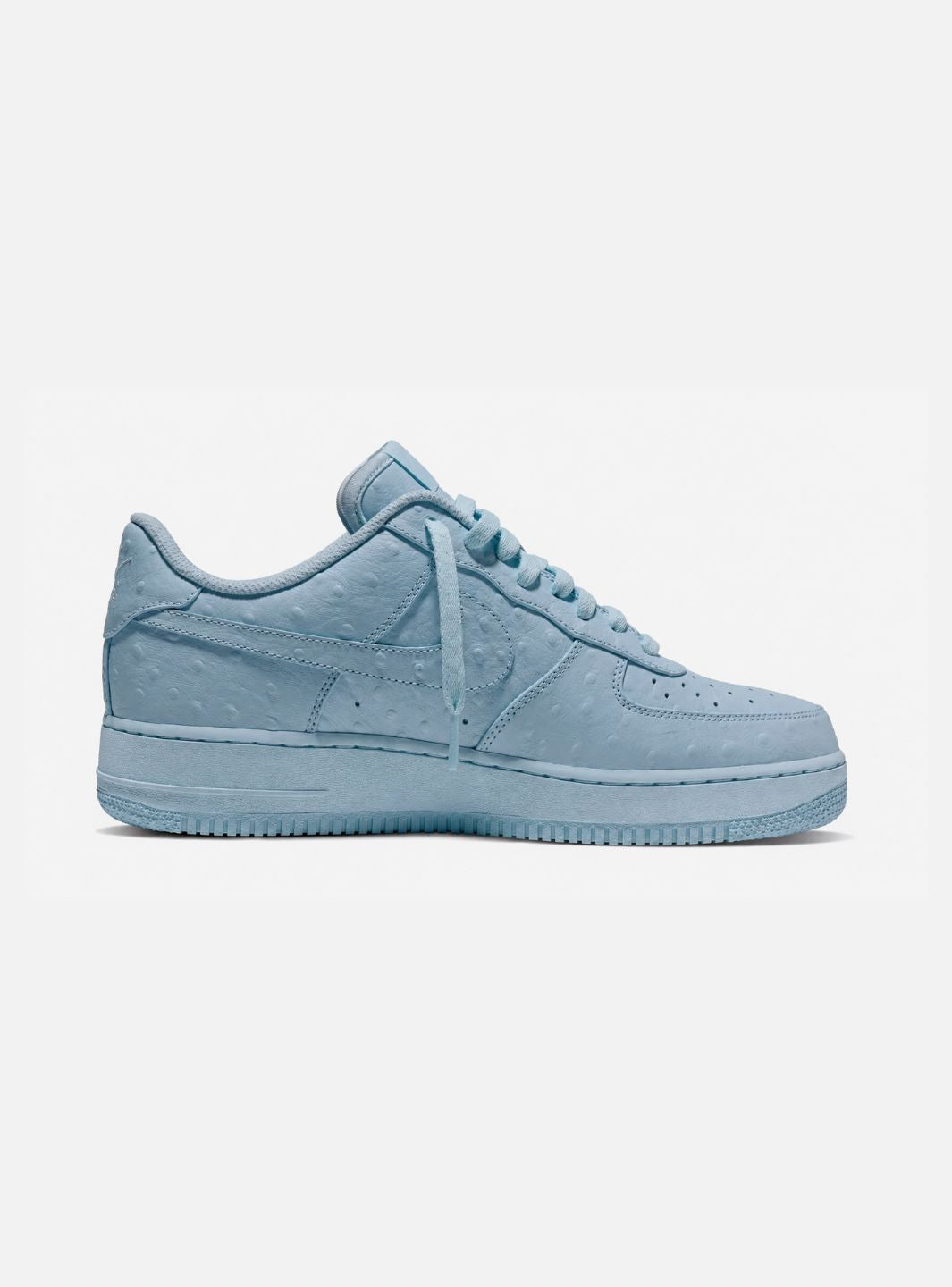
The palette combines Ice Blue and Celestine Blue, creating an almost monochromatic sneaker dominated by light blue tones.
It is a choice very distant from the browns, Sail, and Olive that have become particularly associated with Travis Scott collaborations over the years.
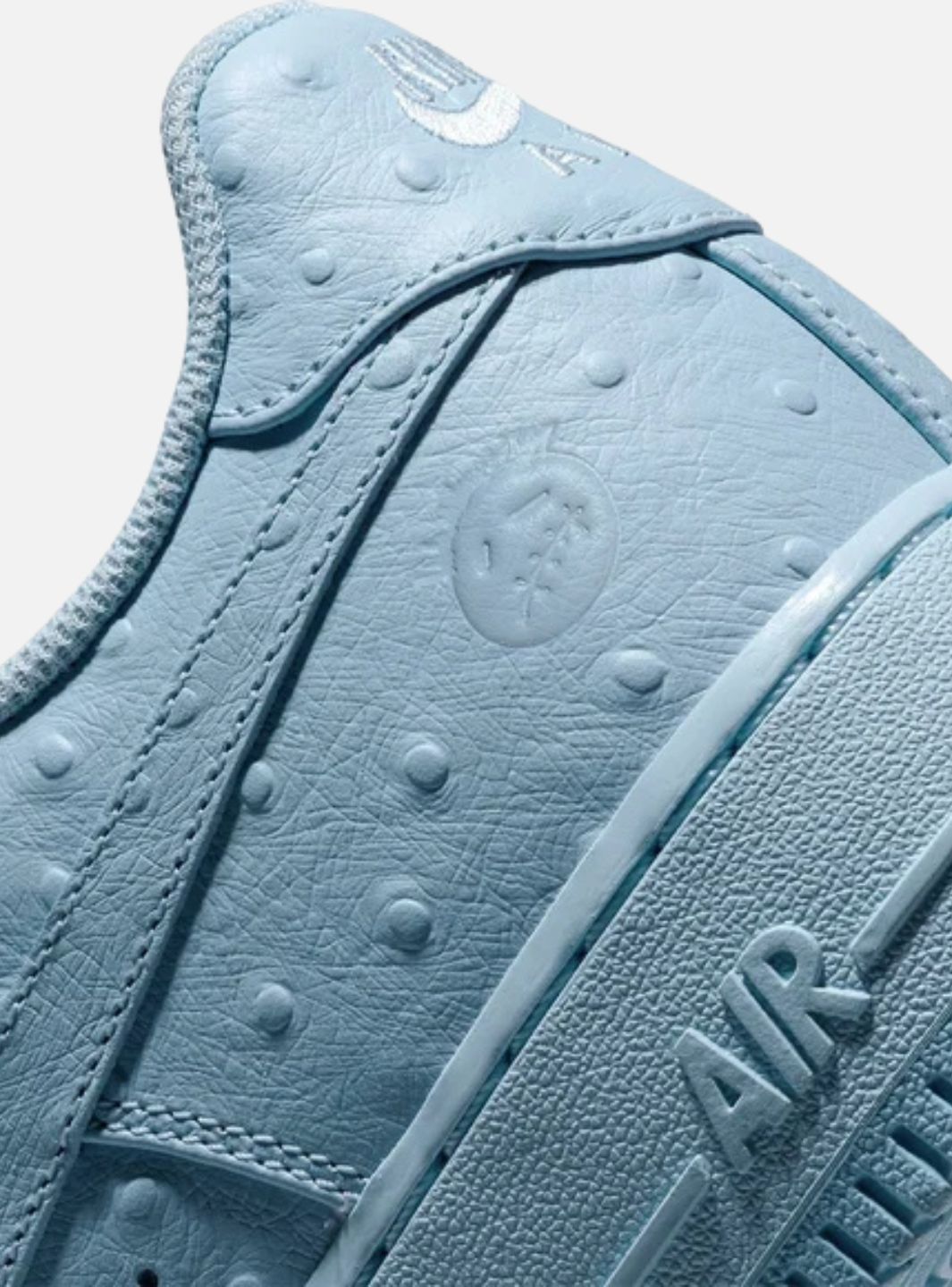
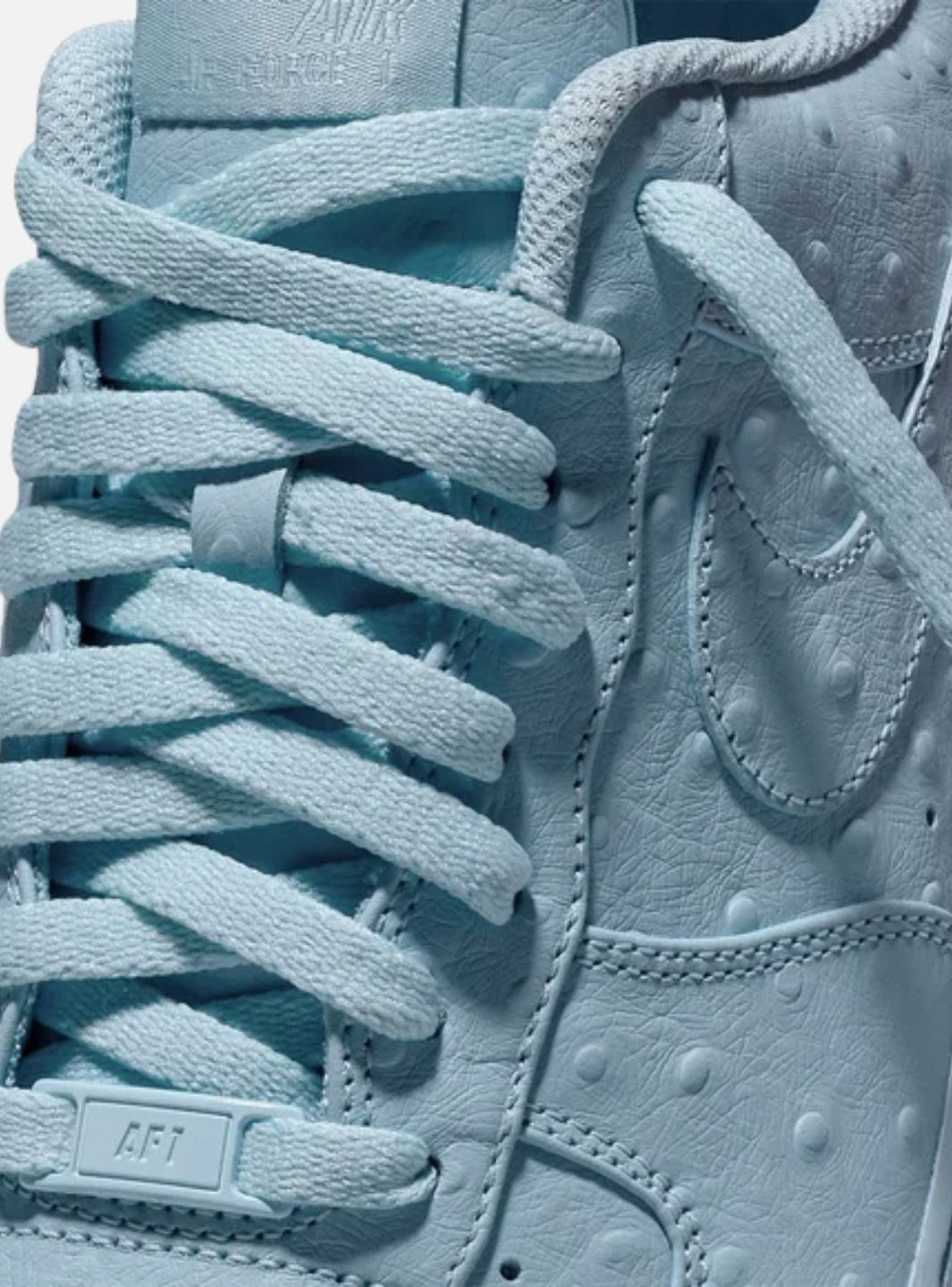
The most characteristic element is the leather upper with an ostrich-effect texture. The small bumps distributed across the surface make the material recognizable, especially when observing the sneaker up close.
A light midsole separates the upper from the blue outsole, keeping the general construction very close to that of a classic Air Force 1 Low.
No Reverse Swoosh: a more understated Travis Scott
One of the most interesting aspects is precisely what does not appear on the Ice Blue.
The sneaker does not use the large Reverse Swoosh that has since become one of the codes most immediately associated with the Air Jordans signed by Travis Scott.
Instead, the Swoosh maintains the traditional orientation of the Air Force 1 and is integrated into the tonal palette.
Even the Cactus Jack branding remains relatively discreet, appearing primarily in the rear and interior details.
The Ice Blue, therefore, does not seek to radically transform the AF1 to make it recognizable as a collaboration. Materials, coloring, and the Cactus Court context are enough to differentiate it from a normal release.
Air Force 1 and Zoom Vapor 12: street and court
To understand Cactus Court, you need to look at the two star sneakers together.
The Air Force 1 Ice Blue represents the lifestyle side. Originally created as a basketball sneaker in 1982, the AF1 has become one of the most important silhouettes in streetwear and hip-hop culture over time.
The Zoom Vapor 12 Cactus Jack, on the other hand, represents the performance side and uses a construction developed for tennis.
The palettes are also intentionally different. The Vapor 12 uses Sail and brown tones much closer to the chromatic imagery generally associated with Travis Scott, while the Air Force 1 experiments with a much cooler blue.
The two sneakers therefore belong to the same project without trying to appear as simple variations of the same product.

How were the Travis Scott Air Force 1 Ice Blue released?
The initial distribution of the sneaker was strictly linked to the US Open and the Cactus Court activations organized in New York.
The first pairs were available between late August and early September 2026 through the Cactus Court Pro Shop at 47 Chrystie Street and some Nike activations linked to the tournament.
On September 4, 2026, the Air Force 1 Ice Blue also arrived online through Cactus Jack via a draw system.
The retail price in the United States was $120.
Therefore, it was not, at least in the first phase, a normal global Nike release distributed simultaneously across all markets.
Were the Travis Scott Air Force 1 Ice Blue released in Europe?
At the time of writing this article, in September 2026, no dedicated European release via Nike SNKRS has been announced.
The documented distribution of the Air Force 1 Ice Blue has focused mainly on the US activations of the US Open and the subsequent Cactus Jack drop.
This does not allow us to rule out any future distributions, but until Nike or Cactus Jack communicate new launches, it is better not to indicate unconfirmed European dates.
For those looking for the sneaker outside the United States today, availability is primarily through retailers and the secondary market.
On ResellZone, you can check sizes and availability of the Travis Scott x Nike Air Force 1 Low Ice Blue.

Why the Ice Blue is different from other Travis Scott releases
The Air Force 1 Ice Blue distinguishes itself from many recent Travis Scott collaborations for three main reasons.
First of all, it brings the artist back to the Air Force 1 after several years. Secondly, it abandons much of the earthy palette that had characterized numerous previous projects. Finally, it was born within a collaboration built around tennis and the US Open.
It does not, therefore, try to replicate the success of the Jordan 1 Mocha or automatically transfer the Reverse Swoosh to another silhouette.
Instead, it recovers an earlier part of the Nike x Travis Scott history and places it in a completely different context.
From the AF100 to Cactus Court
Observed together with Travis Scott's previous Air Force 1s, the Ice Blue shows well how much the collaboration with Nike has changed.
In 2017, the AF100 revolved mainly around the customization of the classic white Air Force 1. In 2018, the Sail developed the same concept. In 2019, the Cactus Jack completely transformed the sneaker through materials and personal references.
In 2026, the Ice Blue returns to a much simpler construction, but places it within a broader cultural project that involves tennis, performance, and one of the most important sporting events of the year.
The Travis Scott x Nike Air Force 1 Ice Blue is therefore not just a new colorway. It is the meeting point between the initial phase of the Nike x Travis Scott partnership and the much broader universe that Cactus Jack has become almost ten years later.