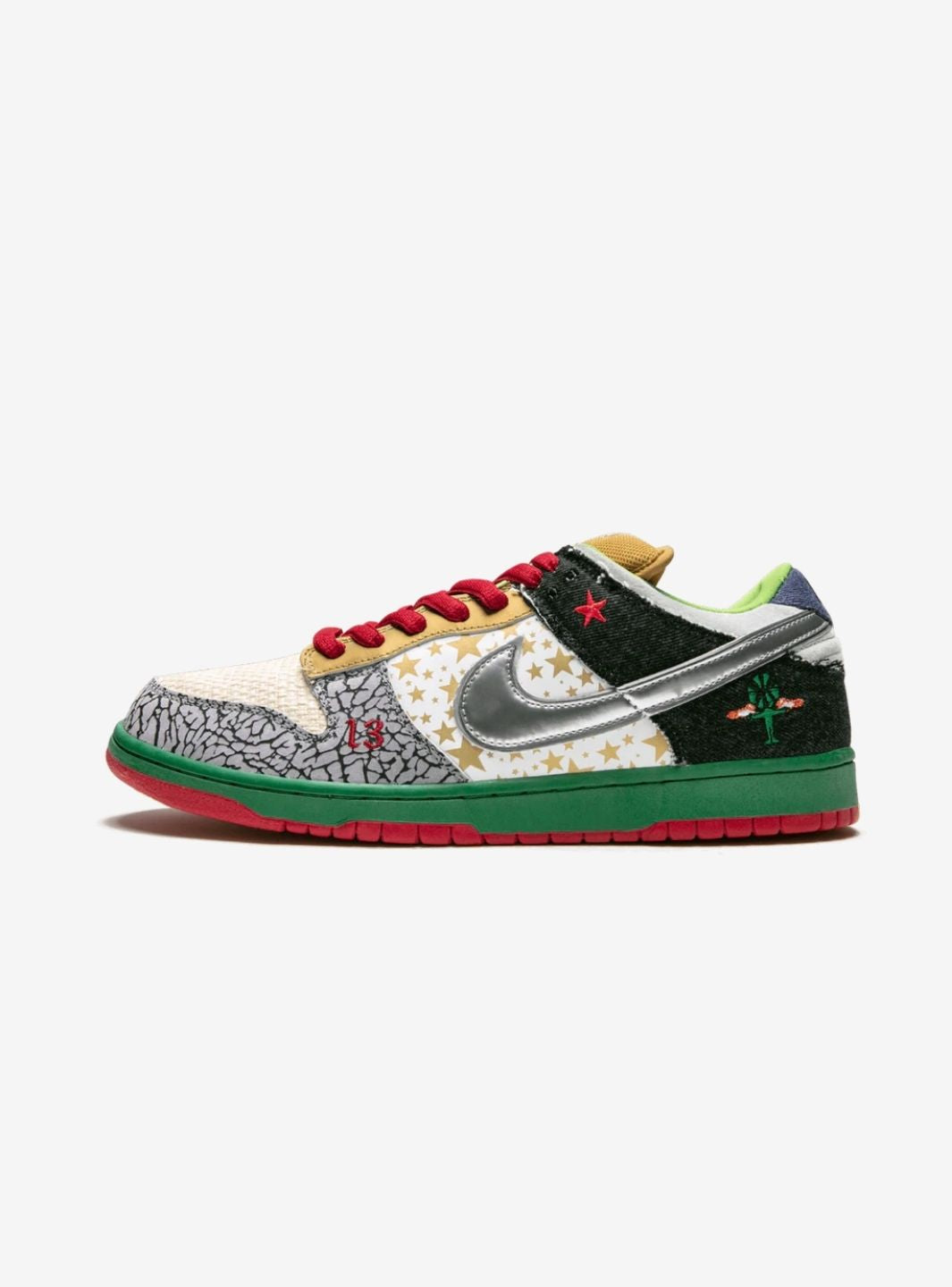
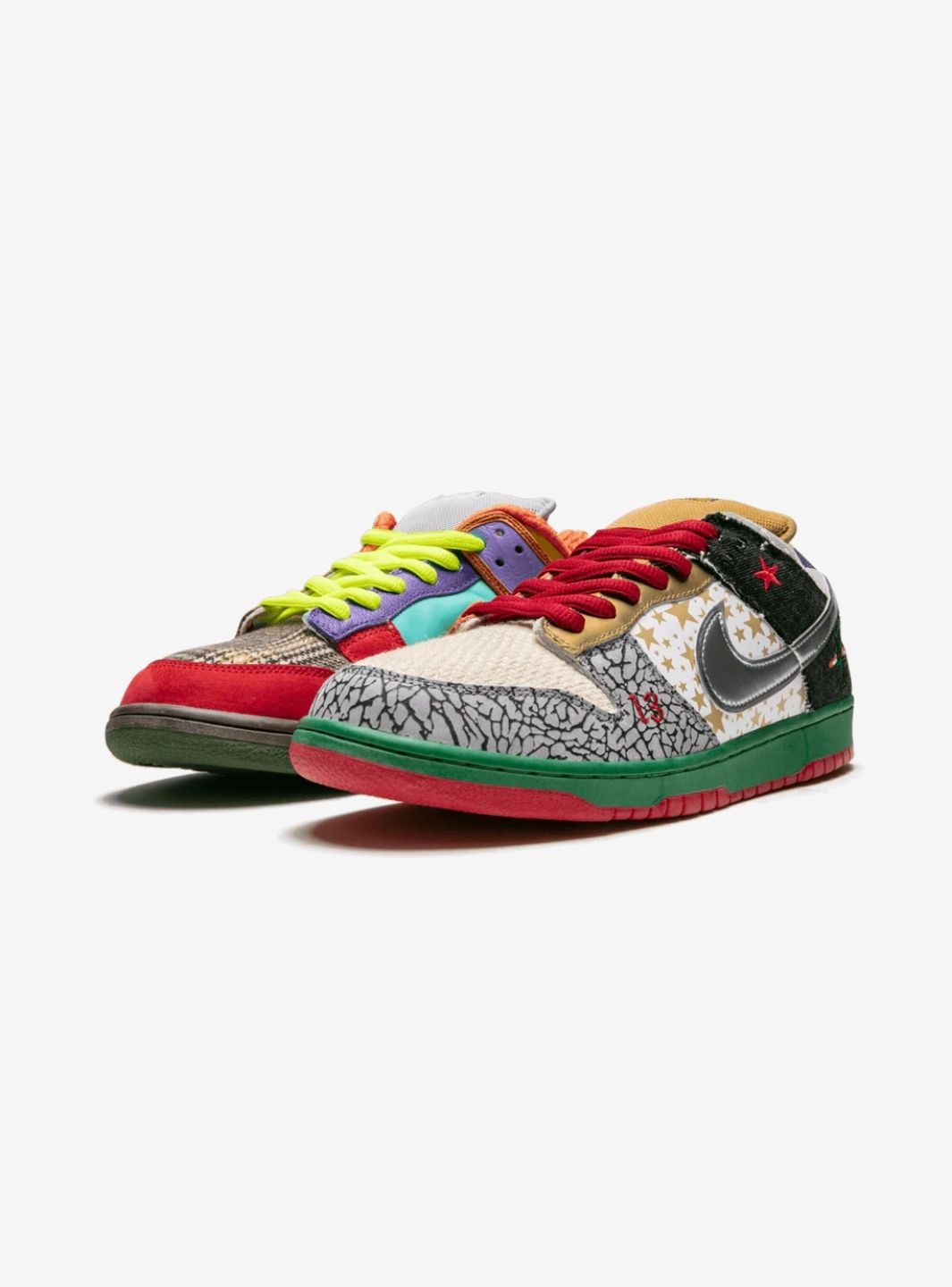
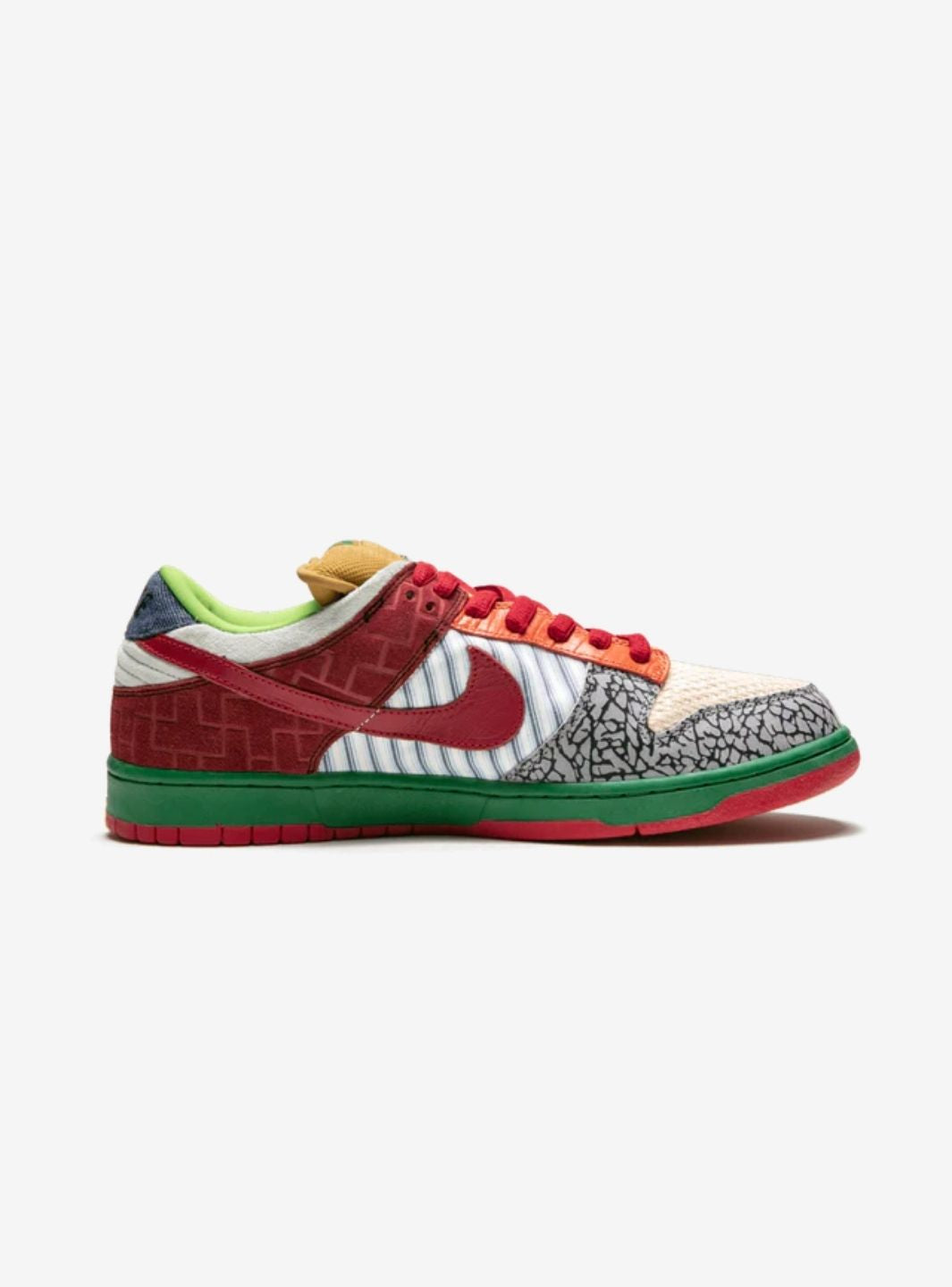
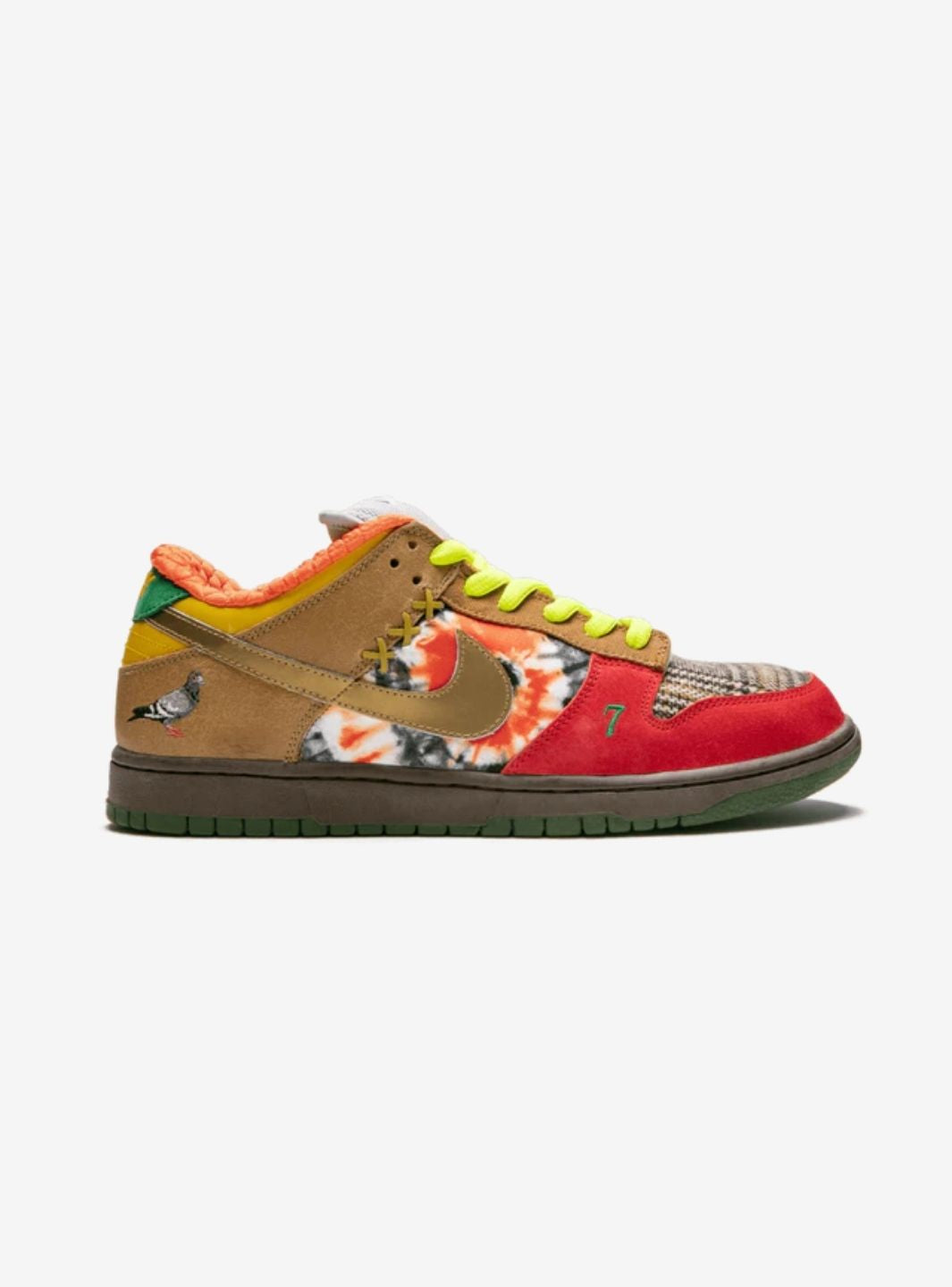
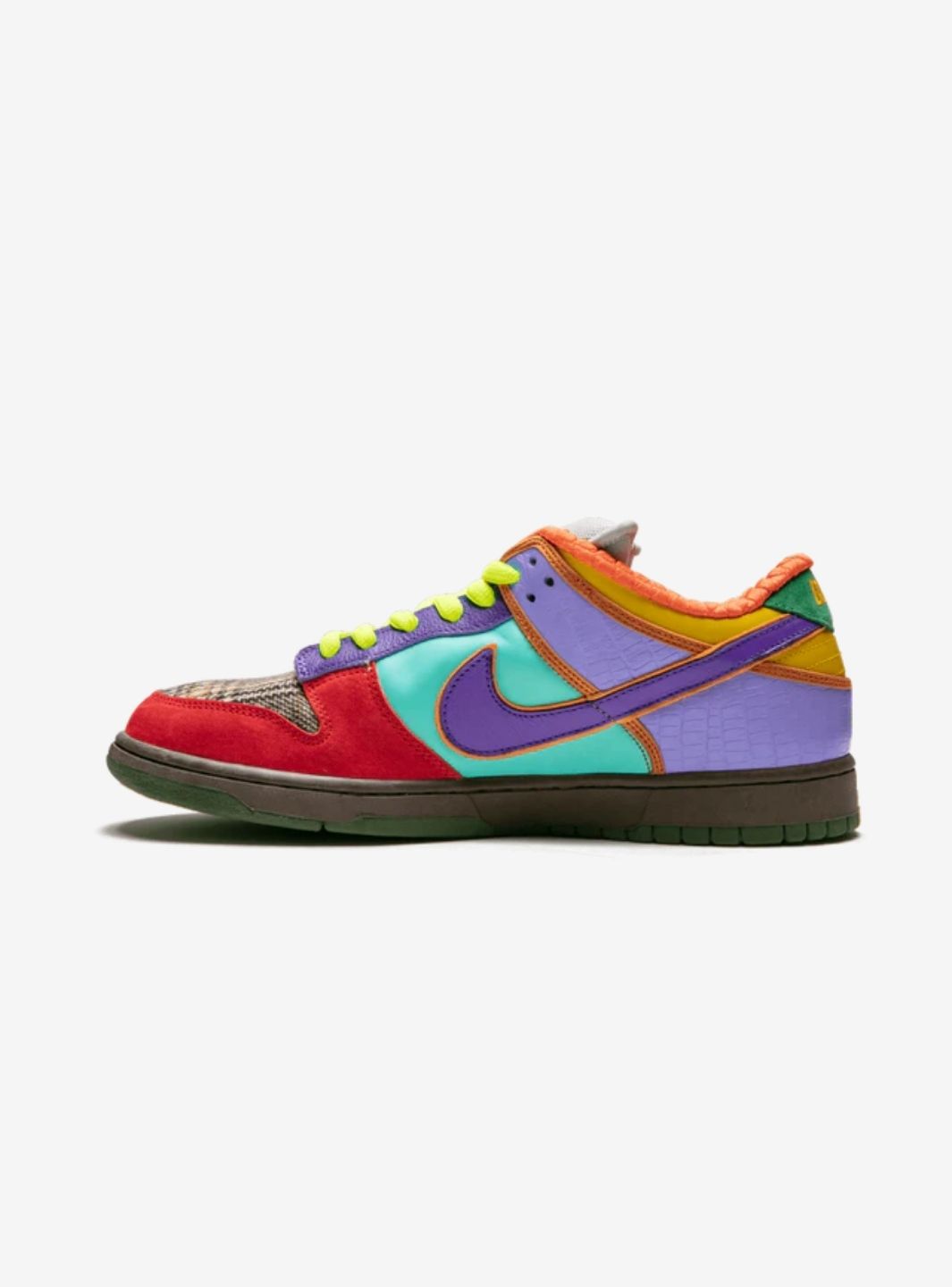
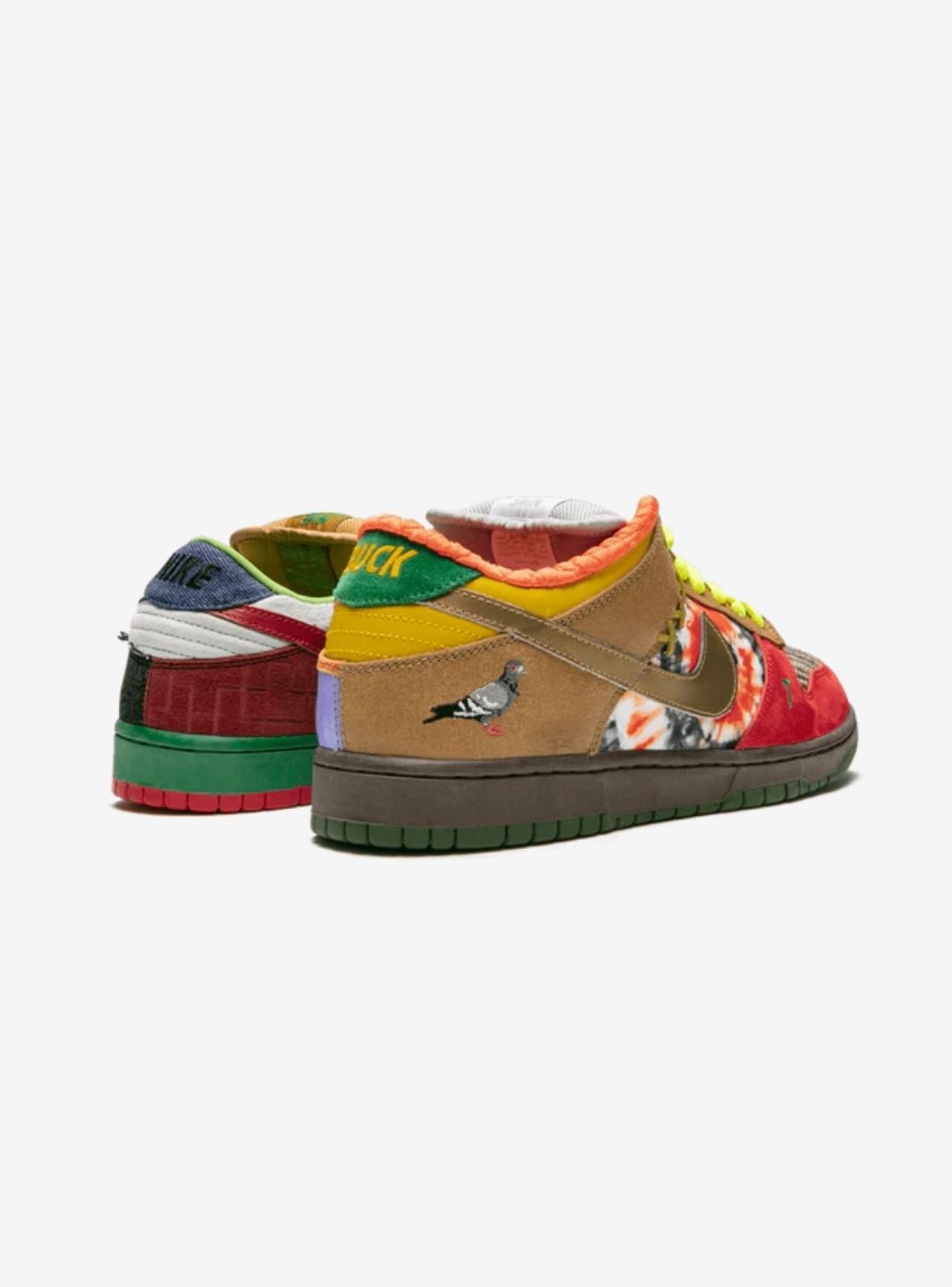
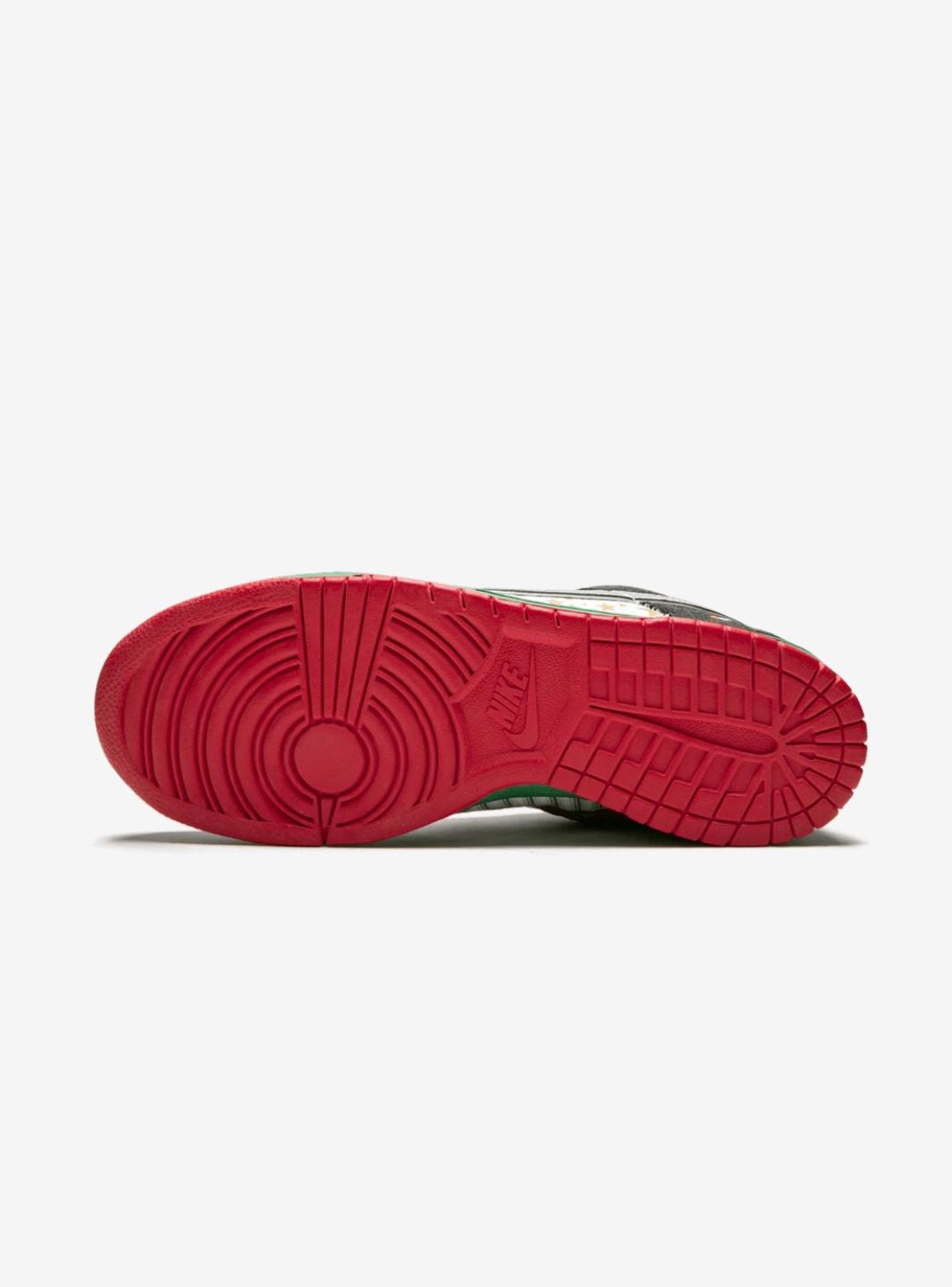
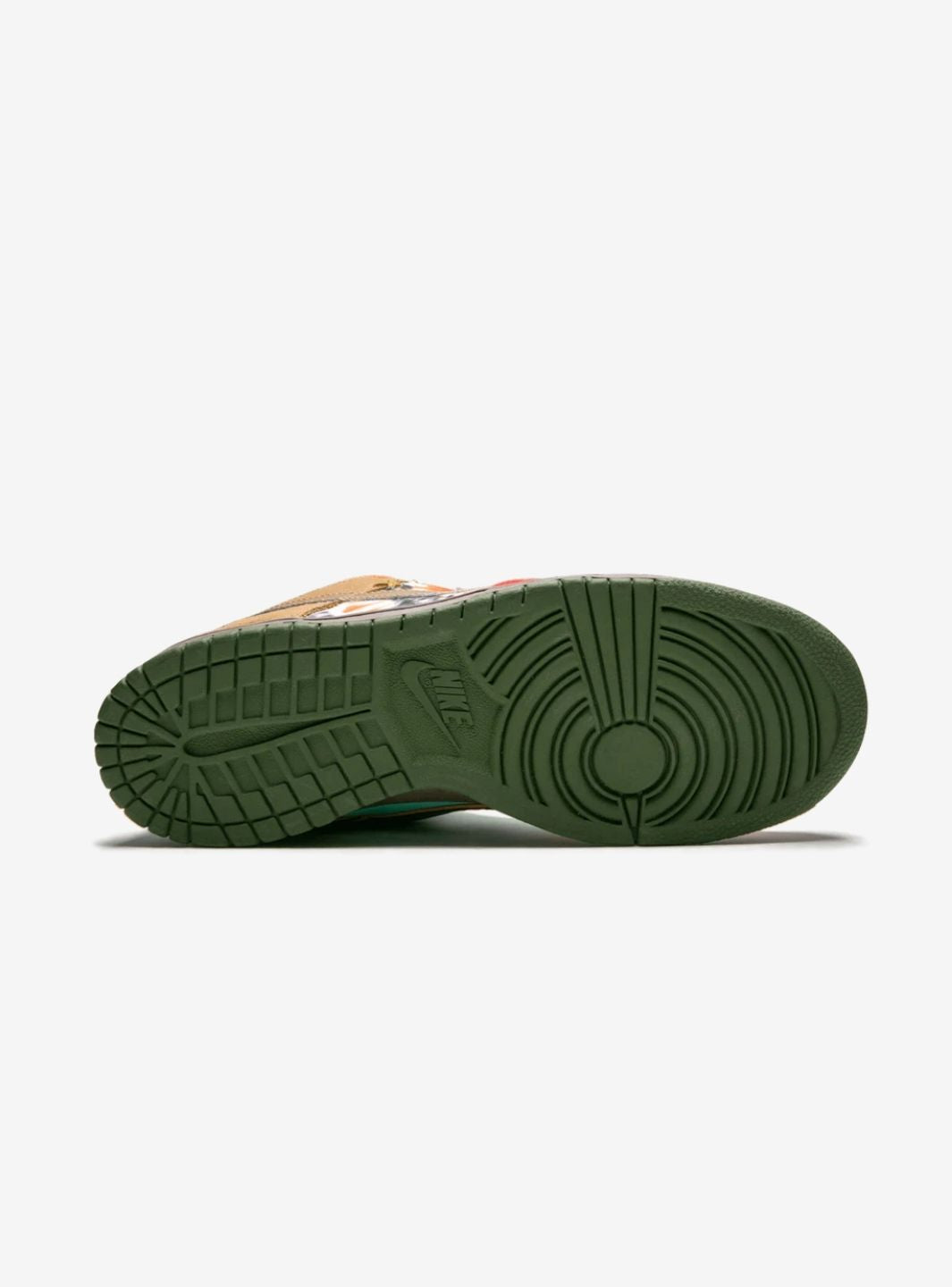
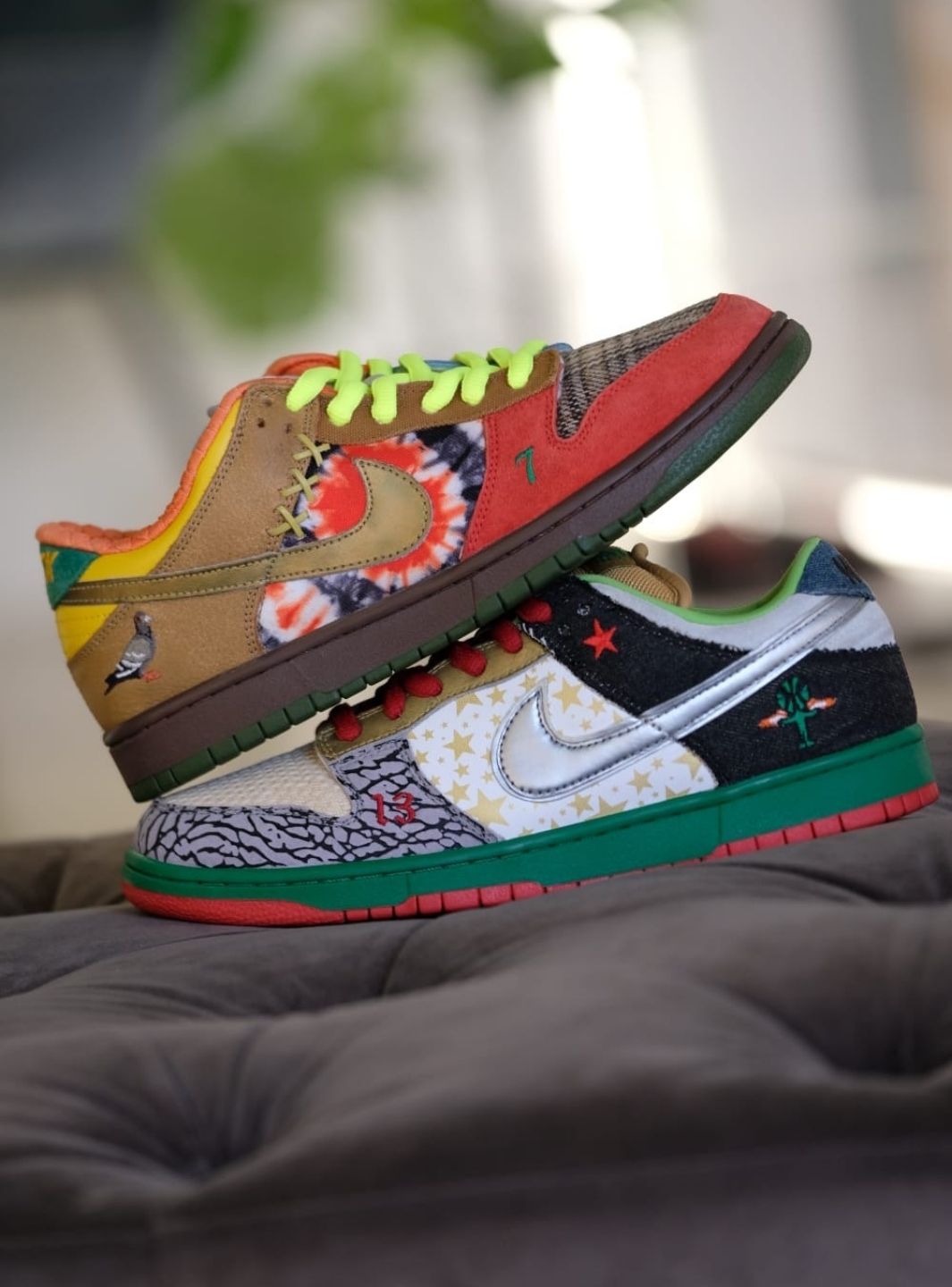
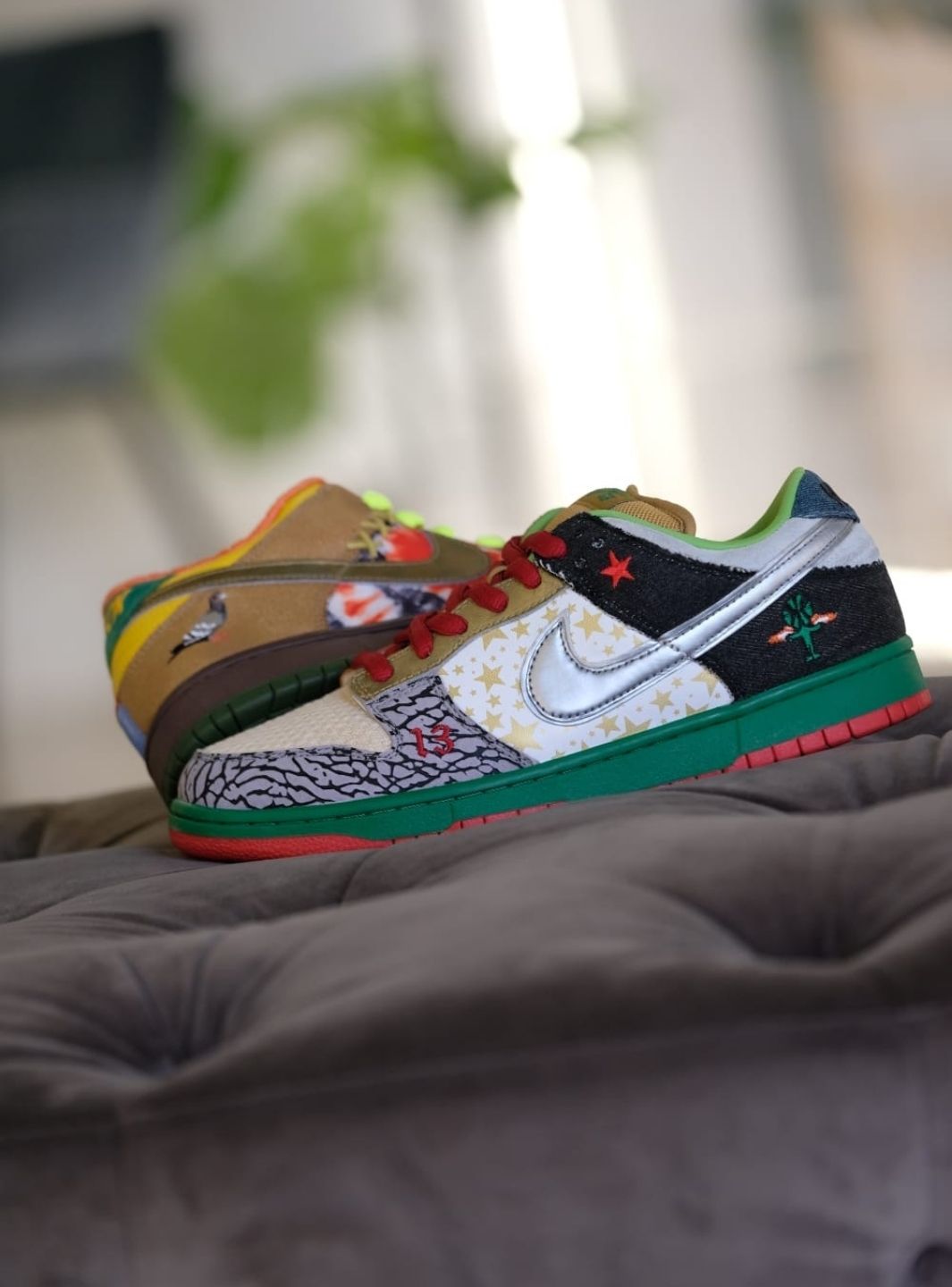
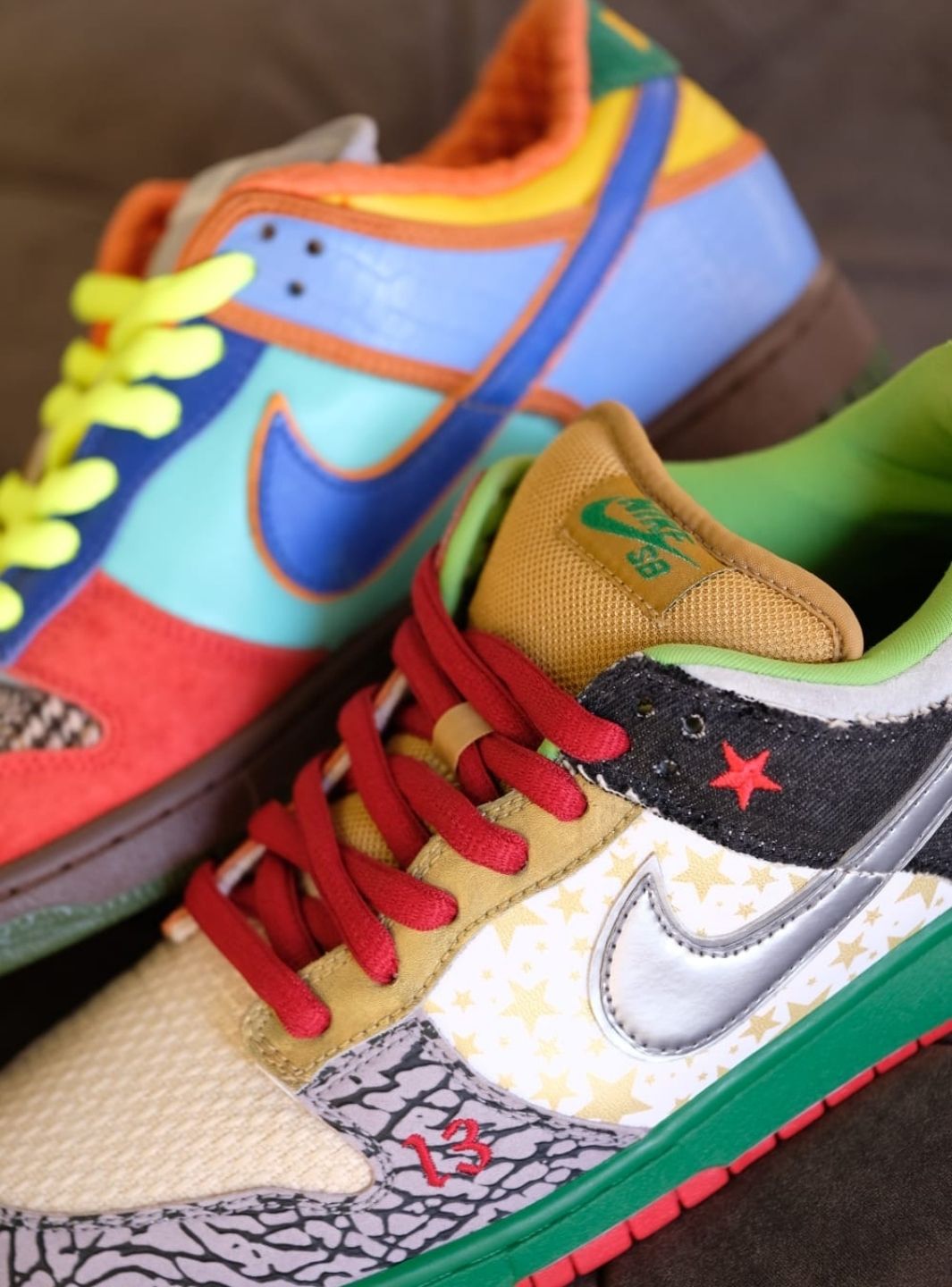
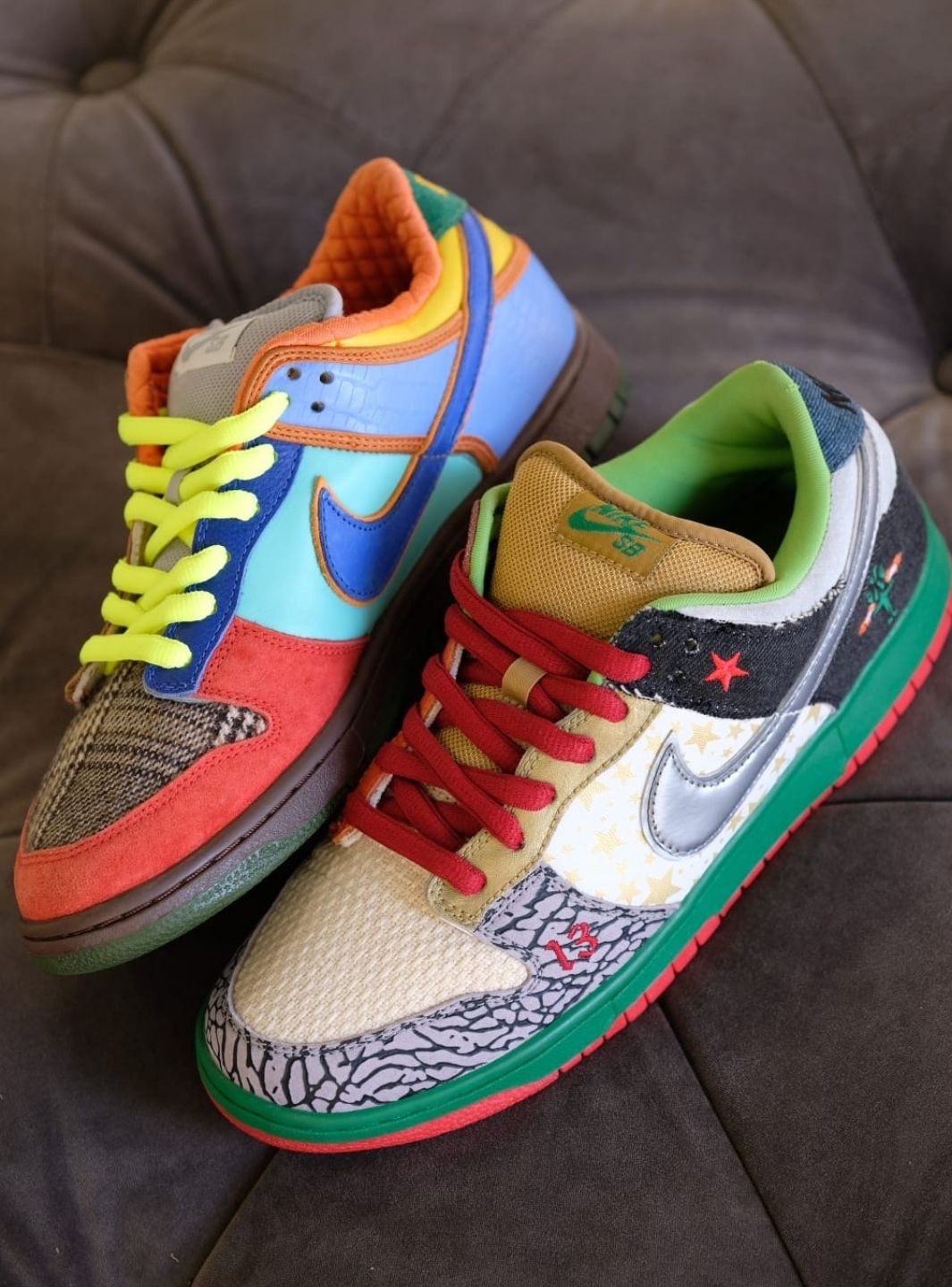
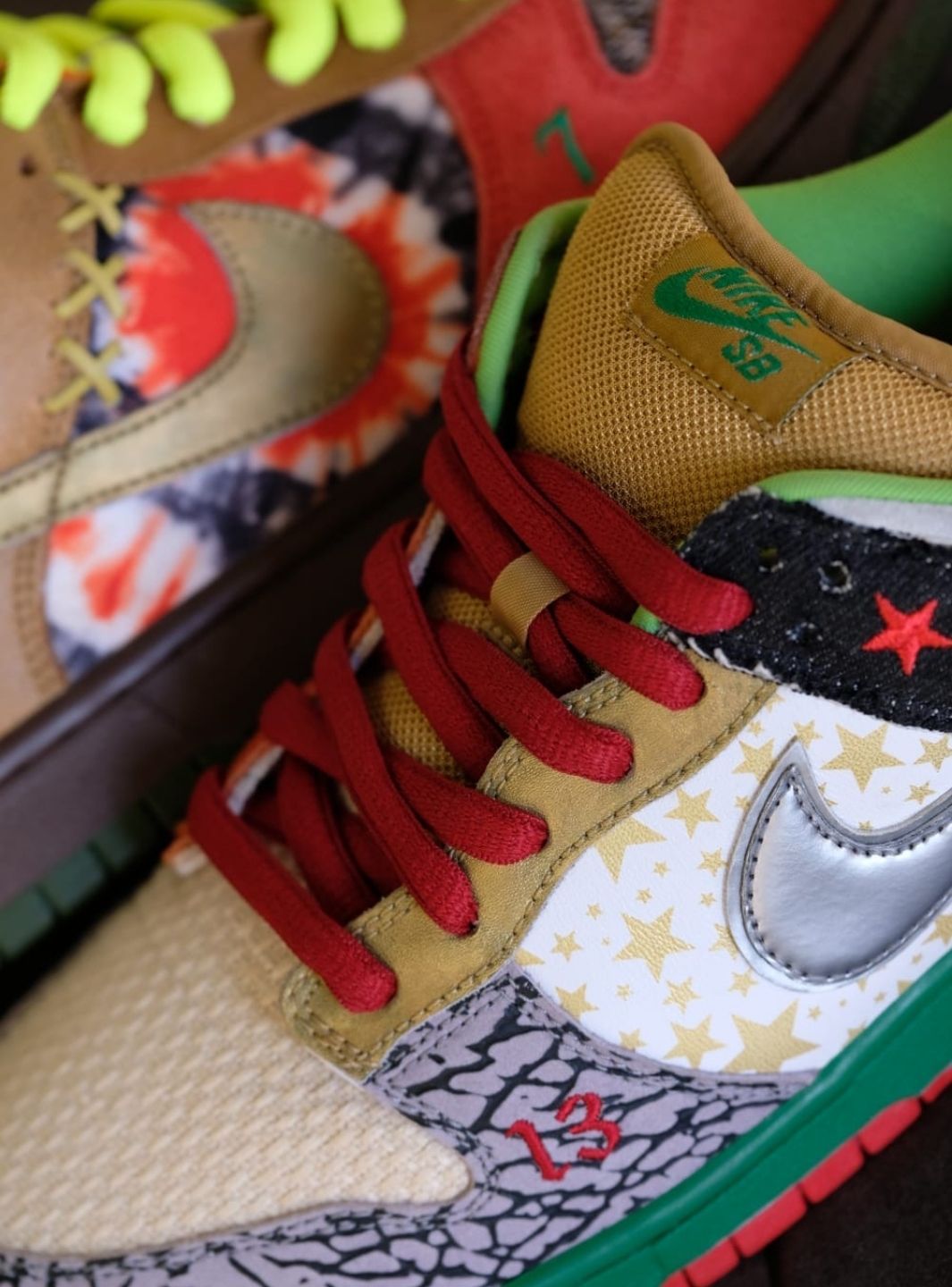
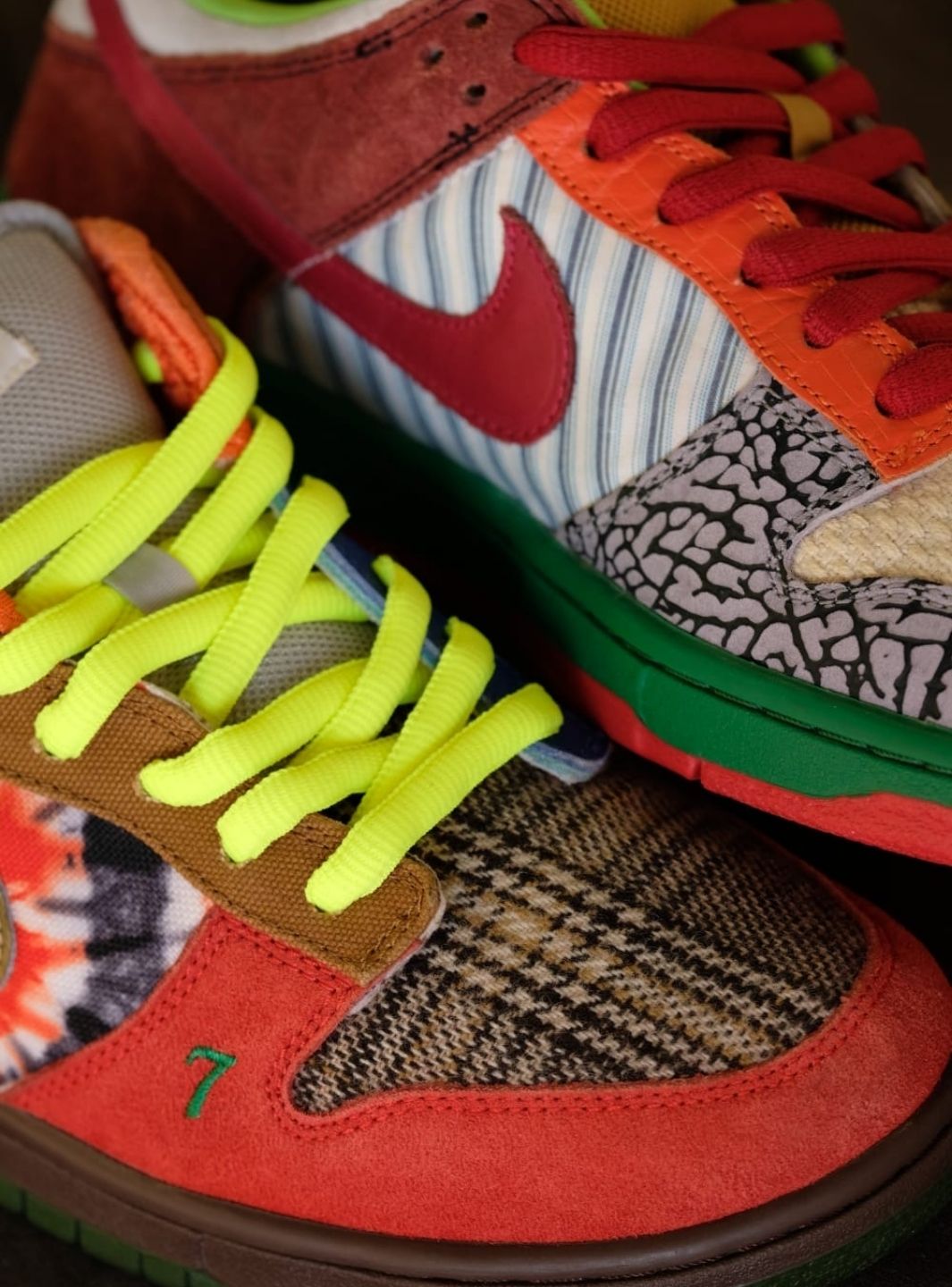
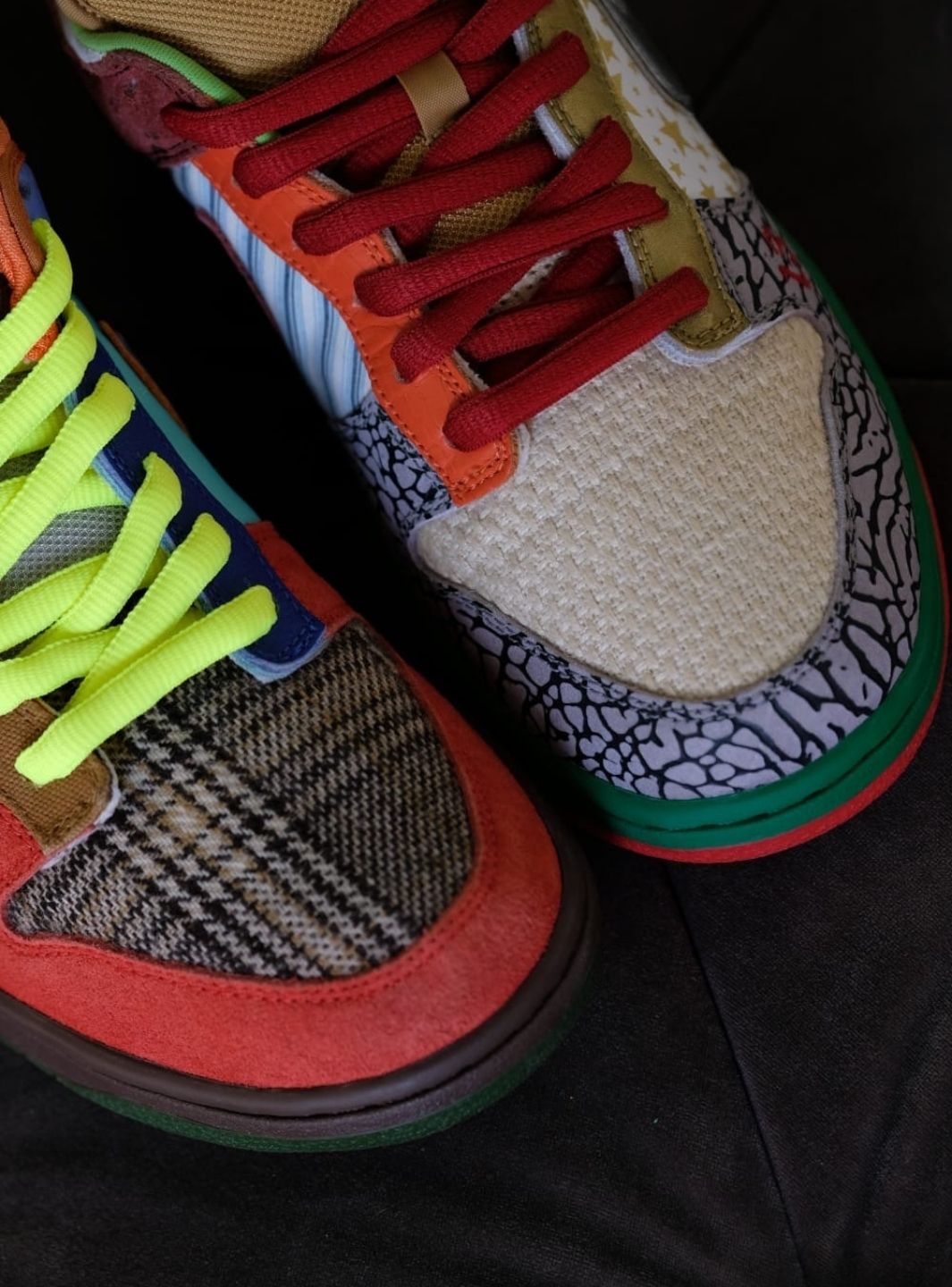
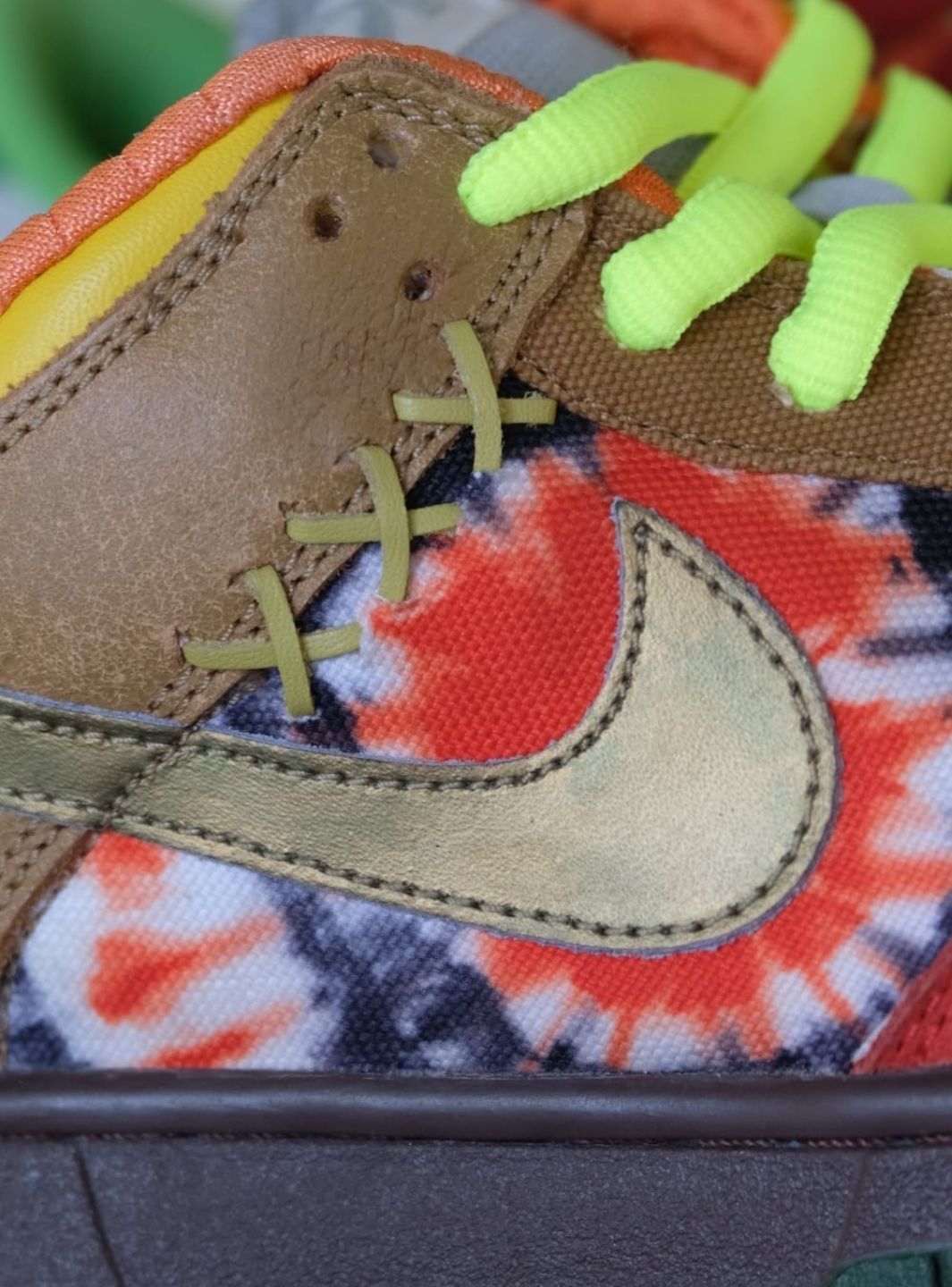
In the world of Nike SB, there are rare Dunks, legendary Dunks, and Dunks that changed the way a sneaker is told forever. Then there is the Nike SB Dunk Low What The Dunk, a shoe so absurd it seems like the result of an experiment that got out of the designers' control.
It doesn't try to be clean, balanced, or easy to match. It does exactly the opposite: it takes some of the most important models from the early Nike SB years, mentally deconstructs them panel by panel, and reassembles them into a completely asymmetrical pair. The two shoes are not the same, the materials change constantly, and every detail seems to come from a different release.
The result is a collage built through elements of 31 Nike SB Dunks. A wearable archive, full of references to sneakers that were already considered grails in 2007 and are worth huge amounts today. The What The Dunk, therefore, does not celebrate just one story: it seeks to tell, within the space of a pair of shoes, the entire birth of the Nike SB myth.
2007 and the era when Nike SB could afford to celebrate itself
The What The Dunk was born in 2007, just five years after the official launch of the Nike SB division. In that period, the brand had already accomplished an impressive transformation: from an outsider initially viewed with suspicion by the skate community, it had become one of the most influential players in sneaker culture.
The credit was not only due to the technical characteristics of the SB Dunk, such as the padded tongue, the Zoom Air insole, and a construction adapted for skateboarding. The true strength of the line lay in its ability to create stories. Every new colorway could draw inspiration from a city, a skate shop, an artist, a movie character, an animal, or even a product of everyday life.
Within a few years, sneakers like the Supreme Dunks, the Paris, the eBay, the Cali, the Jedi, and naturally the legendary Pigeons were born. Models that were very different from one another, but united by the ability to generate community, stories, and desire well before Instagram, TikTok, and digital raffles became part of the sneaker game.
The What The Dunk arrived at exactly this moment. Nike SB had by now built a recognizable language and could afford to look at its own archive, celebrate it, and even poke fun at it through a deliberately exaggerated sneaker.

James Arizumi and the idea of the “ultimate Dunk”
The project was entrusted to designer James Arizumi, who started with a seemingly impossible goal: to build the “Dunk to end all Dunks,” the Dunk capable of encompassing all others. Not a new traditional colorway and not even a collaboration with a single artist, but a sneaker that would function as a retrospective of the SB line's early years.
Arizumi selected elements from 31 different Nike SB Dunks. The work did not consist simply of pairing random colors: every panel, print, embroidery, and material had to be recognizable and, at the same time, fit into a new composition. The difficulty increased because the two shoes were designed differently, so as to multiply the space available for references.
Nike described the creation as a meticulous, complex, and deliberately ridiculous process. That is a perfect definition. The What The Dunk is absurd by choice, but behind its apparent chaos exists almost archival work. Every detail is there for a reason, and every element speaks to those who truly know the history of the line.

The connection to “Nothing But the Truth”
The What The Dunk was not born as an isolated release. It was developed as the sneaker component of the campaign dedicated to Nothing But the Truth, the first full-length video produced by Nike SB. The project represented a fundamental moment for the brand: it was no longer enough to make good shoes or sponsor important riders; Nike wanted to prove it possessed a true identity within skate culture.
The film brought together the Nike SB team and transformed years of footage, trips, and skateboarding into a collective statement. The What The Dunk performed the same function through design: if the video showed what Nike SB had become on the board, the sneaker showed what it had built through its releases.
For this reason, calling it a simple promotional product would be reductive. It was a celebratory manifesto. A way to say that Nike SB now had an archive strong enough to be dismantled, cited, and rebuilt into a single pair of shoes.
The model arrived in October 2007, during what would be remembered as the initial phase of the Gold Box Era. Despite the enormous attention generated by the concept, Nike offered the public only a limited quantity of pairs, contributing from the beginning to its transformation into a collector's item.
Thirty-one Dunks in a single sneaker
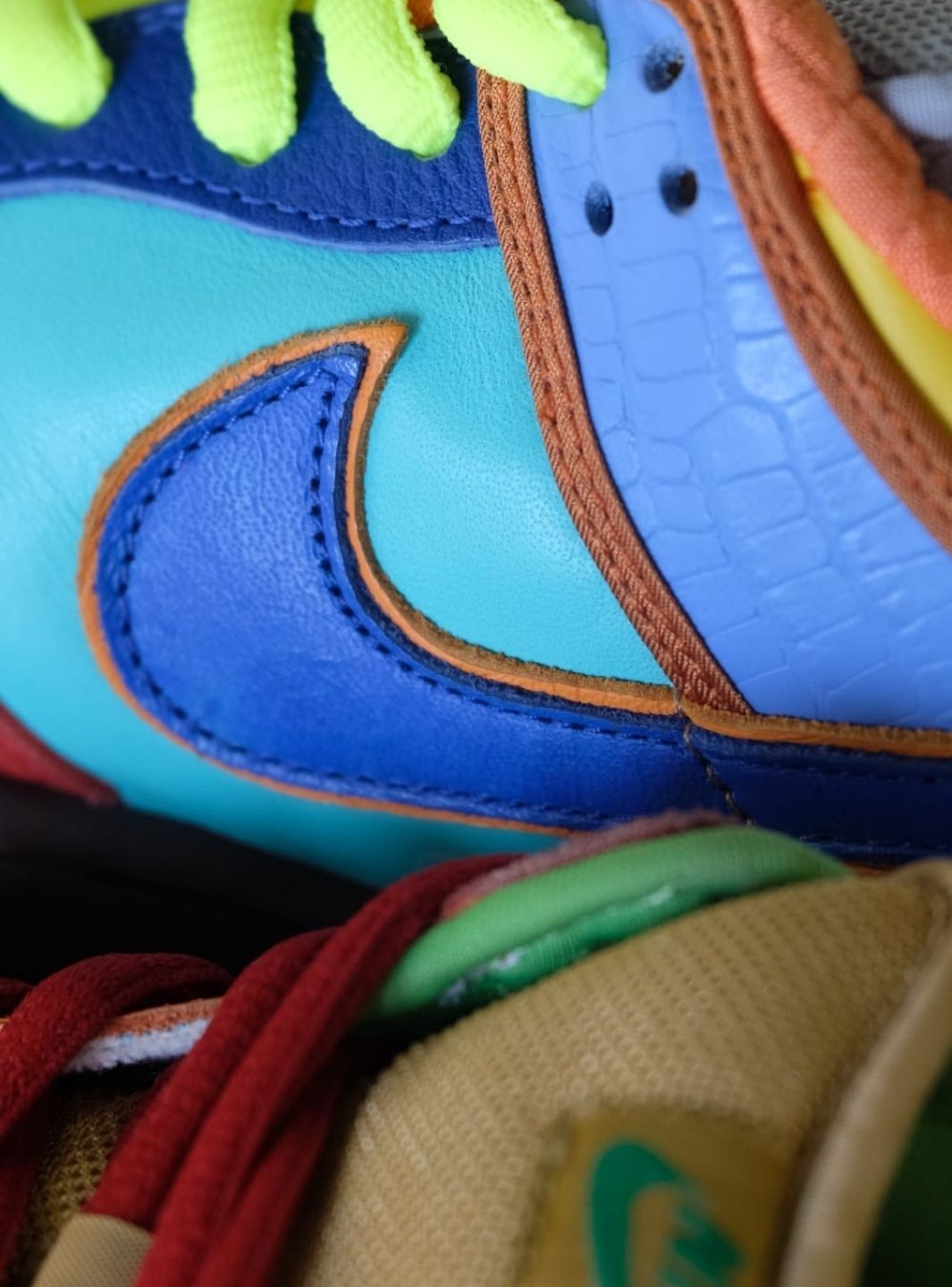
The characteristic that makes the What The Dunk unique is naturally the quantity of references inserted into the design. There is no single dominant element: every area of the sneaker changes material, color, and identity, creating a continuous sequence of citations.
Among the most immediately recognizable references, we find:
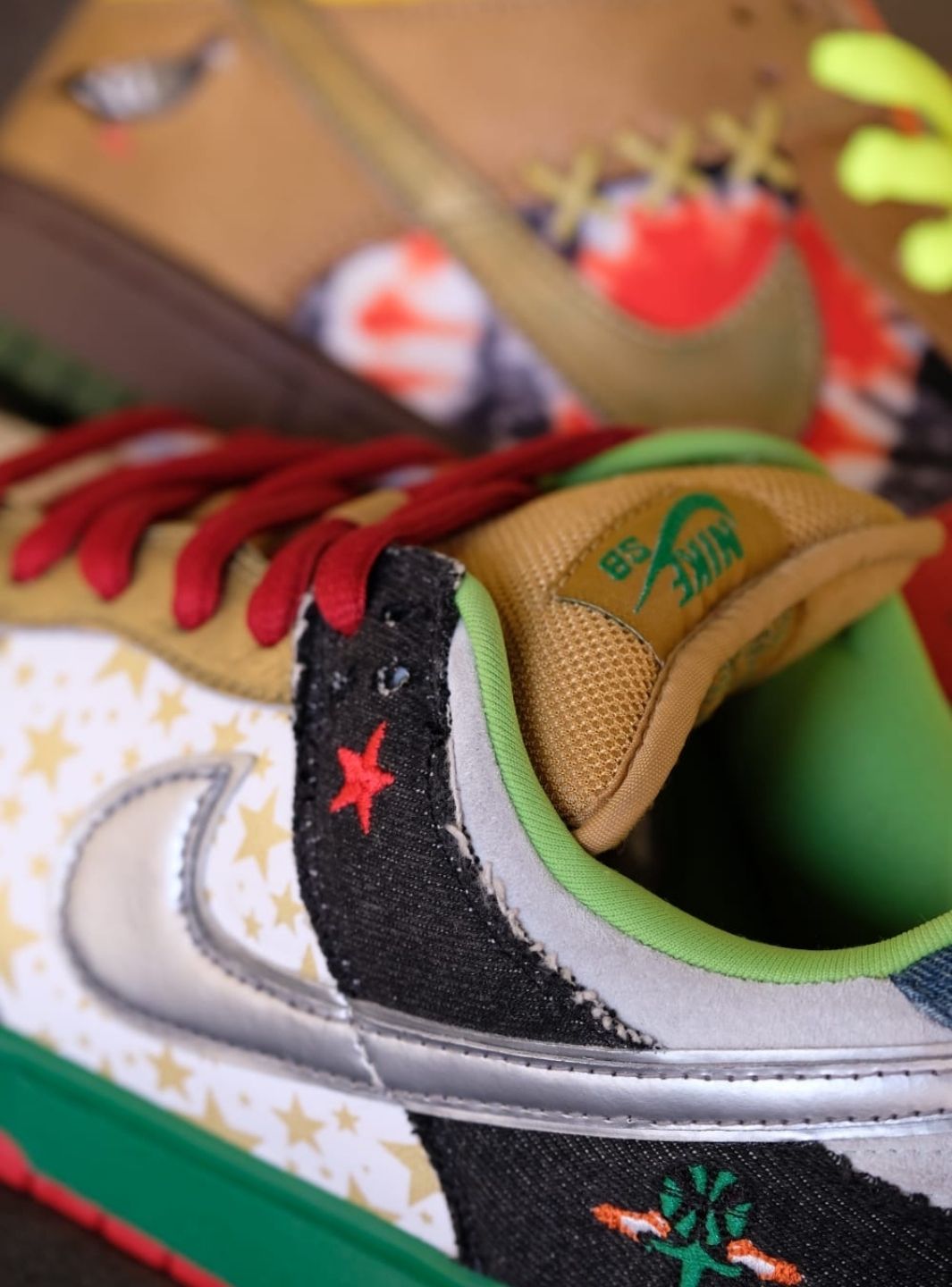
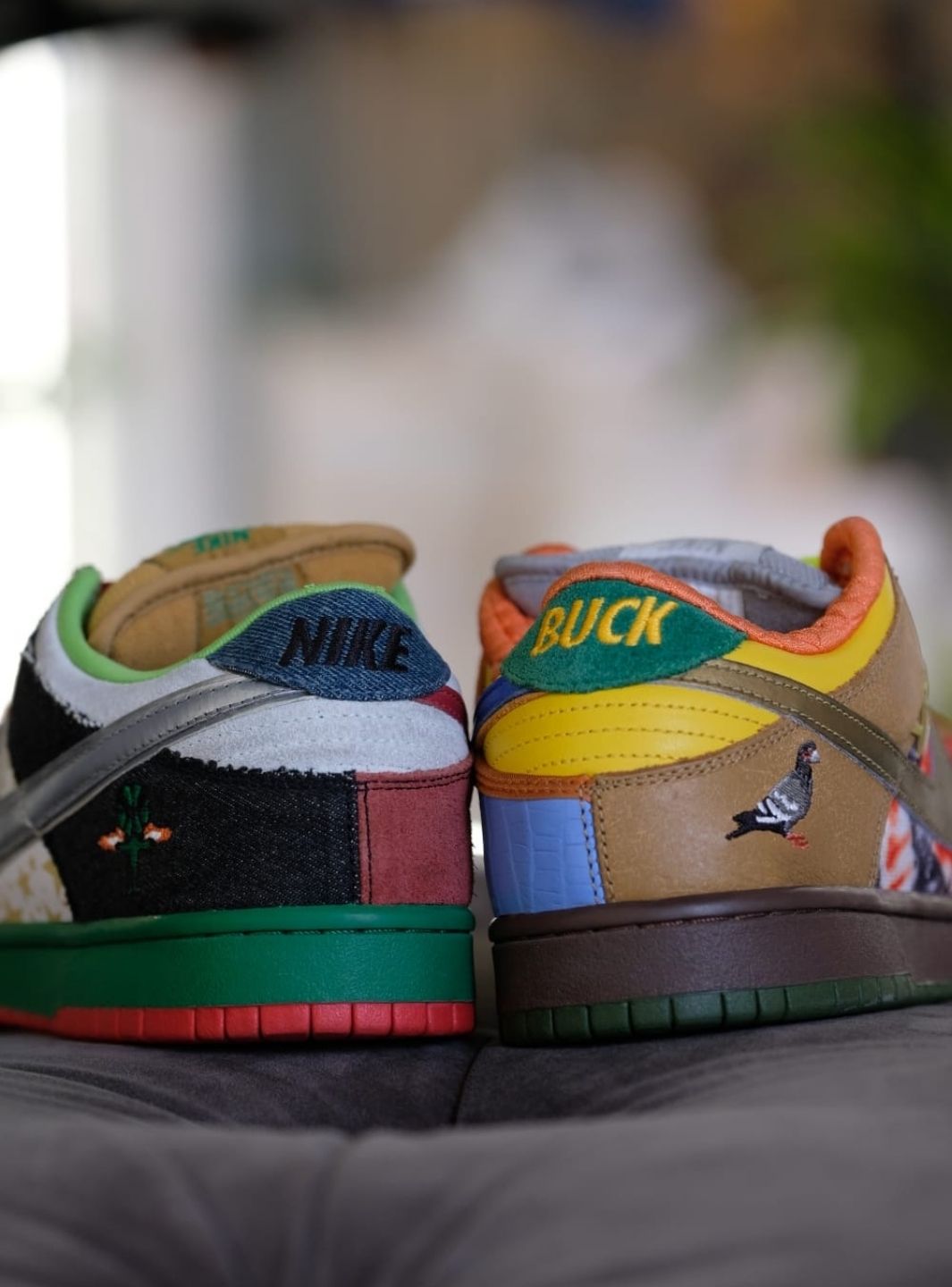
- the embroidered pigeon from the Staple NYC Pigeon;
- the elephant print of the Supreme Dunk Lows;
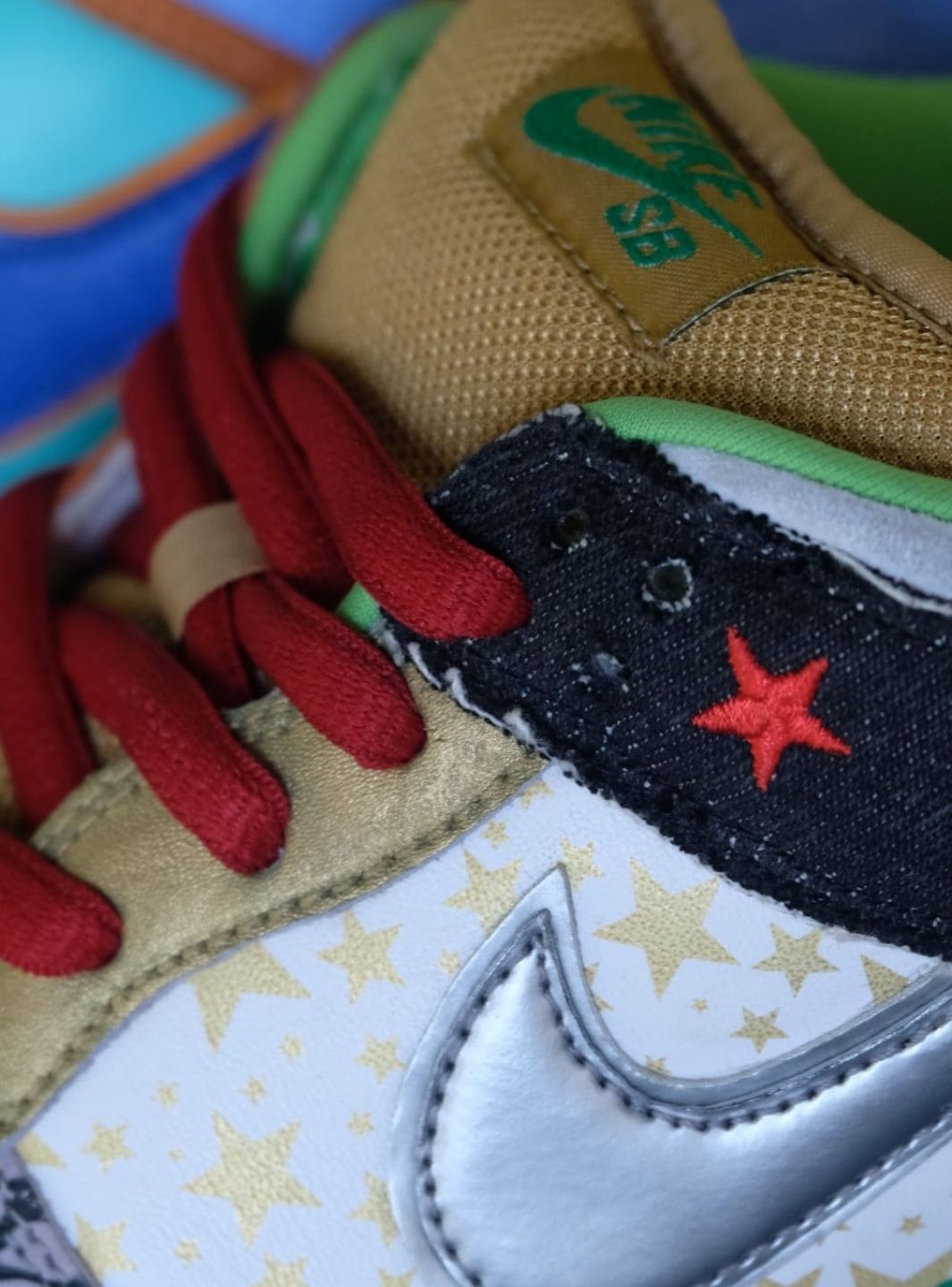
- the famous golden stars associated with the Supreme Dunk Highs;
- the artistic graphics linked to the extremely rare Paris;
- the bright green and other elements of the eBay Dunk;
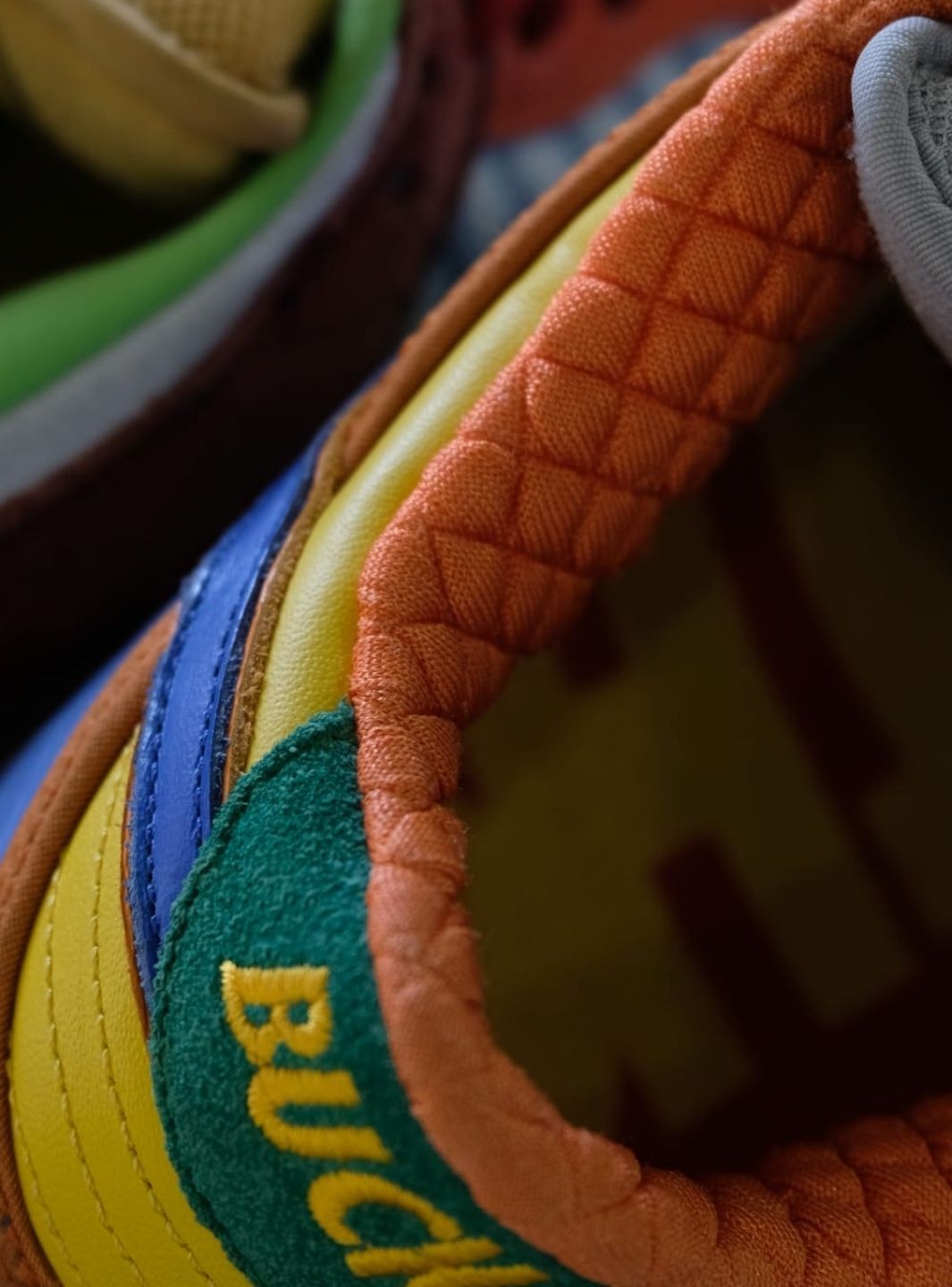
- color and material references from the Cali, Jedi, Lucky, and Buck.
These are just some of the references that are easiest to spot. The shoe contains details also taken from many other releases, distributed among the toe, heel, tongue, lining, Swoosh, side panels, and sole. Some are evident even to those who only superficially know Nike SB; others require a more expert eye.
It is precisely this layering that makes the What The Dunk so fascinating. It doesn't end at the first glance. The more you know the history of the line, the more the design gains meaning.

The Pigeon, the Supremes, and the Paris: the references that became legend
The pigeon embroidery is one of the most important elements of the entire sneaker. The Nike SB Dunk Low Staple “NYC Pigeon” had been released in 2005 and had already become a symbol of modern hype after the chaos that occurred in front of the Reed Space in New York. Inserting it into the What The Dunk meant immediately recognizing its historical value.
Equally important are the references to the Supreme Dunks. The elephant print recalls the 2002 Lows, while the golden stars bring to mind the 2003 Highs. Those collaborations had helped to definitively connect Nike SB, skateboarding, and streetwear, becoming some of the most influential releases of the early 2000s.
The Paris Dunks, produced in extremely limited quantities and characterized by artistic panels that differed from pair to pair, add an almost museum-like component instead. Citing the Paris meant including in the What The Dunk one of the models that had most clearly transformed the sneaker into an artistic canvas.
Finally, there is the eBay Dunk, one of the most absurd stories in the Nike SB archive. The color references to that model add a further level of rarity and folklore, because the What The Dunk doesn't just take inspiration from popular releases, but also from shoes that are almost impossible to see in person.
Cali, Jedi, Lucky, and Buck: the memory of the first Nike SB years
The What The Dunk is not composed exclusively of the most expensive or famous models. Part of its charm derives from the way it puts absolute grails and colorways that became symbolic—especially for those who truly lived the SB scene in the early 2000s—on the same level.
The Cali, inspired by the California flag, tell the story of the bond between Nike SB and the West Coast. The Jedi, with their green and brown palette, perfectly represent the period in which the community gave nicknames to colorways and built often unofficial stories around them.
The Lucky and the Unlucky instead belong to that language made of symbols, numbers, and contrasts, while the Buck recall the universe of Oregon and a fundamental part of the Nike identity. The What The Dunk brings all of this together without establishing a hierarchy: every release becomes a necessary piece of the puzzle.
Why the two shoes are completely different
One of the most radical aspects of the project is the asymmetry. The left and right shoes almost never try to correspond. Colors, prints, and materials change constantly, making the pair deliberately “wrong” according to normal footwear design rules.
This choice doesn't just serve to create a chaotic visual effect. It allows James Arizumi to insert many more references and makes the sneaker similar to a double display panel. Each foot tells a different combination of Nike SB moments, while the complete pair functions as a single work of art.
Today, mismatched sneakers are much more common, but in 2007, such a construction felt decidedly more extreme. The What The Dunk didn't simply suggest wearing two different colors: it demonstrated that a sneaker could almost completely renounce traditional coherence and still become iconic.

A folly studied in every detail
At first glance, the What The Dunk might seem like a sneaker created by randomly choosing panels and colors from an archive. In reality, the project works precisely because the chaos is carefully controlled. Every reference must be faithful enough to be recognizable, but also flexible enough to coexist with all the others.
The design plays continuously with extreme contrasts: animal prints next to cleaner materials, fluorescent colors near natural tones, embroidered details paired with technical panels. The sneaker seems on the verge of losing its balance completely, but still manages to maintain the recognizable structure of the SB Dunk Low.
For an enthusiast, spotting the references is an integral part of the experience. It is like observing a poster full of easter eggs: the more you know the archive, the more you can read what is in front of you. The What The Dunk doesn't want to be understood by everyone in the same way. It rewards those who possess memory and knowledge of the SB culture.
The birth of the “What The” language
The impact of the sneaker is not limited to the history of the Dunk. The 2007 release defined a true creative language that Nike would revisit many times in subsequent years: the “What The” concept.
The idea consists of taking colorways, moments, and details belonging to the history of a silhouette or an athlete and uniting them into a single model. Over the years, this approach would appear on shoes linked to Kobe Bryant, LeBron James, Kevin Durant, and on numerous other Nike silhouettes.
Today, the mash-up might seem almost like a consolidated category, but in 2007, the What The Dunk represented something truly new. It didn't celebrate a single season or a single athlete: it transformed the very concept of the archive into an aesthetic language.
The term “What The” has become synonymous with mismatched sneakers, layered colors, and hidden references. Everything starts from this Dunk and the decision to make excess not a problem to be corrected, but the very heart of the project.
Why the What The Dunk became a grail
The What The Dunk possesses all the necessary elements to become a legendary sneaker. It was produced in limited quantities, arrived during a fundamental phase of Nike SB history, and presented a concept impossible to confuse with any other release.
Scarcity, however, represents only part of the story. Its true value stems from the ability to condense the early years of the SB line into a single object. Buying a What The Dunk means, ideally, possessing a fragment of the Pigeons, the Supremes, the Paris, the Calis, and dozens of other colorways that built that culture.
To this is added the model's pioneering role. It is not just an old Dunk that became expensive over time: it is the sneaker that paved the way for an entire family of “What The” designs and showed how powerful a mash-up could become when supported by a true story.

The symbol of Nike SB's most creative era
The What The Dunk tells of a period in which Nike SB seemed to fear nothing. Inspirations could come from a city, a skate shop, an artist, a pigeon, a beer, a horror movie, or an everyday object. Every release had a precise personality, and often the story became as important as the product.
The What The Dunk works because it doesn't try to choose which of those stories was the best. It puts them all on the same level and transforms them into a single, exaggerated celebration. It is as if Nike opened the doors of its own archive, took the most recognizable fragments, and built a sneaker-museum.
It is not nostalgia built after the fact. In 2007, many of the cited models were recent, and their impact was still alive. The sneaker, therefore, celebrated a culture that was happening at that moment, not a past that was already far away.
How much is a Nike SB What The Dunk worth today?
Finding an authentic What The Dunk in good condition today is extremely difficult. Many pairs were worn, because despite their collector value, it remained an SB Dunk designed with padding and Zoom Air to be able to be used on a skateboard as well.
Deadstock examples, complete with their original box and properly stored, can reach very high asking prices. Valuations change a lot based on size, the state of the upper, yellowing, and the completeness of the set. Some listings in the rarest sizes have even reached six-figure values, but it is fundamental to distinguish between the requested price and a sale actually concluded.
The most important piece of data, therefore, is not a single figure. It is the fact that the What The Dunk is now firmly considered a top-tier collector's piece. Each pair has different conditions, provenance, and value, and the best ones are treated like true archival objects.
A wearable archive
The Nike SB Dunk Low “What The Dunk” is not a normal sneaker. It is a puzzle composed of 31 stories, a retrospective of the early Nike SB years, and a celebration of the moment when the skate line had finally built an identity impossible to ignore.
The What The Dunk can be read almost as a summary of the first chapters of the line. To reconstruct those releases in their context, from the birth of Nike SB in 2002 to the different Box Eras, you can explore the complete history of the Nike SB Dunk.
In 2007, it seemed like madness: two different shoes, dozens of materials, incompatible colors, and references understandable only to the most prepared enthusiasts. Today, it is considered one of the most important Dunks ever, precisely because it never tried to be universal, elegant, or easy.
The What The Dunk speaks directly to those who know SB culture. To those who see an embroidery and think of the Pigeon, recognize the elephant print of the Supremes, and know why a small green detail can refer to the eBay Dunk.
It is a sneaker that doesn't just contain design. It contains memory. And it is precisely for this reason that, almost twenty years later, it remains a folly impossible to replicate.
Discover Nike SB grails on ResellZone
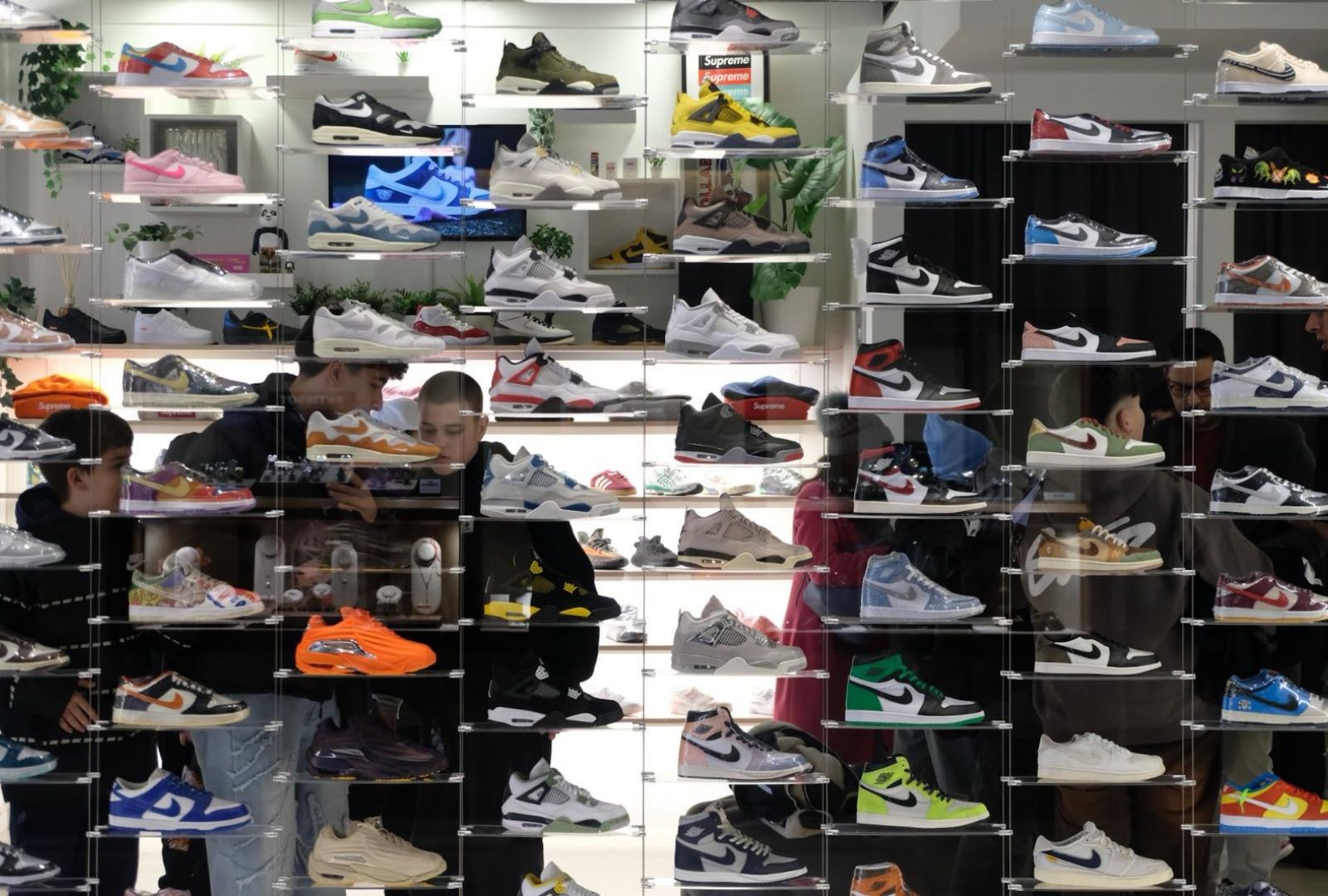
On ResellZone, you will find rare, limited, and collector sneakers: models that don't just tell the story of a release, but entire chapters of sneaker culture. From the most iconic Nike SBs to the most sought-after Jordan, every pair carries a precise story with it.
And some stories, like that of the What The Dunk, are simply impossible to recreate.