



Nike Air Max 97: wavy lines and full-length Air
The Nike Air Max 97 represents one of the most recognizable turning points in the evolution of the Air Max family.
Introduced in 1997 and designed by Christian Tresser, it introduces a silhouette completely different from previous generations: an upper crossed by wavy lines, reflective details, and a visually more fluid profile.
But the true innovation is found underfoot. The Air Max 97 is the first Nike sneaker to use a full-length visible Air unit, once again transforming cushioning into one of the main design elements.
Within the Nike Air Max family, the 97 therefore marks the transition toward a more futuristic aesthetic and an even more evident presence of Air technology.
Christian Tresser and the inspiration for the Air Max 97
One of the most common stories about the Air Max 97 attributes its design to Japanese high-speed trains, but the origin story told by Nike is different.
Christian Tresser explained that he was inspired by the ripples that form when a drop of water falls onto the surface of a pond. That concentric movement is translated into the lines that cross the upper and seem to propagate toward the sole.
The shoe's metallic look also stems from a specific reference. Tresser was passionate about mountain biking and drew inspiration from the aluminum and titanium finishes of the components used on bikes at the time.
Water, metal, and technology thus meet in a silhouette that still retains an immediately recognizable identity today.
Nike Air Max 97 Silver Bullet
The Silver Bullet is the colorway most closely associated with the Air Max 97.
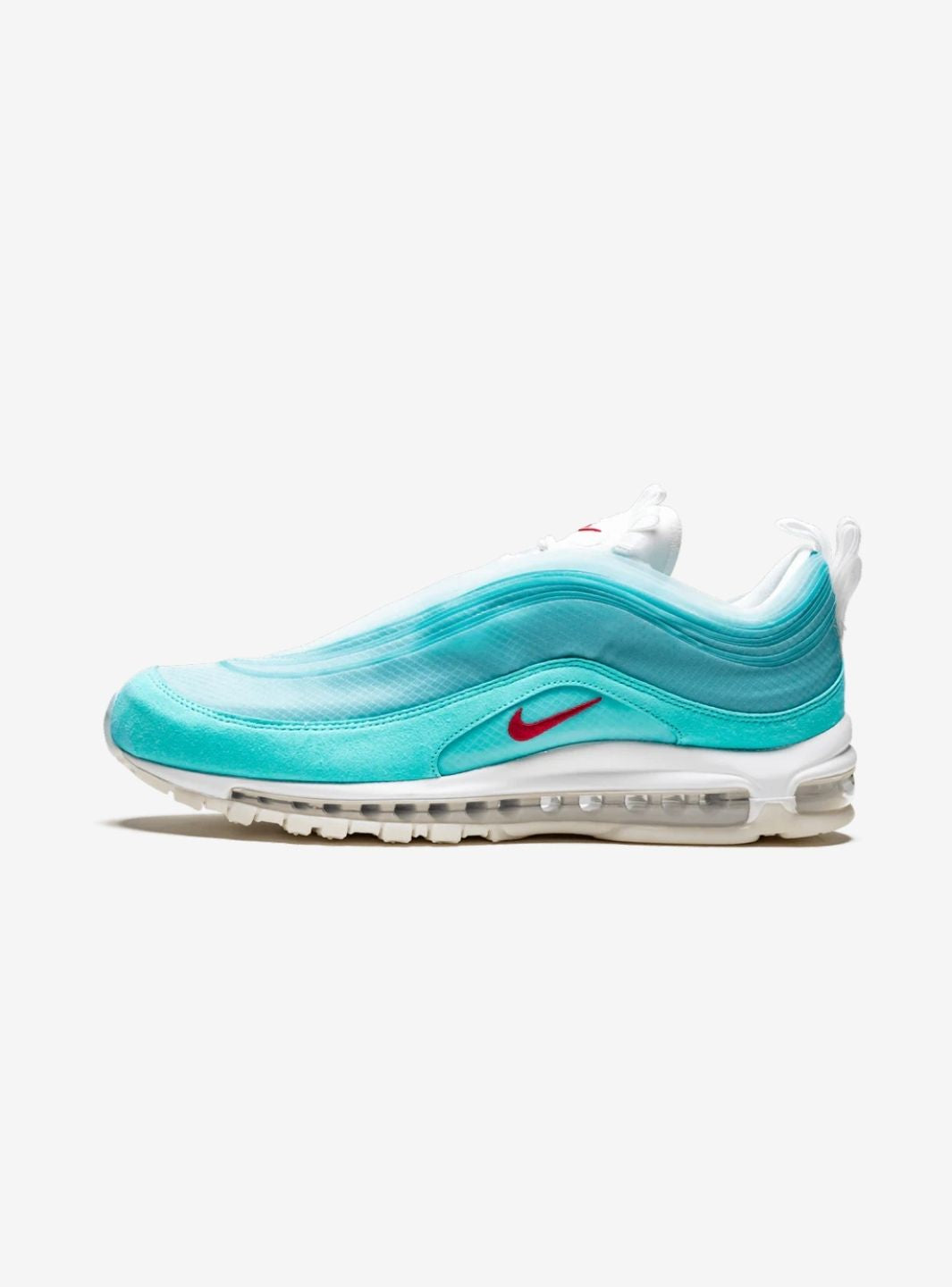
The Metallic Silver base emphasizes the wavy lines of the upper, while reflective details accompany the sneaker's profile and accentuate its technical look.
The result is a shoe that perfectly interprets the language of the late nineties: metallic surfaces, fluid shapes, and technology intentionally left visible.
Over time, the Silver Bullet has become the historical benchmark for the silhouette and the starting point against which subsequent reinterpretations of the Air Max 97 are often compared.
The design of the Nike Air Max 97
The upper of the Air Max 97 is built through numerous layers that longitudinally follow the shape of the sneaker.
This arrangement creates a sense of movement completely different from the more geometric panels of previous generations.
The lacing system is also partially integrated into the structure, helping to keep the profile cleaner, while the side Swoosh is resized compared to other Nike silhouettes.
The lower part is dominated by the Air unit visible along the entire length of the shoe, an element that allows the technology to become an integral part of the 97's identity instead of remaining concentrated only in the heel area.
Off-White x Nike Air Max 97
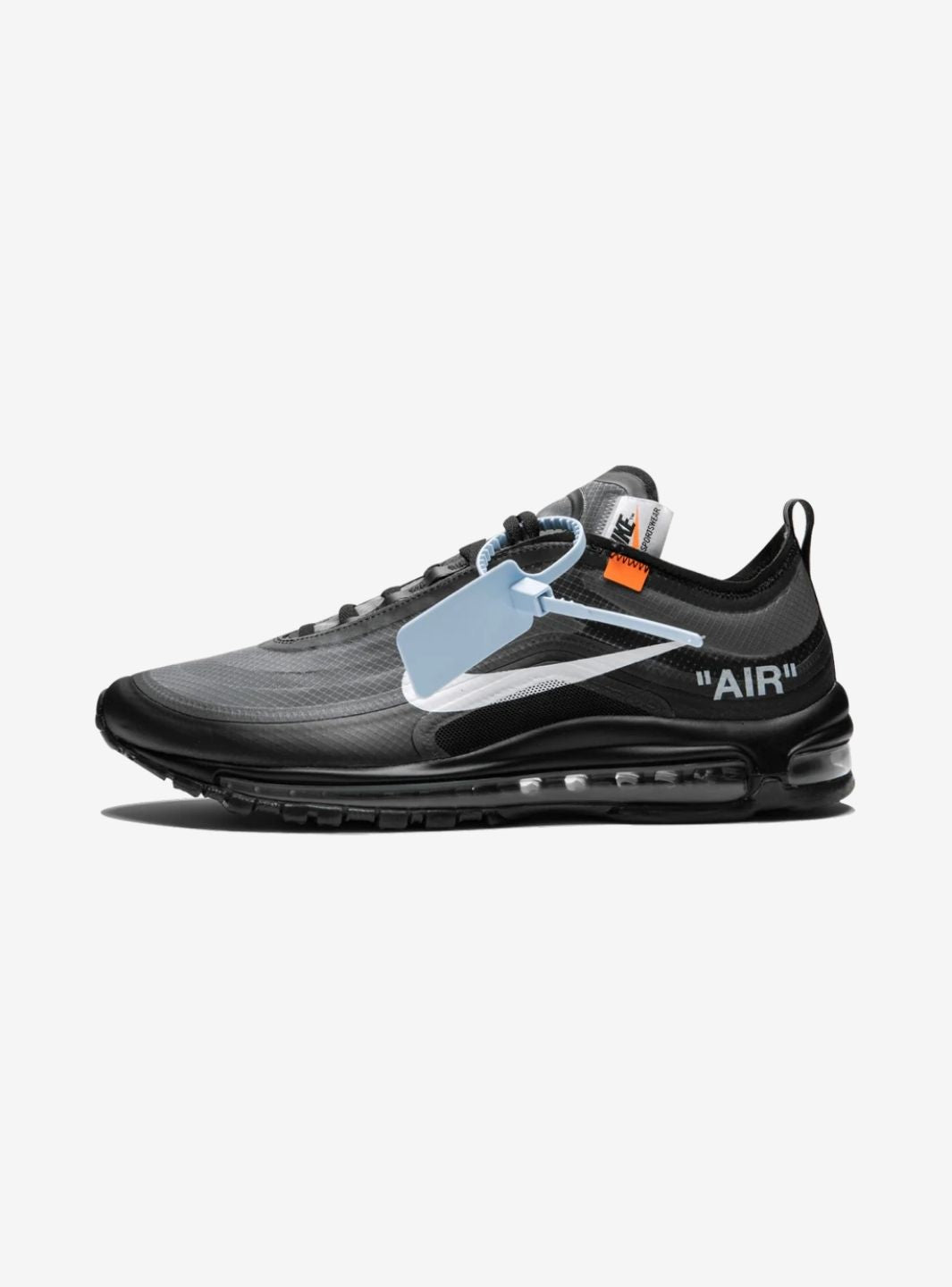
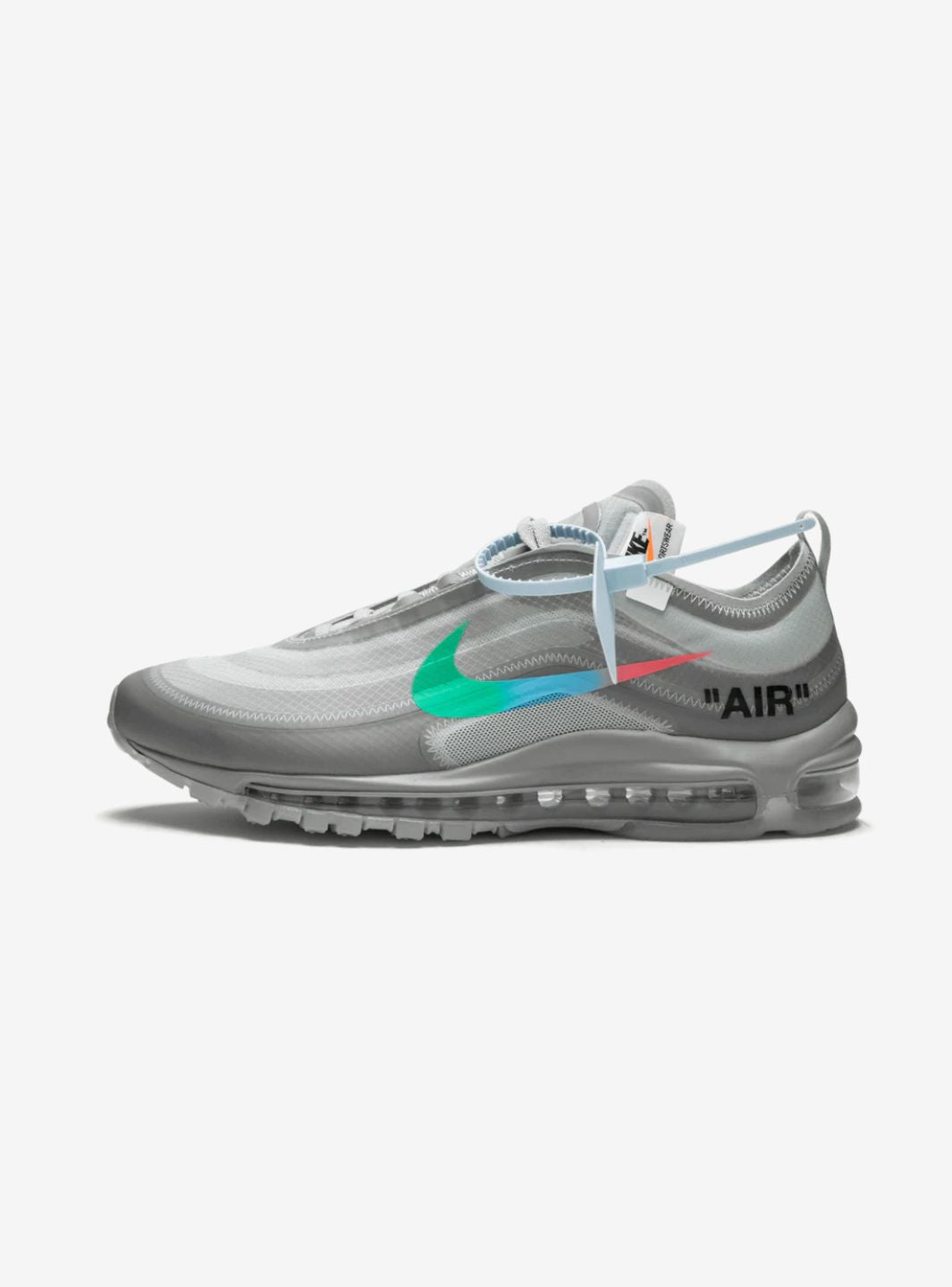
In 2017, the Air Max 97 joined Virgil Abloh's The Ten project.
The silhouette belongs to the “Ghosting” group, in which the use of semi-transparent materials allows for the construction of the sneaker to be shown and further develops the deconstructed language of Off-White.
That first reinterpretation was followed by other versions, including Black, Menta, and Elemental Rose Serena Queen, which apply different colors and details to the same structure.
The Air Max 97s thus represent one of the many chapters of the Nike x Off-White collaboration, along with the Dunk, Air Force 1, Jordan, Air Max 90, and other silhouettes from the Nike archive.
Undefeated x Nike Air Max 97
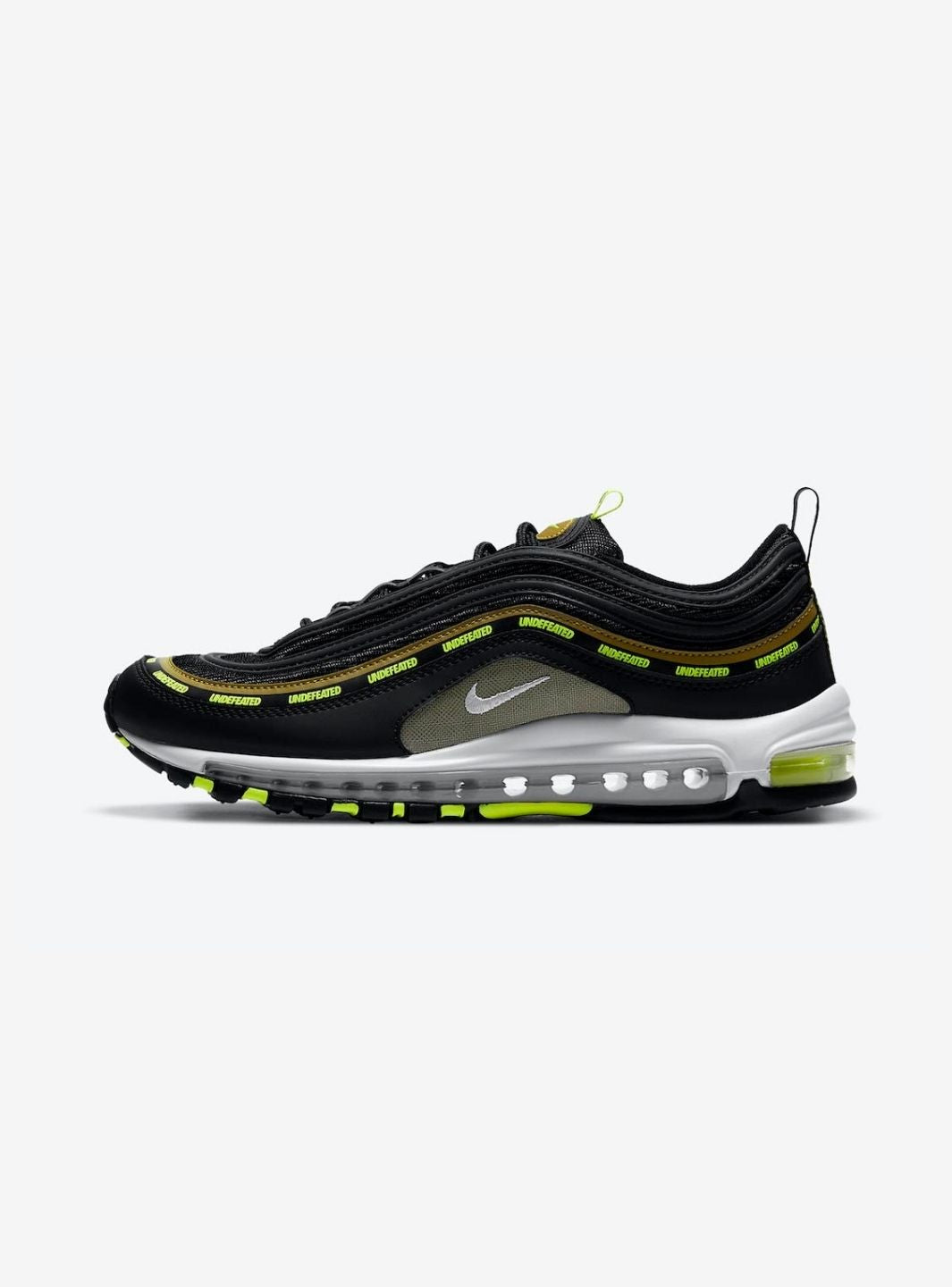
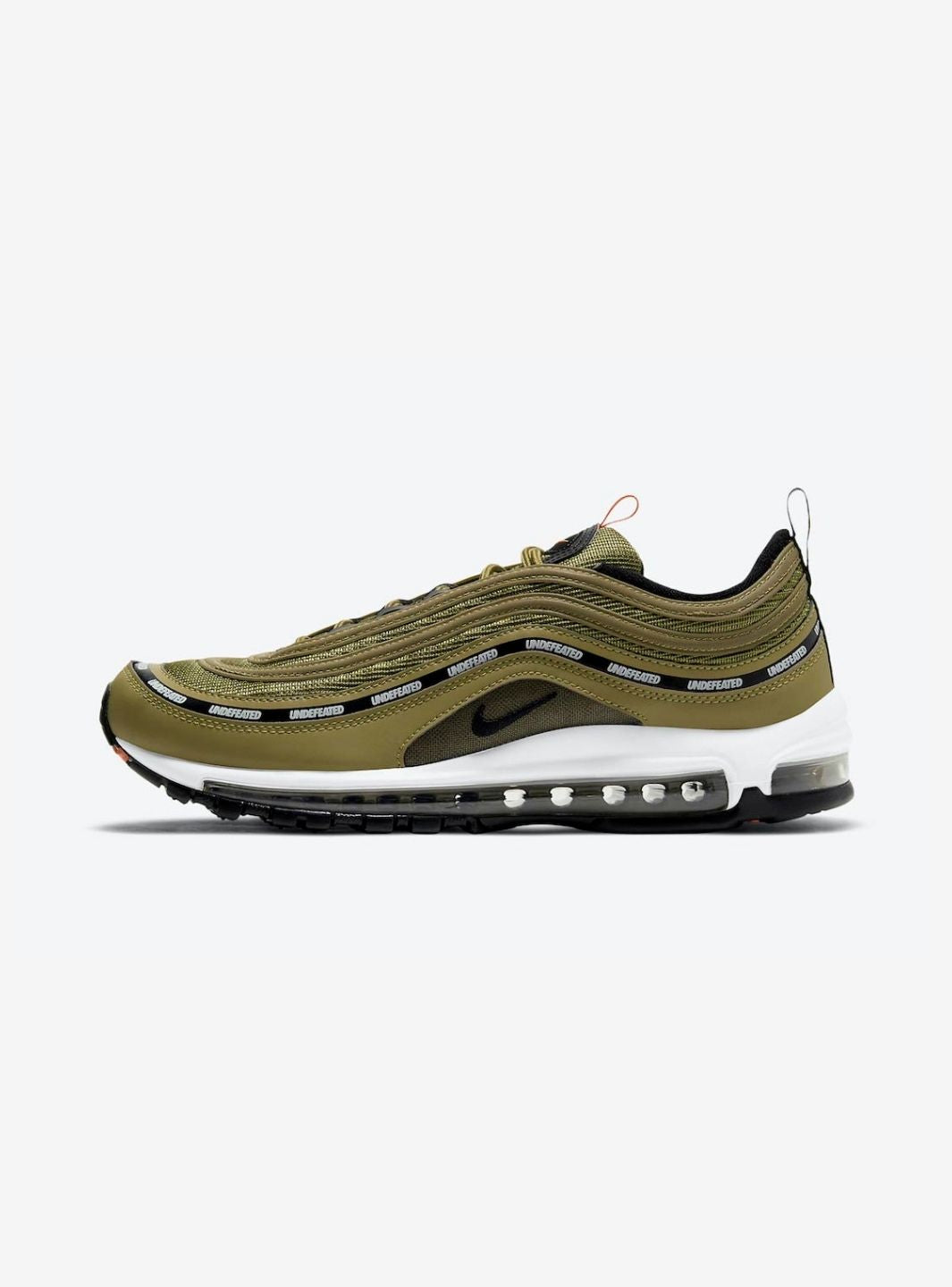
Also in 2017, Undefeated reinterpreted the Air Max 97 through a collaboration that became one of the most recognizable chapters of the silhouette's anniversary.
The Undefeated branding is inserted along the side lines of the upper, transforming one of the shoe's structural elements into a graphic space.
Versions like the Black Volt and subsequent reinterpretations maintain the full-length visible Air and the original profile of the 97, but introduce colors and materials linked to the identity of the Los Angeles retailer.
The collaboration demonstrates how the lines of the Air Max 97 can be used not only as an aesthetic element, but also as an integral part of a release's branding.
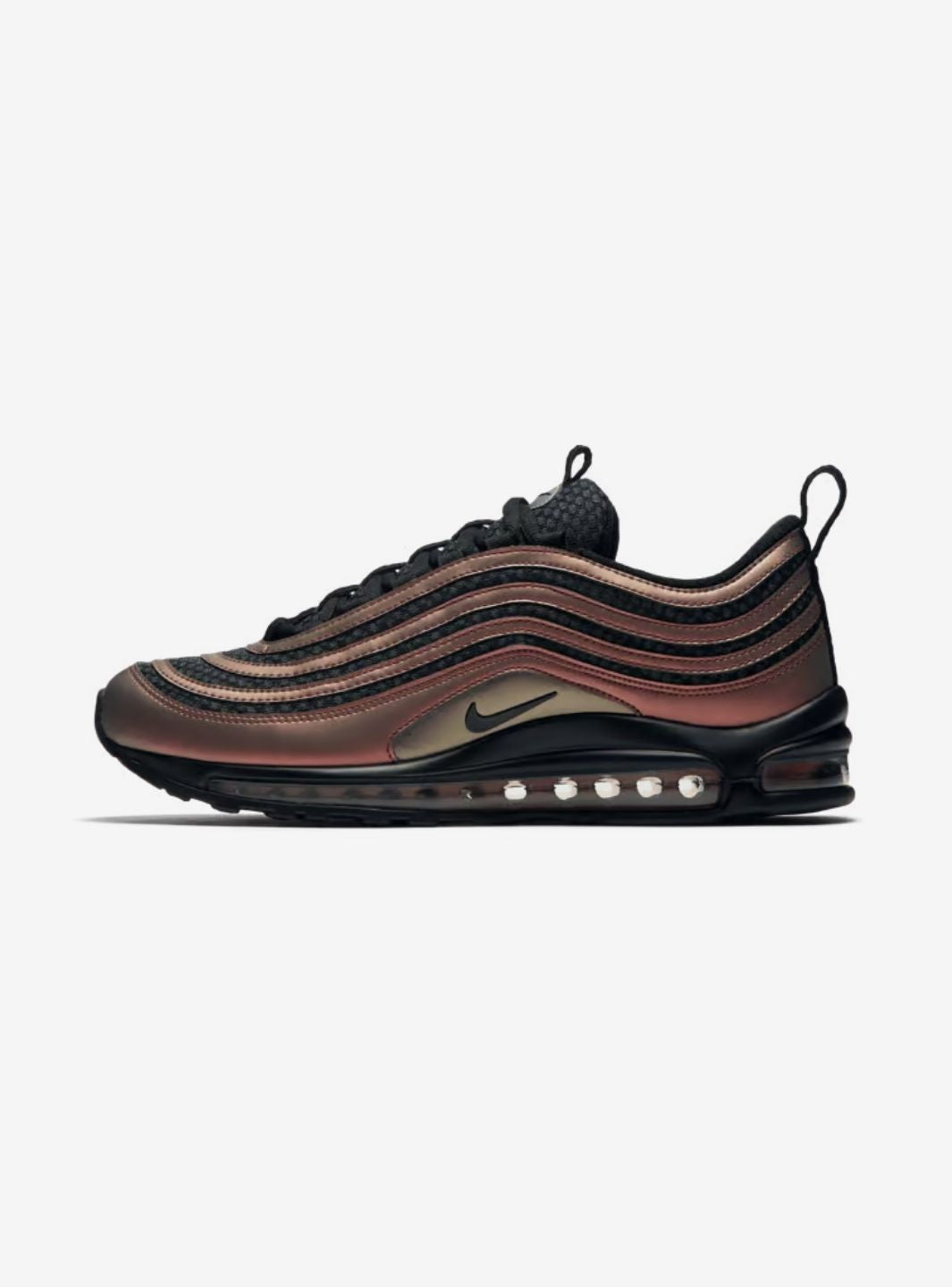
Skepta x Nike Air Max 97 Ultra ’17
Skepta also used the Air Max 97 as a base for one of his Nike collaborations.
The Air Max 97 Ultra ’17 Skepta reinterprets the silhouette through a more modern construction and a palette that makes the project immediately recognizable.
The connection to Skepta also represents a further chapter in the relationship between Air Max and British culture, where various models of the family have taken on an important role over the years well beyond their original use in running.
Sean Wotherspoon and the Nike Air Max 1/97
One of the most unique interpretations linked to the silhouette is the Nike Air Max 1/97 Sean Wotherspoon.
The model combines the upper of the Air Max 97 with the sole of the Nike Air Max 1, creating a hybrid sneaker built using elements from two different moments in Air Max history.
The upper uses corduroy in numerous shades, completely transforming the futuristic and metallic character generally associated with the Air Max 97.
It is a significant example of how Nike has used its archive not only through reissues, but also by combining silhouettes and languages belonging to different generations.
Air Max 97 Neon Seoul and international reinterpretations
The Air Max 97 has also been used for projects linked to different cities and cultures.
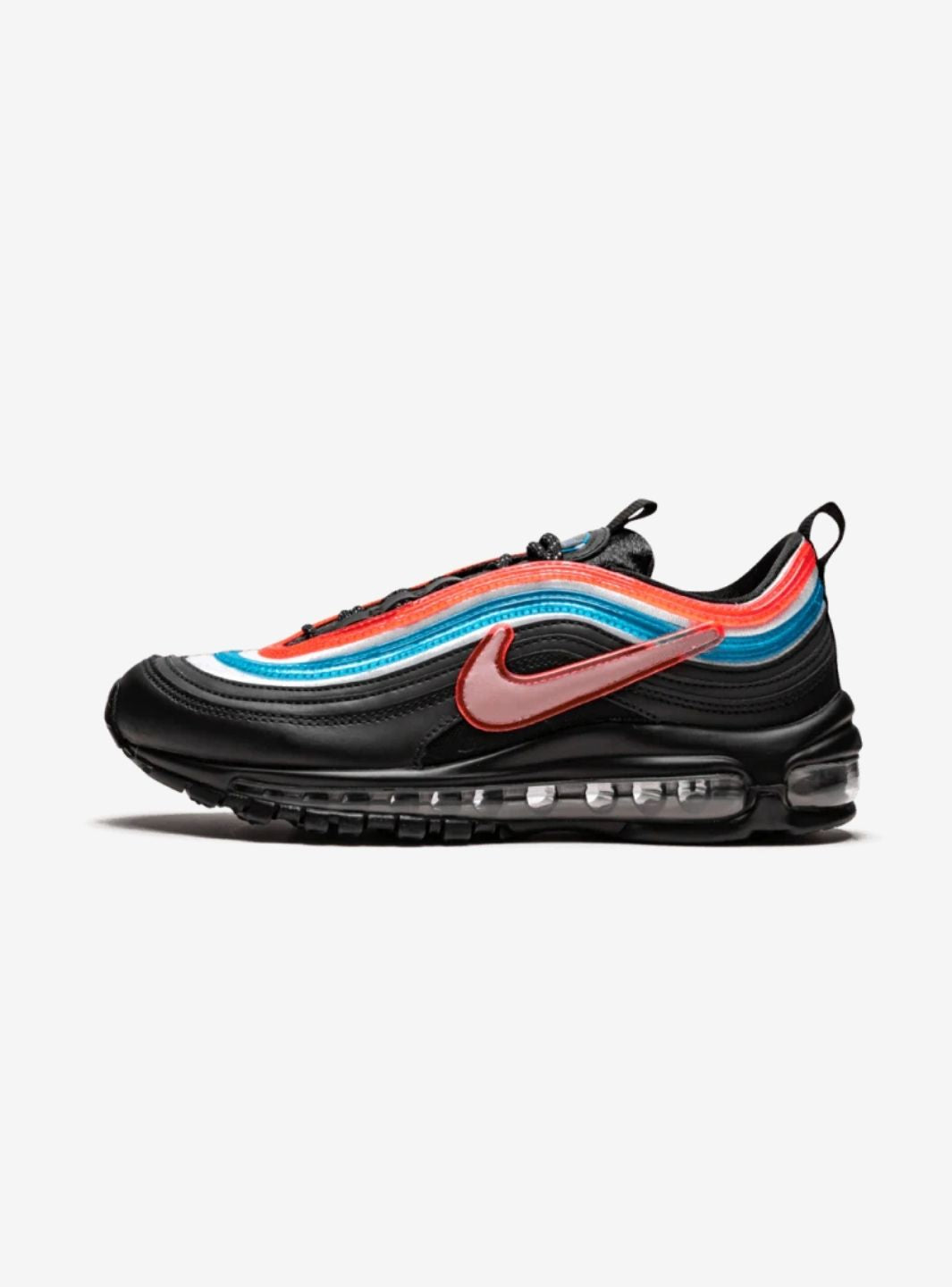
The Neon Seoul combines a dark base with neon details that recall the nighttime lighting of the South Korean capital, taking advantage of the sneaker's wavy lines to create very evident color contrasts.
Projects of this type show how suitable the 97's construction is for color-based storytelling: the numerous bands that cross the upper can take on different shades and materials without altering the recognizability of the silhouette.
Air Max 97, Air Max 1, 90, and 95: what changes
The Air Max 97 arrived after a series of models that had already transformed the Nike Air language several times.
The Nike Air Max 1 introduced visible Air through a relatively essential construction, while the Nike Air Max 90 increased contrasts, panels, and the visual presence of the cushioning zone.
The Nike Air Max 95 broke further with the past through a layered upper inspired by human anatomy and Air visible in the forefoot as well.
The Air Max 97 brought this evolution toward more continuous and fluid lines and introduced for the first time an Air unit visible along the entire length of the sneaker.
Original Nike Air Max 97s and collectible sneakers
The history of the Air Max 97 today includes original colorways, reissues, and collaborations belonging to very different periods.
Silver Bullet remains the historical benchmark for the silhouette, while projects with Off-White, Undefeated, Skepta, and Sean Wotherspoon show how much the model has been reinterpreted through streetwear, music, and sneaker culture.
Availability can vary significantly between releases, and some versions become progressively harder to find after launch.
For this reason, especially in the secondary market, authenticity and the condition of the pair take on particular importance. Products sold by ResellZone as original undergo the checks provided by the verification process, which is detailed on the page dedicated to product authenticity.