To say that Vans had really disappeared would be wrong. For years, the Californian brand continued to produce sneakers, support skateboarding, and keep silhouettes like the Authentic, Old Skool, Era, and Slip-On in its catalog.
What had changed, above all, was its weight within the sneaker conversation. While Nike and Jordan dominated the loudest collaborations and other brands captured space in contemporary fashion, Vans seemed to have become almost too familiar.
Between 2025 and 2026, however, something changed. OTW by Vans accelerated its artistic collaborations, historic silhouettes began to be reinterpreted through much more experimental materials, craftsmanship, and details, and the brand simultaneously refocused attention on its roots.
So the question makes sense: Is Vans really back?
Why Vans is returning to the center of sneaker culture
The most interesting change doesn't stem from a single sneaker.
Vans is working in two directions simultaneously: on one hand, it is reclaiming its historic heritage, and on the other, it is using OTW by Vans as a creative laboratory to take those same silhouettes toward art, design, fashion, and experimentation.
OTW is described directly by the brand as a space dedicated to pushing Vans products and experiences further through collaborations with creatives from skateboarding, art, music, design, and culture.
It is an approach particularly well-suited to Vans because it doesn't require inventing a new identity. The Authentic, Era, and Old Skool already have decades of history behind them: the work consists of finding new ways to interpret them.
Even the Vans collection on ResellZone increasingly reflects this transformation, pairing classic models with much more experimental OTW collaborations and versions.

OTW by Vans: the brand's creative laboratory
OTW is probably the most important element for understanding this new phase.
It isn't simply a premium line of the Vans we already know. It is the platform through which the brand is experimenting with materials, constructions, and collaborators that would struggle to find a place in the regular Classics line.
In recent years, artists, designers, and entities like Gallery Dept., Sterling Ruby, Parra, Undercover, OAMC, Satoshi Nakamoto, and Julian Klincewicz have passed through OTW.
The common denominator is not a specific style. Some projects are extremely minimal, others deliberately ruined, decorated, or deconstructed.
What unites them is rather the idea of using already familiar silhouettes as creative platforms instead of treating them as models to be preserved exactly as they are.
OTW by Vans x Gallery Dept.: when the Authentic becomes a canvas
The collaboration with Gallery Dept. represents this philosophy very well.
The classic Authentic is transformed through an aesthetic that directly recalls a painter's studio: paint splatters, seemingly random marks, traces of grease, and a construction that deliberately celebrates imperfection and the creative process.
The phrase “Art That Kills” runs along the sidewall, immediately connecting the sneaker to the language of Gallery Dept. and its founder, Josué Thomas.
Vans itself describes the project as a meeting between disruptive art and classic craftsmanship. It is an important definition because it says exactly what OTW is trying to do: not erase the Authentic, but allow another creative to use it as a canvas.
It is also proof of how a silhouette born in 1966 can continue to function without being completely redesigned.
Old Skool 36 Souvenir: a Vans built to look lived-in
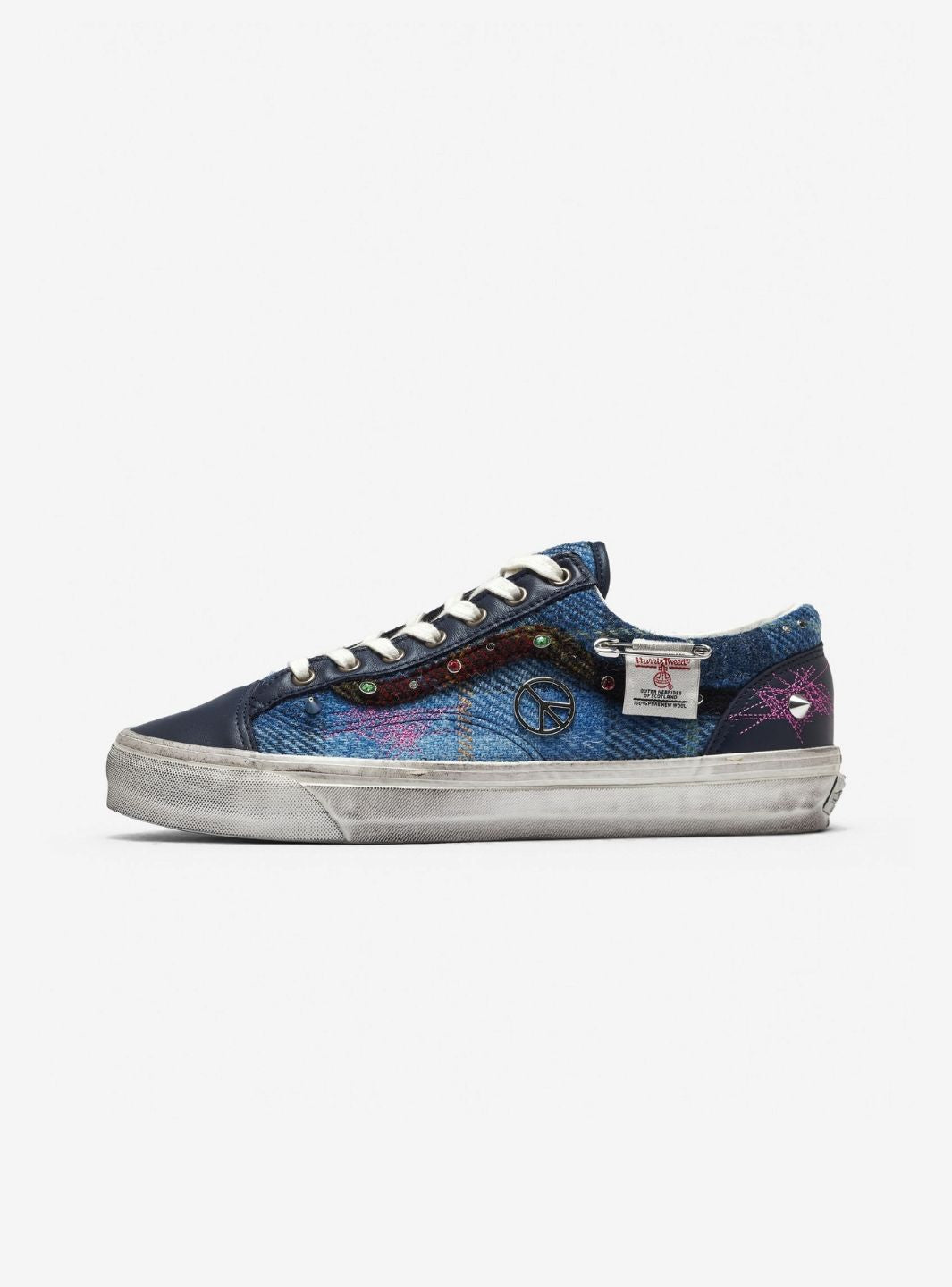
One of the sneakers that attracted the most attention between the end of 2025 and 2026 is the Premium Old Skool 36 Souvenir Warm Brown.
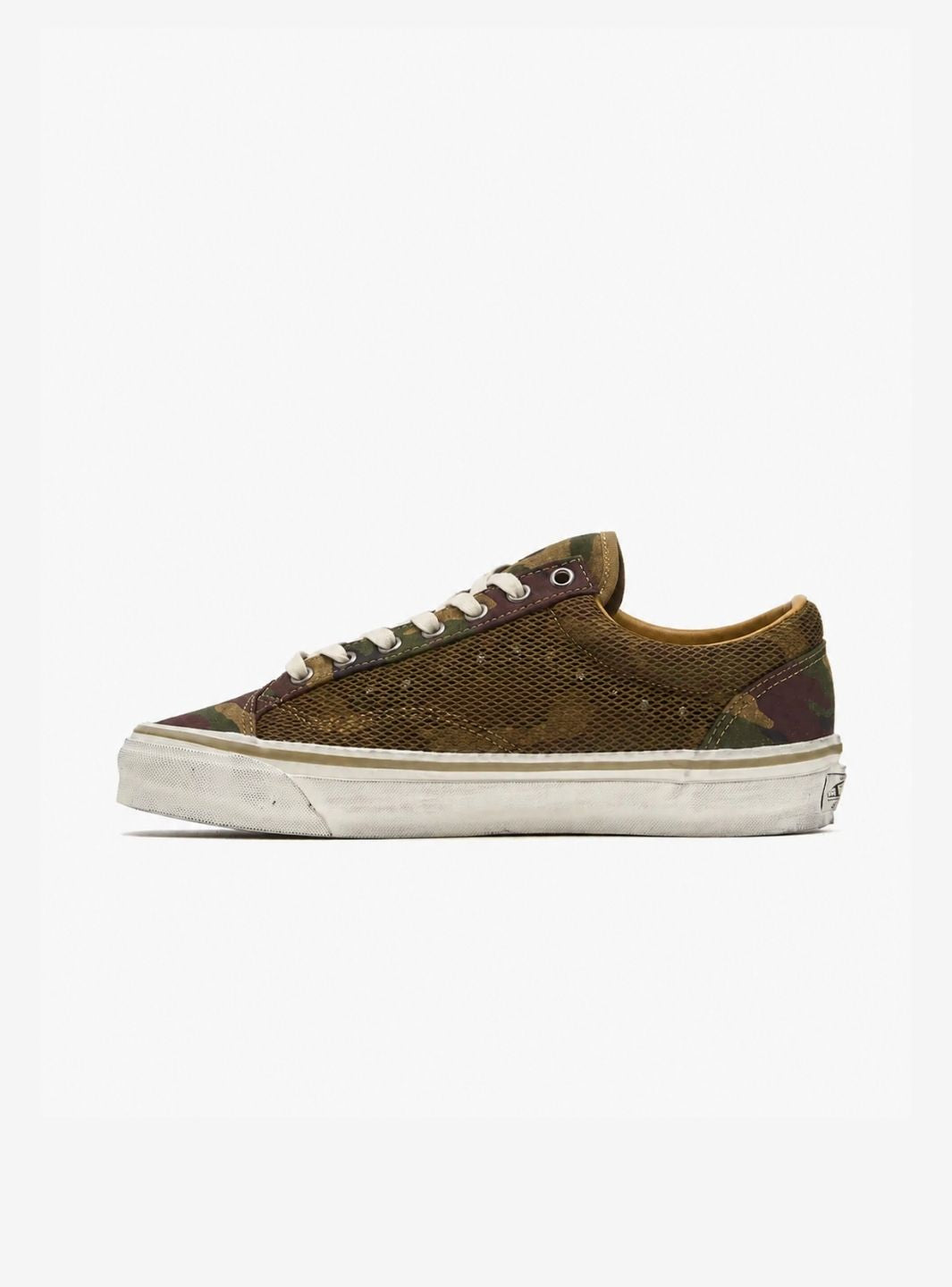
The design uses an upper with a spray-paint effect, leather inserts, a multicolored tweed Sidestripe, and small decorative elements applied to the shoe.
The result looks almost like a pair of Vans personally modified over the years rather than a product fresh out of the box.
Online, the model has often been compared to the aesthetic of lived-in, decorated, and customized luxury bags. However, it is important to distinguish this visual reading from the sneaker's official story: Vans does not present the Souvenir as a collaboration with Chanel or as a product officially inspired by a specific bag from the Maison.
The stated concept instead revolves around the souvenir as a personal object: something that collects memories, details, and character over time.
Vans Premium Authentic La Habana: customization takes center stage
The same direction can be found in the Premium Authentic La Habana.
Once again, the foundation is one of the simplest shoes in the Vans archive, but the way it is treated completely changes the perception of the silhouette.
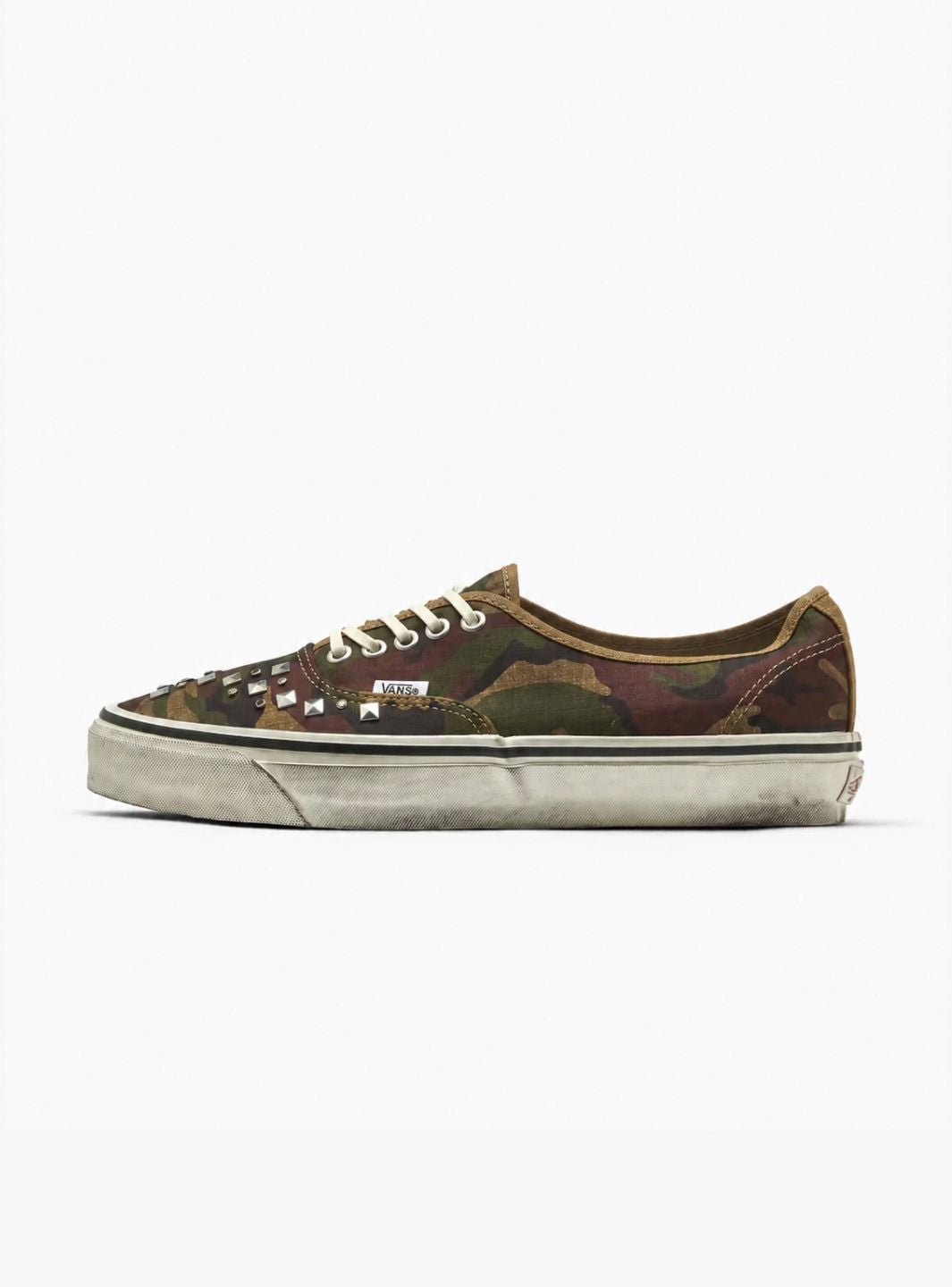
Decorative details, unusual color combinations, textures, and accessories transform the Authentic into an object much closer to the logic of customization than to that of a classic minimalist canvas shoe.
It is significant because it is precisely the simplicity of the Authentic that has always allowed the wearer to modify it, draw on it, or wear it down until it becomes personal.
This new generation of products seems to simply bring that same DIY culture directly into the initial design of the sneaker.

OTW by Vans x Satoshi Nakamoto: a sneaker designed to transform
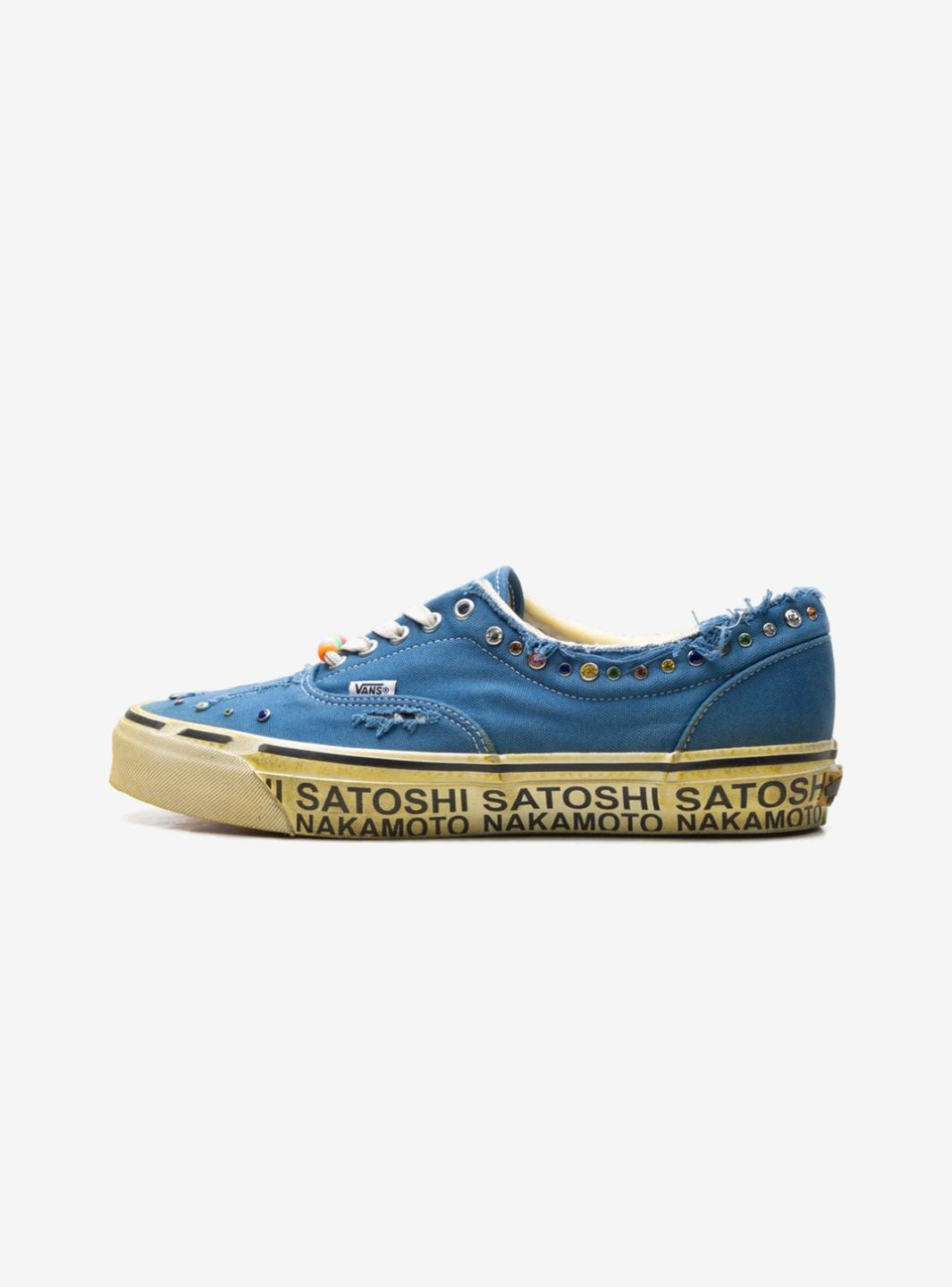
The OTW by Vans x Satoshi Nakamoto collaboration takes this idea even further.
The Era 95 is reinterpreted through a deliberately deconstructed construction in which wear and transformation are not problems to be avoided, but fundamental parts of the project.
The black canvas upper uses a tearaway layer that, as it wears down, progressively reveals the classic Vans checkerboard hidden underneath.
The collar features exposed foam, the laces use dedicated graphics, and around the upper part of the sneaker, multicolored stones appear, contrasting with the raw look of the construction.
Even the translucent sole hides further references to the collaboration.
The most interesting thing, therefore, is that the sneaker is not designed to remain identical to the day it is purchased. The more it is used, the more it changes and lets new parts of the design emerge.

Vans Old Skool 36 Pearlized: pearls and crystals on the skate silhouette
Another important example is the Pearlized Pack.
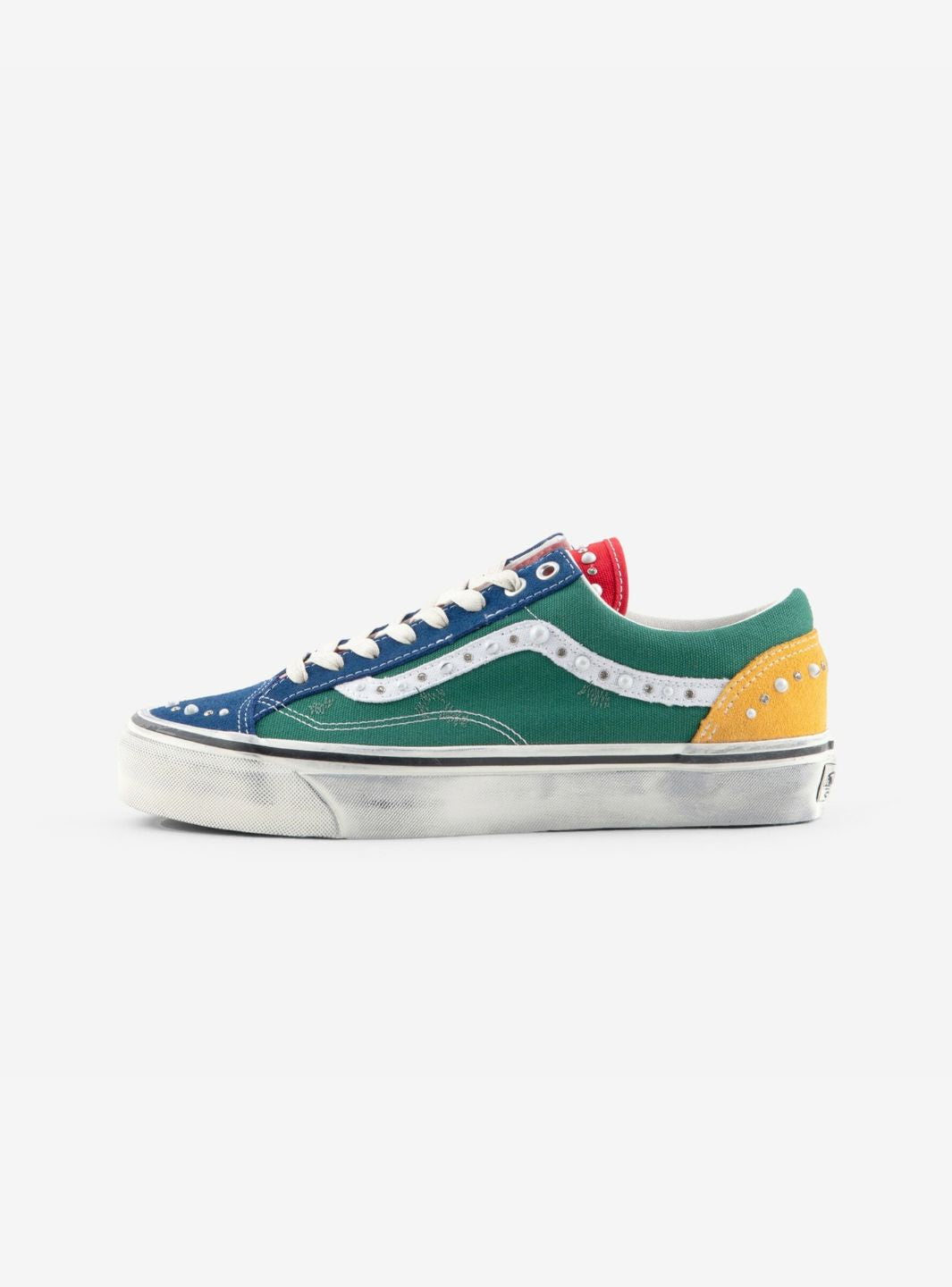
Here, Vans takes the Old Skool and Slip-On into territory almost opposite to their functional origin in skateboarding, adding pearls, crystals, and deliberately lived-in surfaces.
The idea, however, is not to make the Vans suddenly elegant in the traditional sense of the word.
Vans describes these details as part of the image of a shoe loved, repaired, and customized over time. The decorative elements thus seem added progressively by the wearer rather than being simple luxury ornaments.
The Vans Old Skool 36 Pearlized clearly shows how much the silhouette can change while remaining immediately recognizable as an Old Skool.

2026 also brings the Authentic back to the center of Vans
The return of Vans, however, does not only happen through more experimental collaborations.
2026 marks the 60th anniversary of the brand and the Authentic, the silhouette with which it all began in 1966.
For the occasion, Vans launched a new global Off The Wall campaign built right around the Authentic and a group of musicians, artists, and skateboarders including SZA, Hayley Williams, Travis Barker, and Lizzie Armanto.
It is an interesting choice because while OTW pushes the product in new directions, the brand simultaneously continues to remind us that its identity starts from one of the simplest sneakers ever made.
There is no need, therefore, to choose between heritage and experimentation. The strategy seems to be to use both.
The Vans Era has also returned to its skate origins
The same goes for the Era.
In 2026, Vans Skateboarding celebrated fifty years of the silhouette by bringing the Skate Era back into its line and once again involving Tony Alva, one of the skaters who contributed to its birth.
In parallel, the new Era WaffleCup arrived, which maintains the recognizable profile of the model but introduces a construction designed to combine support, flexibility, and boardfeel.
It is another important signal: Vans is not simply trying to become a fashion brand.
While OTW collaborations engage with art and design, the Skate line continues to work directly with the culture from which many of the historic silhouettes were born.
Why the lived-in aesthetic works so well on Vans
A significant portion of the most interesting sneakers from the new Vans direction share the same characteristic: it does not seek perfection.
Paint, faded surfaces, tearaway parts, frayed tweed, pearls, pins, signs of wear, and deconstructed constructions appear continuously.
On other brands, this aesthetic might seem artificially applied to follow a trend. On Vans, it feels more credible because customization and wear have always been part of the product's culture.
An Old Skool actually used for skating changes. A canvas Authentic is drawn on, dirtied, and modified. A Slip-On is worn until the very shape of the shoe tells the story of who wore it.
The new releases seem to be turning this natural behavior into a true design language.
Is Vans really back?
The most correct answer is probably that Vans never really went away.
What is returning is the feeling that something culturally interesting is happening around the brand.
OTW allows for experimentation with more radical collaborations and constructions. The Old Skool, Authentic, and Era are reinterpreted without losing their identity. At the same time, anniversaries and Skate projects refocus attention on the brand's roots.
Not every release needs to become a grail, and Vans doesn't need to turn every launch into a global event to prove it is relevant.
The most interesting thing about 2026 is just this: the brand seems to have stopped looking for a new identity and is instead better utilizing the one it has possessed for sixty years.
From 1966 to OTW: why Vans still works
The Authentic was born in 1966. The Era arrived in the seventies. The Old Skool appeared in 1977. These are silhouettes that, on paper, could have exhausted their cultural significance decades ago.
Their strength, however, lies in their simplicity. Being relatively essential shoes, they can be continuously reinterpreted without becoming unrecognizable.
Gallery Dept. can transform the Authentic into a canvas. Satoshi Nakamoto can make the Era a tearaway sneaker. Pearls and crystals can completely change an Old Skool. And underneath all these interventions, the same Vans remains visible.
This is, more than simple hype, the reason why we can talk about a true new moment for the brand: Vans is becoming interesting again without stopping being Vans.