The history of Louis Vuitton begins long before the bags and collaborations we associate with the Maison today. It all starts with travel and a practical problem: protecting personal items as trains, ships, and new modes of transportation were changing the way people moved around the world.
From the first flat, stackable trunks of the 19th century to the Damier and Monogram, and finally the Soft Trunk created by Virgil Abloh for Spring-Summer 2019, the same idea has been reinterpreted for over a century and a half.
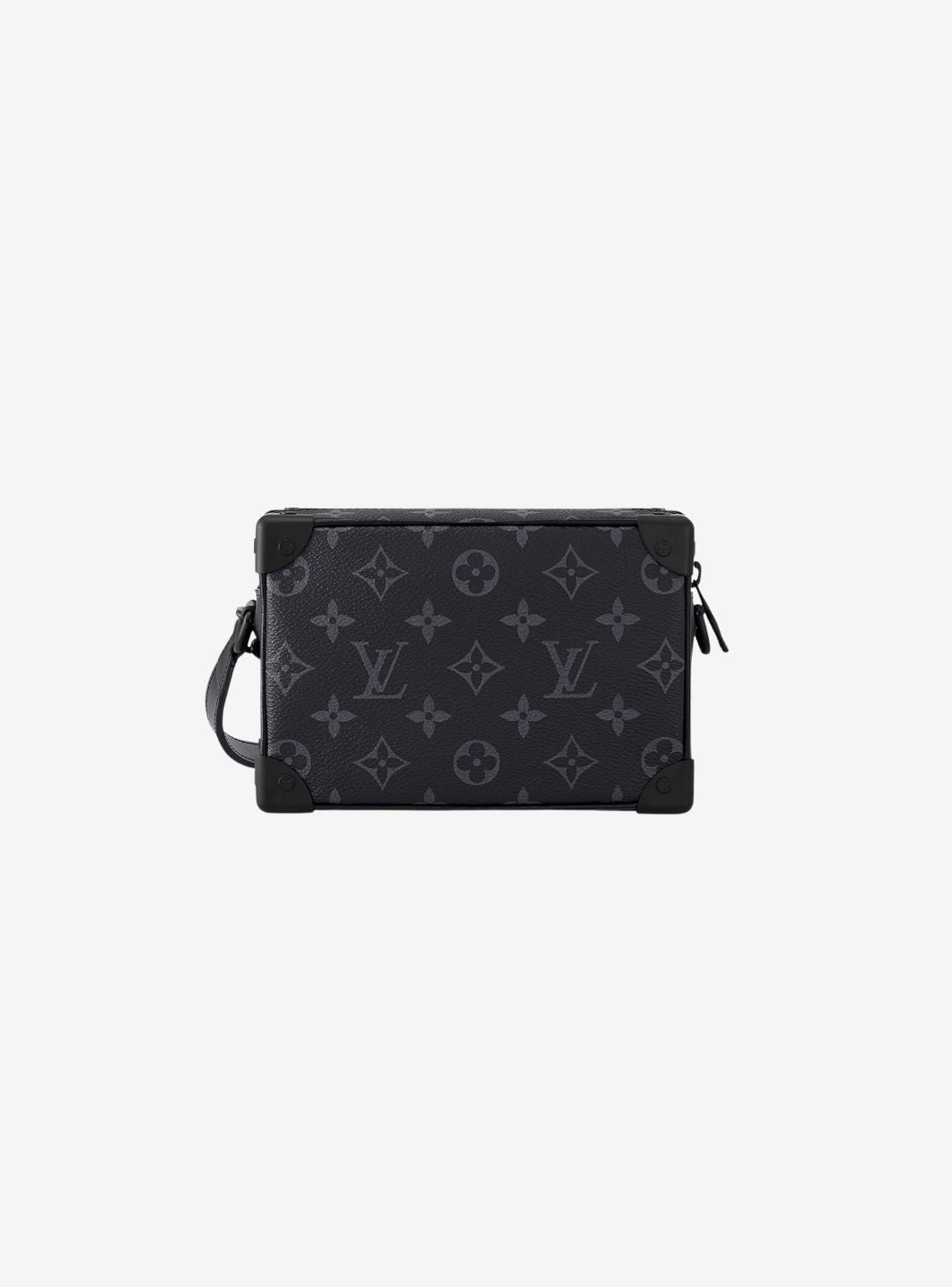
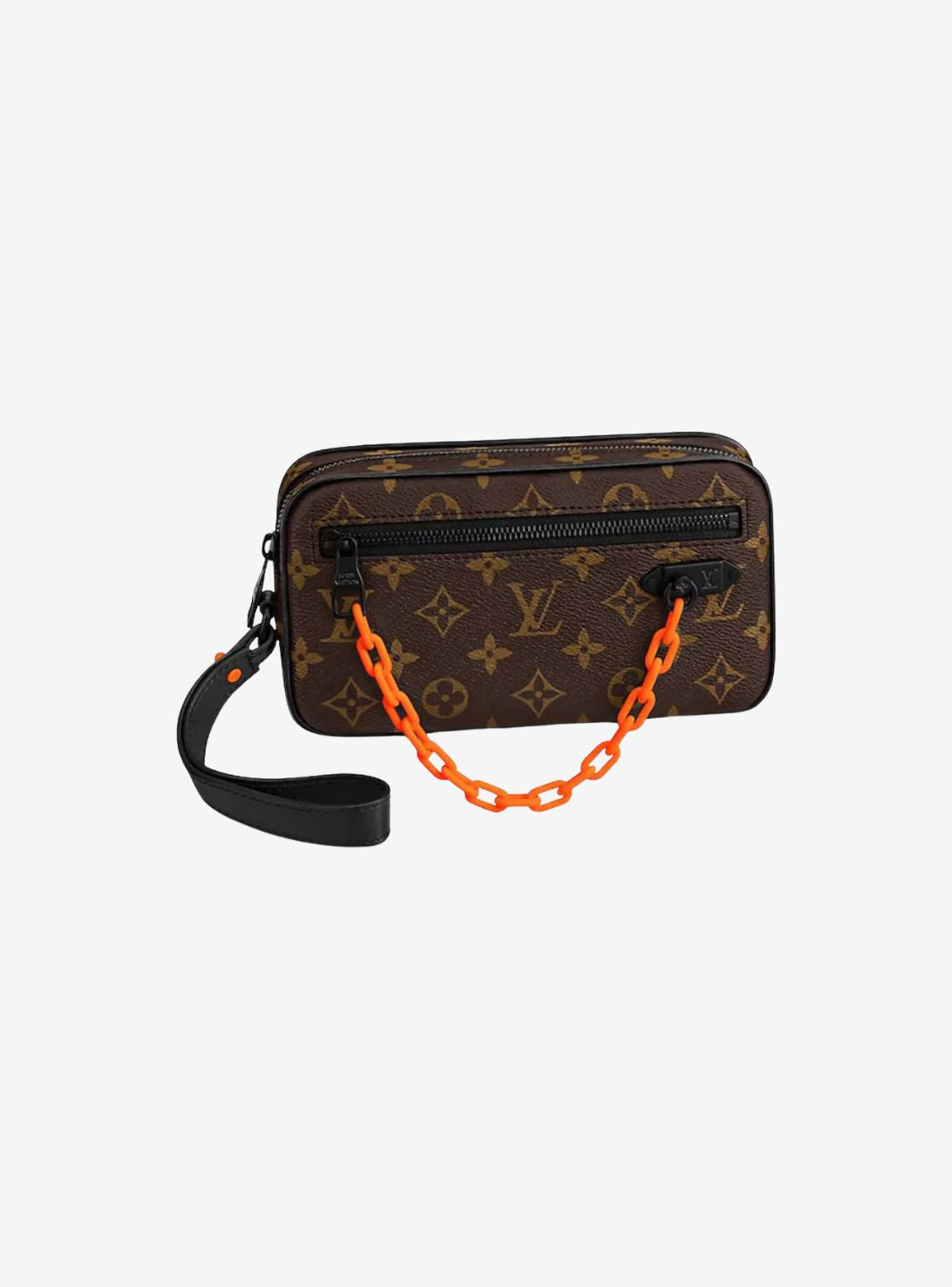
The Soft Trunk does not erase Louis Vuitton’s past: it compresses it into an urban, soft, and crossbody bag. Reinforced corners, a rectangular shape, and metallic details recall the Maison’s great trunks, while its proportions and usage reflect contemporary ways of traveling—and dressing.
Louis Vuitton: it all begins with travel
Louis Vuitton founded his own Maison in Paris in 1854, after spending seventeen years as an apprentice and craftsman specialized in making and packing trunks.
At the time, luggage had to withstand travel very different from today’s. Carriages, ships, and trains subjected trunks and their contents to shocks, humidity, and constant handling.
Louis Vuitton understood that luggage had to evolve alongside new means of transport and progressively developed a more practical construction compared to traditional trunks with rounded lids.
The result was the famous flat-topped trunk: easier to stack, relatively light, and made with a wooden structure covered in grey Trianon canvas.
It was an apparently simple modification, but it radically changed the way luggage could be organized during a trip.

Asnières: the historic heart of Louis Vuitton
Success came quickly, and as early as 1859, Louis Vuitton moved part of his production to Asnières-sur-Seine, just outside Paris.
The site became a workshop, a family home, and the center of the Maison's savoir-faire all at once.
Initially, about twenty people worked there. With Louis Vuitton's international expansion, Asnières grew progressively and remains to this day one of the brand's iconic locations, also dedicated to the creation of hard-sided trunks, special orders, and particularly complex products.
It is here that a philosophy destined to remain central to the Vuitton history took shape: combining function, craftsmanship, and personalization.
From Trianon Grey to Damier: the birth of the Louis Vuitton identity
The success of the trunks inevitably led to imitations.
To distinguish his products, Louis Vuitton and later his son Georges Vuitton developed increasingly recognizable canvases over time.
One of the fundamental steps came in 1888 with the Damier canvas, characterized by the famous checkerboard pattern. It was also one of the first times the Vuitton name was placed directly on the external surface of the product.
The following year, Georges also patented a sophisticated tumbler lock system, designed to increase the security of the trunks.
Design and function continued to evolve together: the aesthetic allowed Louis Vuitton to be recognized, while the construction had to continue responding to the real needs of travel.

1896: Georges Vuitton creates the LV Monogram
The final step arrived in 1896.
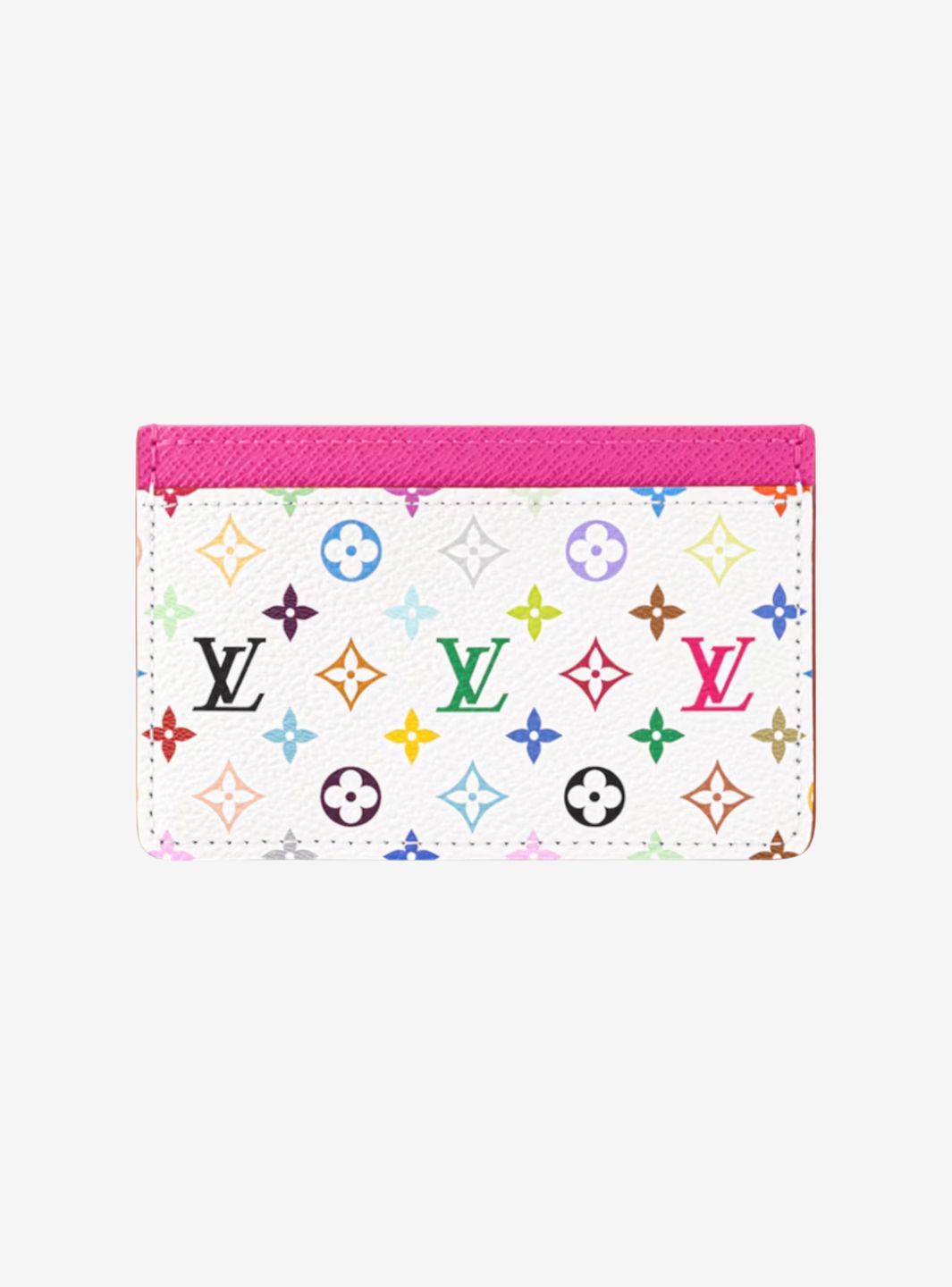
Georges Vuitton created the Monogram canvas by combining the LV initials with floral and geometric motifs. The design was born in response to the constant counterfeiting of the Maison’s products and as a tribute to his father Louis, who had passed away a few years earlier.
The Monogram progressively became much more than an identification system.
It is one of the first examples of a pattern capable of working almost like a logo repeated over the entire surface of a product. Even today, one only needs to see a small portion of the canvas to recognize Louis Vuitton immediately.
In 2026, the motif reached its 130th anniversary, proving how a graphic code born in the 19th century continues to be central to contemporary collections.
Louis Vuitton trunks become bespoke objects
One of the most fascinating aspects of the Maison's history is the quantity of trunks developed for extremely specific uses.
Over the decades, Louis Vuitton created wardrobe trunks, bed-trunks, containers for books, tools, watches, shoes, cigars, and practically any object a customer might want to transport.
The interior was not considered an empty space, but was designed around the contents.
Shelves, drawers, dividers, and linings were adapted in an almost architectural way, transforming the trunk into a sort of portable environment.
It is precisely this ability to adapt the structure to different needs that made it possible, many decades later, to reinterpret the same language in the form of much smaller bags.
From travel to pop culture
Over time, the Louis Vuitton trunk stopped being just a functional object and became a true cultural canvas.
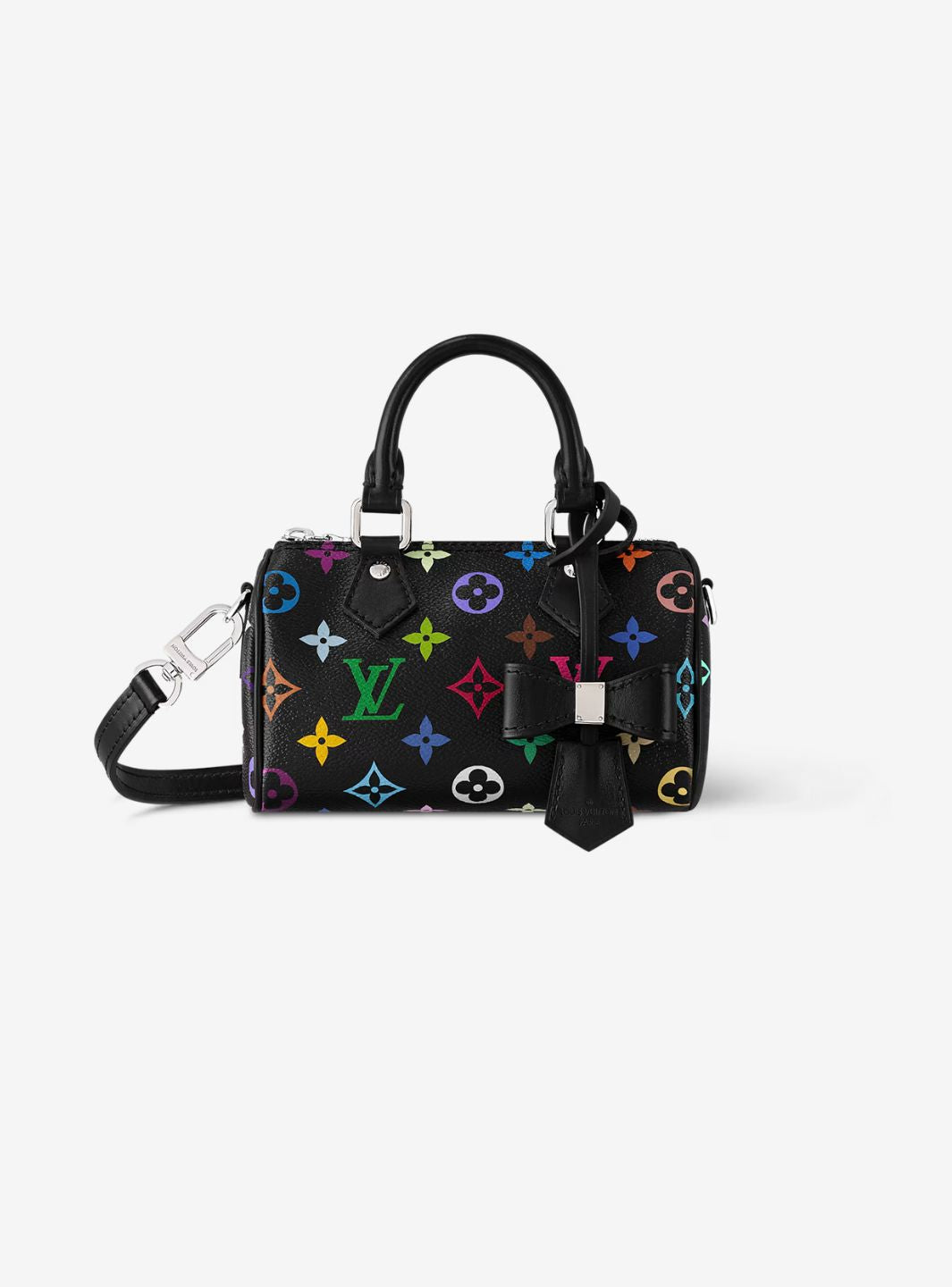
Artists and designers began to reinterpret the Monogram, canvases, and historic shapes of the Maison. Projects with Stephen Sprouse and Takashi Murakami demonstrated that Vuitton heritage could dialogue with graffiti, contemporary art, and pop culture without losing its recognizability.
The same occurred with the world of streetwear.
The Louis Vuitton x Supreme collaboration brought the New York brand's aesthetic to bags, accessories, and even trunks in 2017, creating one of the landmark moments in the meeting between luxury and street culture.

Trophy Trunks: when Louis Vuitton guards sports symbols
Another interesting evolution of the trunk involves the Trophy Trunks.
Over time, Louis Vuitton has created custom cases for some of the world's most important sporting trophies, transforming its travel tradition into a system for transporting and presenting symbolic objects.
The Maison has worked with competitions related to soccer, Formula 1, rugby, tennis, and esports. In 2019, it also collaborated with League of Legends on a dedicated trophy case.
For the Paris 2024 Olympic and Paralympic Games, Louis Vuitton also created trunks for medals and torches.
The original function thus remains surprisingly consistent: protecting something during travel. It is simply the contents that have changed.
Virgil Abloh arrives at Louis Vuitton
In 2018, Virgil Abloh became the artistic director of Louis Vuitton's menswear collections.
His arrival introduced elements from streetwear, music, and contemporary culture even more explicitly, but one of the most interesting aspects of his work was his relationship with the Maison's historical archives.
Virgil did not try to erase the Vuitton heritage.
He used it as raw material, taking extremely traditional codes—Monogram, trunks, reinforced corners, chains, and hardware—and moving them onto products built for a different generation.
It is in this context that the Soft Trunk was born.
Soft Trunk: the trunk becomes a bag
Virgil Abloh presented the Soft Trunk within his first Louis Vuitton collection, Spring-Summer 2019.
The idea is immediately legible: take the trunk, drastically reduce its size, and transform it into a soft, wearable object.
The rectangular shape, reinforced corners, and reference to the Maison's rigid construction remain. However, the materials, weight, and usage change.
The product is not carried by porters or loaded onto a train. It is worn over the shoulder, crossbody, or by hand.
The journey recounted by the Soft Trunk is therefore that of the contemporary city.

Mini Soft Trunk Monogram Eclipse: Virgil Abloh's model
One of the most recognizable interpretations is the Mini Soft Trunk Monogram Eclipse.
The bag uses black and grey Monogram Eclipse canvas, tonal reinforced corners, and a characteristic matte black chain.
The compact dimensions—approximately 18.5 x 13 x 8 cm in the current version—make the contrast with the large travel trunks from which the design derives particularly evident.
It is almost a functional miniature of the Louis Vuitton heritage: same visual language, but a completely different destination.
On ResellZone you can check the availability and condition of the Louis Vuitton Pochette Soft Trunk Mini Monogram Eclipse.
Why is the Soft Trunk important in the history of Virgil Abloh?
The Soft Trunk perfectly represents how Virgil Abloh approached a historical archive.
He did not create a product completely disconnected from the past. He started with one of the most recognizable objects of the Maison and modified its scale, materials, rigidity, and function.
The reference remains evident, but the result clearly belongs to his era.
In this sense, the Soft Trunk synthesizes an important part of Virgil's vision: demonstrating that streetwear and luxury do not necessarily have to belong to opposite worlds and that a 19th-century code can be used within a contemporary wardrobe.
Soft Trunk, Mini Soft Trunk, and Pochette Soft Trunk: what changes?
Over time, Louis Vuitton has developed different interpretations of the concept.
The names may change based on size, season, and construction, but the common idea remains recognizable: a boxy bag that directly references the codes of historic trunks.
The Mini Soft Trunk favors compact dimensions and crossbody use, while other versions increase internal space or reinterpret materials, chains, colors, and the Monogram.
The Soft Trunk family thus demonstrates that Virgil's idea was not tied to a single colorway, but could itself become a new Louis Vuitton code.
Is the Soft Trunk still produced by Louis Vuitton?
Yes. Years after its introduction, Louis Vuitton continues to offer the Mini Soft Trunk and other interpretations linked to the same language.
The Monogram Eclipse version is still present in the Maison’s universe, joined over time by leather variants, Monogram, Damoflage, and other seasonal finishes.
This is probably the most interesting signal of the project's success: a bag born in Virgil Abloh's first collection managed to survive beyond a single season and permanently enter the contemporary lexicon of Louis Vuitton.
From rigid trunk to crossbody bag: what has really changed?
Between 19th-century trunks and the Soft Trunk, almost all practical aspects have changed.
The former were used to transport large quantities of objects during long journeys. The Soft Trunk, on the other hand, contains only daily essentials.
The trunk was rigid, heavy, and designed to be stacked. The Soft Trunk is soft, light, and intended to be carried directly on the body.
But the visual language remains surprisingly similar: rectangular shape, protected corners, hardware, Monogram, and attention to construction.
The true evolution, therefore, does not consist in abandoning the trunk, but in modifying its function while keeping its identity recognizable.
Louis Vuitton and the Monogram in 2026
The relationship between past and present continues to this day.
In 2026, Louis Vuitton celebrated the 130 years of the Monogram by bringing its own historical codes back to the center, through heritage trunks and new capsules such as Monogram Origine, VVN, Time Trunk, and Monogram Emblème.
It is significant that, after more than a century, the Maison continues to use the same elements born from luggage-making to build contemporary products.
The Soft Trunk belongs exactly to this logic: it is not a break with Louis Vuitton, but a new chapter in the same story.
Where to find authentic Louis Vuitton bags
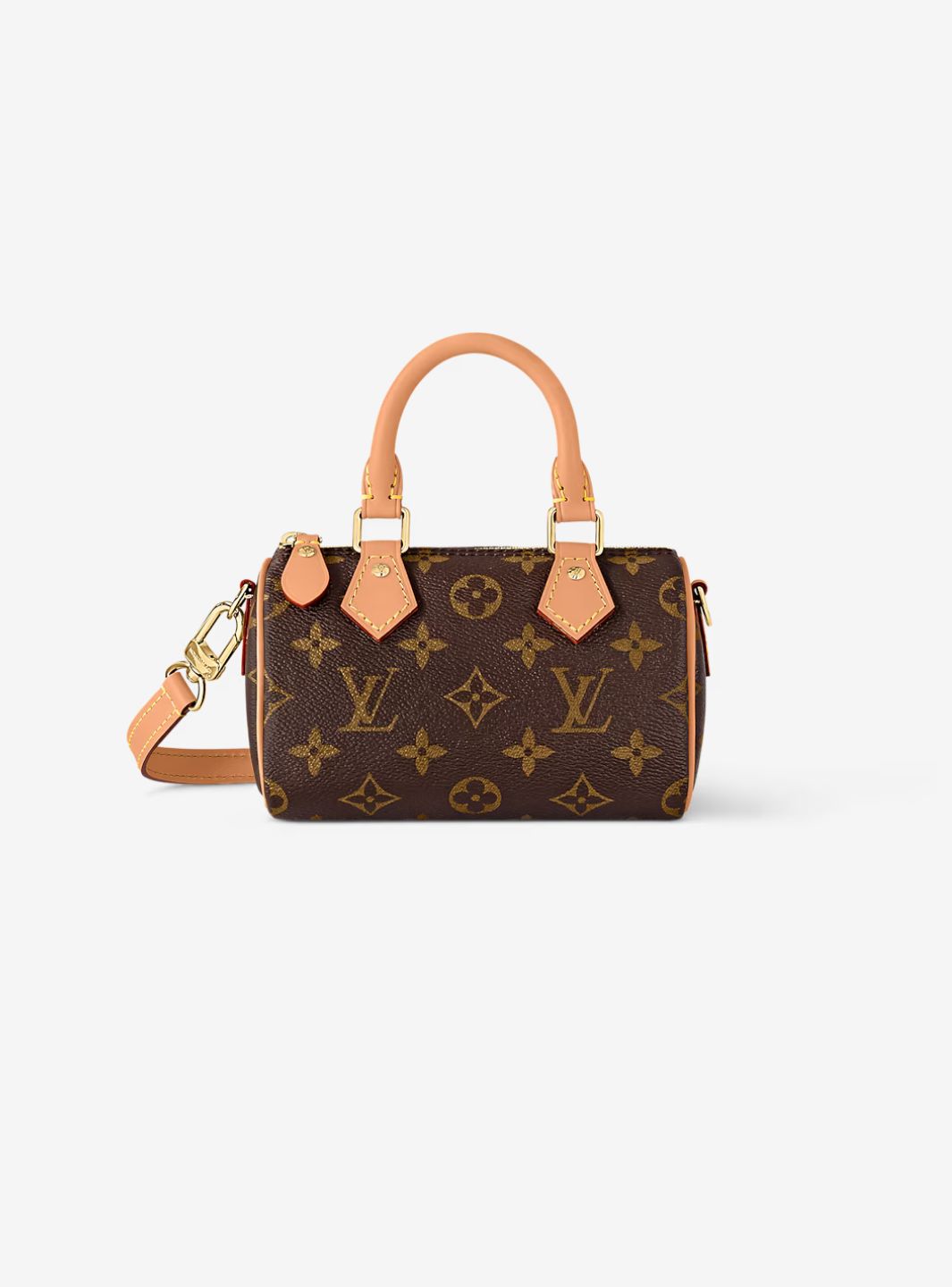
Between trunks, Speedy bags, pouches, and contemporary interpretations, Louis Vuitton has built one of the most recognizable catalogs in luxury leather goods.
On ResellZone you can explore the Louis Vuitton selection available, with new and pre-owned models based on arrivals.
For products purchased on the secondary market, it is important to always verify authenticity, actual condition, hardware, canvas, stitching, codes, and the provenance of the individual item.
Why the Soft Trunk represents Louis Vuitton so well
The story connecting the first Parisian atelier to the Soft Trunk spans over 160 years, but it always revolves around the same question: how must an object change when the way we live and travel changes?
Louis Vuitton answered in the 19th century by making trunks easier to stack and transport. Georges Vuitton built an identity through Damier, Monogram, and locking systems. Subsequent generations transformed those codes through art, fashion, sport, and pop culture.
Virgil Abloh took a further step: he took the Maison's oldest symbol and made it personal, urban, and wearable.
The Soft Trunk works precisely because it does not try to hide where it comes from. Every corner and every proportion remind us of the old trunk, but everything else belongs to the present.
It is proof that heritage does not necessarily have to be preserved in a stationary state: it can be resized, softened, and worn as a crossbody bag while continuing to tell the same story.