There are Air Jordans that have become rare over time and others that are born with all the characteristics of a grail. The Air Jordan 5 Tokyo definitely belongs to the latter category.
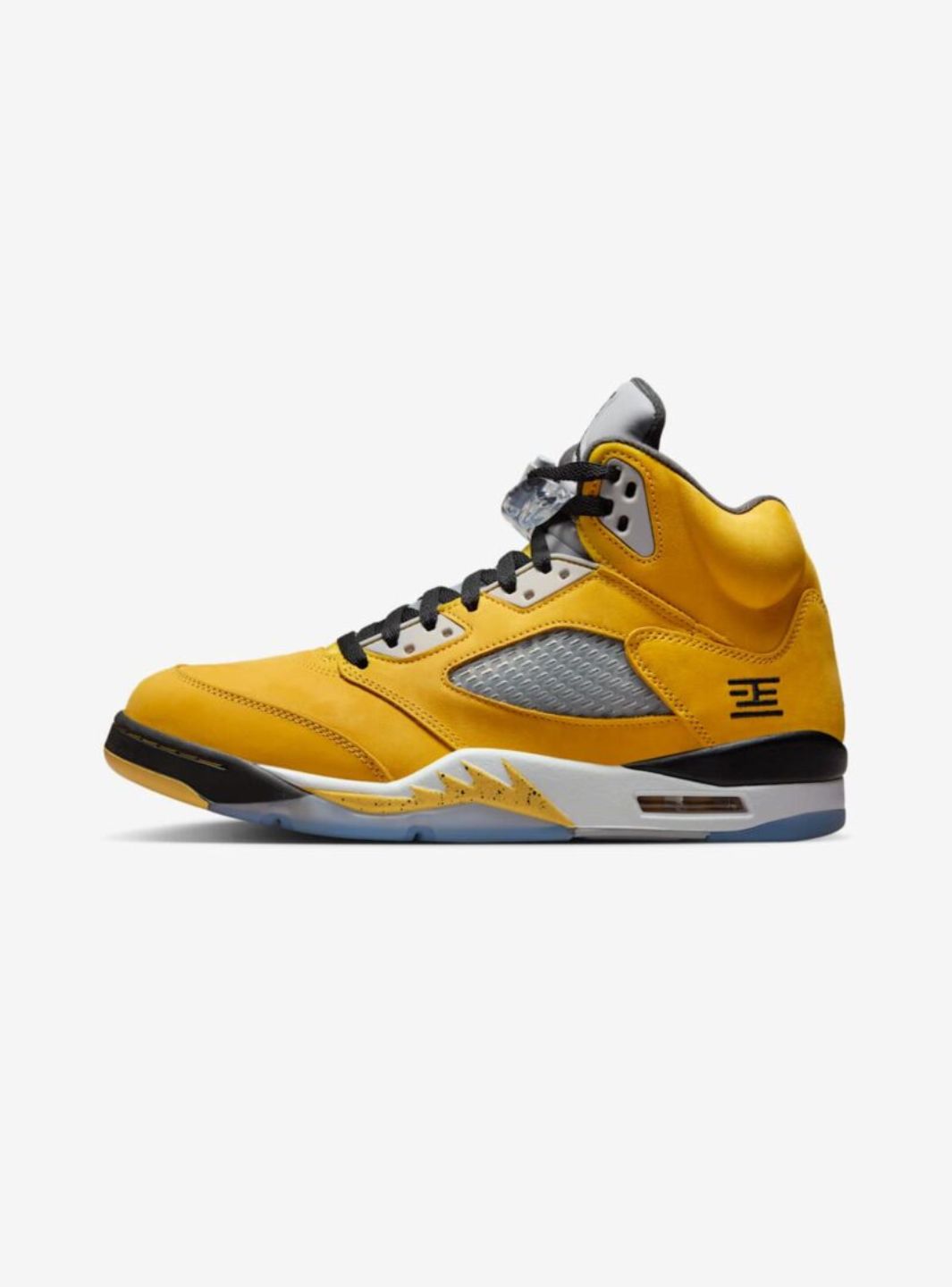
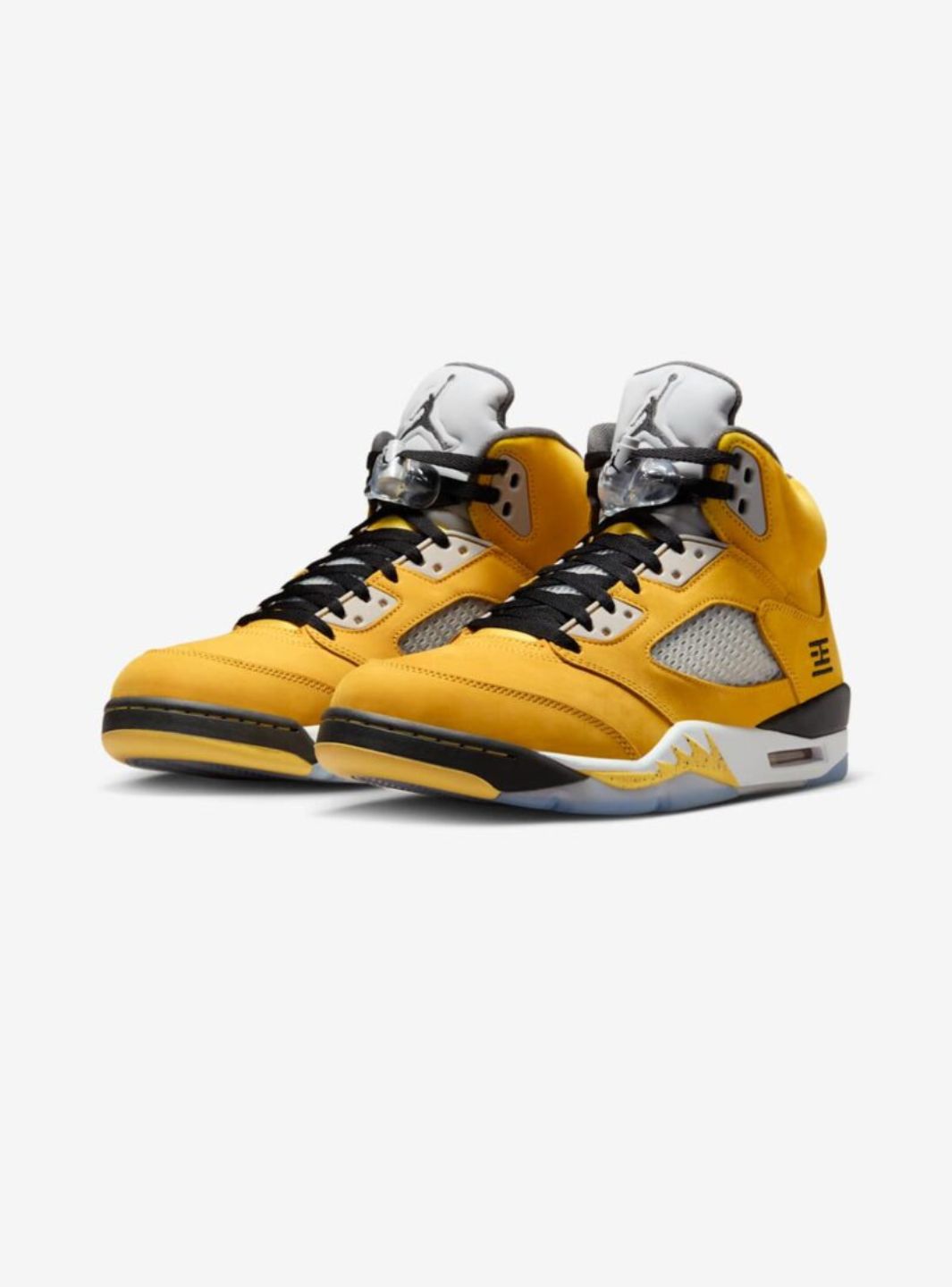
Presented in 2011 as part of the JORDAN TOKYO 23 project, they were distributed exclusively in Japan in just 1,000 pairs. The combination of a yellow upper, gray and black details, and the characteristic “23” symbol embroidered on the side immediately made them one of the most recognizable versions of the Air Jordan 5.
For fourteen years, they remained virtually unreachable for most international collectors. In 2025, Jordan Brand finally brought the Tokyo back to the market, this time through a much wider distribution.
Air Jordan 5 Tokyo 2011: how the Japanese grail was born
The story of the Tokyo 5 begins in April 2011, when Jordan Brand prepared the JORDAN TOKYO 23 project in Japan.
Nike officially describes the sneaker as a model created to commemorate the JORDAN TOKYO 23 event planned in Tokyo and confirms that the release was limited to 1,000 pairs exclusively for the Japanese market.
The project was linked to a series of Jordan initiatives in the Japanese capital, spanning basketball, sneaker culture, and a temporary space dedicated to the brand. It is precisely this context, broader than a simple store opening, that gave rise to the colorway.
Such a small production run and a distribution confined to Japan were enough to very quickly transform the Tokyo into one of the most difficult Air Jordan 5s to find outside the country.

The design of the Air Jordan 5 Tokyo
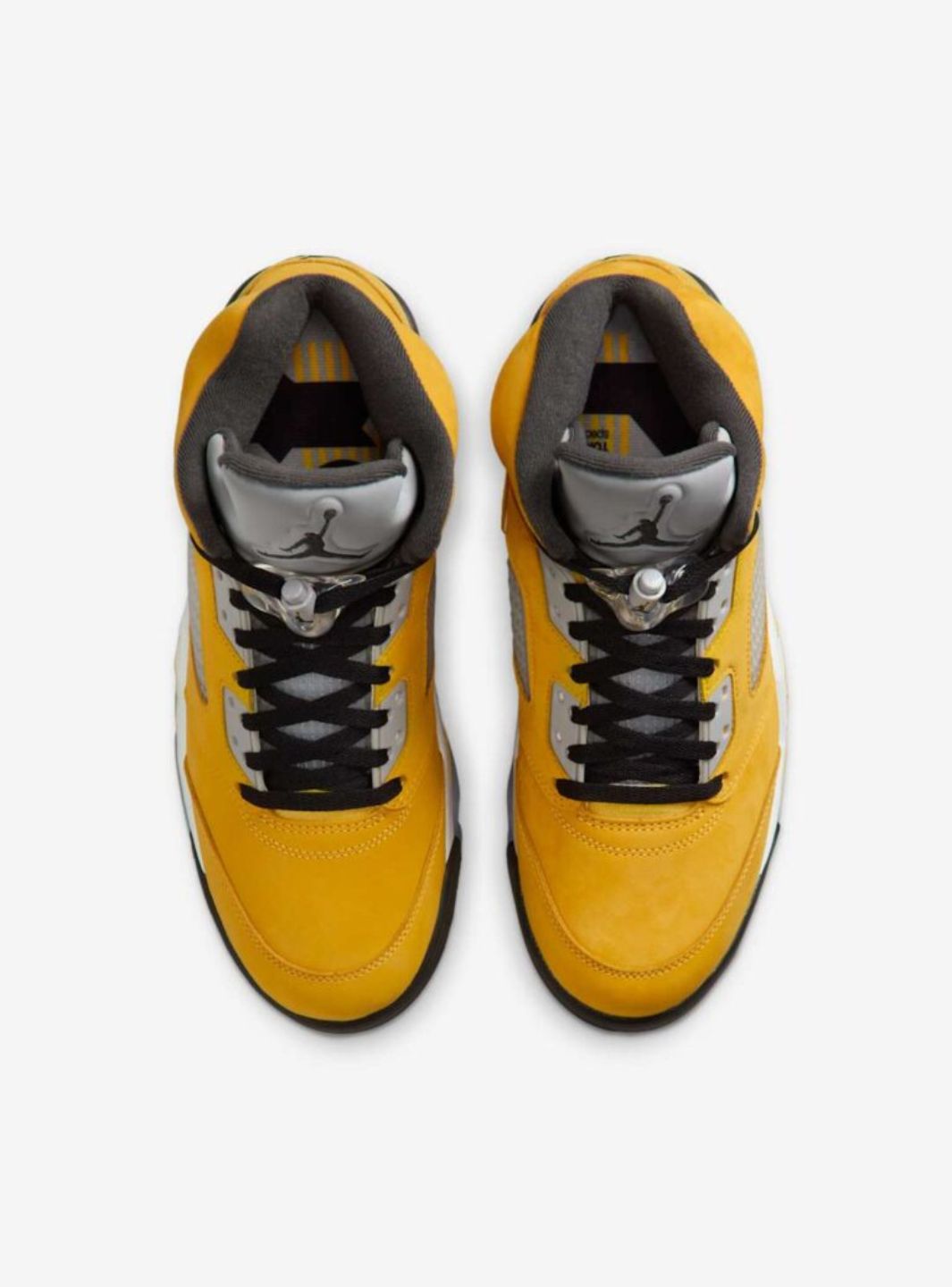
The element that makes the Tokyo instantly recognizable is the Varsity Maize upper, a very intense yellow shade that almost completely covers the top of the sneaker.
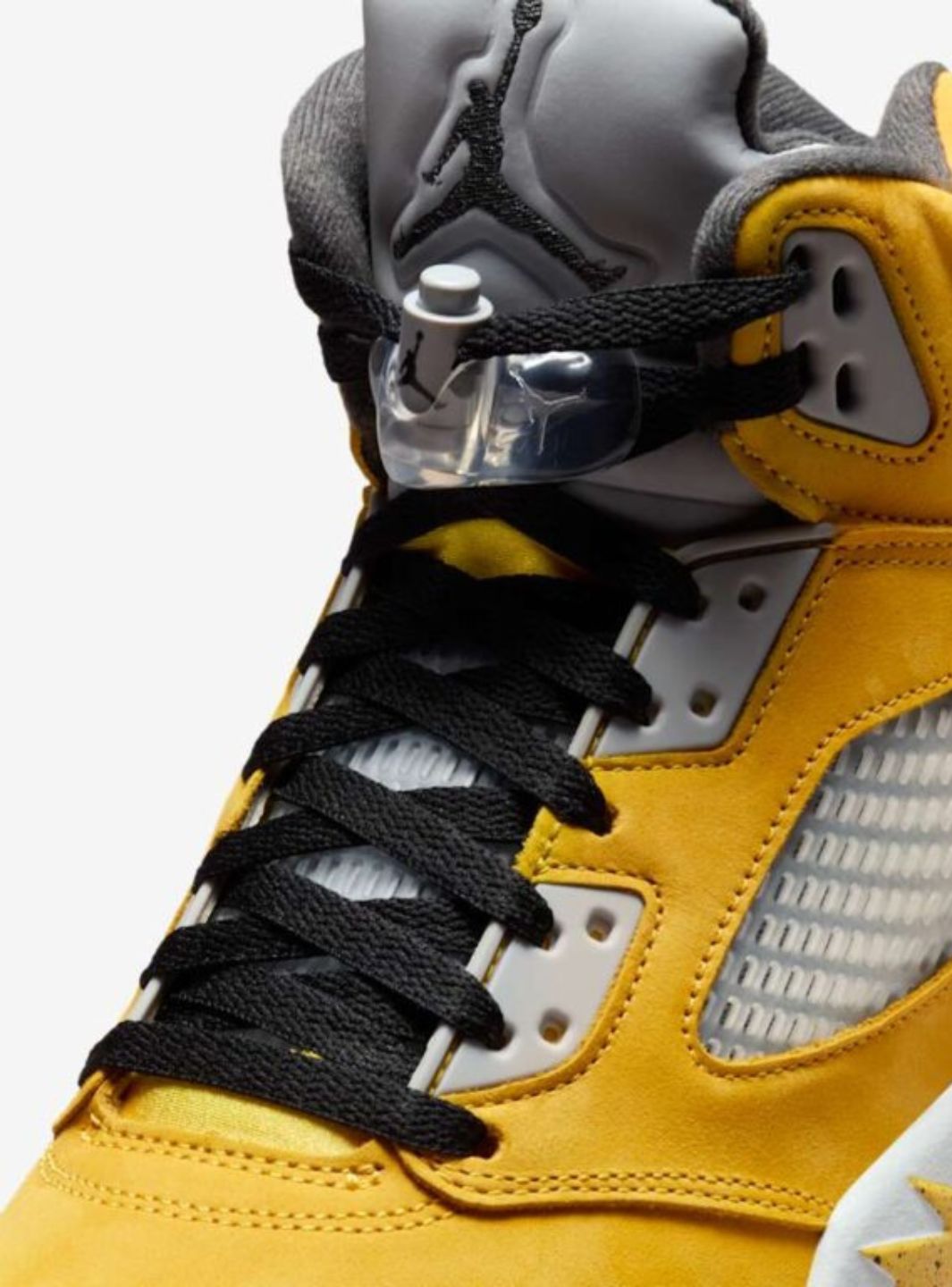
Balancing it out are Wolf Grey elements on the tongue, eyelets, and side panels, along with black laces and midsole details.
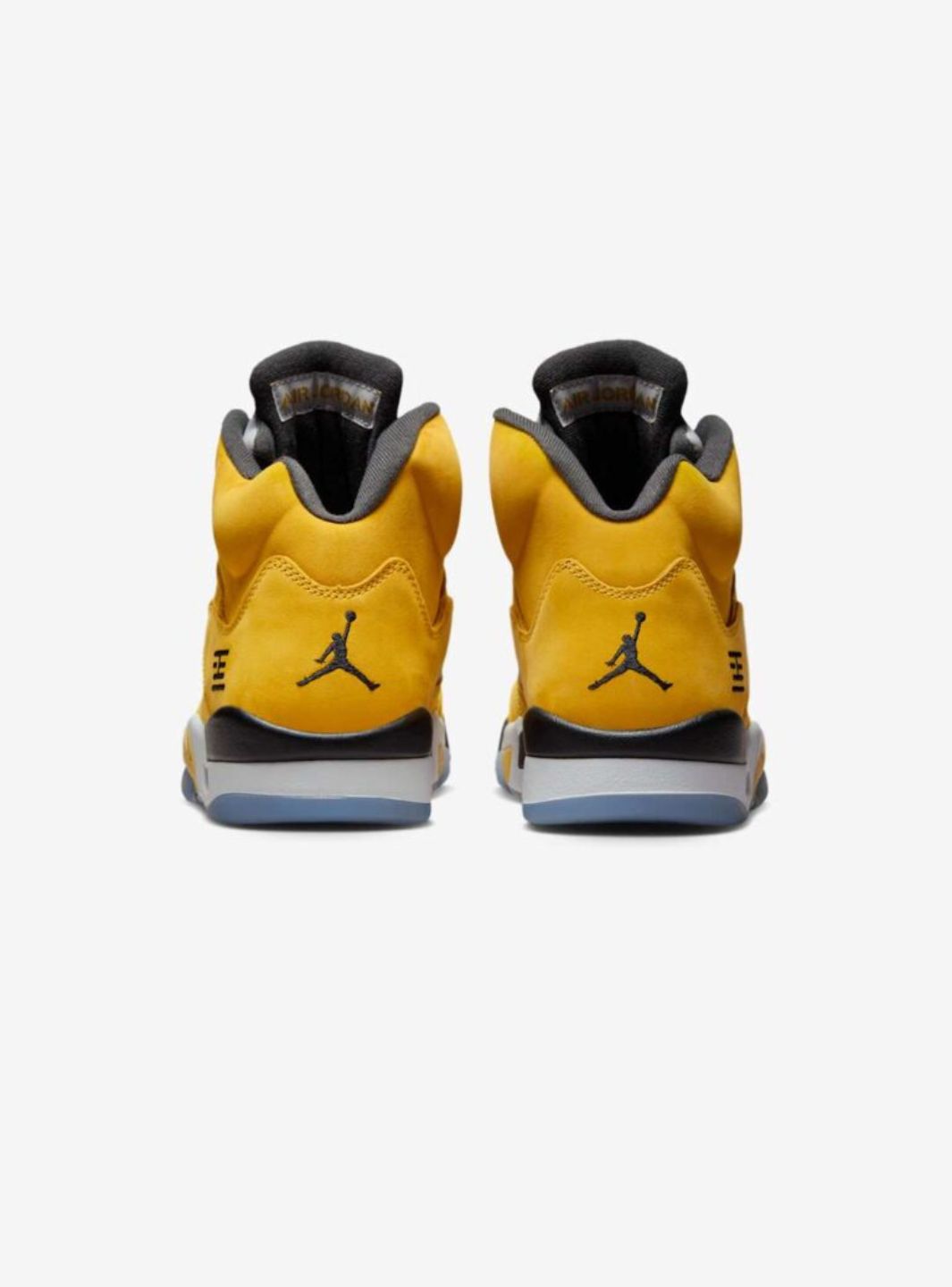
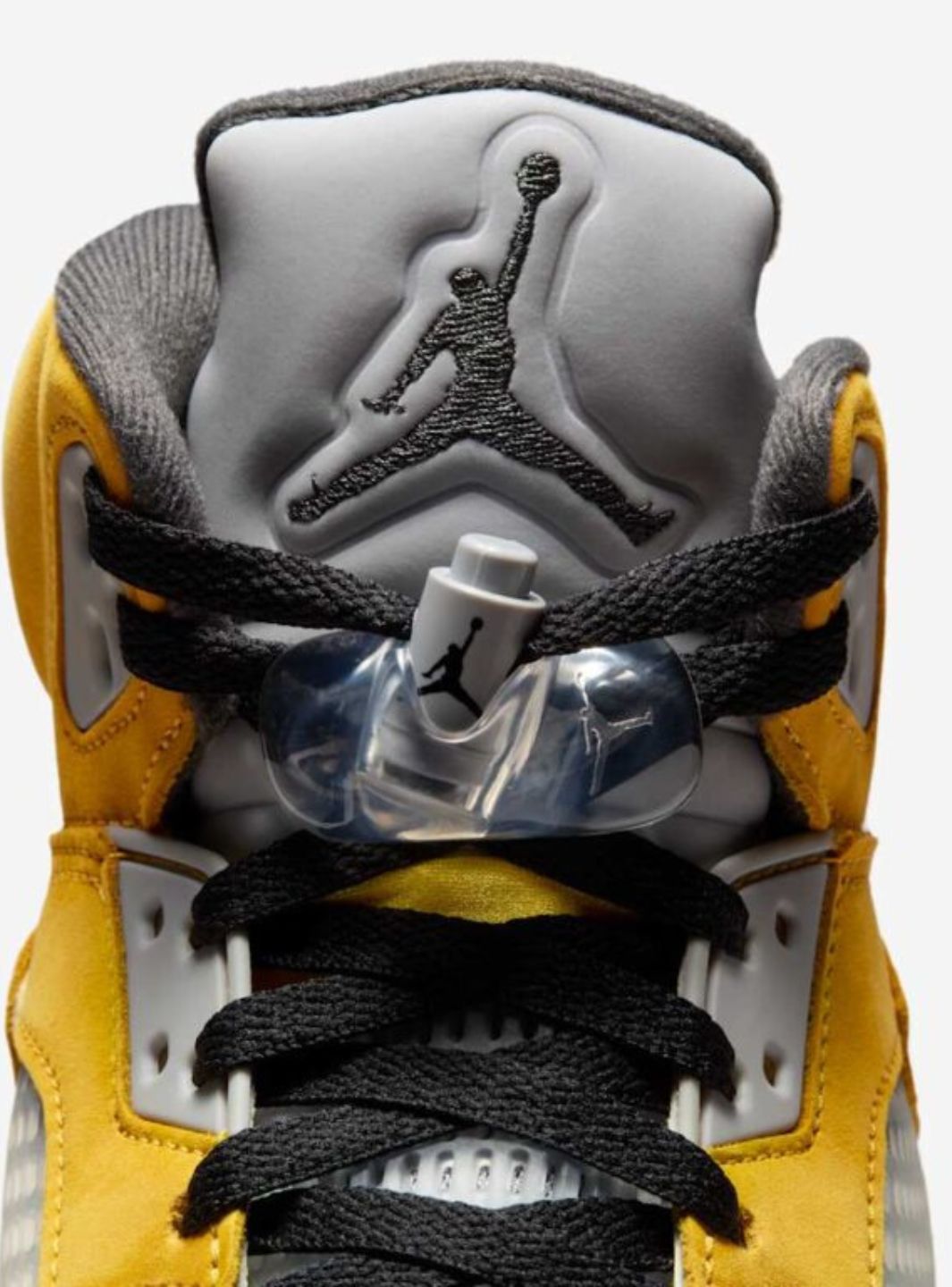
The classic reflective tongue of the Air Jordan 5 retains the black Jumpman, while the heel still uses the Jumpman rather than Nike Air branding.
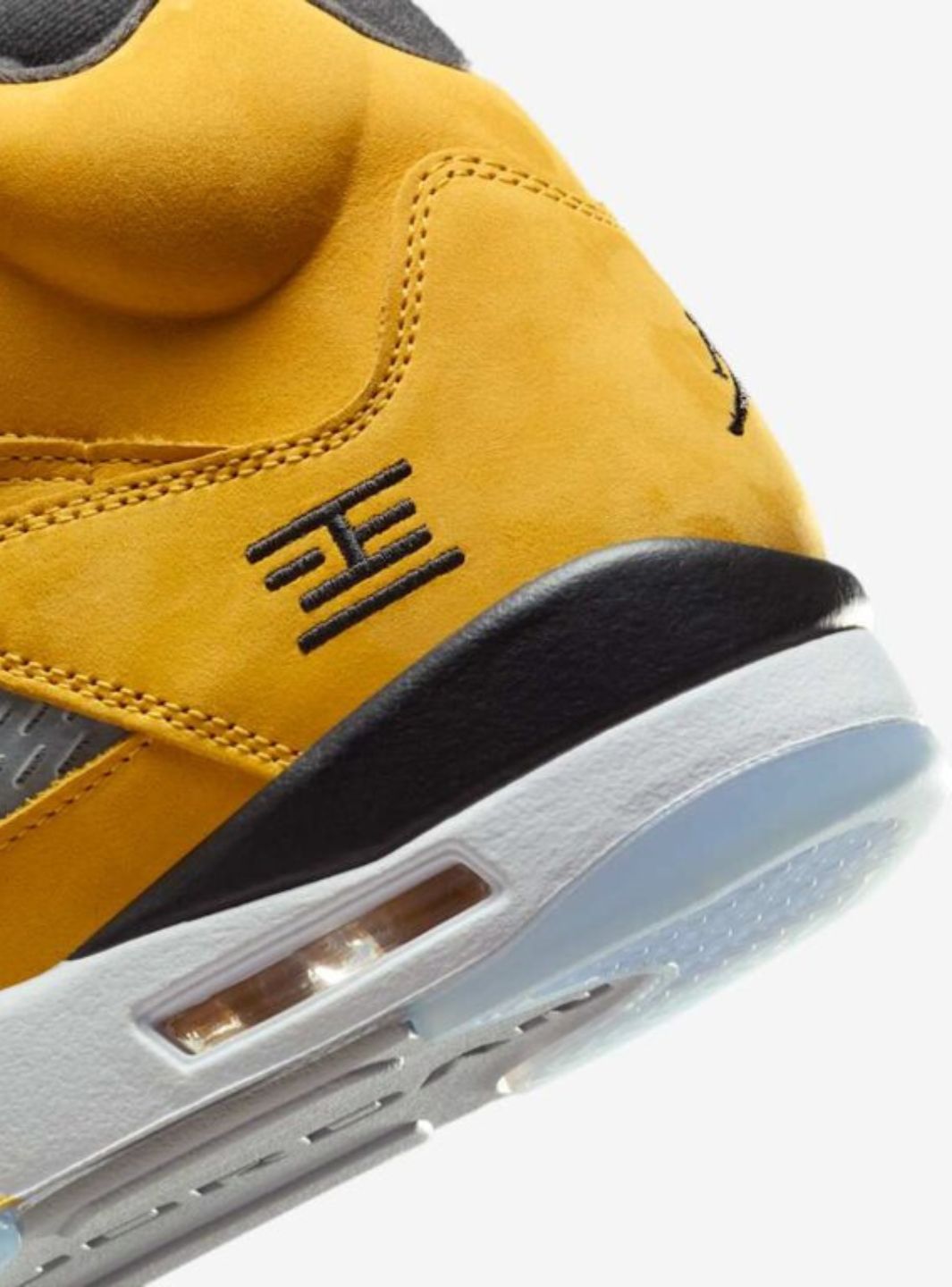
However, the most important detail remains the specific symbol embroidered on the side, graphically constructed around the number 23 and which has become one of the signature elements of the entire Tokyo project.
It is an extremely flashy sneaker, but the power of the design comes precisely from the contrast between the very bright yellow and the few gray, black, and white elements that accompany it.
What does the “23” symbol on the Air Jordan 5 Tokyo mean?
One of the details that contributed most to the allure of the Tokyo is the black embroidery positioned on the rear side of the upper.
It is often described generically as a “Kanji 23,” but it is more accurate to consider it a stylized graphic symbol built around the number 23 and the identity of the Tokyo 23 project.
By observing it closely, the number itself is incorporated into the graphic composition.
It is this detail that immediately separates the Tokyo from a normal yellow Jordan 5: the design ties the sneaker to a specific time and place in Jordan Brand history.
Why did the original Air Jordan 5 Tokyo become so rare?
The main reason is extremely simple: 1,000 pairs is very few for a Jordan release.
To this, one must add the exclusively Japanese distribution. In 2011, a European or American fan could not simply participate in a normal global launch or purchase the sneaker through SNKRS.
In the following years, original pairs began to appear increasingly rarely on the secondary market, often at very high prices.
Condition, size, the presence of the box, and provenance, however, affect the value enormously. For this reason, I would avoid assigning a universal price to the Tokyo 2011: on such a rare sneaker, listings and actual sales can be very far apart.
It is, however, one of the models that best represents the concept of a sneaker grail: a historic release, numerically limited, and linked to a specific moment in Jordan culture.
2025: the global return of the Air Jordan 5 Tokyo
After fourteen years without a true retro, Jordan Brand brought the Air Jordan 5 Tokyo back to the market in 2025.
The global release arrived on September 27, 2025 through SNKRS and select Jordan retailers, allowing a much wider audience to purchase this colorway officially for the first time.
The difference compared to 2011 is therefore huge, especially from the point of view of distribution: the original was a 1,000-pair release intended only for Japan, while the 2025 retro was made available in numerous international markets as well.
This does not make the 2025 identical to the original nor does it erase the historical value of the first version. Rather, it makes it a new opportunity to learn about and wear a colorway that for over a decade had remained almost exclusively the domain of collectors.

Air Jordan 5 Tokyo 2011 vs 2025: what changes?
The 2025 retro remains extremely faithful to the sneaker that built the Tokyo legend, but it is not a perfect copy of the 2011 retail version.
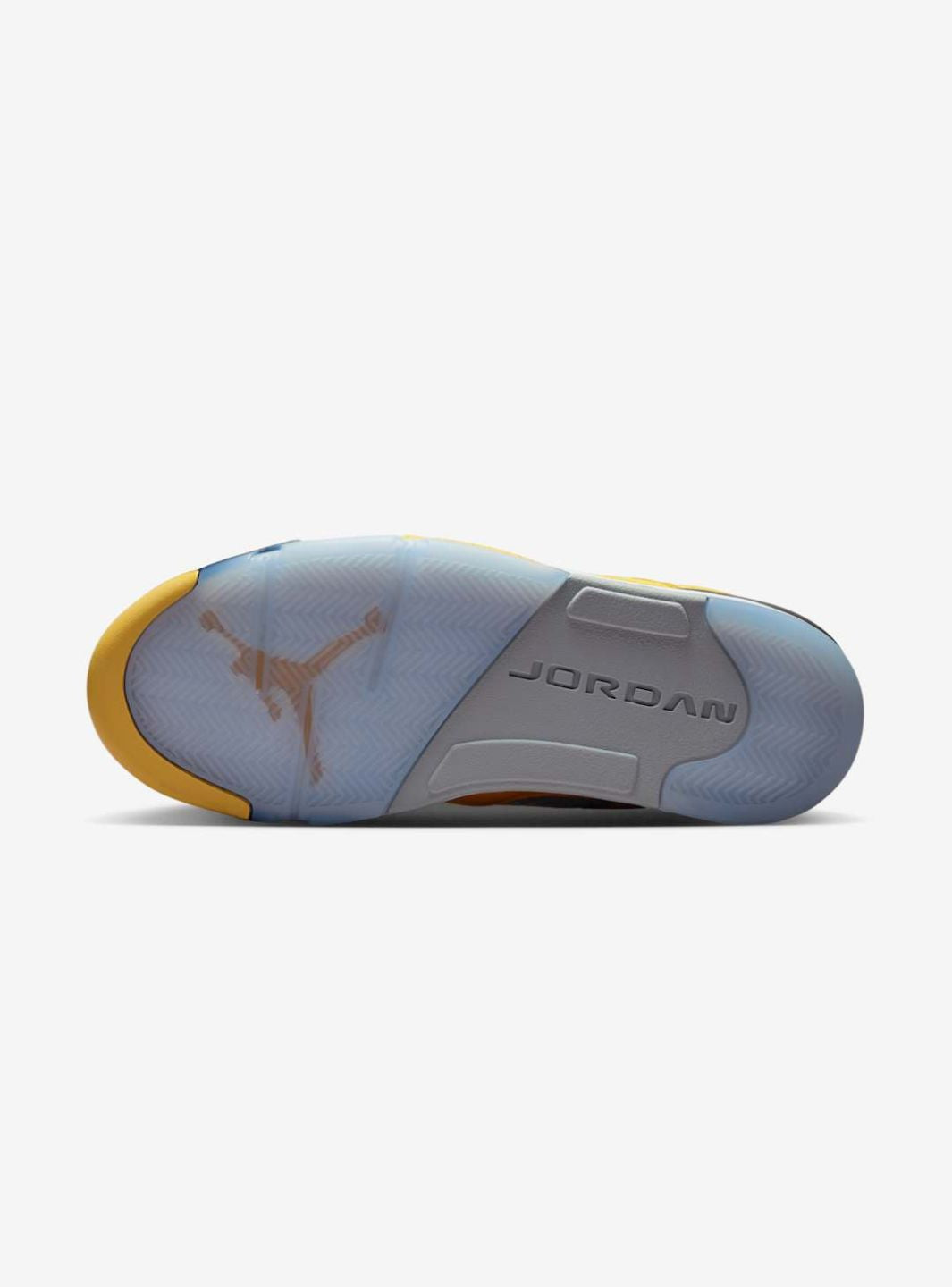
The most obvious difference concerns the front area of the sole. The 2025 version introduces a yellow element on the toe that did not belong to the original retail release, but had appeared on a rare sample developed in 2011.
The black finish in the rear area of the midsole also changes slightly: on the original, it had a glossier appearance, while on the 2025 retro it appears more matte.
The splatter of the classic shark teeth is also lighter and neater on the new version, while the side embroidery appears thinner and more precise.
The elements that define the colorway remain practically unchanged:
- yellow upper;
- Wolf Grey details;
- reflective tongue with black Jumpman;
- Jumpman on the heel;
- Tokyo 23 symbol embroidered on the side;
- black laces and classic Jordan 5 structure.
The 2025 can therefore be read as a faithful retro that also incorporates a small detail from the development phase of the original model.
The Tokyo 2025 does not have Nike Air on the heel
During the months preceding the release, rumors circulated about a possible second version of the sneaker with Nike Air instead of the Jumpman.
That rumor did not translate into the normal retail release.
The Air Jordan 5 Tokyo 2025 that hit the market uses the Jumpman on the heel, thus maintaining one of the fundamental elements of the original configuration.
This is important above all because old articles and product descriptions continue to circulate online, written when the sneaker had not yet been released, which still report the hypothesis of the two versions.
Why we cannot say that 20,000 pairs were produced
Before the 2025 release, various estimates on the quantity of pairs produced also circulated.
Some sources spoke of approximately 20,000 pairs, but Jordan Brand did not publish a reliable official figure on global production.
For this reason, I would not use that figure as fact.
What we know for certain, however, is much more useful for recounting the evolution of the model: in 2011, Nike officially confirmed a production of just 1,000 pairs for Japan, whereas in 2025, the distribution became international.
The transition from a local exclusive to a global retro already tells the story of how much the role of the Tokyo changed without needing to add unconfirmed numbers.
Why the Air Jordan 5 Tokyo is important in sneaker culture
The Tokyo represents a period in which Jordan Brand increasingly used regional releases and local events to build sneakers with a specific identity.
The 2011 model likely would not have acquired the same allure if it had been distributed everywhere from the start.
The extreme scarcity and the link to Japan became as much a part of its identity as the yellow color or the side symbol.
The return in 2025 inevitably modifies that relationship with rarity, but it also allows the sneaker's story to leave the narrow world of OG collectors and reach a new generation.

Where to find the Air Jordan 5 Tokyo 2025
After the global release in September 2025, the Tokyo continues to be available through select retailers and on the secondary market.
On ResellZone, you can directly check availability and sizes for the Air Jordan 5 Tokyo 2025.
The modern retro is naturally much more accessible than the original 2011 version, but it maintains all the visual elements that made this colorway one of the most recognizable Jordan 5s of the last fifteen years.
From the 1,000-pair grail to the global retro
The story of the Air Jordan 5 Tokyo is interesting precisely because the two releases represent two completely different moments in sneaker culture.
In 2011, we had a shoe built around a local event, produced in just 1,000 pairs and virtually unreachable for those living outside of Japan.
In 2025, the same colorway returns to a global market in which releases, images, and information cross the world in seconds.
The retro can never replicate the context that transformed the first Tokyo into a legend, but it does not necessarily have to.
Its role is different: to bring one of the most important Air Jordan 5 colorways back to the streets without erasing the history that made it special.